
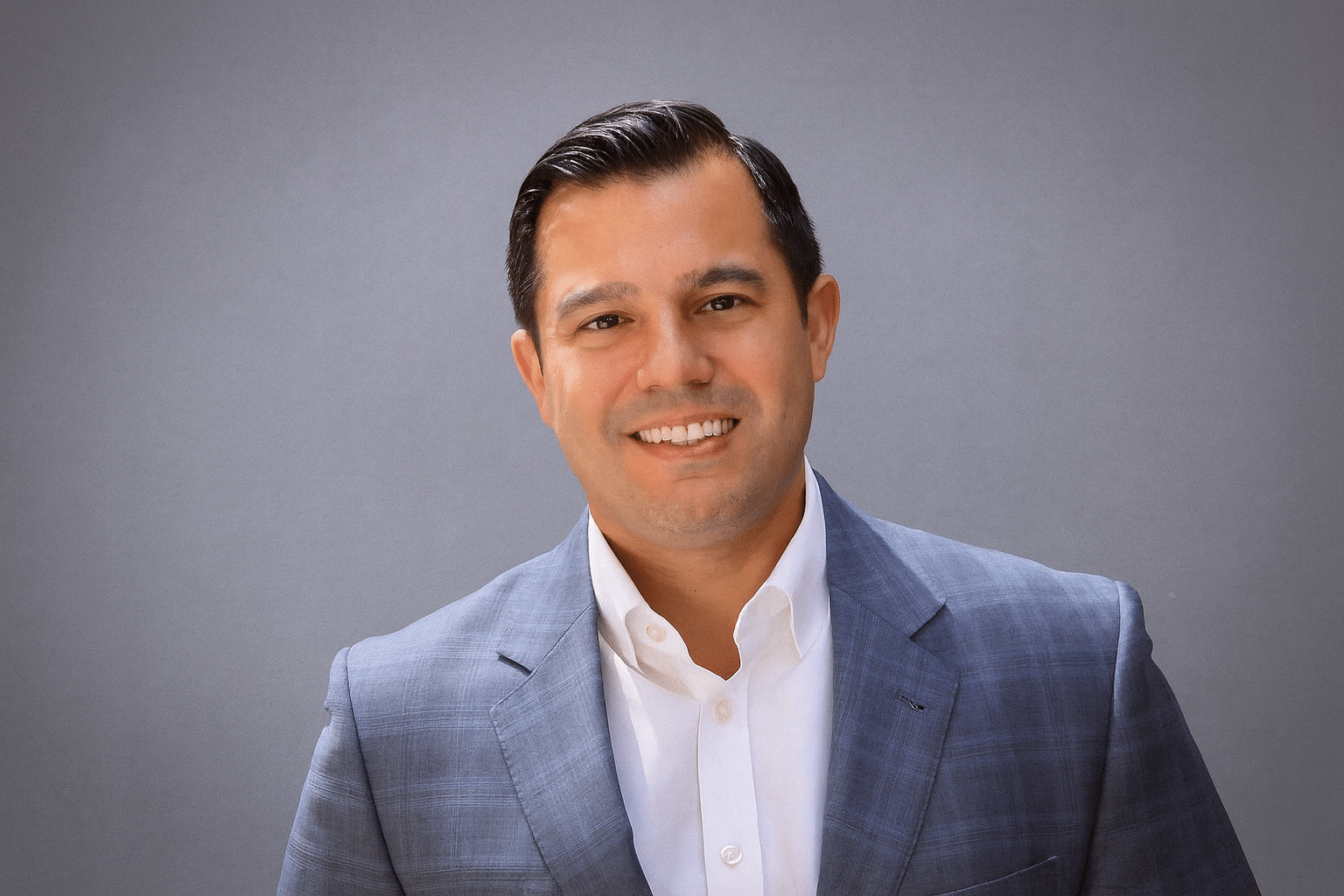
Anthony DenierGroup President & U.S. CEO
In this interview, Anthony Denier discusses leading Webull as a newly public company and building a global brokerage platform for sophisticated retail investors. He shares insights on scaling internationally, leveraging AI to improve investing decisions, and balancing innovation with transparency and trust. The conversation highlights customer-focused product development, global expansion, leadership through rapid growth, and how technology can empower investors to navigate increasingly complex financial markets.

Founder Stats
- Finance, Technology
- Started 2016
- $1M+/mo
- 50+ team
- USA
About Anthony Denier
Anthony Denier is the Group President and U.S. CEO of Webull. As Webull’s first employee in the United States, he played a pivotal role in building the company into a global, app-first brokerage serving investors across multiple markets. Under his leadership, Webull has expanded its product offerings, international presence, and AI-powered capabilities while maintaining a focus on transparency, innovation, and empowering retail investors with professional-grade tools and market access.
Interview
November 29, 2025
You were employee number one at Webull. How did you go from starting the U.S. brokerage to leading a public company?
Webull operates in a crowded brokerage market. How do you differentiate the platform from other digital brokers?
How have you seen retail investors evolve over the last few years?
You recently launched Vega, Webull’s AI platform. What problem are you trying to solve with it?
How do you decide when to build tools in-house versus partnering with third parties for data and features?
How has your role changed going from private CEO to public company CEO?
Be honest, how often do you check Webull’s stock price and how do you think about it?
What does your personal information diet look like to stay on top of markets and macro trends?
Why did you decide to build a major office in St. Petersburg, Florida in addition to New York?
We bought a St. Petersburg building post-pandemic for operations, customer service, marketing, social, and some institutional work. About 250 people are there. Nearby universities, lower cost of living, and quality of life help recruit talent who do not want a four-hour New York commute, while front-office roles stay in New York.
Webull now operates 14 broker-dealers globally. How do you manage international growth and local teams?
How different are international users from U.S. users today when it comes to investing behaviour?
Who do you think your shareholders are, and how do they discover Webull as an investment?
You offer Corporate Connect for issuers. How is it changing the relationship between public companies and retail investors?
Corporate Connect lets issuers talk directly with their retail shareholders. We approach companies where our clients hold shares and offer a structured, compliant channel. Retail is now a big part of their mix. It helps management tell their story and gives retail a real voice similar to institutions.
Given your Wall Street background and your role today, what is your personal investment philosophy?
Looking five years ahead, what non-financial goals or KPIs matter most to you for Webull?
Top non-financial goal is trust from clients and investors. I want true global investing: if we have São Paulo offices, U.S. clients should trade Brazilian stocks as easily as Brazilians trade U.S. stocks; tokenization will help. Innovation is another KPI: being first to new products while larger players turn slowly.
You highlighted fixed income and wealth transfer. Why do you think these areas are so important now?
Many founders are listening to you. What is your main advice to them about leadership and growth?
Scaling is hard on you and your family. Be clear on what you want to achieve and surround yourself with talented, hard-working people. There is no substitute for grinding every day. I ask employees to be in the office five days a week so we stay collaborative and push through setbacks. Do not be dismayed; keep grinding.
Table Of Questions
Video Interviews with Anthony Denier
Webull ($BULL) CEO Anthony Denier on AI, Going Global, and the Future of Retail Investing | Marketopolis
Webull ($BULL) CEO Anthony Denier on AI, Going Global, and the Future of Retail Investing | Marketopolis
Webull CEO: Being a public company gives us transparency | CNBC Money Movers

Webull's Road to a $7.3Bn SPAC – Webull President, Anthony Denier | Fintech Podcast
Cite This Interview
Use this interview in your research, article, or academic work
Related Interviews
Sadi Khan
Co-founder & CEO at Aven
In this interview, Sadi Khan discusses the mission behind Aven and how combining home equity with credit card functionality can help reduce borrowing costs for…
Marc Rowan
CEO & Co-Founder at Apollo Global Management
In this interview, Marc Rowan discusses the evolution of alternative investing and why private markets have become a critical part of the global economy. He…
Hayes Barnard
Founder & CEO at GoodLeap
In this interview, Hayes Barnard discusses the journey of building GoodLeap into a leading fintech platform for sustainable home solutions. He shares insights on overcoming…

Naveen Rao
VP of Generative AI & Former CEO of MosaicML at Databricks
In this interview, Naveen Rao, VP of Generative AI at Databricks and former CEO of MosaicML, analyzes the explosive economics of artificial intelligence inference and…
Rahul Vohra
Founder & CEO at Superhuman
In this interview, Rahul Vohra, Founder and CEO of Superhuman, explores why superficial AI integrations fail to retain software users and outlines frameworks for embedding…

Sam Altman
Co-founder & CEO at OpenAI
In this interview, Sam Altman, Co-Founder and CEO of OpenAI, explores the practical trajectory toward artificial general intelligence and the imperative of human agency in…