

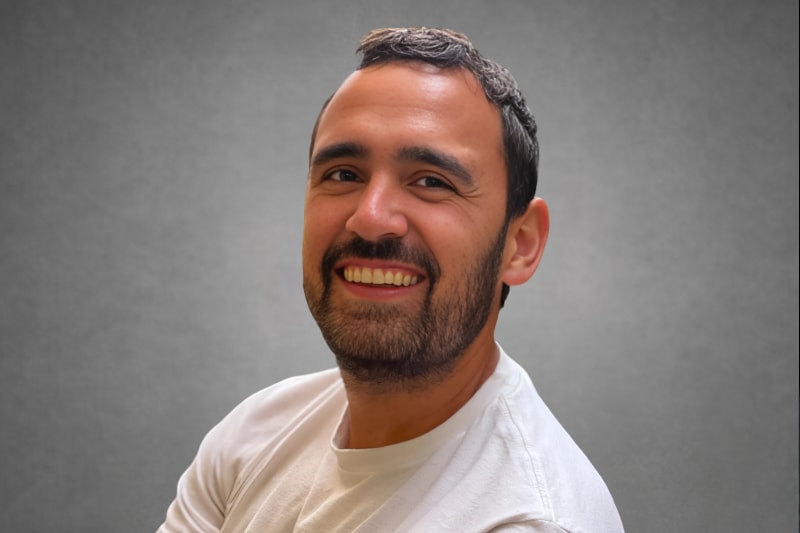
Diogo AlmeidaCo-Founder & CEOThe reliability bottleneck in AI automation and why data matters more than compu
In this interview, Diogo Almeida, Co-Founder and Chief Executive Officer of TypeSafe AI, analyzes why intelligence reliability remains the defining bottleneck to software automation and introduces his non-text decision model Jev. Drawing on his background as an early OpenAI researcher who helped invent ChatGPT, he explains why data quality matters more than raw compute, the limitations of standard benchmarks, and how calibrated confidence scores enable enterprise automation. Almeida shares strategic perspectives on building defensible artificial intelligence infrastructure.


Founder Stats
- AI
- Started 2024
- $8.3M/mo
- 10–50 employees
- San Francisco, California, USA
About Diogo Almeida
Diogo Almeida is the Co-Founder and Chief Executive Officer of TypeSafe AI, the machine learning enterprise behind Jev, a specialized non-text decision model powering automated workflows across Fortune 500 enterprises. Previously a research scientist at OpenAI and Google Brain, he co-authored InstructGPT, helped invent reinforcement learning from human feedback, and contributed to GPT-4. Almeida has raised significant institutional capital from Andreessen Horowitz and Sequoia Capital, establishing TypeSafe AI as a leader in reliable artificial intelligence infrastructure.
Interview
November 17, 2026
This is interview 2 of 2 with Diogo Almeida.
Diogo Almeida has been featured on CEO Insider 2 times. Explore the full collection.
Why do you consider intelligence reliability the absolute greatest bottleneck to software automation?
Almost everyone paying attention to artificial intelligence realizes reliability is our main obstacle. Current models provide Einstein-level brilliance ninety-five percent of the time, but behave like Mr. Bean the remaining five percent. In expected value terms, mission-critical enterprise workflows like accounting cannot tolerate unpredictable failures. Real software automation requires absolute nine-nines reliability rather than erratic brilliance.
What is the core premise behind TypeSafe AI and your flagship decision model Jev?
Jev is designed to bridge the chasm between artificial intelligence capability and true software automation. Instead of generating conversational text or assistant summaries, Jev acts as a calibrated decision model embedded directly inside production software. It makes discrete programmatic choices and outputs mathematically grounded confidence scores so systems know when to execute automatically versus asking humans.
Why did the era of scaling raw pre-training compute hit diminishing returns?
The industry operated under the bitter lesson that scaling compute solved everything from 2019 through 2023. That progression largely plateaued because scaling unstructured parameters stops delivering commercial payoffs without targeted task alignment. The bitterest lesson of artificial intelligence is that high-quality curated data matters vastly more than raw compute clusters once baseline model scale is achieved.
How did TypeSafe AI reach one hundred million USD in revenue within seven days?
Fortune 500 enterprises had accumulated massive backlogs of automation projects stalled by model hallucinations and unpredictable latency. When we introduced a non-text decision model that delivered deterministic reliability, commercial demand surged instantly. Enterprises deployed Jev across high-volume production workflows because our calibrated confidence intervals finally allowed them to automate core operations safely at scale.
Why do traditional post-training paradigms like RLHF fail to produce enterprise-grade software automation?
Reinforcement learning from human feedback trains models to please human judges in conversational interfaces, while benchmark evaluation rewards gaming narrow multiple-choice puzzles. Neither objective function correlates with executing robust background software logic. When you optimize models for conversational persuasion or standardized exam scores, you inadvertently degrade their consistency on rigorous deterministic business workflows.
What are the primary hazards of over-relying on synthetic data for model training?
Synthetic data often circulates model blind spots into self-reinforcing echo chambers. Unless you ground synthetic generation against rigorous formal verifiers or physical execution environments, models amplify subtle logical errors across generations. Real enterprise software requires ground truth anchored in verified runtime outputs, compiler checks, and definitive transaction confirmations rather than recursively generated textual approximations.
Why do you argue that standard artificial intelligence benchmarks have become practically useless?
Public benchmarks are fundamentally broken because frontier models continually contaminate test splits, while labs aggressively overfit training runs to win marketing scorecards. Scoring ninety-nine percent on an academic benchmark provides zero indication of whether a model can navigate a complex enterprise billing architecture. Industry buyers are learning to ignore synthetic leaderboards in favor of production reliability.
How does Jevons paradox apply to the future consumption of artificial intelligence tokens?
As the cost of intelligence per token plummets by orders of magnitude, total token consumption will not stagnate, it will explode exponentially. When automated decisions become virtually free, engineers will embed continuous evaluation loops into every background software process. Ultra-cheap reliable intelligence expands the addressable market from occasional human queries to billions of persistent background decisions.
Will open-source American artificial intelligence models successfully overtake Chinese frontier models?
Chinese engineering teams demonstrate extraordinary discipline in data curation and compute efficiency, operating with far less financial waste than Western labs. While Western foundation labs frequently prioritize hype and massive pre-training clusters, top Chinese labs extract maximum performance per watt. American open-source developers must refocus on data rigor rather than assuming compute supremacy guarantees leadership.
Why do you avoid classifying TypeSafe AI alongside typical venture-backed neo-labs?
Most neo-labs are extraordinarily wasteful, burning hundreds of millions of dollars renting compute clusters to produce marginally differentiated text wrappers. We operate like an enterprise infrastructure company with deep algorithmic differentiation. We do not train models for social media prestige; we engineer specialized high-reliability decision systems that solve high-value enterprise software bottlenecks.
How should enterprise software architecture evolve as autonomous decision models mature?
Traditional enterprise software consists of rigid relational databases surrounded by manual user interfaces. As calibrated decision models take over operational execution, user interfaces will diminish in importance. Software will transform into autonomous event-driven state machines that evaluate business logic continuously in the background, only routing exceptions to human operators when confidence scores dip.
What is the defining operational lesson you learned from your research work at OpenAI?
The most critical determinant of success is choosing the exact north star to optimize. At OpenAI, we unlocked breakthrough capabilities by aligning models to human conversational intent via reinforcement learning. However, commercial enterprise transformation demands an entirely different north star: rigorous reliability, calibrated uncertainty, and deterministic execution within mission-critical production environments.
Table Of Questions
Video Interviews with Diogo Almeida
Jev Creator on Will US Open Models Catch Chinese - The Cost of Intelligence and Tokens - Diogo Almeida (Interview Video)
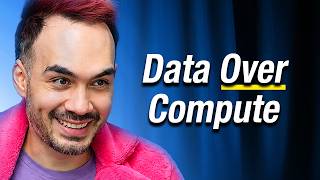
Jev Creator on Will US Open Models Catch Chinese - The Cost of Intelligence and Tokens - Diogo Almeida (Interview Video)
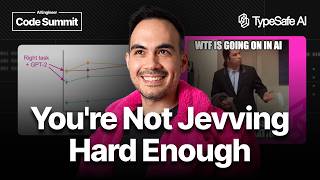
Where is all the automation? - Diogo Almeida, TypeSafe AI
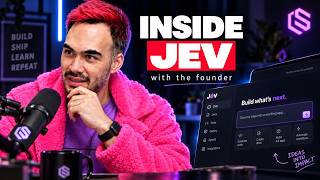
Why I could not build Jev at OpenAI - Diogo Almeida, TypeSafe Co-founder and CEO
Cite This Interview
Use this interview in your research, article, or academic work
Related Interviews
Arthur Mensch
Co-Founder & CEO at Mistral AI
Sovereign AI frontier models and enterprise compute economics
In this interview, Arthur Mensch, Co-Founder and Chief Executive Officer of Mistral AI, analyzes the geopolitical and economic dynamics driving the global artificial intelligence race.…
Jon Noronha
Co-Founder & Chief Product Officer at Gamma
In this interview, Jon Noronha, Co-Founder and Chief Product Officer of Gamma, breaks down the architectural mechanics of agent harnesses and how his team scaled…

Erik Bernhardsson
Founder & CEO at Modal
In this interview, Erik Bernhardsson, Founder and CEO of Modal, explores the rapidly evolving economics of frontier artificial intelligence inference and cloud computing infrastructure. He…

Nick Dobos
Co-Founder & CEO at Orgo
In this interview, Nick Dobos, Co-Founder and CEO of Orgo and creator of Bops, breaks down the operational blueprint for running high-margin autonomous artificial intelligence…

Demis Hassabis
Co-Founder & CEO at Google DeepMind
In this interview, Sir Demis Hassabis, Co-Founder and CEO of Google DeepMind and Nobel laureate in Chemistry, warns that societal institutions remain underprepared for the…

Dario Amodei
Co-Founder & CEO at Anthropic
Scaling laws, Constitutional AI and superintelligence
In this interview, Dario Amodei, Co-Founder and CEO of Anthropic, outlines the scientific trajectory toward superintelligent artificial intelligence and details the mechanics of Constitutional AI.…