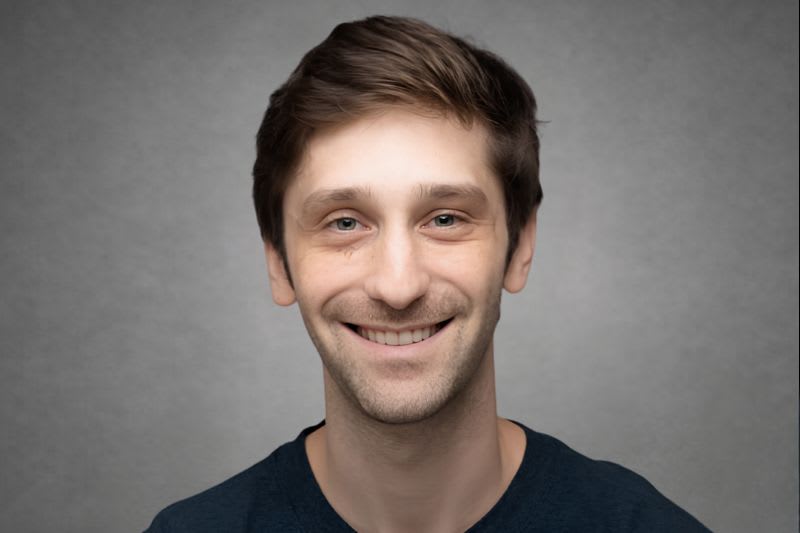
Kiran Mazumdar-Shaw, Founder & Executive Chairperson at Biocon
4.5/5 Rating
Health & Wellness
Approx. $172 Million/mo
Approx. $2.07 Billion ARR

Kiran Mazumdar-ShawFounder & Executive Chairperson

In this interview, Biocon founder and executive chairperson Kiran Mazumdar-Shaw discusses the pioneering of India's biotechnology sector, from launching an enzyme startup to building a global leader in biosimilars. Mazumdar-Shaw shares insights on disrupting the insulin market, expanding CAR-T cell therapy access, and navigating regulatory pathways. She critiques India's risk-averse investment climate, details urban governance initiatives in Bengaluru, and explains how purpose-driven leadership eliminates professional self-doubt.

Kiran Mazumdar-Shaw

Kiran Mazumdar-Shaw

Founder & Executive Chairperson

Biocon

Biocon

Founder Stats

  • Health & Wellness
  • Started 1978
  • Approx. $172 Million/mo
  • 15000+ team
  • Bengaluru, Karnataka, India

About Kiran Mazumdar-Shaw

Kiran Mazumdar-Shaw is the founder and executive chairperson of Biocon Limited, India's pioneer biotechnology enterprise. After completing her education in brewing at Ballarat College in Australia, she established Biocon in a Bengaluru garage in 1978. Under her leadership, the company grew from an industrial enzyme manufacturer into a global leader in biosimilars, recombinant insulin, and oncology therapies. She has been recognized globally for her contributions to science, health, and urban civic policy.

Interview

July 23, 2026

Q

How did your father's liberal worldviews shape your early career decisions?

Question 1 of 18
Kiran Mazumdar-Shaw

My father was a brewmaster at United Breweries who had studied in the United Kingdom. Because of his background, our family lived a cosmopolitan life in Bangalore. When I graduated from college, he encouraged me to study brewing in Australia, insisting that gender had nothing to do with science.

0
Q

What was your father's perspective on paying capitation fees to secure a college seat?

Question 2 of 18
Kiran Mazumdar-Shaw

When I failed to get into a medical college on merit, I suggested paying a ten thousand rupee capitation fee for a seat. My father refused, stating that money is not currency to buy favors but to make a difference. He believed in building credibility solely through meritocracy.

0
Q

What challenges did you face when trying to enter the brewing industry in India?

Question 3 of 18
Kiran Mazumdar-Shaw

Despite topping my class in Australia, no Indian brewery would hire me as a brewer. Even after I successfully commissioned a brewery 24/7, lifting pipes and spanners, they hired a man instead. They told me they could not risk having a woman lead a brewery in a hostile environment.

0
Q

How did you make the transition from brewing to founding a biotechnology startup?

Question 4 of 18
Kiran Mazumdar-Shaw

I was about to leave for a job in Scotland when I met Leslie Auchincloss, an Irish biotech entrepreneur. He wanted to start an enzyme company in India and tracked me down. Despite my lack of business experience and capital, he convinced me to partner with him for a year.

0
Q

How did you secure your business license during the height of the License Raj?

Question 5 of 18
Kiran Mazumdar-Shaw

In 1978, the corridors of Udyog Bhavan were filled with touts demanding bribes to speed up applications. I walked directly into the office of the secretary in charge, Mr. Biswas, and explained that I wanted to build an honest company. He was horrified, gave me a desk, and processed my license in two weeks.

0
Q

Why did you choose to focus on industrial enzymes as your first business venture?

Question 6 of 18
Kiran Mazumdar-Shaw

My Irish partner offered a buyback guarantee, which solved the initial customer acquisition problem. We extracted papain from papaya latex and developed fermentation technologies for fungal enzymes. I was excited because enzyme catalysts are green technologies that replace polluting chemical processes.

0
Q

What did the banks get wrong when you were trying to raise capital for Biocon?

Question 7 of 18
Kiran Mazumdar-Shaw

Venture capital did not exist, and banks considered a twenty-five-year-old girl with no business experience, no collateral, and a novel technology to be too high risk. They could not understand how a liquid or powder produced in a garage could be worth thousands of dollars per gram.

0
Q

How did you secure your first bank loan after facing multiple rejections?

Question 8 of 18
Kiran Mazumdar-Shaw

I met a banker from Canara Bank at a wedding reception. I explained the concept of biotechnology and shared my frustration about getting rejected by other banks. He got excited about my passion and understanding of the business and told me to visit his office to get a credit line.

0
Q

Why did you decide to pivot from enzyme manufacturing to biopharmaceuticals?

Question 9 of 18
Kiran Mazumdar-Shaw

I like to challenge myself and reinvent my business. Around 1996, I decided to apply our fermentation platforms to pharmaceuticals. We successfully produced statins, capturing a significant share of the global active pharmaceutical ingredient market, and then began targeting recombinant human insulin.

0
Q

How did Biocon disrupt the recombinant human insulin market in India?

Question 10 of 18
Kiran Mazumdar-Shaw

Recombinant human insulin was imported by Western multinationals who sold it at one thousand rupees per vial. We used a recombinant DNA technology based on Pichia yeast to produce human insulin domestically, dropping the price to one hundred rupees and forcing competitors to match us.

0
Q

How did your friend's battle with cancer influence your work in oncology biosimilars?

Question 11 of 18
Kiran Mazumdar-Shaw

My best friend had to sell her property to afford oncology therapies that cost two and a half lakh rupees per dose. This inspired me to develop affordable copies of biologic drugs, leading to Biocon becoming the first company to receive US FDA approval for a trastuzumab biosimilar.

0
Q

What is the difference between small molecule generics and large molecule biosimilars?

Question 12 of 18
Kiran Mazumdar-Shaw

Generics are copies of small, chemically synthesized molecules like aspirin, which have simple structures. Biosimilars are copies of large, complex proteins produced by living cells, like monoclonal antibodies. Because proteins fold into complex shapes, copying them requires high-level biotechnology.

0
Q

Why did you choose to bypass the Indian market for your first GLP-1 drug launch?

Question 13 of 18
Kiran Mazumdar-Shaw

We launched liraglutide in the United States, Europe, and the United Kingdom. In India, the market for semaglutide was highly saturated, with forty-two companies launching products on day one. We decided to bypass that price war and focus on markets that offer better value.

0
Q

Why did the market react skeptically to your acquisition of Viatris's biosimilar assets?

Question 14 of 18
Kiran Mazumdar-Shaw

The three billion dollar acquisition required us to take on debt, whereas we had previously been debt-free. While the market accepts high debt in massive corporations, they penalized us. We ignored the naysayers, cut the debt, and successfully built a global commercial engine.

0
Q

What is the harshest truth about India that successful people are afraid to discuss?

Question 15 of 18
Kiran Mazumdar-Shaw

The harshest truth is that Indian society does not respect women enough. While young women consistently outperform men academically, many fall out of the economic mainstream after marriage due to a lack of shared household responsibilities and persistent gender bias in investment capital.

0
Q

Why did you choose your niece Claire as your successor at Biocon?

Question 16 of 18
Kiran Mazumdar-Shaw

Claire holds a PhD from MIT and an MBA from Stanford, and she successfully built and took Bicara public in the United States. She is a highly respected immunooncology expert who understands the science, the markets, and the importance of professional networking.

0
Q

What is your critique of the risk aversion shown by Indian venture capital funds?

Question 17 of 18
Kiran Mazumdar-Shaw

Indian VCs are willing to invest in safe, copycat service companies, but they avoid backing cutting-edge innovation. Pre-revenue and clinical-stage companies cannot list on Indian exchanges to raise scale-up capital, forcing our best innovators to sell their technologies to foreign buyers.

0
Q

What is one piece of business advice that entrepreneurs should never follow?

Question 18 of 18
Kiran Mazumdar-Shaw

You should never follow the advice that everything must be perfectly planned and organized before you start. Entrepreneurship is about executing on a clear vision, navigating failures, and having the confidence to adjust when calculated risks do not go as planned.

0

Video Interviews with Kiran Mazumdar-Shaw

Billion-Dollar Founder: Why Success In India Is So Hard | Kiran Mazumdar-Shaw | FO537 Raj Shamani
Billion-Dollar Founder: Why Success In India Is So Hard | Kiran Mazumdar-Shaw | FO537 Raj Shamani
Billion-Dollar Founder: Why Success In India Is So Hard | Kiran Mazumdar-Shaw | FO537 Raj Shamani

Biocon Executive Chairperson Kiran Mazumdar Shaw Bats For Regulatory Reforms | CNBC TV18

Biocon Executive Chairperson Kiran Mazumdar Shaw Bats For Regulatory Reforms | CNBC TV18

Cite This Interview

Use this interview in your research, article, or academic work

Related Interviews

Cobi Blumenfeld-Gantz, Co-Founder & CEO at Chapter
Health & Wellness

Cobi Blumenfeld-Gantz

Co-Founder & CEO at Chapter

Approx. 8.3 Million
180+

In this interview, Chapter co-founder and CEO Cobi Blumenfeld-Gantz discusses the company's rise to a $3 billion valuation in the senior health navigation market. He…

Read Interview
Dr Emil Kendziorra, Founder & CEO at Tomorrow.bio
Health & Wellness

Dr Emil Kendziorra

Founder & CEO at Tomorrow.bio

$50K-$250K
11–50

In this interview, Emil Kendziora discusses the future of cryopreservation, longevity science, and the pursuit of life extension. He explains why he views cryostasis as…

Read Interview
Mark Bertolin, CEO at Oscar Health
Health & Wellness

Mark Bertolin

CEO at Oscar Health

$500M+
1,000+

In this interview, Oscar Health CEO Mark Bertolini explains how technology, AI, and consumer choice can reshape the health insurance industry. He discusses the future…

Read Interview
Chris Best, Co-founder & CEO at Substack
Technology

Chris Best

Co-founder & CEO at Substack

Not Publicly Disclosed
100+

In this interview, Substack co-founder and CEO Chris Best discusses the challenge of AI slop, the premium on human attention, and Substack's new transparency tooling.…

Read Interview
Aaron Hoddinott, Founder & Managing Director at Pinnacle Digest
Finance

Aaron Hoddinott

Founder & Managing Director at Pinnacle Digest

Not Publicly Disclosed
50+

In this interview, Pinnacle Digest founder Aaron Hoddinott joins Andy Schectman to discuss global macroeconomic trends, mining sector investments, and shifting monetary systems. Hoddinott explains…

Read Interview
Mike Novogratz, Founder & CEO at Galaxy Digital
Finance

Mike Novogratz

Founder & CEO at Galaxy Digital

Not Publicly Disclosed
2472+

In this interview, Galaxy Digital founder and CEO Mike Novogratz discusses the evolution of cryptocurrency markets, the transition to utility-driven blockchain systems, and Galaxy's strategic…

Read Interview