

Ali GhodsiCo-Founder & CEO
In this interview, Ali Ghodsi, co-founder and CEO of Databricks, shares the unlikely story of how a reluctant professor became one of Silicon Valley's most respected CEOs. He explains his single-bottleneck focus strategy, how he built a world-class enterprise sales team with zero experience, how Databricks outmaneuvered Snowflake over four years, and why conflict-averse CEOs are the worst kind. He also reveals his view on AGI, why AI will take a decade to diffuse into enterprise, and his plan for eventually taking Databricks public.

Founder Stats
- AI
- Started 2013
- Approx. USD 583 Million/mo
- 12000+ team
- San Francisco, California, USA
About Ali Ghodsi
Ali Ghodsi is the co-founder and CEO of Databricks, the AI and data intelligence company he has led since 2016. Born in Sweden, he earned his PhD in computer science and held a faculty position at UC Berkeley before co-founding Databricks with six others in 2013, building on the success of Apache Spark. Under his leadership, Databricks grew from USD 1.5 million in revenue to a USD 7 billion ARR run-rate and a USD 190 billion valuation as of 2026. He is widely regarded as one of the top enterprise technology CEOs in Silicon Valley, having navigated the company through the open source era, the cloud era, and now the AI era.
Interview
September 23, 2026
How did you end up becoming CEO of Databricks when you never wanted the job?
The board was interviewing other people and I was hearing about it through the grapevine. I assumed I was not going to be picked. The company had great open source success with Apache Spark but only about 1.5 million in revenue. I was actually applying for a faculty job at Berkeley at the same time. I was facing the choice between becoming CEO, which I never wanted to do, or going back to my dream of being a professor. What made me choose CEO was a pattern I noticed in my own life. Every time I faced a choice between the comfortable known path and the genuinely challenging unknown, I had picked the challenge and it had opened my horizons each time. So I took the CEO role as the hardest thing I could possibly do.
What was your early philosophy for tackling the company's problems?
Find the one major bottleneck and put an orders-of-magnitude disproportionate amount of attention on it. Not just a little more attention. A lot more. Almost to the point of going overboard. Because even with that level of focus, you probably will not fully unclog it. There is so much other stuff landing in your lap every day that you will be pulled in every direction. If you do not deliberately overallocate attention to that one thing, you will make no real progress on it. For me in 2015 and 2016, the bottleneck was simple. Open source success, check. Commercial success, zero. So everything went toward building the commercial engine.
You had no sales experience. How did you figure out what kind of salespeople to hire?
I ran a mental experiment. I looked at the companies where enterprise sales was working best and asked myself, are the best salespeople the most technical people? The ones with PhDs? And the answer was clearly no. None of the top performers were technical. So I concluded not only is technical knowledge not an advantage in sales, it is probably a disadvantage. That told me we needed to completely change our hiring profile. I was looking for people who were professionally aggressive, who had exceptional emotional intelligence in high-pressure situations, and who could read and navigate the power base inside a large enterprise organization. Those are very different skills from what I had spent my career developing.
Can you describe what professionally aggressive means in practice?
The first AE Ron hired, a guy named Dave, got us a meeting with a customer we could not get a meeting with. In that meeting the executive told us to get Dave out of the room and never bring him back. He had emailed the boss, the boss's boss, everyone in the building. After the meeting I confronted Dave and he said, Ron told me to get into the building. Nobody was responding. So I went through every door I could find. I got you the meeting. What are you complaining about? That was my education. The squeaky wheel gets the grease, and in enterprise sales, if you are not willing to be professionally aggressive, you do not get the meeting.
How did you find your head of sales Ron Grisco and what made him so rare?
Ron was what they call in the industry a PTC or BMC-style seller. Classic meat-eating enterprise sales DNA. But he also had an engineering undergraduate degree and an engineering master's from Stanford GSB. That combination meant he could talk to our engineering founders as equals. We were not oil and water. He had also built a sales organization from zero to 50 million ARR at a startup called Cyclone, then seen the journey up to hundreds of millions at Axway. He knew how to build the car, not just drive someone else's car. And he had been at the same company for 11 years. That told me he had loyalty and staying power. If it got rough, he was not going to quit. That turned out to be crucial because great enterprise salespeople are very hard to manage.
How did you outmaneuver Snowflake, a company that had double your revenue?
We studied their weaknesses carefully. Three stood out. First, their stack was fully proprietary. The data sat in their format and customers were worried about lock-in. Second, their AI and machine learning story was weak. Third, they were expensive. We went after all three simultaneously. We positioned Databricks around the open lakehouse, meaning you own your data in open formats, you can do AI on it natively, and the total cost of ownership is about a third of the alternative. We also ran a coexistence strategy rather than a rip-and-replace message. We would go into accounts and identify the specific workloads suited to machine learning, pull those out, and move them to open formats. It was a very precise playbook executed account by account. That strategy took about four years to play out. You cannot do something like that overnight.
Why was Lakehouse such a hard category to create internally and externally?
Internally, the seasoned people said do not do it. The word sounds ridiculous in an enterprise context. Strategy consultants ran surveys and told us nobody wanted it. They came back with category names like Unified Data Science Platform. Our sales reps said that made no sense either. Externally, when we launched it, people made fun of us online. Data rivers. Data rapids. Ha. But I held firm and made it a maniacal obsession across the whole company. If a press article about Databricks did not mention Lakehouse, that was a failure. If a customer win did not reference Lakehouse, that was a loss. Even if our conversion data showed that mentioning Lakehouse hurt ad performance, I made us use Lakehouse in the ads anyway. It took multiple years of that kind of religious commitment before the category took hold.
You believe conflict aversion is the worst trait a CEO can have. Why?
As a CEO, everyone is pushing you for something constantly. If you are conflict averse, you are going to say yes to things you should say no to, or worse, you will avoid the conversation entirely and leave people confused. The company then starts going in all directions at once instead of focusing all its energy on that one bottleneck you are trying to unclog. And I think conflict aversion and truth-seeking are fundamentally incompatible. If you want to see clearly what is not working in your company or your strategy, you have to face those gaps head on. You have to be aggressive about it. I tell people it is like going to the gym. It is hard for everyone. Nobody loves it. But if you want to be a CEO, you cannot say I am the kind of CEO who does not do conflict. That is like saying I am the kind of athlete who does not train.
You believe AGI is already here in a practical sense. Can you explain your argument?
I ask this question at every audience I speak to. How many of you think AI is smarter than most of the people around you most of the time? Ninety percent of hands go up. At Moscone Center with 32,000 people, almost everyone raised their hand. That is what I define as AGI. It may not be superintelligence but it is performing at or above the level of most human workers in most contexts. The disagreement about AGI being here is a definitional problem, not an empirical one. The real problem is that enterprises are not using these capabilities. They are still using AI as a chatbot or a coding assistant. The gap between what the models can do and how enterprises are actually deploying them is enormous. I believe it will take at least a decade for that gap to close.
What is Genie and why does ontology matter so much?
The models are smart but they do not have the context of your business. They do not know what decisions are being made in your meetings, what your priorities are, who the key people are, what your data means. We call capturing all of that the ontology. Genie is our product that builds and maintains that ontology for you and feeds it continuously to the AI. At Databricks internally, I can ask Genie any question about any part of the business at any point in a meeting and get a real answer. We have built up our ontology over years. When I look at our customers using the same product, the ones who have not built up the ontology yet get a fraction of the value. The intelligence is not the bottleneck. The context is.
Why are you skeptical of the flat org with 25 direct reports and player-coach managers?
A lot of what managers do is fundamentally human work. Someone is unhappy. Career goals are unclear. There is a conflict between two team members. These things require presence and attention. If you have 25 direct reports and you are also expected to vibe code 80 percent of the day, you are going to have a lot of unhappy employees who do not know what is happening, whose manager they barely see. I support the philosophical direction that AI changes how information flows through an organization. I am not convinced yet that it should mean one manager for 25 people. Those two things can be true at the same time.
When will Databricks go public and why not now?
We will go when the waters are more calm. Right now the public markets are going through wild swings about what AI means for software valuations. One week SaaS is dead, the next week it is a buy. That kind of volatility is not good for a company in the middle of a major transformation. We also do not need the capital. We are free cash flow break even. Unlike companies like Anthropic or OpenAI that need to raise constantly, we do not. The reason to go public eventually is the complexity of running private liquidity programs across 100 countries for 15,000 current and former employees. At some point it is simpler to just be a public company. But that point is probably another year or so away.
What is your own operating system as CEO? How do you structure your time?
I see it as three buckets. The first is the main bottleneck I am personally obsessed with. That is the thing only I will work on because everyone else is busy running their trains on time. I want to carve out as much time as possible for that. The second bucket is all the reactive CEO work that fills your calendar. I try to compress that as much as I can. The third bucket is being a product CEO. I spend significant time with our engineering and product teams staying deeply familiar with what we are building. If I have a day that is completely packed from eight in the morning to six at night, I tell my team that was a wasted day. I did nothing to move the needle. I just worked for my calendar.
Table Of Questions
Video Interviews with Ali Ghodsi
Databricks’ Ali Ghodsi Never Wanted to Be CEO. Now He’s Among the Best
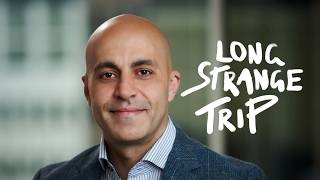
Databricks’ Ali Ghodsi Never Wanted to Be CEO. Now He’s Among the Best
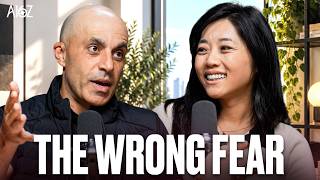
Why Would AI Companies Want to Slow Down? Ali Ghodsi (a16z Podcast)
Cite This Interview
Use this interview in your research, article, or academic work
Related Interviews
Rahul Vohra
Founder & CEO at Superhuman
In this interview, Rahul Vohra, founder and CEO of Superhuman, unpacks how to build, scale, and sell a startup with clarity and precision. He shares…

Jack Clark
Co-Founder & Head of Policy at Anthropic
In this interview, Anthropic co-founder and head of policy Jack Clark addresses escalating existential and economic concerns surrounding advanced artificial intelligence. Clark explains the critical…

Sauvik Banerjjee
Group CTO & Chairman of Rezolve India at Rezolve AI
In this interview, Rezolve AI Group CTO and Chairman of Rezolve India Sauvik Banerjjee discusses career acceleration, organizational leadership, and enterprise artificial intelligence architectures. Banerjjee…

Shishir Mehrotra
CEO at Superhuman
In this interview, Superhuman CEO Shishir Mehrotra shares actionable insights on career development and organizational management in the artificial intelligence era. Mehrotra explains how to…
Chungin Roy Lee
Co-founder & CEO at Cluely
In this interview, Cluely co-founder and CEO Chungin Roy Lee discusses the gold rushes inside AI, focusing on AI video production and capturing arbitrage from…
Pablo Palafox
Co-founder & CEO at Happy Robot
In this interview, Happy Robot co-founder and CEO Pablo Palafox explains how AI agents are moving beyond answering questions to executing complex coordination tasks across…