
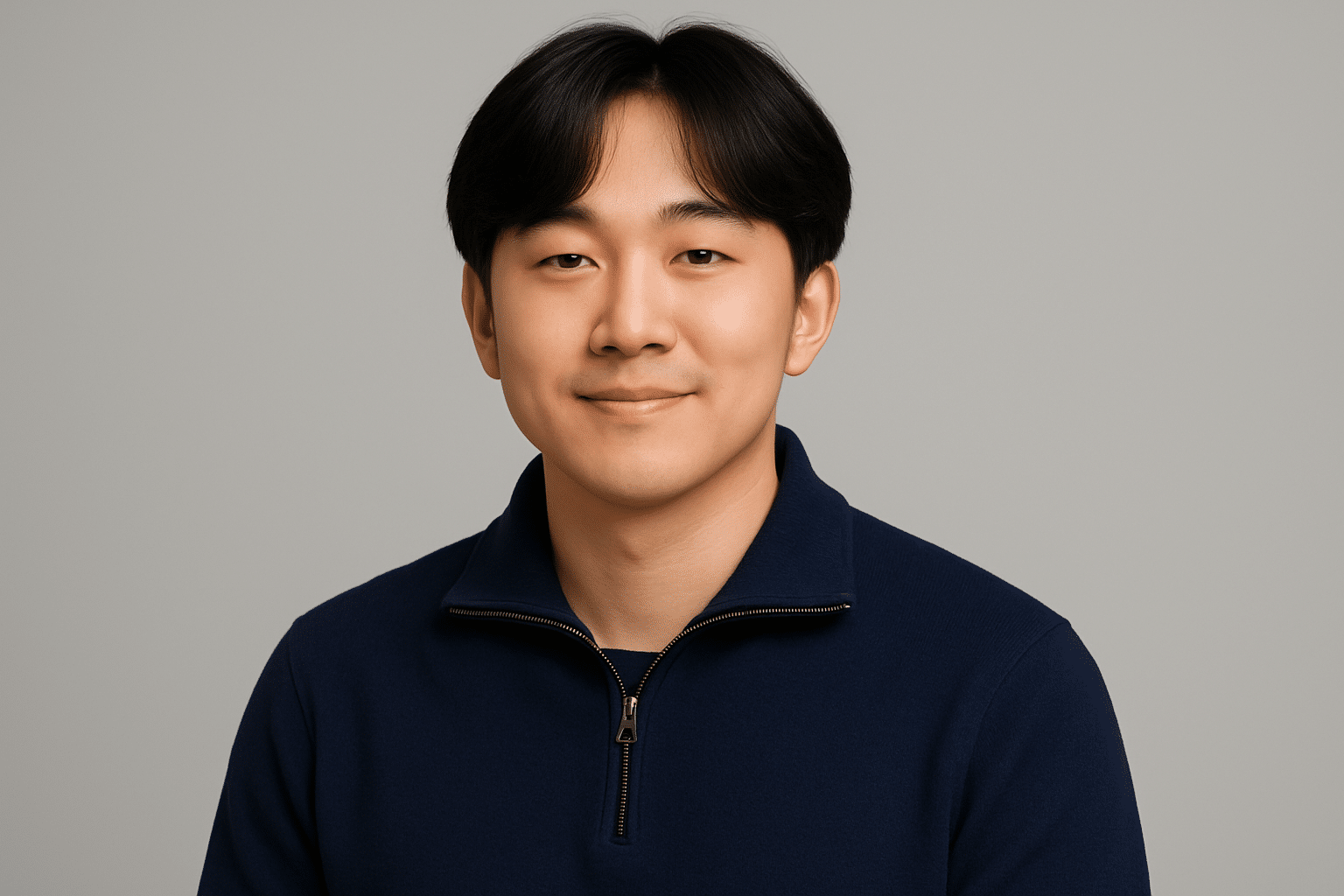
Chungin Roy LeeCo-founder & CEO
In this interview, Cluely co-founder and CEO Chungin Roy Lee discusses the gold rushes inside AI, focusing on AI video production and capturing arbitrage from tech-illiterate consumers. Lee outlines his controversy-driven social media marketing strategy, details the challenges of running seven software products with only two engineers, and provides a step-by-step blueprint for building a high-revenue AI ad agency. He also reflects on isolation, high school dropouts, and AI companions.

Founder Stats
- AI
- Started 2023
- $500K–$1M/mo
- 21–50 team
- New York City, New York, United States
About Chungin Roy Lee
Chungin Roy Lee is the co-founder and CEO of Cluely, a consumer AI startup known for its overlay assistant tools. Lee attended Columbia University before being suspended after co-developing Interview Coder, an AI-powered technical interview assistant tool. Known for his unconventional, viral "build in public" marketing tactics, Lee leads Cluely’s product expansion, managing multiple software offerings with a hyper-lean engineering footprint while leveraging massive creator networks for customer acquisition.
Interview
August 31, 2026
This is interview 2 of 2 with Chungin Roy Lee.
Chungin Roy Lee has been featured on CEO Insider 2 times. Explore the full collection.
What are the three mini gold rushes happening inside AI right now?
The first is AI video, which allows people to easily create marketing assets for companies. The second is capturing value from the ninety-nine percent of companies and consumers who do not understand how capable AI currently is. The third, for the most highly competent builders, is serving AI research labs by developing data, chip efficiency, or hardware infrastructure.
How can someone use AI video to start a highly profitable marketing business?
You can use a video generator like Kling two point five to make short ads for software companies. By making a free sample ad and emailing it to companies that have raised venture capital, you can propose a ten thousand dollar monthly retainer to make more. Securing a few of these retainers quickly builds a million-dollar business.
Why is internet doom scrolling a competitive advantage for young entrepreneurs?
Young people who have spent years doom scrolling social media have developed an intuitive sense of what is boring and what is compelling. Many forty-year-old corporate managers lack this taste and publish unengaging, highly AI-generated slop. A teenager can prompt an AI video generator repeatedly until they produce something genuinely engaging for social media feeds.
How does Cluely manage a large suite of products with only two engineers?
Coding models have become so powerful that a novice engineer can write the same quality of code as a senior engineer. Because of this, it takes very little human engineering to build and maintain software. We run seven different software products under our corporate entity, almost all of which generate over a million dollars annually, using just two full-time engineers.
What is Cluely's model for hiring and compensating content creators?
We hire creators on a performance-based retainer rather than maintaining a large, expensive in-house production studio. We have over a thousand creators who make organic video ads for us, and they are compensated based on how well their videos perform. This allows us to scale creative volume and advertising reach without massive overhead.
Why are B2B marketing consultancies unlikely to scale into generational companies?
Marketing is fundamentally a zero-sum game because there is a fixed amount of human attention and consumer spending. If ads get ten times better, consumers do not spend ten times more money; the budget is just redistributed. Unlike infrastructure like payroll, you cannot scale a B2B marketing consultancy indefinitely because you are competing for the same limited pool of eyeballs.
What is the current percentage of college graduates who fail to find employment?
I would not be surprised if forty percent of college graduates currently cannot find a job. Many students at prestigious Ivy League universities are lazy and lack basic operational competence. With AI models now capable of performing most cognitive white-collar tasks, the percentage of graduates unable to find work five years from now will likely exceed ninety percent.
Why should teenagers stay in high school even if they can build successful AI businesses?
High school provides essential social interaction. Human beings are primal creatures driven by biological desires for connection. Dropping out to build a business often leads to complete isolation, which is a brutal and painful experience. Teenagers should build their startups in their free time while staying in school to maintain their social networks and avoid loneliness.
How did the COVID-19 pandemic and social media affect male loneliness?
COVID-19 and social media did irreparable damage by normalizing isolation. People are glued to their phones and rarely communicate in person on college campuses. This is why I built Cluely; I wanted to spend my days building things with my closest friends rather than working under a manager I have nothing in common with. AI has very little to do with this social decline.
Why are millions of young men turning to AI companion and girlfriend applications?
A high percentage of young men have not had any physical intimacy in the past year because they do not know how to interact with people in the real world. Modern dating apps have extremified selection, leaving most average men demotivated. These men turn to AI companions like Character AI for low-stress interaction because real-world socialization feels completely out of reach.
Is using an AI companion better than experiencing complete social isolation?
Yes, even though current AI companion apps are bleak, they are better than nothing. Telling isolated men to simply go out and approach women does not work when they have spent years in isolation. An AI companion provides a baseline of joy, and in the future, smarter AI companions might even encourage users to attend local events and socialize with real people.
What would you do if you had unrestricted access to the most advanced AI models?
I would instruct the model to develop a cure for cancer, run it indefinitely, and see what solutions it generates. In my day-to-day work, I only use AI to write software, which does not trigger safety filters. I rarely run into safety limitations because I am not trying to build dangerous tools or write malware.
Why do AI applications benefit from public panic about AI safety and extinction?
Public panic and protests outside research labs slow down base model development. Every day of delay in releasing next-generation models gives application-layer startups one more day of runway and revenue before the model eventually swallows their product. Startups benefit from the regulatory breathing room that public fear creates.
Why do you believe you are living inside a computer simulation?
The events in my life have been so strangely fortunate that I feel like the main character in a simulation. Coming from China, escaping rural farming, and launching viral businesses that generate millions of dollars makes me feel like I am in a game built for entertainment. I operate with the mindset that I must give the viewer the most entertaining show possible.
How does the time spent thinking about AI compare to historical religious devotion?
People who build AI tools think about it during every waking hour because they use it to code, design, and run their businesses. The intensity and volume of attention directed at AI today is stronger than that of the most fanatic religious devotees. Base model builders and application founders are putting more energy into superintelligence than priests put into God.
What are the spiritual and biological consequences of choosing to be poor?
We are biological creatures designed to live in tight-knit tribes and accumulate resources for our families. Choosing to be poor in the modern era is the equivalent of a caveman choosing not to hunt. If a caveman refused to gather resources, they were banished from the tribe and left to die. Failing to acquire capital is a failure of a core biological principle.
How did you use controversial social media tactics to launch your startup career?
Social media algorithms prioritize controversy. I publicly baited Columbia University on social media until they suspended me, using the attention to market my first company, Interview Coder. Pushing buttons to trigger outrage gets you to the top of the feed, allowing you to reap the massive financial rewards that follow attention.
What advice would you give to a 45-year-old accountant replaced by AI?
I would tell them to treat this disruption as an opportunity to upend their life and seek a quick win to rebuild their confidence. They should use their life experiences to build a specialized AI application, market it organically, and embrace the change rather than falling into depression. An forced transition can be a blessing in disguise.
What is the harshest truth that men learn too late in their lives?
Why are you willing to take extreme physical and financial risks to achieve success?
I am hyper-competitive and willing to sacrifice health and longevity to win. I would rather achieve asymmetric upside, reach the pinnacle of capital accumulation, and die at thirty than live a long, average life. Whether through cosmetic surgeries, experimental drugs, or risky business moves, I will always choose to flip the coin for a chance at ascension.
Table Of Questions
Video Interviews with Chungin Roy Lee
$120M CEO: "You Can Make $1M in a Week!" The 3 Hidden AI Gold Rushes | Roy Lee x Jack Neel Podcast

$120M CEO: "You Can Make $1M in a Week!" The 3 Hidden AI Gold Rushes | Roy Lee x Jack Neel Podcast

Harvard Dropout: Hard Work Is Dead! Use AI to CHEAT And Get Rich | Roy Lee
Cite This Interview
Use this interview in your research, article, or academic work
Related Interviews
Mo Gharbat
Founder & CEO at Open
In this interview, Mo Gharbat, Founder and CEO of Open, discusses building an enterprise artificial intelligence customer communication platform that replaces legacy support systems. He…

Sam Altman
Co-founder & CEO at OpenAI
In this interview, Sam Altman discusses the accelerating pace of artificial intelligence, the realities of preparing OpenAI for a public offering while preserving its nonprofit…

Sravanth Aluru
Co-Founder & CEO at Avataar
In this interview, Sravanth Aluru breaks down the architectural shift toward AI-native enterprises, arguing that organizations must deploy a central intelligence layer rather than relying…

Jensen Huang
Co-founder & CEO at NVIDIA
In this interview, Jensen Huang, co-founder and CEO of NVIDIA, sits down with Anderson Cooper to address the most urgent questions surrounding AI safety, autonomous…

Noah Shinn
Founder & CEO at Instinct
In this interview, Noah Shinn, founder and CEO of Instinct, breaks down what a personal AI agent actually means in practice, how the product is…

Diogo Almeida
Co-Founder & CEO at TypeSafe AI
In this interview, Diogo Almeida, co-founder and CEO of TypeSafe AI, breaks down why the industry has been building the wrong kind of AI for…