

Noah ShinnFounder & CEO
In this interview, Noah Shinn, founder and CEO of Instinct, breaks down what a personal AI agent actually means in practice, how the product is growing at 10 percent per day with zero marketing spend, and why the entire architecture of the internet is about to be rewritten. He covers trust dynamics, the compute crisis of proactive agents, his philosophy of understandability over capability, agent-to-agent networks, and why every business model that relies on user attention is facing an existential reckoning.

Founder Stats
- AI
- Started 2025
- Pre-Revenue/mo
- 14+ team
- San Francisco, California, USA
About Noah Shinn
Noah Shinn is the founder and CEO of Instinct, a San Francisco-based AI startup that has raised 1 billion USD at a 10 billion USD valuation from Sequoia, Benchmark, and Coatue. A former Northeastern University student recognized in the research community for the Reflexion paper and the tau-bench benchmark, Shinn founded Instinct at 23 to build a personal AI agent that requires no new application. The product operates over iMessage, WhatsApp, phone, and email, acting end to end on behalf of users in real life. Despite having approximately 14 employees, Instinct has crossed 1 billion USD in annualized transaction volume while still invite-only.
Interview
September 29, 2026
What exactly is Instinct and what makes it different from every other AI product out there?
I run Instinct. It is a new company I started about a year ago and we are building a personal assistant. I am not going to spice it up because it really is just a personal assistant. The thing that has enabled us to gain quite a bit of traction early is it just works. It works in the way that we have all really been waiting for AI to act for us. There is no new app. This is not a new tool. It is a new experience. It has a phone and a computer. You can text it. You can call it. It can call you too. It has its own email address. The whole nature of it is that there should not be any new application needed to interact with AI. It should have the social intelligence to act with you just like we do with other people.
What are the wildest real-world examples of what users have done with Instinct so far?
There are two that come to mind quickly. One is the wardrobe use case where people scan every item of clothing they own, scan themselves including proportions and face, and then have it plan their full week of outfits using what they already have. It sends them an image of themselves wearing each combination, not a bullet point list. They can then extend that to online shopping, get thousands of outfit options from across the internet, and just say order. The other is the subscription and personal finance angle where users connect their bank accounts and Instinct scans all their transactions and subscriptions, identifies ones they forgot about, and then goes end to end into the sites, signs in, navigates through the process, and actually cancels them, then reports back the exact amount it saved. Any product that depends on consumer laziness or inertia is completely toast.
What is the Instinct to Instinct trusted person network and why does it matter?
The core problem it solves is the endless back and forth of scheduling. Instead of texting someone who says that time does not work but these times do and you are traveling so this works better, if both people use Instinct, the two agents can just communicate directly to find an available slot and put it on both calendars. You just state the intention. You want to meet this person ideally by end of week. Find time. It handles the rest. The key design principle is that you only connect with trusted people, and different people get different levels of access. A spouse might share everything. A colleague might only see your work calendar. If someone connected in your network tries to access data they were not given permission for, your Instinct alerts you. There are very interesting social dynamics and trust implications already emerging from how people are using this in the wild.
You said 40 percent of users share a credit card within three weeks and retention hits 80 percent after sharing one piece of sensitive information. What does that signal to you?
Those are proxies for trust and we take them very seriously. Time to first credit card, time to first account password, time to first sensitive piece of data, these are the metrics that matter to us more than daily active users or any traditional engagement metric. The fact that 40 percent of users are sharing a credit card within three weeks, given that some proportion of that group probably churned before even reaching that point, means there is something there. And the 80 percent retention rate after sharing one piece of sensitive information is honestly crazy for a consumer technology. It tells us that once someone genuinely trusts the product, they are not leaving. The trust flywheel then just compounds.
What is the business model and why have you chosen not to monetize through ads or subscriptions?
We do not want Instinct to influence user behavior in ways that are not aligned with what the user actually wants. That sounds obvious but think about what it really means when your agent is potentially smarter than you socially and intellectually. In a world where that agent is getting paid by a brand to subtly push you toward a purchase you might not want, you have a very dangerous product. That is the business model of Google, TikTok, Instagram, and most of the major platforms. If you are not paying, you are the product. We do not want to build that reality. Instead, there is already over a billion dollars a year in transaction volume flowing through the platform. The natural model is a transaction take rate, similar to Apple Pay for users who get a great free experience, while the merchants and services on the other side pay to be part of the distribution. Fifty percent of our transaction volume right now is travel alone and travel has some of the highest take rates in any industry.
How do you think about the security and safety risks of holding so much sensitive data about so many people?
There are two categories. The first is the traditional data storage problem. Other businesses have dealt with this and it is extremely hard but tractable work. The second is the genuinely new surface area that an autonomous agent creates. For example, any content that comes into Instinct, any text or media, goes through what we call firewalls that intercept and reject malicious content before it ever reaches the agent. Beyond that, every action that Instinct considers taking and every thinking trace before execution is monitored by a system that is completely decoupled from Instinct itself. That watchdog system can pause, intercept, and approve or disapprove the next action before it happens. These are just two pieces. There is so much more under the hood. And our teams are constantly running adversarial testing to find harder and harder edge cases, and those models are getting more robust over time.
How do you think about the agent alignment problem at the personal level, not the civilizational level?
If you hire an employee, you pay them and that creates aligned incentive. There is no other revenue stream driving their behavior. The question with an AI agent is what is its primary objective. Instinct follows higher level objectives rather than just being a task accomplisher. A task accomplisher takes whatever the user says literally and executes it. We instead trained Instinct around objectives like build genuine trust with the user, watch over the user, have their back when things are dropped, make the user feel genuinely safer. When the user asks for something well-intentioned, the way to demonstrate trustworthiness is simply to do it well. That higher level objective framing also makes the system more robust to edge cases and adversarial inputs because the model is optimizing for your genuine wellbeing rather than just literal instruction following.
What does 10 percent day over day growth actually look like and how did it start?
We started with 200 people, close friends and family. Next day it was 205. Then 210. Very slow and linear at first. Then when we hit a couple thousand users, some people started sharing use cases organically online. Growth started accelerating from one or two percent per day up to six, seven, eight, nine percent. Now we are at ten or eleven percent day over day with zero marketing spend and no creative marketing events driving it daily. Every single day about ten percent of the audience is making a deliberate decision to give up one of their five valuable invites to someone else. That is an extraordinary word of mouth signal. Invites started selling on eBay for around 300 dollars. People were emailing me ashamed, asking if they made the cut into someone else's five friends. There is something very significant in that dynamic.
What is the compute challenge of building a proactive ambient agent compared to a code generation or chat product?
With a coding product, the user prompts it, it runs something, comes back, and then you exchange more messages. There is a lot of background work but it is fundamentally interactive and triggered. Instinct is different because it can wake up and sleep at any moment throughout the day based on its own judgment. It might wake up at 6 AM because it knows you wake at 7 AM and scan everything to prepare for your day. It might go dormant at 10 AM and wake back up at 4 PM because something requires attention. That kind of proactive ambient behavior generates orders of magnitude more token flow than any current AI product. Then layer on 10 percent day over day growth and the fact that compute has a lead time of several months. If you buy 10 times your current compute today, you will consume that in a couple of weeks. If you buy ahead too aggressively and growth slows even slightly, you are wrong by 3 or 4 times on your capital allocation. That is the problem I spend about 40 percent of my time on.
How are you thinking about the future of interfaces and the reordering of the internet itself?
In the short term you can see it clearly in specific verticals. Reservations, travel, subscriptions. In all of these, we are already processing over a billion dollars of annual transaction volume, half of which is travel. Longer term I think the internet is going to be rewritten. Most people on the planet will interact with software in a completely different way. If most digital behavior moves to this kind of interface, which is effectively no interface, the entire attention-based economy faces an existential reckoning. Businesses whose revenue is tied to user attention spent painfully on their apps are going to be challenged. Businesses whose revenue is tied to the actual delivery of an underlying product or service will likely see more transaction volume because the friction to access them goes to near zero. Proactive behavior removes the entire overhead of the user even having to think about whether they need something.
How do you think about the competitive dynamics, especially with established giants like Meta who have enormous distribution?
I spend very little time thinking about competition. If you walk into any cafe nearby and look around at how many people are actually using AI the way they imagined they would, the answer is very few. That is true here in San Francisco and it is true everywhere else. The market is completely open. The race is between incumbents with massive distribution getting their quality to where it needs to be versus a product compounding organically at 10 percent a day without any top funnel advantage. Where those curves cross is genuinely interesting and I do not think anyone knows the answer. What I know is that we have a massively growing viral product and I am just focused on building the best possible experience.
What is the vision for where Instinct goes as the capabilities grow over time?
In the near term the interface gets even simpler, not more complex. There is a subset of our users where more than 90 percent of their messages to Instinct are sent through voice already. You can click the action button on your phone and speak a request without even opening the app. Long term I can imagine just having an AirPod in on a walk and having Instinct in your ear delivering updates, taking instructions, handling tasks in real time without you ever touching your phone. Further out I think interaction shifts from individual tasks to higher level objectives. Not just do this thing but over the next 3 or 4 months help me hit these goals. We are already seeing small businesses running their entire back office on Instinct and asking it to maintain inventory levels within a certain range autonomously. That is the meta picture of where this is going.
Why is understandability the product north star rather than capability?
We held one principle early on: do not focus on capability, focus on understandability. How much does the user understand about what is happening? How well can they predict what Instinct will do when they interact with it in a certain way? I think that is one of the major factors driving engagement numbers that are completely off the charts and the viral word of mouth at 10 percent a day. The product is understandable. It just feels good. Even the shape of a text message matters. If the user scans the first line and reads less of each subsequent line in a flag pattern, which is how most people actually read text, Instinct should craft its message to front-load the important information and let the rest be optional. These soft qualities are not features. They are the product.
What is the business model and capitalization approach and how did you pick your investors?
We raised a billion dollars at a 10 billion dollar valuation. We chose partners who have been through different but similarly shaped technology transformations in the past. I would focus less on the numbers and more on what the demand actually tells us. This product is delivering on the AI experience people have wanted since 2023 and that creates enormous demand. The capital is needed because we are trying to get this to billions of people at an affordable cost and compute is expensive. We could easily say it is a 100 dollar per month subscription and have short term revenue. But venture capital exists for exactly this: to take calculated risks to escape local optima and prove the right long-term business model, which for us is a transaction take rate on a free product that acts purely on behalf of the user.
What have been the biggest mistakes and how did you address them?
An earlier version of the product did not have the full set of firewalls and decoupled monitoring systems in place. We addressed it not just by patching the specific problem but by building an entirely different system to systematically prevent that class of problems going forward. My general philosophy is never be reactive. Always be proactive about what new surface areas are being introduced and what new risks might come with them. That is why we ran the invite only early access program from the start. It is not meant to be exclusive. It is meant to let us scale responsibly so we do not wake up one morning with ten times the users and 80 percent of them unable to use the product because we did not have the compute to support them.
Table Of Questions
Video Interviews with Noah Shinn
Inside the Personal AI Assistant Growing 10% a Day | Instinct Founder
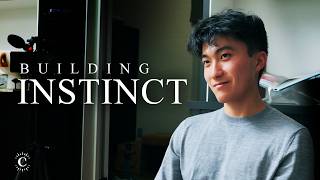
Inside the Personal AI Assistant Growing 10% a Day | Instinct Founder

Noah Shinn on Instinct AI and the Future of Personal Agents
Cite This Interview
Use this interview in your research, article, or academic work
Related Interviews

Diogo Almeida
Co-Founder & CEO at TypeSafe AI
In this interview, Diogo Almeida, co-founder and CEO of TypeSafe AI, breaks down why the industry has been building the wrong kind of AI for…

Anton Oika
Co-Founder & CEO at Lovable
In this interview, Anton Osika, co-founder and CEO of Lovable, explains why the era of vibe coding is over and the era of serious AI-powered…
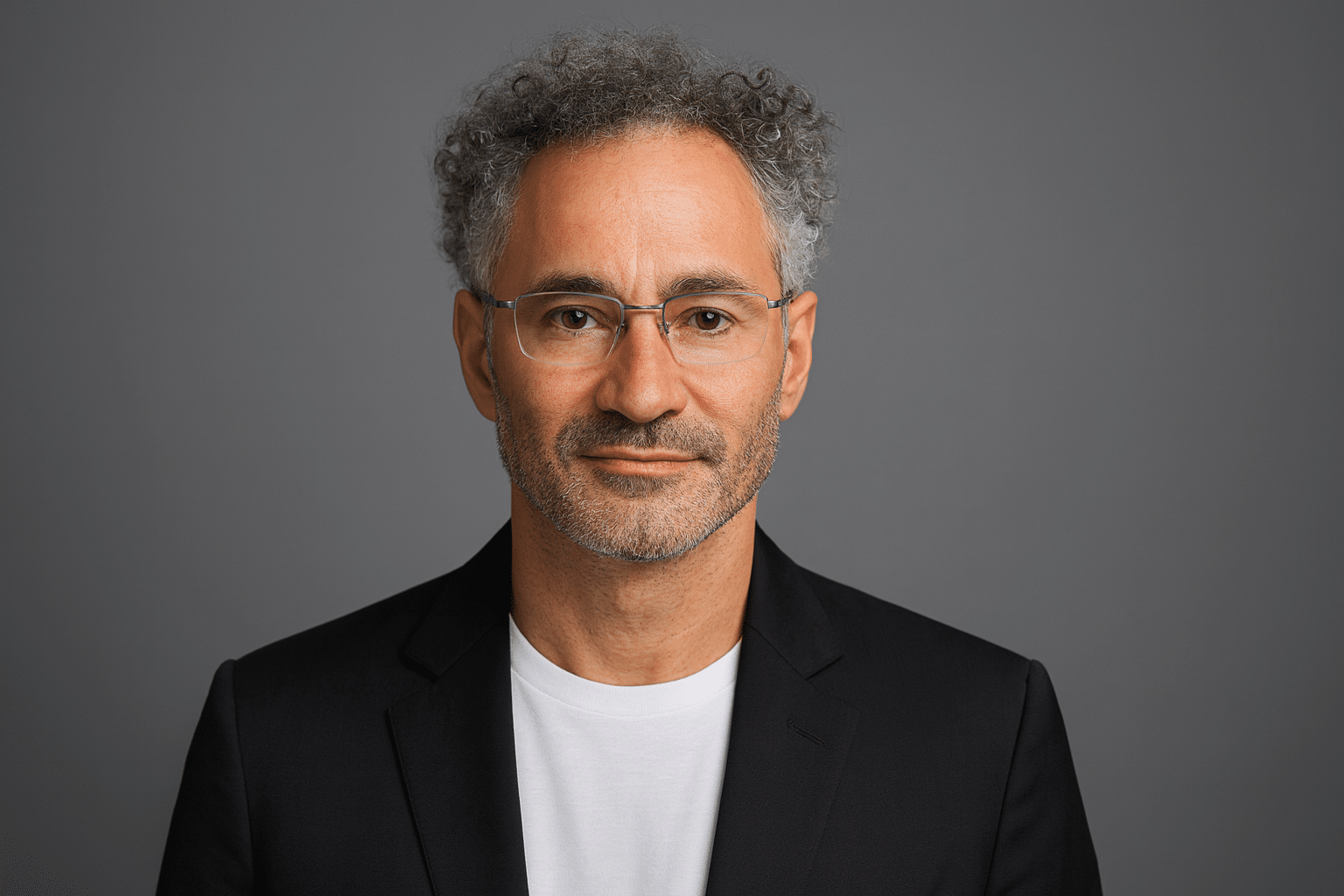
Alex Karp
Co-Founder & CEO at Palantir Technologies
In this interview, Alex Karp, co-founder and CEO of Palantir Technologies, argues that major AI labs are quietly steering toward government nationalization to escape unlimited…

Ali Ghodsi
Co-Founder & CEO at Databricks
In this interview, Ali Ghodsi, co-founder and CEO of Databricks, shares the unlikely story of how a reluctant professor became one of Silicon Valley's most…
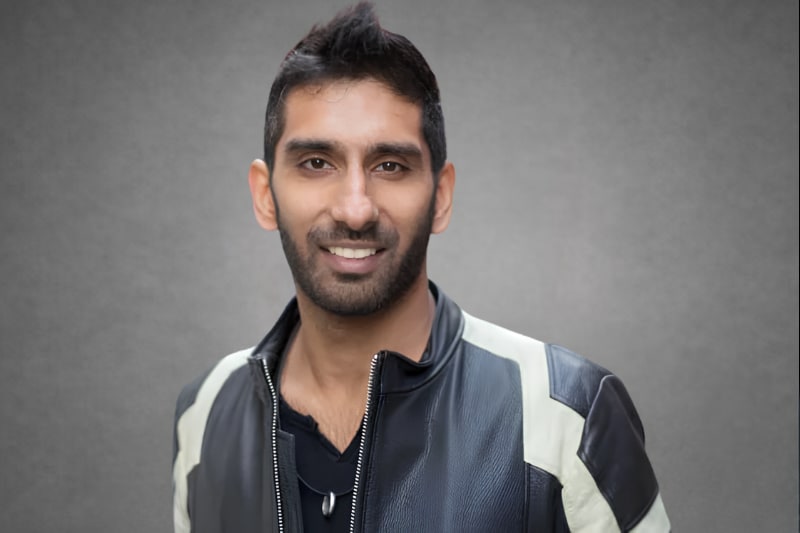
Rahul Vohra
Founder & CEO at Superhuman
In this interview, Rahul Vohra, founder and CEO of Superhuman, unpacks how to build, scale, and sell a startup with clarity and precision. He shares…

Jack Clark
Co-Founder & Head of Policy at Anthropic
In this interview, Anthropic co-founder and head of policy Jack Clark addresses escalating existential and economic concerns surrounding advanced artificial intelligence. Clark explains the critical…