
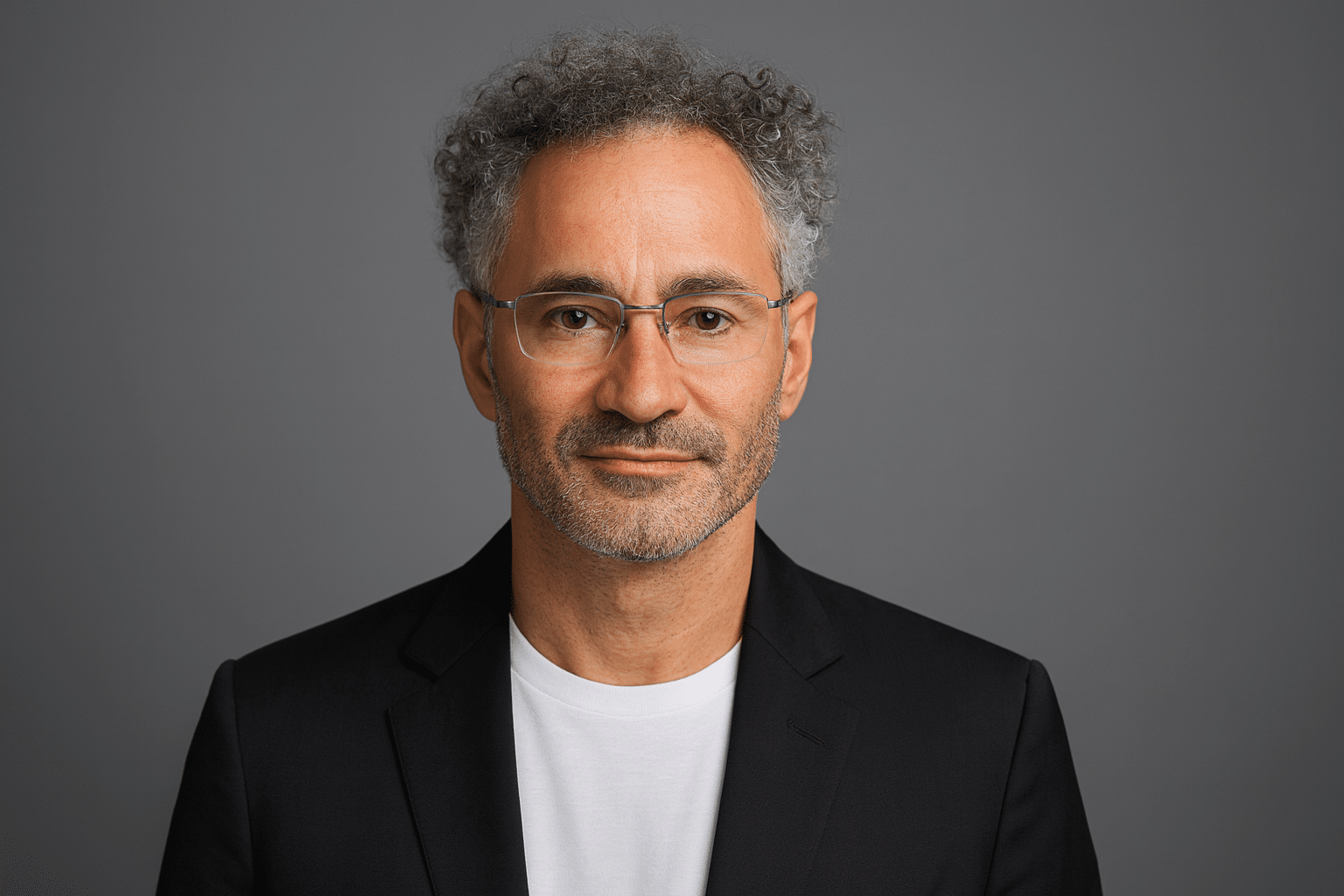
Alex KarpCo-Founder & CEO
In this interview, Alex Karp, co-founder and CEO of Palantir Technologies, argues that major AI labs are quietly steering toward government nationalization to escape unlimited civil and criminal liability. He breaks down the sovereign AI movement Palantir co-launched with Nvidia, explains why enterprise clients are furious about IP migration through closed token-based models, discusses battlefield AI ethics and the US-China technology race, and warns that an extreme wealth divide driven by AI could trigger dangerous political instability on both the far right and far left.

Founder Stats
- AI
- Started 2003
- Approx. USD 680 Million/mo
- 6000+ team
- Denver, Colorado, USA
About Alex Karp
Alex Karp is the co-founder and CEO of Palantir Technologies, the AI and data analytics company he has led since co-founding it with Peter Thiel and others in 2003. Karp holds a JD from Stanford Law School and a PhD in neoclassical social theory from Goethe University in Frankfurt. Under his leadership, Palantir became the dominant provider of data intelligence platforms for the US military, intelligence community, and major enterprises worldwide. In 2026, the company surpassed USD 8 billion in annual revenue and is among the fastest-growing enterprise software businesses in the world. Karp is an outspoken public intellectual known for his unconventional rhetoric, philosophical framing of business, and practice of Tai Chi.
Interview
September 24, 2026
This is interview 2 of 2 with Alex Karp.
Alex Karp has been featured on CEO Insider 2 times. Explore the full collection.
What is the sovereign AI movement and why did Palantir help launch it?
When you use a closed model and pay for tokens, the tokens are discounted not to grow the market. They are discounted so the model company can get access to your intellectual property and make their models better. There was functionally no honest conversation about this and no disclosure. This means enterprises that use these services are unknowingly migrating their competitive alpha, their proprietary methods of running a business, directly into a model that their competitors can then access. The sovereign AI movement, which we launched together with Jensen Huang and Nvidia, is the response to that. It gives enterprises and governments control over their own data, their own model weights, and their own future.
How angry are your enterprise clients about this IP situation?
I cannot repeat what they are saying. The most polite version I can offer is still quite vulgar. They are livid. They feel that their secrets have been stolen. They paid for a service and what they were actually paying for was to hand over the operational logic of their business to a competitor they did not know existed. This includes hospitals, real estate companies, chemical manufacturers, every category. And they are even more livid because every single one of them operates under strict liability rules. If something goes wrong with their product, they lose their business, their house, their future. These AI companies want an entirely different rulebook, and the clients are not accepting that.
You claim frontier AI companies are effectively seeking nationalization. Can you explain that argument?
Most people are reporting this as a debate between safety and non-safety, or regulation versus no regulation. That is not what is actually happening. The philosophical frame that I believe drives the effective altruism movement inside these companies is that they are uniquely deserving of all the world's intellectual property. That is why they cannot work with the military, and that is why they believe they can absorb the IP of businesses into their models. But that philosophical frame requires unlimited liability protection. And there is only one institution that can provide unlimited liability protection. That is the US government, or a consortium of Western governments. What they are actually arguing for, though they cannot say it plainly because it would collapse their investor base overnight, is nationalization. When the investors realize they are the mark and not the beneficiary, the business collapses. Then the government steps in.
What is the first line of defense against dangerous AI that is being ignored?
It is liability. You build a product. If that product harms someone, you are civilly and potentially criminally liable for it. That is the rule every single business in America operates under. These AI companies are asking for broad societal regulation as a way to exit that first line of defense. What they should be doing is disclosing exactly what risks they believe exist and demonstrating what they are doing to bound those risks. If they cannot do that, people need to get involved. The nuclear analogy is instructive. When we built the bomb, the people who did it were not on payroll. They believed in something. Today, everyone who understands these systems is on some payroll. Who exactly do you trust to regulate it?
What is the application layer and why does it matter for safety and sovereignty?
To make AI models work precisely over complex use cases, whether that is building manufacturing systems, food safety at scale, military operations, or supply chain logistics, you need an application layer sitting between the raw model and the real world. Without it, you get imprecision at best and catastrophic failure at worst. The application layer is also what allows you to use open-weight models that you control entirely, rather than closed models that may be migrating your IP. Palantir has been building that application layer for over 20 years. The ontology we maintain, the way we fuse data sets, the precision of outputs at the moment of a consequential decision, that is what makes this work in practice.
How does Palantir approach AI on the battlefield and what are the ethics of it?
You have to understand that in defense, there are different ethical standards for offense and defense. For offensive action, you absolutely need a human in the loop. That is non-negotiable. For defense, the response time can be so compressed that a human loop is not physically possible. Then the situation becomes even more complicated when you consider prediction. If we can determine with high confidence that an attack is coming in 35 seconds or in three hours, is that offense or defense? The answer is genuinely unclear, and it matters enormously because it determines what level of human authorization is required. These are not theoretical questions. We work through them every day with our partners.
How does AI actually perform on the battlefield based on your direct experience?
When I arrived in Ukraine on day five of the conflict, there was not a single person there who did not believe they were going to lose. You always have to measure performance against expectations. I can tell you with as much certainty as I am able to that if you obtained a classified assessment from Russia or China today, one of their primary concerns would be the systemic outperformance of Ukraine, Israel, and America on the battlefield in contexts where Palantir-style technologies have been deployed. The concatenation of classified data sets and precision ontology, structured so that no single component can see another, produces outcomes that were not achievable before. That is the reality of this technology in conflict zones.
You call yourself a liberal progressive. How does that square with building military AI?
Actual progressives want poor people and working-class people to have better lives. That is what I want. And I genuinely agree with Bernie Sanders and Elizabeth Warren on many things. Poor people in this country do not get a fair shake. That is true. Where I disagree is with the conclusion that slowing down American AI development is the solution. If we overregulate this technology, the people who fill the gap are not going to run it according to progressive values. The choice is not between American AI and no AI. It is between America leading and China leading. And I have studied Chinese culture for decades. I am a serious Tai Chi practitioner. I have enormous respect for that culture. But those are two different sets of values in competition.
What is the political risk of extreme wealth concentration from AI?
You cannot have a revolution where I become 50 times wealthier and everyone else becomes 10 percent wealthier. That is a mathematically guaranteed path to political insanity. It manifests on the far left as people who say screw this, I am going to blow up the whole system. On the far right it looks different but the anger is the same. And by the way, the far right and far left are not wrong about the underlying reality. They are correctly reading the political landscape. What I disagree with is their proposed solution, which does nothing for poor people and everything to help our adversaries. What we need instead is serious wealth redistribution at the top that does not kill entrepreneurship. A wealth tax is actually not the answer even though it would benefit me financially. You have to find ways to tax at the high end that are tied to reduction of waste, fraud, and abuse. That is a much harder problem.
What is your view on the future of frontier AI model companies like Anthropic and OpenAI?
I have enormous respect for Dario Amodei. I have never seen anyone come from fifth place to first in this industry. He is genuinely brilliant and I believe he is genuinely ethical. The enterprise future, however, is going to be companies using multiple models, some open, some closed. Where businesses have actual secrets and real competitive alpha, they are all going to move to open weight models they control. Where it is a lower-stakes application like marketing in a regional market, they may continue using a closed model. The Palantir model, the sovereign model, wins where precision and data control matter most. That is where the enterprise is actually going, regardless of what any particular CEO wants to happen.
You said Palantir is systemically undervalued. What is the basis for that?
The market still has not fully understood what a sovereign AI stack actually means for enterprise value creation. Investors fell in love with the narrative that the closed AI labs were going to capture all the value, that all the alpha of every business would migrate to a small number of model owners. What they have not fully priced in is the backlash, the liability, the IP anger among clients, and the scale of demand for the alternative. When I cannot deploy into some of our most critical allied-country engagements simply because we do not have enough Palantirians to staff them, that is a capacity constraint on a demand signal that is not priced into the stock. US commercial grew 149 percent. That is the shape of what is coming.
How do you think about scaling Palantir given the constraints on talent?
Every Palantir deployment requires what I call full Palantirians. These are people who can operate across our software, understand the ontology, work inside complex enterprise and defense environments, and maintain the precision standards we hold ourselves to. Training someone to that level is a multi-year process. Meanwhile, the market for sovereign AI is expanding faster than we can staff into it. I literally have people working around the clock in allied countries because I cannot move someone out of a US deployment to fill the gap. It is one of our most serious constraints. The irony is that our biggest problem right now is that we have more demand than we can handle, not the reverse.
Table Of Questions
Video Interviews with Alex Karp
Alex Karp: AI Models Are Stealing Your Data & The AI Safety Truth | CNBC Full Interview
Alex Karp: AI Models Are Stealing Your Data & The AI Safety Truth | CNBC Full Interview

Alex Karp: Frontier AI Labs Will Seek Nationalization to Escape Liability (CNBC Squawk on the Street)
Cite This Interview
Use this interview in your research, article, or academic work
Related Interviews

Ali Ghodsi
Co-Founder & CEO at Databricks
In this interview, Ali Ghodsi, co-founder and CEO of Databricks, shares the unlikely story of how a reluctant professor became one of Silicon Valley's most…
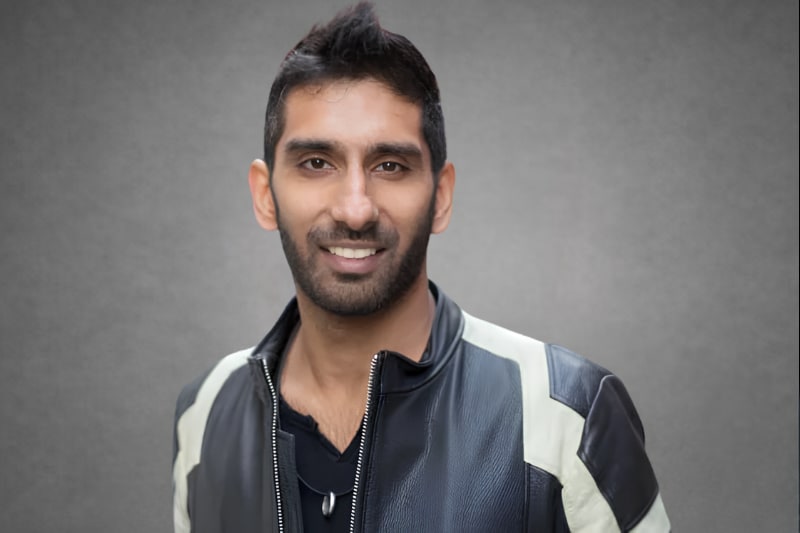
Rahul Vohra
Founder & CEO at Superhuman
In this interview, Rahul Vohra, founder and CEO of Superhuman, unpacks how to build, scale, and sell a startup with clarity and precision. He shares…

Jack Clark
Co-Founder & Head of Policy at Anthropic
In this interview, Anthropic co-founder and head of policy Jack Clark addresses escalating existential and economic concerns surrounding advanced artificial intelligence. Clark explains the critical…

Sauvik Banerjjee
Group CTO & Chairman of Rezolve India at Rezolve AI
In this interview, Rezolve AI Group CTO and Chairman of Rezolve India Sauvik Banerjjee discusses career acceleration, organizational leadership, and enterprise artificial intelligence architectures. Banerjjee…

Shishir Mehrotra
CEO at Superhuman
In this interview, Superhuman CEO Shishir Mehrotra shares actionable insights on career development and organizational management in the artificial intelligence era. Mehrotra explains how to…
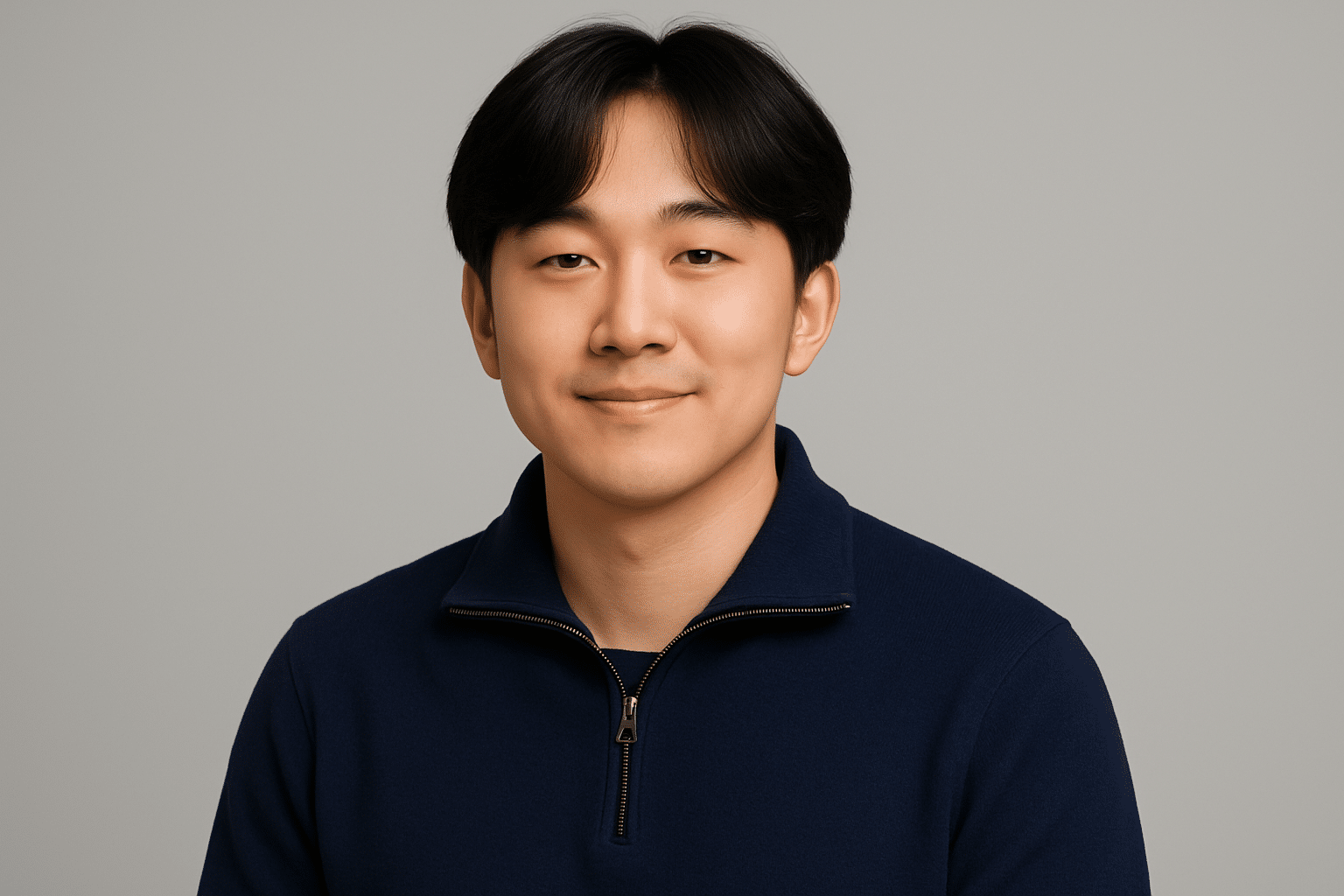
Chungin Roy Lee
Co-founder & CEO at Cluely
In this interview, Cluely co-founder and CEO Chungin Roy Lee discusses the gold rushes inside AI, focusing on AI video production and capturing arbitrage from…