
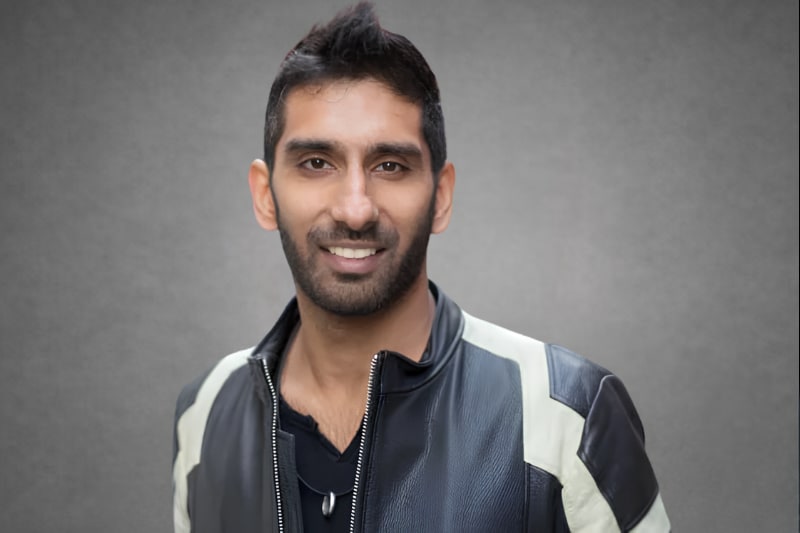
Rahul VohraFounder & CEO
In this interview, Rahul Vohra, founder and CEO of Superhuman, unpacks how to build, scale, and sell a startup with clarity and precision. He shares his three-axis acquisition framework, the origins of the product-market fit engine, how AI is now driving 20 percent of new Superhuman users through Claude, and why charging customers from day one is non-negotiable. He also reflects on six failed businesses, founder-market fit, and what separates world-class founders from everyone else.

Founder Stats
- AI
- Started 2009
- Approx. USD 30 Million/mo
- 1200+ team
- San Francisco, California, United States
About Rahul Vohra
Rahul Vohra is the founder and CEO of Superhuman, the AI-powered productivity suite formed after Grammarly's acquisition of Superhuman in July 2025. Before founding Superhuman in 2015, he built and sold Rapportive to LinkedIn, creating the first Gmail extension to scale to millions of users. A seasoned angel investor with co-founder Todd Goldberg, Vohra has backed more than 130 startups at the pre-seed and seed stages. He is widely recognized for the Superhuman Product-Market Fit Engine, a quantitative framework adopted by founders and investors worldwide.
Interview
September 21, 2026
If someone is starting a company tomorrow, what should their primary goal be?
Almost certainly to build a great product. I am not sure why someone would start a business if they did not intend to build something wonderful. That said, if you have raised institutional capital, especially from large investors, then you must aim for an IPO. There is otherwise no way to return that money.
You have sold two companies. How do you know when it is the right time to sell?
You should only sell when it is the right thing for the mission and the business. I have a three-axis framework for thinking through this. The three axes are motivation, urgency, and scale. Motivation asks whether the drive to sell is coming from you or from the acquirer. The more it is the bigger company wanting to buy you rather than you needing to sell, the more leverage you have and the better price you will get. Urgency asks where the why-now is coming from. Never try to sell when you are running out of money. And scale describes the size of what you have built, from acqui-hires all the way through to a full business generating hundreds of millions in revenue.
What do most founders not talk about when it comes to acquisitions?
How hard and unpredictable they truly are. The people you think are most likely to want to buy you often do not, and the most compelling offers can come from completely unexpected places. Acquisitions depend on internal decisions at large companies, executive changes, strategic road maps, and budget cycles that founders have almost no visibility into. It is often a random walk. Our acquisition process took six months, and for those six months I was effectively doing two full-time jobs simultaneously.
What does it actually take to make an acquisition successful after the deal closes?
For most founders it is far from a finish line. You are expected to integrate the business, attract talent, inject founder DNA into the new organization, and take on meaningful new responsibilities. The most important thing is to have a very explicit conversation with the acquirer about your role going forward before you sign. In our case, one of the last things I did before the term sheet was present to the Grammarly board for two hours and we had a direct conversation about how the acquisition could go wrong, including the risk of role mismatch. That conversation shaped my entire role definition at the new company.
How do you recognize when your product-market fit is slipping?
It is not a binary condition and it is not permanent. Two main forces erode it over time. The first is audience drift. As you grow, you encounter less passionate users who are further from the ideal early adopter, and your product-market fit score will naturally come down for those people. The second is structural industry change. If a wave like generative AI redefines your category and you do not respond, you can lose fit even among your existing users. We measure it with the question of how would you feel if the product went away, and we watch whether that percentage is trending up or down.
Can you walk through the product-market fit engine in practice?
We ask users four questions. The most important is how would you feel if you could no longer use the product, with options of very disappointed, somewhat disappointed, or not disappointed. If over 40 percent say very disappointed, you have product-market fit. In Superhuman Mail's early days we were at 22 percent, which is dangerously low. Within three quarters we got it to 58 percent by studying who was saying very disappointed, understanding what they loved and what was holding everyone else back, and then building toward the fans while removing the obstacles for everyone else.
How is AI changing the product and the business today?
We were the first email app to deeply integrate generative AI across all product surfaces. We now have a Superhuman Mail MCP that launched earlier this year and it has been our most successful launch in a very long time. Claude is now actively driving 20 percent or more of our new customers every single week. What is remarkable is that 80 percent of those Claude-driven users never even download the app. They are headless Superhuman Mail users, operating entirely through Claude, Codex, or ChatGPT and routing actions back into Gmail or Outlook. We call this the Superhuman Mail Agent, and it is running alongside the traditional app experience.
Why did you start Superhuman?
It started with a realization I had in an Uber on the way home from LinkedIn in 2014. During that car ride I reached inbox zero, checked my calendar, finished a product requirements document, called my mom, and made a dinner reservation. The technology was giving me back time and making me more present in every dimension of my life. That led me to think about where all of our time goes. It turns out the second biggest time spend for professionals after sleep is email. One billion professionals spend three hours a day reading and writing email, which is three billion hours every single day. And yet before Superhuman, people were using one-size-fits-all solutions not designed for high volume. That was the problem we set out to solve.
You had six failed businesses before Superhuman. What does that tell aspiring founders?
Is there such a thing as collecting too much customer feedback?
You can drown in it, but you cannot really talk to your customers too much. In the early years of Superhuman I sent every person who joined the wait list a personal email with two questions: what are you using today and what do you hate about it? Then I would just try to keep the email conversation going as long as possible. After five or six exchanges you develop a real emotional connection with someone around a problem they care deeply about. It is a remarkably scalable way to interview users.
When should founders start charging customers?
How do you think about pricing strategy?
Start with positioning before you ever think about price. Write the mad libs statement for who your product is for, how it is differentiated, and what the core value is. That tells you whether you are the Ford or the Ferrari of your category. Then use the Van Westendorp pricing sensitivity meter, which asks four questions at different price thresholds. We initially landed on 29 dollars per month, then rounded up to 30 on the advice of a pricing consultant because nines signal cheapness. We kept that price for almost a decade without changing it.
What separates exceptional founders from everyone else?
Three things. First, you have to be equally good at making something people want and making people realize they want it. The best founders can move seamlessly between building the product and creating the market. Second, grit, which breaks down into passion and perseverance. Passion keeps you from chasing shiny new things. Perseverance keeps you finishing what you start. Third, the founding team needs to be able to articulate unprompted a clear path to a business worth 10 billion or more. If I have to pull that vision out of you, that is a warning sign.
What is founder-market fit and why does it matter more than people realize?
Founder-market fit is the intersection of market, product, and founder where you are uniquely suited to win. It is the thing where if you describe your company, the community around you stands up and cheers, funding appears almost naturally, and talent seeks you out because the mission is obvious. After selling Rapportive to LinkedIn I had become an expert in email. I could raise money easily because of that track record and I had built a following of devoted users. That created a situation where Superhuman was clearly the right thing for me to do. I explored other ideas, but this one kept calling me back. That feeling of an idea calling you back is what founder-market fit feels like.
Table Of Questions
Video Interviews with Rahul Vohra
Superhuman Founder Rahul Vohra: How to Build, Scale & Sell a Startup

Superhuman Founder Rahul Vohra: How to Build, Scale & Sell a Startup
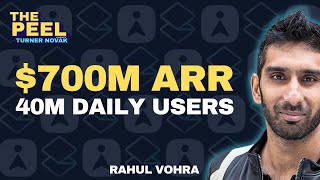
Inside the New Superhuman | Rahul Vohra (The Peel with Turner Novak)
Cite This Interview
Use this interview in your research, article, or academic work
Related Interviews

Jack Clark
Co-Founder & Head of Policy at Anthropic
In this interview, Anthropic co-founder and head of policy Jack Clark addresses escalating existential and economic concerns surrounding advanced artificial intelligence. Clark explains the critical…

Sauvik Banerjjee
Group CTO & Chairman of Rezolve India at Rezolve AI
In this interview, Rezolve AI Group CTO and Chairman of Rezolve India Sauvik Banerjjee discusses career acceleration, organizational leadership, and enterprise artificial intelligence architectures. Banerjjee…

Shishir Mehrotra
CEO at Superhuman
In this interview, Superhuman CEO Shishir Mehrotra shares actionable insights on career development and organizational management in the artificial intelligence era. Mehrotra explains how to…
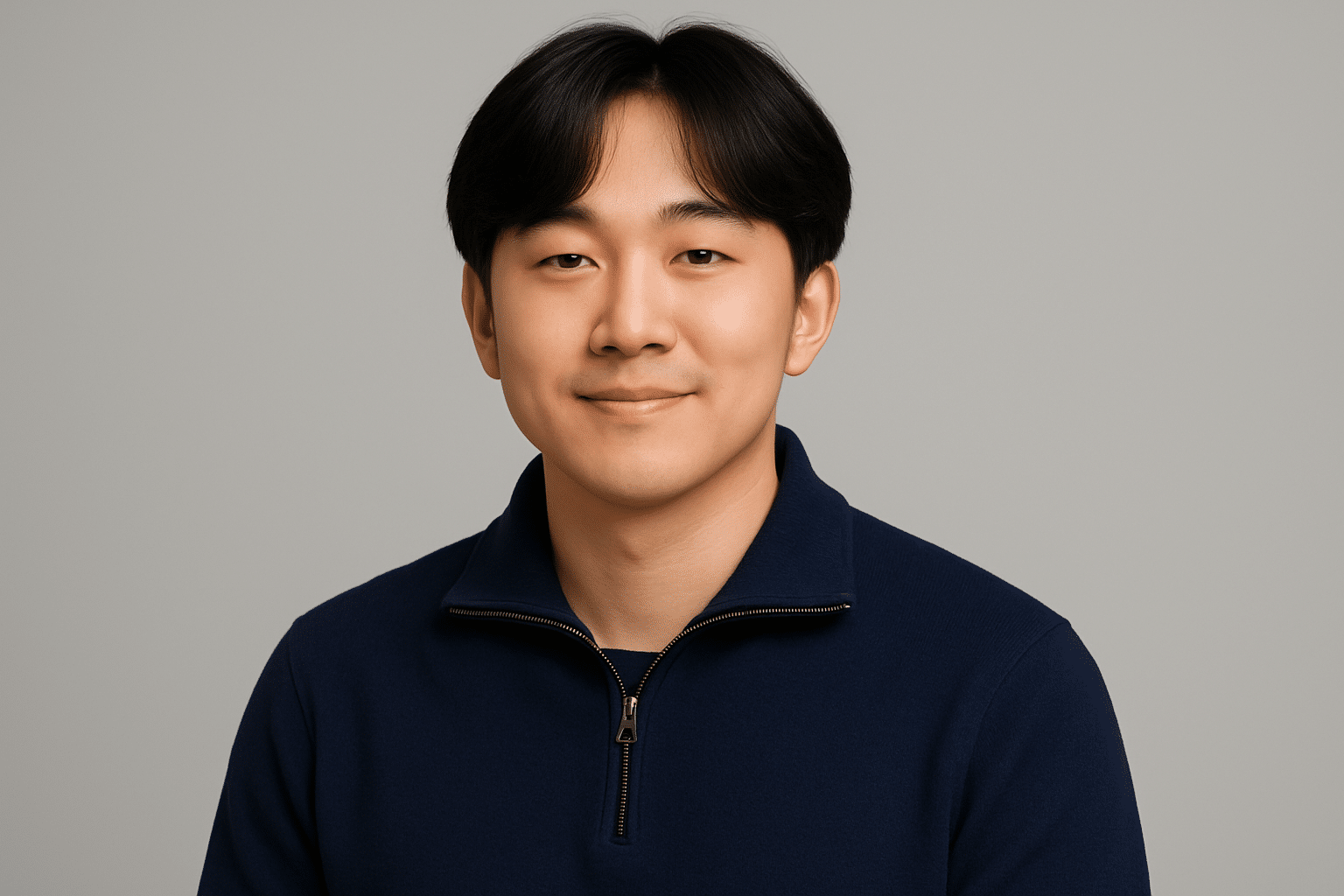
Chungin Roy Lee
Co-founder & CEO at Cluely
In this interview, Cluely co-founder and CEO Chungin Roy Lee discusses the gold rushes inside AI, focusing on AI video production and capturing arbitrage from…
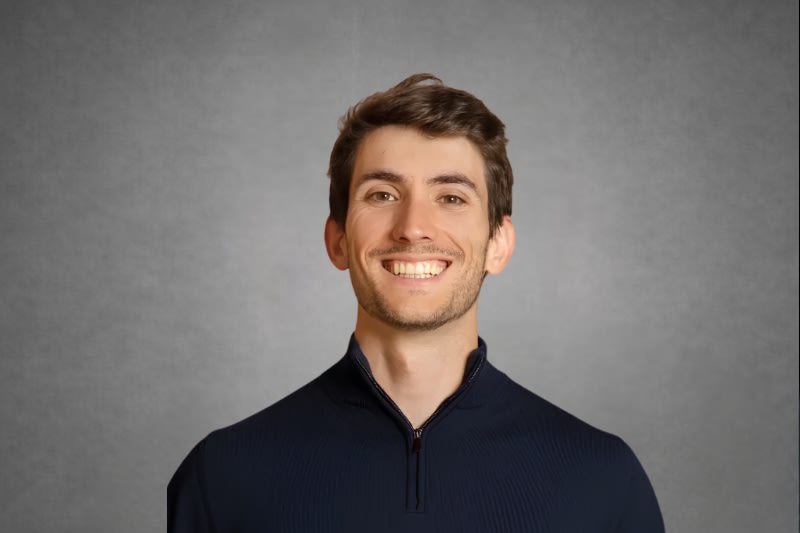
Pablo Palafox
Co-founder & CEO at Happy Robot
In this interview, Happy Robot co-founder and CEO Pablo Palafox explains how AI agents are moving beyond answering questions to executing complex coordination tasks across…

Dr. Fei-Fei Li
Co-founder & CEO at World Labs
In this interview, World Labs co-founder and CEO Fei-Fei Li discusses spatial intelligence, world models, and the future of computer vision. Li explains the distinction…