
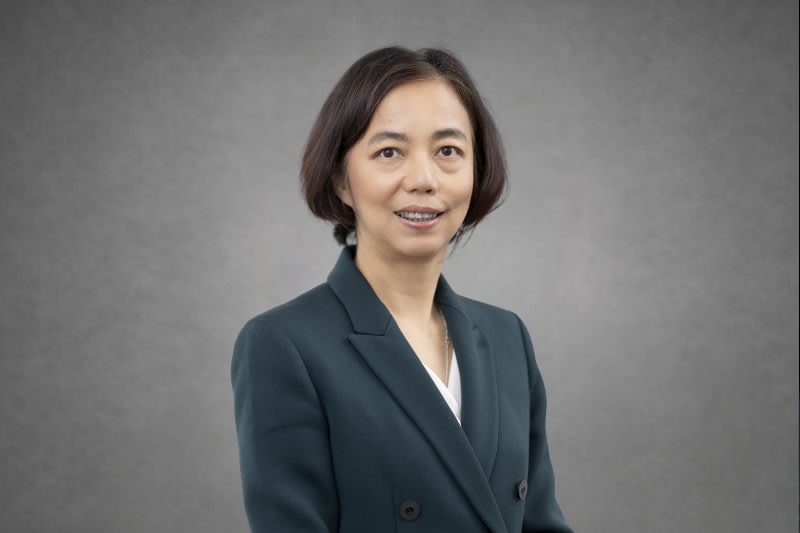
Dr. Fei-Fei LiCo-founder & CEO
In this interview, World Labs co-founder and CEO Fei-Fei Li discusses spatial intelligence, world models, and the future of computer vision. Li explains the distinction between language models and world models, introduces World Labs' first platform Marble, and addresses regulatory policies for artificial intelligence. She also shares personal stories about her childhood, her path to Caltech, and the creation of ImageNet.

Founder Stats
- AI
- Started 2024
- Not Publicly Disclosed/mo
- 50+ team
- San Francisco, California, United States
About Dr. Fei-Fei Li
Fei-Fei Li is the co-founder and CEO of World Labs and a professor of computer science at Stanford University. Widely recognized as the godmother of AI, she co-founded Stanford's Human-Centered AI Institute and previously served as Chief Scientist of AI/ML at Google Cloud. Her pioneering work in creating ImageNet catalyzed the modern deep learning revolution, and she has advised US presidents and international organizations on AI safety and development.
Interview
August 26, 2026
How did your childhood in China shape your passion for science and nature?
Growing up in Chengdu during the eighties and nineties, my dad was a curious soul who got me interested in nature. I spent a lot of time chasing bugs, running after puppies, and sketching in the mountains. I cut my hair short, loved aerospace, and developed a strong identity around physics and science.
What was it like emigrating from China to the United States as a teenager?
Moving to New Jersey was tough because shifting language, culture, and life as a teenager is incredibly difficult. You are trying to find who you are, and suddenly you do not even understand the world. I learned English, finished high school, and helped run my family's dry cleaning business on weekends.
How would you describe the academic field of artificial intelligence when you entered it?
How does computer vision differ from the way human beings see the world?
Humans use eyes to capture sensory signals that the brain computes. For computers, the process is similar. We teach them to learn patterns, understand colors, and recognize objects. Ultimately, seeing is not just about recognition, but about preparing humans to act and navigate through spatial intelligence.
What was the initial spark that led to the creation of ImageNet in 2006?
How did Geoffrey Hinton's team use ImageNet to spark the modern AI revolution?
How do you feel about the title godmother of AI?
Why did you decide to co-found World Labs in 2024?
I saw an opportunity to advance AI beyond chatbots. While the rest of the industry focused on language, I wanted to build systems that understand the physical, spatial world. I run the shop with high standards, and because our engineers and scientists are young and talented, I feel like a tiger mom.
What exactly is a world model and spatial intelligence?
We define spatial intelligence through three functions: rendering, simulation, and planning. Rendering outputs pixels for human consumption, simulation captures the geometric and physical structures of the world for machines, and planning tells a robot how to navigate and interact with physical objects in a de risk environment.
What are the limitations of large language models compared to world models?
How does World Labs' platform Marble help virtual creators and robotics developers?
Why should prospective AI researchers choose a small startup over a big tech company?
How should regulators approach policy guidelines for artificial intelligence?
What are the main risks associated with world models and physical robotics?
What are your thoughts on some AI CEOs being accused of having God complexes?
Why do you remain an optimist about the long-term impact of AI on humanity?
Table Of Questions
Video Interviews with Dr. Fei-Fei Li
What's Beyond ChatGPT? The 'Godmother of AI' Has a Plan | The Circuit
What's Beyond ChatGPT? The 'Godmother of AI' Has a Plan | The Circuit
World Labs' Fei-Fei Li on Creating Large World Models
Cite This Interview
Use this interview in your research, article, or academic work
Related Interviews

Sravanth Aluru
Co-Founder & CEO at Avataar
In this interview, Sravanth Aluru breaks down the architectural shift toward AI-native enterprises, arguing that organizations must deploy a central intelligence layer rather than relying…

Jensen Huang
Co-founder & CEO at NVIDIA
In this interview, Jensen Huang, co-founder and CEO of NVIDIA, sits down with Anderson Cooper to address the most urgent questions surrounding AI safety, autonomous…

Noah Shinn
Founder & CEO at Instinct
In this interview, Noah Shinn, founder and CEO of Instinct, breaks down what a personal AI agent actually means in practice, how the product is…

Diogo Almeida
Co-Founder & CEO at TypeSafe AI
In this interview, Diogo Almeida, co-founder and CEO of TypeSafe AI, breaks down why the industry has been building the wrong kind of AI for…

Anton Oika
Co-Founder & CEO at Lovable
In this interview, Anton Osika, co-founder and CEO of Lovable, explains why the era of vibe coding is over and the era of serious AI-powered…
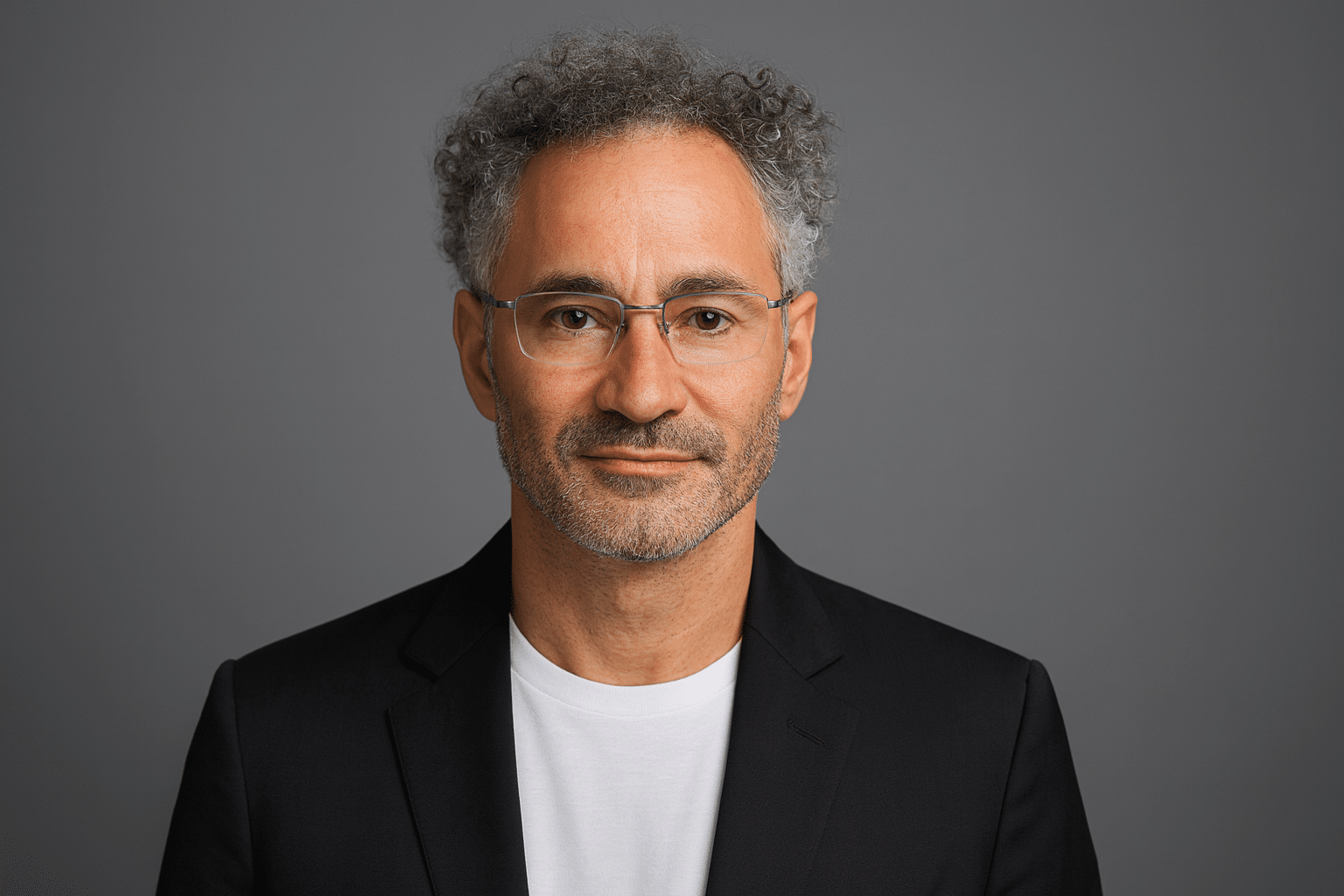
Alex Karp
Co-Founder & CEO at Palantir Technologies
In this interview, Alex Karp, co-founder and CEO of Palantir Technologies, argues that major AI labs are quietly steering toward government nationalization to escape unlimited…