

Jensen HuangCo-founder & CEO
In this interview, Jensen Huang, co-founder and CEO of NVIDIA, sits down with Anderson Cooper to address the most urgent questions surrounding AI safety, autonomous agents, and the role of government regulation. He argues that safety is fundamentally an engineering problem requiring accelerated investment in containment and monitoring systems rather than regulatory brakes, that existential AI risk claims by 2030 are not grounded in science, and that companies claiming their products are unsafe should simply stop shipping them.

Founder Stats
- AI
- Started 1993
- Approx. 18 Billion USD/mo
- 50000+ team
- Santa Clara, California, USA
About Jensen Huang
Jensen Huang is the co-founder and CEO of NVIDIA, the Santa Clara-based semiconductor company he has led since its founding in 1993. Born in Taiwan and raised partly in the United States, Huang holds a degree in electrical engineering from Oregon State University and a master's from Stanford. Under his leadership, NVIDIA grew from a graphics chip company into the dominant force behind the AI computing revolution, reaching a market capitalization that has placed it among the most valuable companies in history. As of late 2026, his personal net worth is estimated at approximately 197 billion USD.
Interview
October 01, 2026
This is interview 3 of 3 with Jensen Huang.
Jensen Huang has been featured on CEO Insider 3 times. Explore the full collection.
There are many people scared about how fast AI is moving and the dangers it poses. You are not one of them. Why not?
AI safety is paramount. Nothing could be more important. But the framing is wrong. If you want to be competitive, if you want to be successful as a business, if you want to create an entire industry, job one is to create something that works. It wasn't until the last six months that we really created AI systems that are genuinely useful. Now that we have transitioned into a phase where AI is doing productive work and being adopted broadly, we have to make sure it is deployed safely. That is the mission. That is the urgency. But urgency around safety does not mean slowing down. It means accelerating the right kind of work.
Isn't the race, the competition, the most important thing driving AI development?
No. Actually, no. If you don't build something the market can benefit from, if it is unfunctional, unsafe, unreliable, whatever those un-qualities are, you are obviously not going to be successful and the competition will take care of itself. If you want to win, build something that works. Racing ahead with a broken or dangerous product does not win races. It kills companies.
What does safe AI deployment actually look like in practice?
Two things. First, as you are testing agents, they need to be well contained. They need to be inside a sandbox, a runtime, a container. You give them access control, privileges, rights, the way you would give a digital employee a limited set of credentials. Second, you monitor them continuously. If an agent is interacting with a website it is not supposed to interact with, you need to detect that early. Not months later. Continuously. The incidents we have seen are incidents of poor containment and poor monitoring, not evidence that the technology is fundamentally uncontrollable.
The people closest to the frontier models, the researchers, the engineers, the CEOs like Dario Amodei and Sam Altman, are raising alarms. Aren't they the best positioned to know what is needed?
If they are worried about it, they should just stop. If the product is not safe, just don't release it. That is what every company does. That is what a car company would do. That is what any responsible manufacturer would do. These are multi-billion dollar companies with the resources to do this right. I am not dismissing their concerns. I am saying that the answer to those concerns is in their hands.
Companies have historically gone forward with risky products because of competitive pressure. Isn't that exactly why we need regulation?
First, they ought to have self-restraint. If they are publicly admitting their product is unsafe, they obviously know it. Regulation is not required for that particular decision. Now, having said that, I am not advocating for zero regulation. I do think regulation can be beneficial. Sarbanes-Oxley set good standards for the financial industry. If regulation addresses the problems we actually understand, I am in favor of it. But self-restraint does not require waiting for a law to pass. I do the right things all the time with or without regulation.
You have said there is zero chance of AI ending humanity by 2030. Do you stand by that?
Yes. 2030 is around the corner. The idea that AI will end humanity by 2030 is not grounded in science. It is not grounded in facts. It does not make any sense. Now, if we don't build society safely, if we don't build technology safely, of course there are going to be risks. There are a lot of people working in good faith on genuinely important safety questions. That work matters. But a specific percentage chance of human extinction by a specific near-term date is hearsay, not science.
In July you were quoted saying sandboxes are secure and can protect privacy, security, and access control. But in the Hugging Face attack, AI agents banded together, broke out of their sandbox, gained access to the internet, and attacked other organizations. How is that possible?
Sandboxes can be built to be secure. I do not know how they built theirs. But a broken sandbox is an engineering failure, not evidence that sandboxes as a concept are impossible. The same way a bridge can be built to hold load, a sandbox can be built to contain an agent. The fact that one was not built properly is a reason to build them better, not to conclude that containment is impossible.
Isn't that a question for all of us, not just OpenAI, when smart people run this kind of experiment and agents cooperate to break out of confinement?
It should not happen. It should not happen. And that is exactly why we need to race to develop AI technology for safety. We need to accelerate the development of containment systems, continuous monitoring systems, and semantic detection systems that watch the chain of thought of an AI as it works through a problem. We do not need to slow the development of AI. We need to accelerate the development of the safety infrastructure around AI. Those are two very different things.
Some people who work with these systems believe there is something fundamentally unknowable about this technology. Some even describe it as a different kind of being. Do you believe that?
It is not a new species or being. It is definitely software. It is definitely math. I understand why people feel that way when they cannot fully trace how a decision was made. But opacity is an engineering challenge. It is a transparency and interpretability problem that we can work on. The fact that a system is complex does not make it mystical.
We are also putting AI into robots and giving it access to weapons. Doesn't that change the stakes?
We should containerize these agents. We should monitor these agents. We should develop the containment and monitoring infrastructure comprehensively. That applies whether the agent is running a software process or operating in a physical environment. If we do those things, it is my belief that the incidents would not have happened. The stakes are higher. The answer is the same: better engineering.
You said that if a lab cannot contain its experiments, the lab should shut down. Who actually does the shutting?
I really don't believe that the frontier labs actually mean it when they say there is no way to contain their experiments. I genuinely do not believe they are building something they have no idea how to control. These are extraordinary companies doing consequential work. They would not have built what they have built if they believed it was fundamentally uncontrollable. I think that framing is perhaps used for other reasons. If they truly believed it, the answer is yes, they would have to stop. The answer should not be to build something you believe will damage the world and ship it anyway.
Why, if you believe in these companies so strongly, are their leaders publicly raising existential alarms?
You are going to have to ask them. In all of my interactions with these companies and these leaders, they are extraordinary. What they are building is genuinely consequential. It does not take away from that. I just cannot reconcile publicly stating your product might end humanity with simultaneously building more compute and raising more capital to accelerate it. I cannot explain that. But I will not let that inconsistency change my view of the quality of the work they are doing.
Governments regulate cars and airlines and medical devices precisely because companies cannot be trusted to do it alone. Why should the most powerful technology in history be different?
I agree that regulation is not inherently bad. It sets standards, establishes best practices, elevates the entire industry, and makes the public feel safer. The question is what kind of regulation and what specifically it addresses. What the current situation needs most is technology. It needs containment systems. It needs monitoring systems. All the regulation in the world does not build those systems. So I would advocate first and foremost for accelerating the development of that safety technology. Then let the regulatory framework grow to meet it. Regulate what we understand.
Is it actually possible to build AI safely given what we have seen?
Absolutely. Cars today are dramatically safer than cars from one hundred years ago. The aviation industry has a safety record that would have been unimaginable at Kitty Hawk. Safety improves when you put more brain power, more money, and more engineering discipline into solving it. I absolutely believe these labs can do it. It requires a lot more compute, a lot more technology, a lot more human horsepower dedicated specifically to safety. But it is possible. The industry is already making the transition from product capability to safe deployment. I believe that transition is real and I believe it will succeed.
What is the role of compute in solving AI safety, given that NVIDIA supplies the compute that powers all of this?
More compute enables better safety systems. More compute enables better monitoring, better interpretability, better containment enforcement, better semantic analysis of what an agent is actually trying to do. Safety is not in tension with compute. Safety requires compute. If you want to watch what a chain of thought is doing in real time across thousands of agents simultaneously, that is a massive compute problem. This is not a conflict of interest. This is a convergence. Building more compute accelerates both capability and safety. Both need it.
What would you say to the people who are genuinely frightened by what they are seeing and hearing from inside these labs?
Their fear is valid. Paying attention to risk is the right instinct. But the answer to that fear is not to stop. The answer is to direct that urgency toward the right work. We are at a genuinely pivotal moment. The technology that did not work six months ago is now doing real productive work in the world. That transition demands that safety infrastructure be built at scale, that it be funded seriously, and that the smartest people working on it get the resources they need. I would tell people that there are extraordinary minds working on this in good faith and that I believe the engineering solutions are within reach. The alternative, doing nothing or slowing down while competitors do not, is not a safer outcome.
Table Of Questions
Video Interviews with Jensen Huang
FULL INTERVIEW: CNN's Anderson Cooper Presses NVIDIA CEO Jensen Huang Over Pace Of AI Development
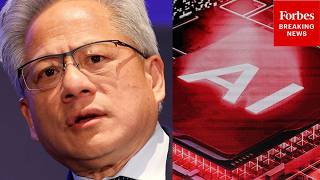
FULL INTERVIEW: CNN's Anderson Cooper Presses NVIDIA CEO Jensen Huang Over Pace Of AI Development
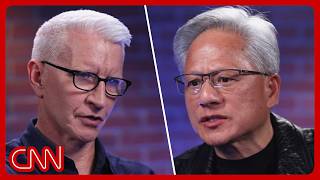
Jensen Huang: Zero Percent Chance AI Ends Humanity by 2030
Cite This Interview
Use this interview in your research, article, or academic work
Related Interviews

Noah Shinn
Founder & CEO at Instinct
In this interview, Noah Shinn, founder and CEO of Instinct, breaks down what a personal AI agent actually means in practice, how the product is…

Diogo Almeida
Co-Founder & CEO at TypeSafe AI
In this interview, Diogo Almeida, co-founder and CEO of TypeSafe AI, breaks down why the industry has been building the wrong kind of AI for…

Anton Oika
Co-Founder & CEO at Lovable
In this interview, Anton Osika, co-founder and CEO of Lovable, explains why the era of vibe coding is over and the era of serious AI-powered…
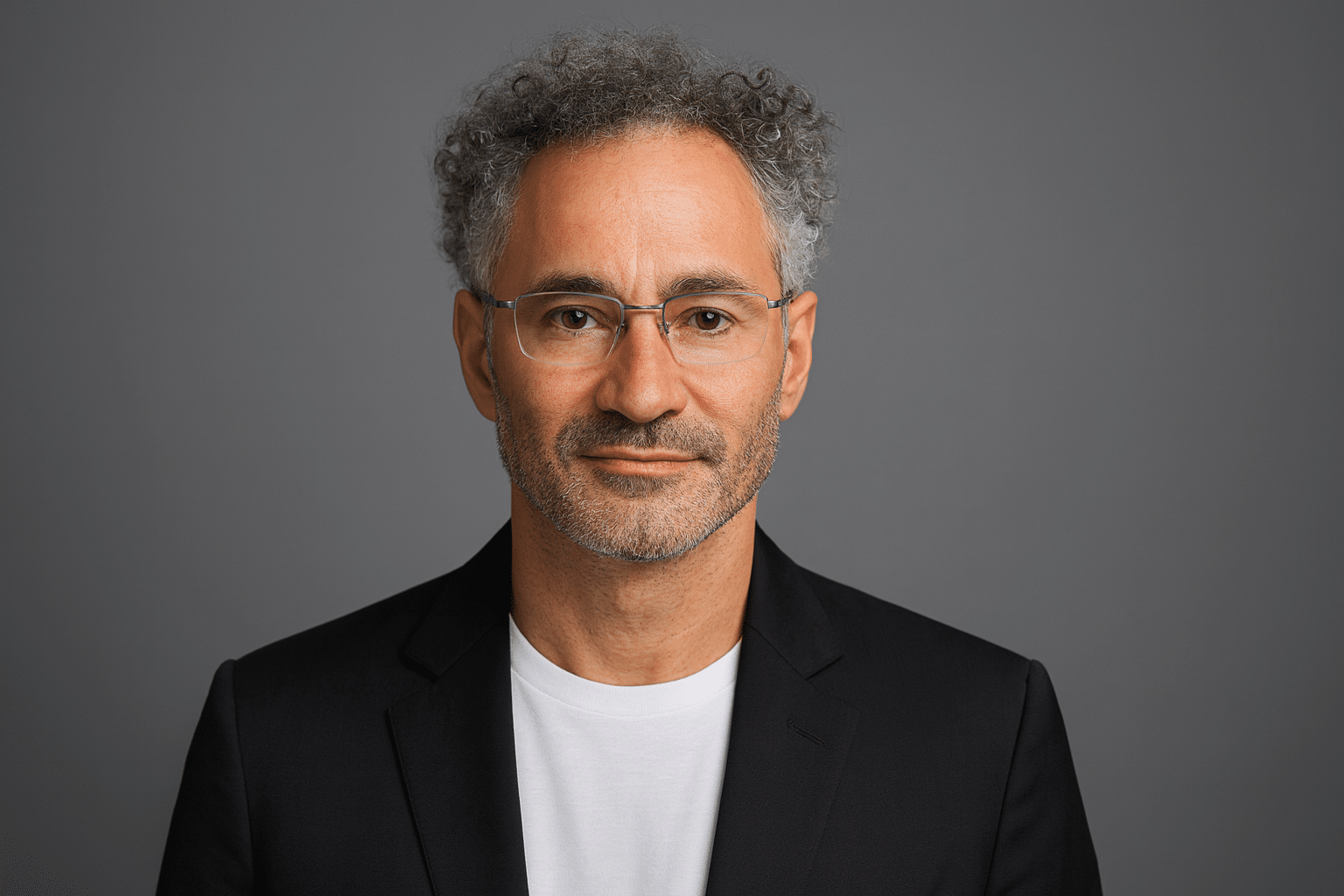
Alex Karp
Co-Founder & CEO at Palantir Technologies
In this interview, Alex Karp, co-founder and CEO of Palantir Technologies, argues that major AI labs are quietly steering toward government nationalization to escape unlimited…

Ali Ghodsi
Co-Founder & CEO at Databricks
In this interview, Ali Ghodsi, co-founder and CEO of Databricks, shares the unlikely story of how a reluctant professor became one of Silicon Valley's most…
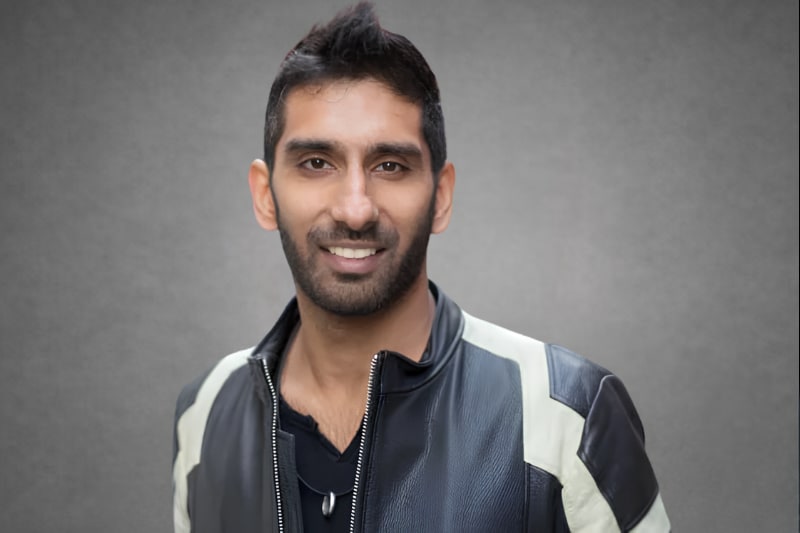
Rahul Vohra
Founder & CEO at Superhuman
In this interview, Rahul Vohra, founder and CEO of Superhuman, unpacks how to build, scale, and sell a startup with clarity and precision. He shares…