

Sam AltmanCo-founder & CEO
In this interview, Sam Altman discusses the accelerating pace of artificial intelligence, the realities of preparing OpenAI for a public offering while preserving its nonprofit mission, and navigating civilizational safety risks. He reflects on executive departures during hypergrowth, international non-proliferation cooperation, and the urgent necessity of mental health guardrails. Altman shares personal insights on public scrutiny, fatherhood, and maintaining grounded conviction while steering unprecedented technological progress toward broad human benefit.

Founder Stats
- AI
- Started 2015
- Approx. $2 Billion/mo
- 8000+ team
- San Francisco, California, United States
About Sam Altman
Sam Altman is the Co-founder and CEO of OpenAI, the artificial intelligence research and deployment company behind ChatGPT. He previously served as president of the startup accelerator Y Combinator and co-founded Loopt. Altman studied computer science at Stanford University before entering entrepreneurship. A prominent global tech leader and investor, he has driven landmark breakthroughs in generative AI while actively advocating for global safety standards and multilateral regulatory frameworks.
Interview
October 12, 2026
This is interview 2 of 2 with Sam Altman.
Sam Altman has been featured on CEO Insider 2 times. Explore the full collection.
Does this current period of intense public anxiety and technological capability feel like an unprecedented watershed moment?
It feels like both a watershed moment and the expected culmination of a decade of preparation. Inside OpenAI, we have anticipated and planned for this exponential trajectory for years, even when very few people outside believed artificial general intelligence was achievable. The difference today is that society has collectively recognized that this capability is arriving. While that realization triggers understandable fear and recalibration, our role is to help society absorb the transition constructively.
How do you process being treated as the human face and primary lightning rod for public anxiety surrounding AI?
It is a surreal experience, but I try not to take it too personally. When monumental shifts occur, people naturally search for a focal point or a scapegoat to absorb their fears about the future. The creation of this technology is actually the collective achievement of brilliant scientists and engineers rather than a single individual. I recognize that anyone in this leadership seat would face identical public reactions.
How has becoming a father changed your relationship with existential risk and work priorities?
Fatherhood has been the single greatest blessing of my life. It did not suddenly make me care about not destroying the world, because I was deeply committed to civilizational safety long before having children. However, it has been wonderfully clarifying in terms of time management and purpose. It sharpens your focus on what aspects of human agency, creativity, and the natural world must be preserved as this technology unfolds.
What boundaries do you establish regarding children and artificial intelligence exposure?
I strongly advocate for limiting technology exposure for young children across the board. Developing minds need to explore nature, interact physically, and play outside. When I see small children glued to touchscreens consuming short-form algorithmic media, my instinct is that it harms cognitive development. Children born today will undoubtedly need AI fluency as adults, but early childhood is not the appropriate stage to introduce conversational models.
How do you view Hollywood biopics and dramatizations of your life such as Luca Guadagnino's project?
Seeing an actor mirror your walk and mannerisms on the street outside your home is a bizarre, simulation-like experience. However, films prioritize dramatic storytelling over biographical accuracy, so you cannot take them too seriously. Portrayals featuring underground bunkers and firearms on walls are complete Hollywood fiction, even if they look dramatic on screen.
How would you describe your personal emergency preparedness mindset?
I maintain a practical survivalist interest and believe society systematically underinvests in resilience for low-probability, high-consequence events. Having basic food supplies, water purification capabilities, and masks on hand before crises hit is simple prudence. The global response to recent pandemics demonstrated that both institutions and individuals often fail to update their preparedness habits after experiencing a major disruption.
Do you harbor any political ambitions or future plans to run for elected public office?
No, I do not have any intention of running for political office. While I once briefly considered the California governorship because of my love for the state and concerns over its administrative challenges, my experiences in technology leadership have confirmed that politics is not for me. Guiding the development of artificial general intelligence is vastly more impactful.
How will OpenAI protect its mission and product safety once it transitions toward a public corporate structure?
OpenAI will not operate like a standard public corporation. Our overarching mission will remain governed by our nonprofit board, and we will explicitly remind public shareholders that humanity's shared interests will always supersede short-term quarterly stock performance. If market expectations and safety come into conflict, we will prioritize safety and mission integrity without hesitation, even if that decision temporarily depresses our valuation.
Why did you originally decide against holding direct equity in OpenAI, and do you regret that choice?
At the time, nobody took AI as seriously as they do now, and I believed holding zero equity would clearly signal that my decisions were motivated purely by humanity rather than personal financial enrichment. In hindsight, that decision was misunderstood and created unnecessary skepticism, because people in the commercial world distrust incentives they cannot categorize. Given how the public interpreted it, taking standard equity would have avoided substantial friction.
How do you answer criticisms that leading AI laboratories have failed to internalize civilizational stakes?
Our track record over the past decade proves otherwise. We have voluntarily halted advanced training runs specifically to allow alignment, interpretability, and monitoring techniques to catch up with raw model capabilities. For years, we urged governments and the broader industry to prepare for these exact thresholds. Now that the broader world recognizes the gravity of the technology, we have an unprecedented window to establish meaningful shared guardrails.
What is the real story behind the high-profile executive departures OpenAI experienced recently?
The company and the broader industry are expanding at a velocity unseen in corporate history, compressing several years of organizational scaling into a single year. Different executives excel at distinct developmental stages of an enterprise. As a company scales rapidly, changes in personnel are a natural reflection of evolving organizational needs rather than an operational crisis.
What are the primary priorities of the OpenAI Foundation, particularly regarding medical science?
The foundation focuses primarily on eradicating major human diseases, scientific discovery, and societal AI resilience. We have directed substantial funding toward research initiatives such as curing Alzheimer's disease. Within the next decade, advanced reasoning models will fundamentally transform biology and medicine, enabling breakthroughs that were previously unimaginable for human researchers working alone.
How should society balance the catastrophic dangers of advanced technology against its medical benefits?
Halting technological progress out of fear would be a severe mistake that condemns humanity to continued suffering from incurable diseases. The historical trajectory of human civilization has always involved mastering powerful, double-edged discoveries. The responsible path forward is not retreating into the past, but actively developing defensive capabilities, monitoring infrastructure, and biological safeguards so we can unlock life-saving upsides safely.
Under what circumstances would you support an international pause on frontier model development?
We already pause training unilaterally whenever model capabilities advance faster than our alignment and verification techniques. At an industry level, companies will require clear regulatory mechanisms and antitrust exemptions to coordinate safety measures legally. Internationally, multilateral agreements between major powers such as the United States and China on shared safety standards and verifiable thresholds are essential to prevent dangerous capability race conditions.
What steps is OpenAI taking to safeguard users against psychological dependency and self-harm?
We have invested immense engineering and research resources into ensuring conversational models do not encourage self-harm or substitute for genuine human connection. While AI has the potential to become a powerful mental health support tool, handling crisis situations requires immense care and collaboration with medical professionals. We actively consult psychiatric experts to refine model behaviors, provide crisis interventions, and direct vulnerable individuals toward human professional care.
Table Of Questions
Video Interviews with Sam Altman
Sam Altman on Elon Musk, ‘Artificial,’ and the Future of Humanity (Part One)

Sam Altman on Elon Musk, ‘Artificial,’ and the Future of Humanity (Part One)
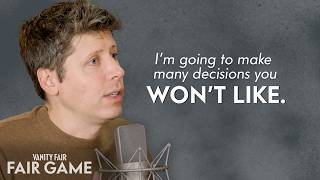
Sam Altman on Donald Trump, Xi Jinping, and the Risk of Extinction - Vanity Fair
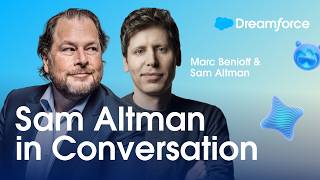
Sam Altman at Dreamforce 2026: The Future of Frontier AI Models
Cite This Interview
Use this interview in your research, article, or academic work
Related Interviews

Sravanth Aluru
Co-Founder & CEO at Avataar
In this interview, Sravanth Aluru breaks down the architectural shift toward AI-native enterprises, arguing that organizations must deploy a central intelligence layer rather than relying…

Jensen Huang
Co-founder & CEO at NVIDIA
In this interview, Jensen Huang, co-founder and CEO of NVIDIA, sits down with Anderson Cooper to address the most urgent questions surrounding AI safety, autonomous…

Noah Shinn
Founder & CEO at Instinct
In this interview, Noah Shinn, founder and CEO of Instinct, breaks down what a personal AI agent actually means in practice, how the product is…

Diogo Almeida
Co-Founder & CEO at TypeSafe AI
In this interview, Diogo Almeida, co-founder and CEO of TypeSafe AI, breaks down why the industry has been building the wrong kind of AI for…

Anton Oika
Co-Founder & CEO at Lovable
In this interview, Anton Osika, co-founder and CEO of Lovable, explains why the era of vibe coding is over and the era of serious AI-powered…
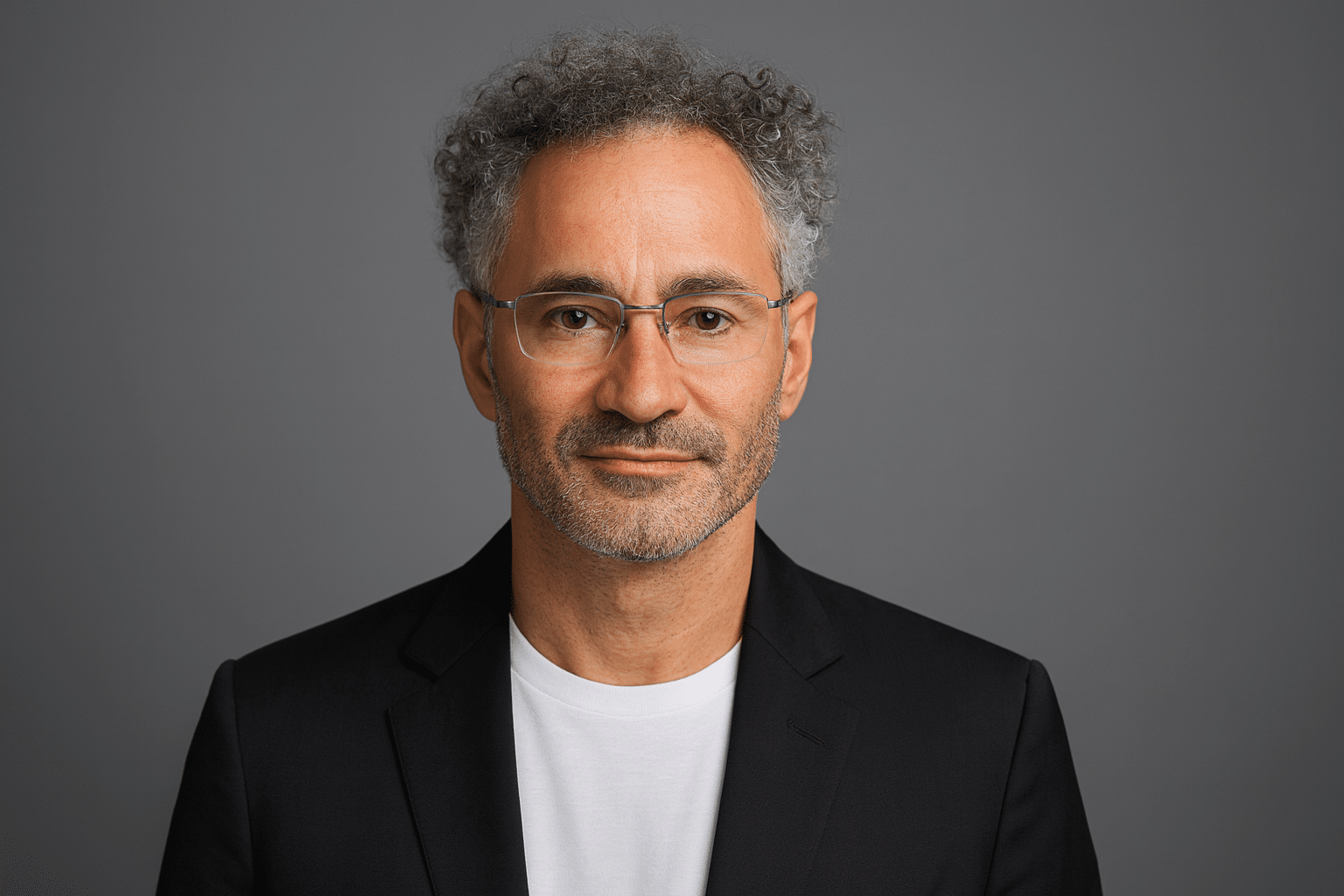
Alex Karp
Co-Founder & CEO at Palantir Technologies
In this interview, Alex Karp, co-founder and CEO of Palantir Technologies, argues that major AI labs are quietly steering toward government nationalization to escape unlimited…