

Aravind SrinivasCo-Founder & CEO
In this interview, Perplexity AI co-founder and CEO Aravind Srinivas challenges the conventional 9-to-5 desk job, identifying it as a corporate strategy engineered by Microsoft rather than a natural model of work. He outlines why AI automation of administrative tasks is positive for human purpose and discusses the unique, risk-seeking startup culture that makes the United States a dominant ecosystem for entrepreneurs. Srinivas shares key lessons on risk, innovation, and global tech leadership.

Founder Stats
- AI
- Started 2022
- Approx. 41.6 Million/mo
- 1400+ team
- San Francisco, California, United States
About Aravind Srinivas
Aravind Srinivas is the co-founder and CEO of Perplexity AI, a conversational search platform valued at over 9 billion dollars. Raised in India, Srinivas moved to the United States to earn his PhD at the University of California, Berkeley, and worked as an AI researcher at OpenAI, Google, and DeepMind. He co-founded Perplexity in 2022, rapidly scaling it to over 500 million USD ARR and establishing it as one of the fastest-growing AI companies globally.
Interview
What was the inspiration behind founding Perplexity AI in 2022?
I moved to the US from India to pursue my PhD at UC Berkeley. After working at OpenAI and DeepMind, I realized that the way we search for information was ripe for disruption. In 2022, we co-founded Perplexity to build a conversational answer engine that bypasses traditional link directories to provide direct, cited answers to users' questions.
How did your time at UC Berkeley and your background in India prepare you for the US startup ecosystem?
I was raised in India, where the academic system is excellent but often structured around traditional career paths. Coming to UC Berkeley exposed me to a culture of deep technical research and entrepreneurship. The transition from academic research to building Perplexity was driven by the unique opportunities and risk-taking mindset that define the American tech ecosystem.
Why do you believe the modern 9-to-5 desk job was a corporate strategy rather than a natural evolution of work?
The typical modern 9-to-5 office day was not a natural development of human productivity. It was a highly successful corporate blueprint engineered primarily by Microsoft as a business strategy to sell hardware and software, creating a massive global base of office workers dependent on their ecosystem.
What role did Bill Gates and Microsoft play in engineering the concept of the modern office worker?
How did the Microsoft model differ from Steve Jobs' vision for personal computing?
In what ways did Microsoft function as a massive sales machine that trained us how to use software?
Microsoft created products like Word, Excel, and email clients, and then trained the global workforce to use them. People were forced to upskill and master these specific tools just to have a stable career. In essence, the global workforce was trained to adapt to Microsoft's software rather than software adapting to human needs.
Why do you think it is positive for AI to automate administrative software tasks?
What happens to human potential when we are freed from mundane, repetitive desk jobs?
When people are no longer forced to do tedious administrative tasks to make a living, they can redirect their energy toward their intrinsic curiosity. Freeing humans from repetitive software labor allows them to pursue creative and intellectually fulfilling endeavors that they are naturally drawn to.
Why is the United States startup ecosystem still unmatched for aspiring entrepreneurs?
How does the risk-seeking culture in the United States compare to elsewhere in the world?
The risk-seeking culture in the United States is incredible and unmatched. In most other parts of the world, people are either explicitly or implicitly forced to defer to authority, stick to conventional paths, and avoid failure. America encourages taking big risks and building things from scratch.
How does Perplexity's business model differ from traditional ad-supported search engines?
Traditional search engines rely on ad revenue, which incentivizes keeping users clicking through pages of links. Perplexity is built on a subscription-based model. We focus on giving users direct, accurate answers immediately, aligning our business success with user efficiency rather than page views.
Where do you see search technology going as conversational AI agents mature?
What is the primary trait required for success in the AI era?
Table Of Questions
Video Interviews with Aravind Srinivas
Perplexity CEO Aravind Srinivas Makes Stunning Claim, Says Bill Gates Tricked World Into Desk Jobs
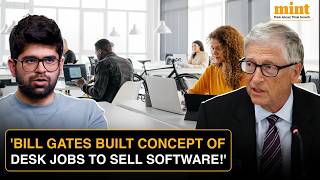
Perplexity CEO Aravind Srinivas Makes Stunning Claim, Says Bill Gates Tricked World Into Desk Jobs

Perplexity CEO Aravind Srinivas Talks AI Boom | Bloomberg Talks
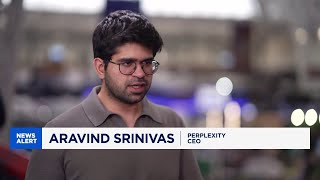
Perplexity CEO: We are on track to IPO in 2028

Nikhil Kamath ft. Perplexity CEO, Aravind Srinivas | WTF Online
Cite This Interview
Use this interview in your research, article, or academic work
Related Interviews

Jensen Huang
Co-founder & CEO at NVIDIA
In this interview, Jensen Huang, co-founder and CEO of NVIDIA, sits down with Anderson Cooper to address the most urgent questions surrounding AI safety, autonomous…

Noah Shinn
Founder & CEO at Instinct
In this interview, Noah Shinn, founder and CEO of Instinct, breaks down what a personal AI agent actually means in practice, how the product is…

Diogo Almeida
Co-Founder & CEO at TypeSafe AI
In this interview, Diogo Almeida, co-founder and CEO of TypeSafe AI, breaks down why the industry has been building the wrong kind of AI for…

Anton Oika
Co-Founder & CEO at Lovable
In this interview, Anton Osika, co-founder and CEO of Lovable, explains why the era of vibe coding is over and the era of serious AI-powered…
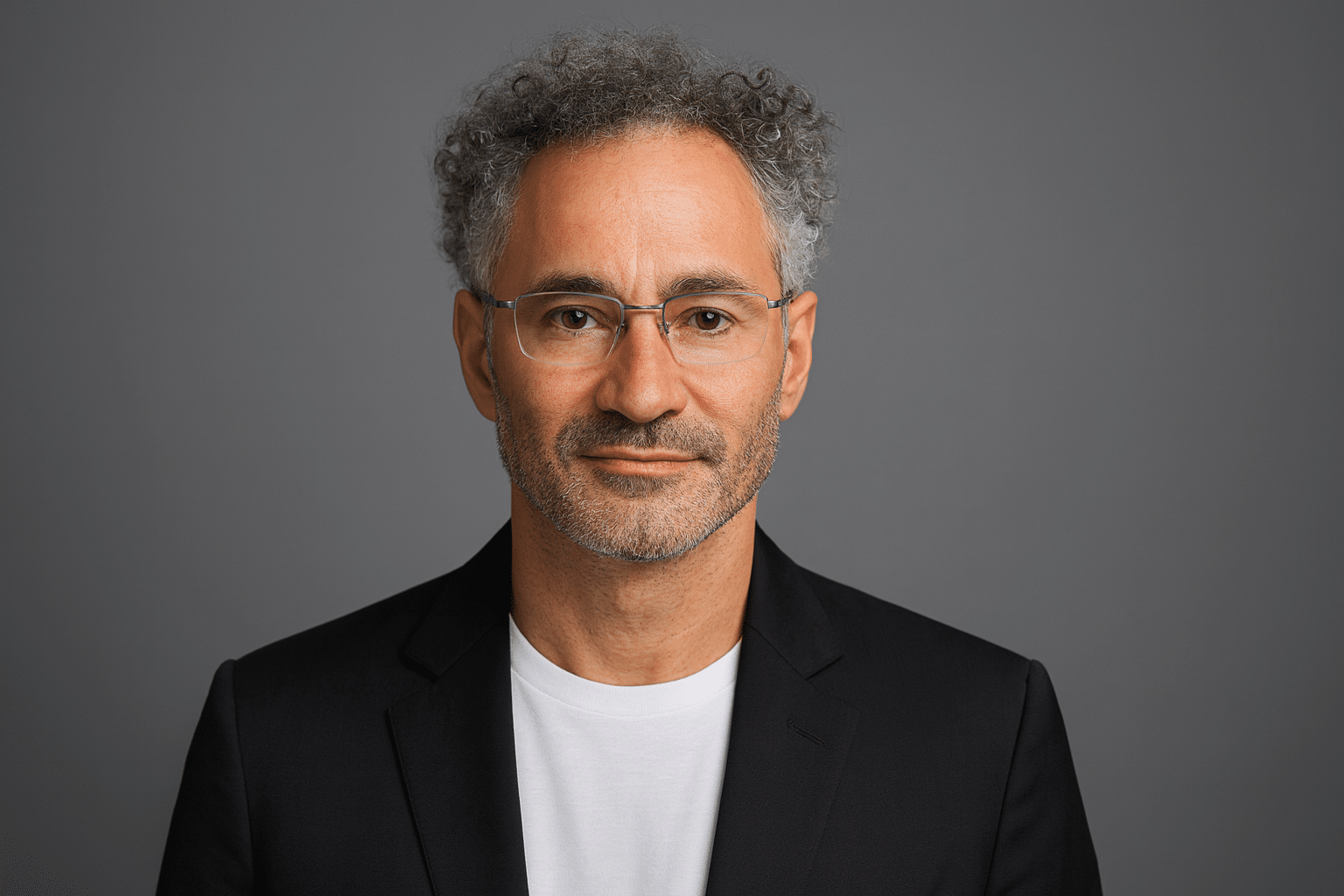
Alex Karp
Co-Founder & CEO at Palantir Technologies
In this interview, Alex Karp, co-founder and CEO of Palantir Technologies, argues that major AI labs are quietly steering toward government nationalization to escape unlimited…

Ali Ghodsi
Co-Founder & CEO at Databricks
In this interview, Ali Ghodsi, co-founder and CEO of Databricks, shares the unlikely story of how a reluctant professor became one of Silicon Valley's most…