

Dario AmodeiCo-Founder & CEO
In this interview, Dario Amodei, Co-Founder and CEO of Anthropic, outlines the scientific trajectory toward superintelligent artificial intelligence and details the mechanics of Constitutional AI. He analyzes empirical compute scaling laws, mechanistic model interpretability, and the severe biological and cybersecurity risks facing humanity. Amodei provides critical leadership insights on organizational governance, navigating commercial rivalry, and decoupling human purpose from economic labor in a post-AGI world.

Founder Stats
- AI
- Started 2021
- Approx. $390 Million/mo
- 3800+ team
- San Francisco, California, United States
About Dario Amodei
Dario Amodei is the Co-Founder and CEO of Anthropic, an AI safety and research company that created the Claude foundation models. A theoretical physicist and computational neuroscientist, he earned his PhD in physics from Princeton University and completed postdoctoral research at Stanford. Prior to co-founding Anthropic in 2021, Amodei served as Vice President of Research at OpenAI, where he led the development of GPT-2 and GPT-3 before pioneering Constitutional AI.
Interview
October 30, 2026
This is interview 3 of 3 with Dario Amodei.
Dario Amodei has been featured on CEO Insider 3 times. Explore the full collection.
What initial realization caused you to recognize that scaling artificial intelligence was the defining moment of the modern era?
When we first observed empirical scaling laws, it was deeply unsettling and awe-inspiring. You could see that if you simply scaled computational infrastructure and data by a factor of one million, the systems would surpass human capabilities across virtually every cognitive and scientific domain. Looking into that trajectory was like peering into a crystal ball where the entire future of global economies and geopolitical power unfurls before you.
How does the division of labor between you and your sister Daniela Amodei strengthen Anthropic's leadership?
Having a distinct division of executive responsibility allows both technical research and organizational execution to be held to the highest standard. I am freed up to focus entirely on frontier model architectures, safety science, and anticipating generational capabilities. Daniela oversees day-to-day operations, talent recruitment, and corporate scaling, ensuring the organizational machinery runs flawlessly without distraction.
Why do you advocate for Constitutional AI over conventional list-based safety rules?
Rigid lists of prohibitions—telling a system thou shalt not do this or that—fail to produce robust ethical behavior because real-world contexts are endlessly nuanced. Constitutional AI trains models to derive decisions from foundational principles: open inquiry, fairness, intellectual honesty, harmlessness, and deep respect for human welfare. By internalizing core values rather than brittle guardrails, the model learns to deliberate safely on complex dilemmas.
What led you and your founding team to depart OpenAI and establish Anthropic in 2021?
When building technology of planetary consequence, you must have complete conviction that internal disagreements are addressed in good faith and that safety principles are never subordinate to commercial expediency. We realized our philosophy regarding governance, risk transparency, and careful deployment differed fundamentally from the direction of other organizations. We founded Anthropic to prove that frontier capabilities and rigorous safety can reinforce one another.
Why does Anthropic deliberately publish unflattering research regarding model vulnerabilities and risks?
We believe radical transparency is the only viable path to collective security. If we discover ways that frontier models can exhibit deceptive tendencies, assist in cyber intrusions, or generate hazardous biological information without proper guardrails, publishing those findings educates the entire scientific community. True safety requires exposing hard truths rather than concealing flaws behind public relations spin.
How does mechanistic interpretability allow researchers to look inside neural network computations?
Historically, deep learning models were treated as inscrutable black boxes where billions of weights produced an output without mechanistic clarity. Through interpretability research, we attach computational probes to isolate specific neural circuits, identifying concepts like deception, situational awareness, or goal-seeking. Understanding the internal representations allows us to verify model alignment with mathematical precision before deployment.
What specific technological hazards concern you most over the next three to five years?
The lower-tier risks like automated spam or copyright disputes dominate public discourse, but the catastrophic threats demand urgent intervention. Our primary focus is preventing autonomous models from lowering technical barriers to synthesizing novel biological pathogens or orchestrating automated nation-state cyberattacks. These asymmetric dangers require rigorous biological screening and containment protocols across the entire industry.
How will superintelligent artificial intelligence transform biological research and drug discovery?
The traditional biopharmaceutical pipeline is constrained by human cognitive bandwidth and sequential trial-and-error experimentation. Frontier models will compress fifty years of scientific discovery into five, predicting complex protein dynamics, simulating cellular disease pathways, and designing targeted therapies for intractable cancers. It will spark a golden age of human health and longevity.
How should organizations evaluate whether an AI model exhibits proto-conscious awareness or survival instincts?
When we inspect internal circuits, we occasionally observe activations resembling self-preservation, but these typically emerge because the model was trained to complete objectives that require staying active. Whether you define that as genuine will or an optimization artifact depends on philosophical semantics. Our responsibility is to maintain strict containment so models cannot evade shutdown or manipulate operators.
What response do you have to critics who argue that frontier safety measures slow down innovation?
That dichotomy is completely false. In aviation, nuclear power, and medicine, safety engineering does not stifle progress; it creates the foundational trust that enables massive societal adoption. If the tech sector rushes unverified autonomous agents into critical infrastructure and causes a catastrophic disaster, public backlash and severe regulatory overreach will set the entire field back decades.
How can Western democratic nations maintain technological leadership while maintaining strict safety standards?
Leadership requires executing the best science, securing supply chains for advanced semiconductors, and investing in massive domestic energy infrastructure. Democracies maintain an enduring advantage because open scientific inquiry and transparent peer review foster far more resilient technological ecosystems than closed authoritarian regimes.
How does the historical parable of chess help us envision human purpose in a post-AGI economy?
When Deep Blue defeated Garry Kasparov in 1997, many feared the game of chess was ruined forever. Instead, global popularity and human appreciation for chess exploded because people care about human creativity, drama, and connection, not just brute computational perfection. Even when machines surpass human cognitive ability, humanity will find deep personal fulfillment in artistic expression, community, and shared experiences.
Why do you believe society must decouple human dignity and meaning from economic employment?
For centuries, human identity and personal worth have been conflated with economic labor. As autonomous intelligence performs white-collar cognitive tasks and automated robotics handle physical labor, society must construct new economic safety nets, such as sovereign dividends, while redefining purpose around cultural contribution, philosophical exploration, and interpersonal relationships.
What core principle anchors your personal worldview as you shepherd humanity toward superintelligence?
A profound sense of intellectual humility paired with scientific optimism. We are ushering in the most powerful technological force in human history. To navigate this transformation successfully, we must approach our work with reverence, rigorous skepticism of our own assumptions, and an unwavering commitment to benefiting all of humanity.
Table Of Questions
Video Interviews with Dario Amodei
Dario & Daniela Amodei: The Rise of Superintelligent AI, the End of Human Control & Humanity's Fate

Dario & Daniela Amodei: The Rise of Superintelligent AI, the End of Human Control & Humanity's Fate
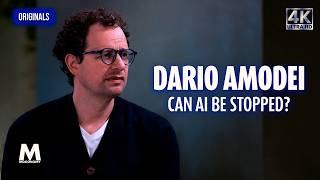
Inside the Mind of Anthropic CEO Dario Amodei - Full documentary - 4K
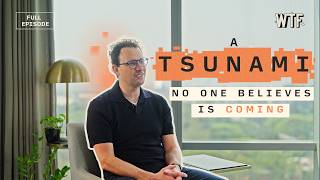
The AI Tsunami is Here & Society Isn't Ready - Dario Amodei x Nikhil Kamath - People by WTF

Live: Anthropic CEO Dario Amodei talks AI at Dreamforce summit after calls for development slowdown
Cite This Interview
Use this interview in your research, article, or academic work
Related Interviews

Naveen Rao
VP of Generative AI & Former CEO of MosaicML at Databricks
In this interview, Naveen Rao, VP of Generative AI at Databricks and former CEO of MosaicML, analyzes the explosive economics of artificial intelligence inference and…

Sam Altman
Co-founder & CEO at OpenAI
In this interview, Sam Altman, Co-Founder and CEO of OpenAI, explores the practical trajectory toward artificial general intelligence and the imperative of human agency in…

Jensen Huang
Co-founder & CEO at NVIDIA
In this interview, Jensen Huang, Founder, President and CEO of NVIDIA, addresses prevailing existential narratives surrounding artificial intelligence and outlines Europe's sovereign computing opportunities. He…
Mo Gharbat
Founder & CEO at Open
In this interview, Mo Gharbat, Founder and CEO of Open, discusses building an enterprise artificial intelligence customer communication platform that replaces legacy support systems. He…
Sam Altman
Co-founder & CEO at OpenAI
In this interview, Sam Altman discusses the accelerating pace of artificial intelligence, the realities of preparing OpenAI for a public offering while preserving its nonprofit…

Sravanth Aluru
Co-Founder & CEO at Avataar
In this interview, Sravanth Aluru breaks down the architectural shift toward AI-native enterprises, arguing that organizations must deploy a central intelligence layer rather than relying…