
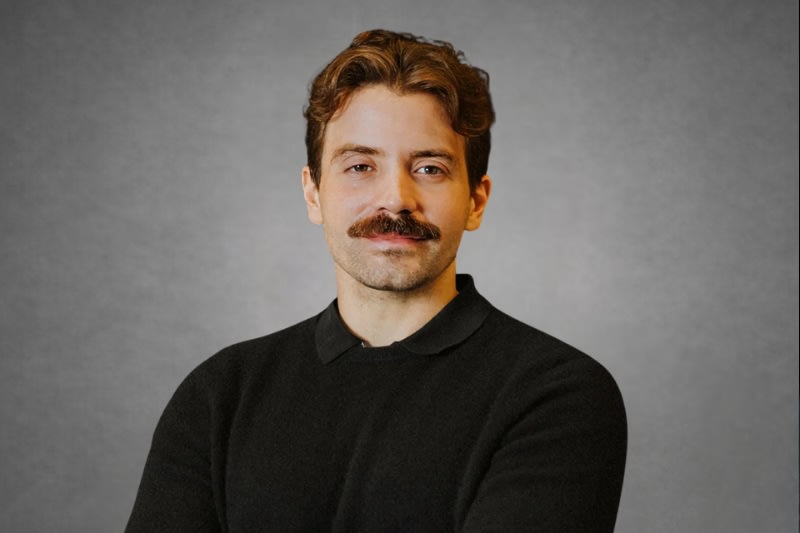
Guillermo RauchFounder & CEO
In this interview, Vercel founder and CEO Guillermo Rauch discusses recursive founder mode, scaling product portfolio autonomy, and the transition toward agentic software factories. Rauch explains Vercel's internal AI agent V, details the evolution of cloud infrastructure for spatial agents, and outlines how coding is a misnomer since everything is code. He also shares insights on recruitment, energy optimization, and the future of small businesses.

Founder Stats
- SaaS
- Started 2015
- Approx. 42 Million USD/mo
- 800+ team
- San Francisco, California, United States
About Guillermo Rauch
Guillermo Rauch is the founder and CEO of Vercel, a leading cloud platform for front-end developers. Born in Argentina, Rauch is the creator of popular open-source projects Socket.io and Mongoose, and co-created Next.js, the world's most popular React framework. Under his leadership, Vercel has scaled to a valuation of nine point three billion dollars, powering the front-end infrastructure for global companies like OpenAI, Stripe, and Nike.
Interview
August 27, 2026
What is recursive founder mode and how does it scale in a large organization?
Recursive founder mode is about finding people who are founders at heart and making them the CEOs of their own products within the company. Traditional founder mode does not scale as you expand your product portfolio. By hiring visionaries like Lars Griemel for the AI SDK or Tom Leonard for Fluid Compute, we build a recursive software factory where product leads operate with a pioneering spirit.
How does Vercel organize ownership and autonomy at the product level?
I set up the overall organizational values and executive targets, but we create pools of autonomy where product founders can drive their own messaging, marketing, and feature design. Because they build on top of Vercel's infrastructure, they get to bootstrap their products directly on our platform, aligning their success with Vercel's ecosystem.
What is the defining characteristic of founder mode when scaling a company?
The defining characteristic is shipping and driving extreme urgency to make customers happy. It requires the leader to be in the weeds of details and take full ownership of the end-to-end customer journey. In an AI-driven world, employees must expand their scope beyond narrow tasks like writing Rust code to own entire product outcomes.
How has Vercel's candidate interviewing process evolved with the advent of AI?
We have completely changed how we evaluate candidates by asking them to build working software during the interview process. We send them work prompts, and they build artifacts using Vzero or Vercel templates. We evaluate their attention to detail, how they handle problem cases, and what features they suggest to improve our platform.
How does your marketing department utilize AI to build marketing artifacts?
Instead of filing engineering tickets to build websites or design creatives, our marketing team builds agents to generate their own marketing assets. AI eliminates the bottleneck of waiting for design and engineering resources, allowing marketing team members to act as high-agency builders who solve their own operational challenges.
Why do you remain deeply involved in review loops for every new hire?
Hiring is a long-term investment because I expect people to stick around for a decade to build this multi-generational project. While I do not meet every single candidate, I review summaries generated by our agents, inspect their code artifacts, and ask questions to ensure we maintain the highest quality talent floor.
What is the meaning of Vercel's core value of iterative greatness?
Why do you believe that coding is a misnomer and that everything is code?
Everything we do in an organization, from spreadsheets to slide decks, is structurally code. Spreadsheet formulas are just Python scripts and tool calls under the hood. Coding is just the technification of business processes. This is why coding agents represent the largest token volume on our platform; everything is a series of executable workflows.
How do you keep high slope talent from leaving Vercel to start their own companies?
We identify high-slope individuals who want to build but realize their products are more successful when integrated into Vercel's massive distribution channel. We allow them to operate as internal entrepreneurs, designing their ideal building lives within Vercel while using our platform to reach millions of customers without raising seed capital.
Why are platform companies uniquely positioned to survive the potential SaaS apocalypse?
Instead of procuring twenty different bespoke software tools, enterprises are building their own internal agents and tools on top of developer platforms. The rigid, off-the-shelf software is being replaced by custom agentic workflows built on infrastructure like ours, making developer platforms highly defensible compared to single-point SaaS products.
How does Vercel's component system shadcn/ui raise the visual floor of the internet?
Shadcn created the most popular UI component framework, which is used by AI models to generate applications. By open-sourcing these beautiful, extensible primitives, we raise the visual floor of the internet. It makes it nearly impossible for high-agency builders to ship low-quality visual interfaces when deploying on Vercel.
How should software engineers adapt their skills to the transition toward code generation?
Engineers must shift their mindset from working on the output to designing the machine that produces the output. The best engineers adopt AI tools immediately to accelerate their delivery. They become product engineers who combine technical understanding with product management, customer feedback, and business metrics.
How does Vercel's internal agent V change your company's operational rhythm?
We built V, our internal omni-agent, to act as the single front door for our entire organization. Instead of using disparate chat applications, team members go to V to query data analytics, check customer onboarding funnels, or run security reviews. This self-improving agent runs on our Eve framework, streamlining communication.
How does the cloud infrastructure need to evolve to support AI agents over human developers?
Cloud infrastructure must adapt to agentic workloads. Just as we built CDNs to globally distribute pages, we now need an AI gateway to orchestrate token delivery and sandbox environments to execute agent-generated code safely. Furthermore, backends must handle the massive requests per second generated by autonomous agents.
How have your daily fitness and optimization rituals expanded your energy capacity?
Why do you believe that human empathy and emotional connection will never be replaced by AI?
Empathy and emotional connection are uniquely human. I refuse to have an AI friend because I value legitimate, farm-to-table human connections with my family and colleagues. While machines can predict the next token, the human energy of what to build and why we build it must remain under our control.
Table Of Questions
Video Interviews with Guillermo Rauch
Inside Vercel's AI-era playbook: "Recursive Founder Mode" | Guillermo Rauch (CEO)
Inside Vercel's AI-era playbook: "Recursive Founder Mode" | Guillermo Rauch (CEO)
Vercel CEO Guillermo Rauch's Advice for New Developers in the Age of AI | Azure Cosmos DB Conf 2026
Cite This Interview
Use this interview in your research, article, or academic work
Related Interviews
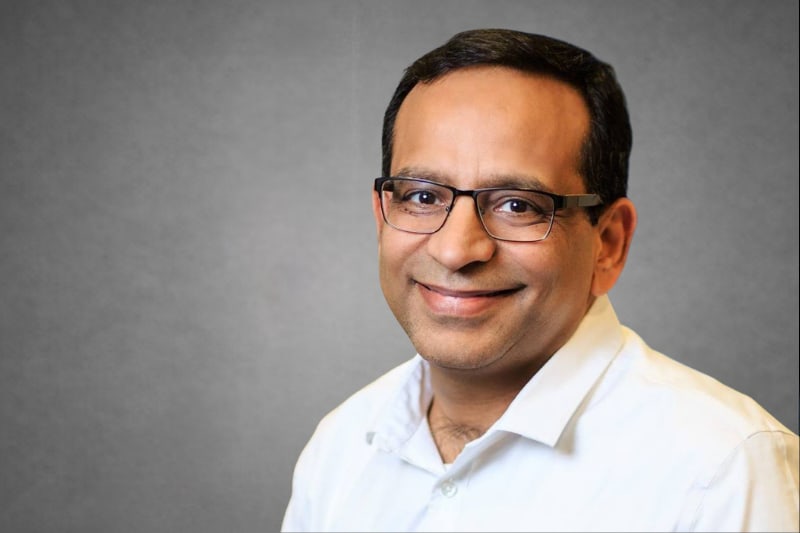
Vikram Chalana
Founder & CEO at Pictory
In this interview, Vikram Chalana, founder and CEO of Pictory, sits down with Vlad Kachur to explore the transformation of corporate knowledge into automated video…

Jirka Bachel
Founder & CEO at Navigara
In this interview, Navigara CEO Jirka Bachel explains how his engineering analytics platform measures software developer performance and tracks the return on investment of AI…

Daniel Chait
Co-founder & CEO at Greenhouse Software
In this interview, Greenhouse Software co-founder and CEO Daniel Chait discusses how artificial intelligence is reshaping the recruiting landscape. Chait outlines the mechanics of the…

Soham Chokshi
Co-Founder & CEO at Shipsy
In this interview, Shipsy co-founder and CEO Soham Chokshi discusses the transition of global supply chains from just-in-time to resilience amidst geopolitical disruptions and rising…

Sam Altman
Co-founder & CEO at OpenAI
In this interview, Sam Altman discusses the accelerating pace of artificial intelligence, the realities of preparing OpenAI for a public offering while preserving its nonprofit…

Sravanth Aluru
Co-Founder & CEO at Avataar
In this interview, Sravanth Aluru breaks down the architectural shift toward AI-native enterprises, arguing that organizations must deploy a central intelligence layer rather than relying…