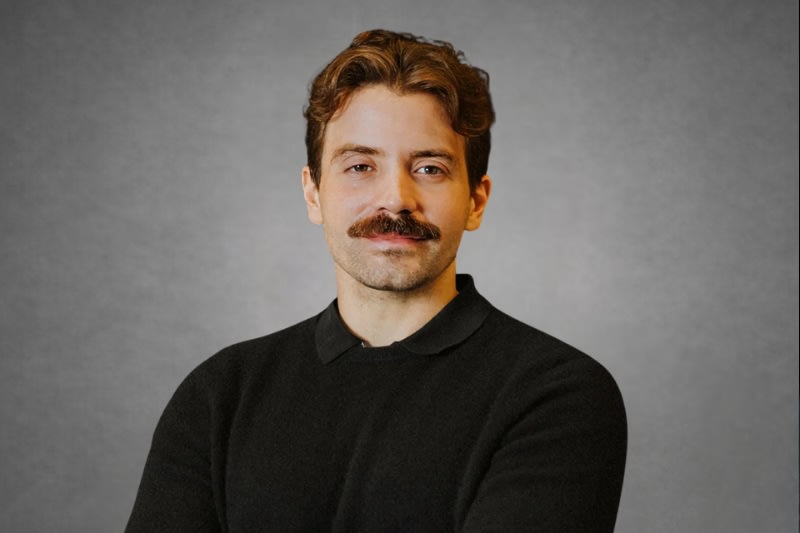
Soham Chokshi, Co-Founder & CEO at Shipsy
3.5/5 Rating
SaaS
Approx. $2.1 Million/mo
$25 Million ARR

Soham ChokshiCo-Founder & CEO

In this interview, Shipsy co-founder and CEO Soham Chokshi discusses the transition of global supply chains from just-in-time to resilience amidst geopolitical disruptions and rising costs. He details the labor shortages in logistics and explains how AI can optimize carrier operations, improve address lat-long accuracy, and reduce quick commerce delivery costs. Chokshi highlights Shipsy's strict architectural guardrails, emphasizing that humans must remain in the loop for critical decision-making.

Soham Chokshi

Soham Chokshi

Co-Founder & CEO

Shipsy

Shipsy

Founder Stats

  • SaaS
  • Started 2015
  • Approx. $2.1 Million/mo
  • 300+ team
  • Gurugram, India

About Soham Chokshi

Soham Chokshi is the co-founder and CEO of Shipsy, an AI-native logistics orchestration platform. Since co-founding the company in 2015, he has led its expansion across India, the Middle East, and Southeast Asia, raising over 32 million USD from prominent venture funds. Chokshi’s leadership has scaled Shipsy to over 25 million USD ARR, helping global enterprises build resilient supply chains through data-driven automation and intelligent decision-making.

Interview

July 13, 2026

Q

What major supply chain disruptions have occurred since 2020?

Question 1 of 13
Soham Chokshi

Since 2020, we have faced a continuous series of supply chain crises. It began with the COVID-19 pandemic, followed by global chip shortages, the Russia-Ukraine war, tensions in the Red Sea, and broader conflicts in West Asia.

0
Q

How are geopolitical tensions impacting global shipping transit times and operational costs?

Question 2 of 13
Soham Chokshi

Geopolitical events are forcing ships to reroute, such as going around the Cape of Good Hope, which adds about 14 days of transit time. For thin-margin commodities, this rerouting can add roughly 30% in extra costs.

0
Q

Why is the industry moving from just-in-time logistics to supply chain resilience?

Question 3 of 13
Soham Chokshi

The constant uncertainty has shown companies that they cannot rely on a single source or path. To build resilience, enterprises are investing in alternate suppliers, contracting with multiple shipping lines, and leveraging technology to handle unexpected disruptions.

0
Q

How do rising diesel prices affect transportation economies like Australia?

Question 4 of 13
Soham Chokshi

In transportation economies like Australia that rely heavily on diesel, prices have surged by nearly 80%. This massive cost increase is not something carriers can easily adjust to, forcing them to find technological efficiencies to survive.

0
Q

What new regulations are impacting how logistics companies compensate their drivers?

Question 5 of 13
Soham Chokshi

New regulations now mandate that if a transportation company charges a customer extra fees, such as fuel surcharges, they must pass those funds on to the drivers in a fair and transparent manner.

0
Q

Why is there a shortage of people in an industry traditionally seen as manual?

Question 6 of 13
Soham Chokshi

As shipment volumes grow, the labor force cannot scale proportionally. In major markets like Europe, Australia, and the US, there simply are not enough drivers and logistics workers to handle the manual workload as it increases.

0
Q

How does shrinking lot sizes affect global shipment volumes?

Question 7 of 13
Soham Chokshi

Due to changing customer demands and the influx of affordable manufacturing goods, purchase lot sizes are decreasing. This means the overall number of individual shipments is increasing dramatically, creating much higher transaction volumes.

0
Q

In what ways can AI amplify human potential in logistics instead of replacing it?

Question 8 of 13
Soham Chokshi

Rather than operating in isolation, AI can take over repetitive manual tasks, allowing human workers to focus on complex decisions. This amplification increases operational efficiency and helps humans manage larger shipment volumes.

0
Q

How does Shipsy use AI to solve the challenge of inaccurate shipping addresses?

Question 9 of 13
Soham Chokshi

Shipsy has processed over 400 million shipments, creating a massive database mapping addresses to exact coordinates. We use AI agents to clean up unclear address formatting and automatically clarify details with customers before delivery.

0
Q

What kind of bottom-line cost savings can be achieved by improving address accuracy?

Question 10 of 13
Soham Chokshi

Improving address formatting and precision mapping has a direct impact on the bottom line. Accurate coordinates prevent failed deliveries and optimization errors, saving companies between 8% and 12% in operational costs.

0
Q

How is batching in quick commerce being optimized using AI?

Question 11 of 13
Soham Chokshi

Instead of sending a driver for every single order, AI analyzes incoming orders in real-time. If a second order from the same neighborhood or building comes in within a few minutes, the system batches them together, reducing the delivery cost per order.

0
Q

What architectural guardrails does Shipsy implement to ensure safe AI deployment?

Question 12 of 13
Soham Chokshi

We enforce a strict constraint where every AI agent must report to a human. AI is not permitted to operate in isolation. The human in the loop must make the final call on payouts, financial decisions, or customer order cancellations.

0
Q

Why is it a mistake to deploy isolated AI agents onto broken legacy systems?

Question 13 of 13
Soham Chokshi

Layering isolated AI agents on top of broken systems does not solve the root problem. The future requires intelligent, integrated orchestration systems that help humans make better decisions and drive actual business outcomes.

0

Video Interviews with Soham Chokshi

Big Business Bet: Discussing Future of Logistics With Shipsy's Soham Chokshi | WION

Big Business Bet: Discussing Future of Logistics With Shipsy's Soham Chokshi | WION

Big Business Bet: Discussing Future of Logistics With Shipsy's Soham Chokshi | WION

The Big C | Strait Of Hormuz Shockwave: Global Trade Under Siege | CNBC TV18 Prime

The Big C | Strait Of Hormuz Shockwave: Global Trade Under Siege | CNBC TV18 Prime

The LPG Crisis No One Is Talking About Is Breaking India's Supply Chain

The LPG Crisis No One Is Talking About Is Breaking India's Supply Chain

Story of Shipsy | The Founders' Show with KaashSeAkash #success

Story of Shipsy | The Founders' Show with KaashSeAkash #success

Cite This Interview

Use this interview in your research, article, or academic work

Related Interviews
Prudhvi Raj Pakalapati, Co-Founder & CEO at Vector Technics
Technology

Prudhvi Raj Pakalapati

Co-Founder & CEO at Vector Technics

Approx. $0.48 Million
22+

In this interview, Vector Technics co-founder and CEO Prudhvi Raj Pakalapati discusses the company's expansion to a manufacturing capacity of 300,000 drone propulsion units annually.…

Read Interview
Jeff Cardenas, Co-Founder & CEO at Apptronik
AI

Jeff Cardenas

Co-Founder & CEO at Apptronik

Not Publicly Disclosed
300+

In this interview, Apptronik co-founder and CEO Jeff Cardenas outlines the rapid expansion of physical AI and humanoid robotics. Speaking at the Race Summit in…

Read Interview
Aravind Srinivas, Co-Founder & CEO at Perplexity AI
AI

Aravind Srinivas

Co-Founder & CEO at Perplexity AI

Approx. 41.6 Million
1400+

In this interview, Perplexity AI co-founder and CEO Aravind Srinivas challenges the conventional 9-to-5 desk job, identifying it as a corporate strategy engineered by Microsoft…

Read Interview
Ritesh Agarwal, Founder & Group CEO at OYO
Marketplace

Ritesh Agarwal

Founder & Group CEO at OYO

Not Publicly Disclosed
1300+

In this interview, Ritesh Agarwal discusses why global tourism is entering a new growth era driven by AI, rising prosperity, and increased travel demand. He…

Read Interview
Cobi Blumenfeld-Gantz, Co-Founder & CEO at Chapter
Health & Wellness

Cobi Blumenfeld-Gantz

Co-Founder & CEO at Chapter

Approx. 8.3 Million
180+

In this interview, Chapter co-founder and CEO Cobi Blumenfeld-Gantz discusses the company's rise to a $3 billion valuation in the senior health navigation market. He…

Read Interview
Jamie Stewart, Founder & CEO at Binq
AI

Jamie Stewart

Founder & CEO at Binq

Not Publicly Disclosed
6–20

In this interview, Jamie Stewart shares how he transitioned from an international music career into fintech entrepreneurship by founding Binq, an AI-powered business assistant for…

Read Interview