
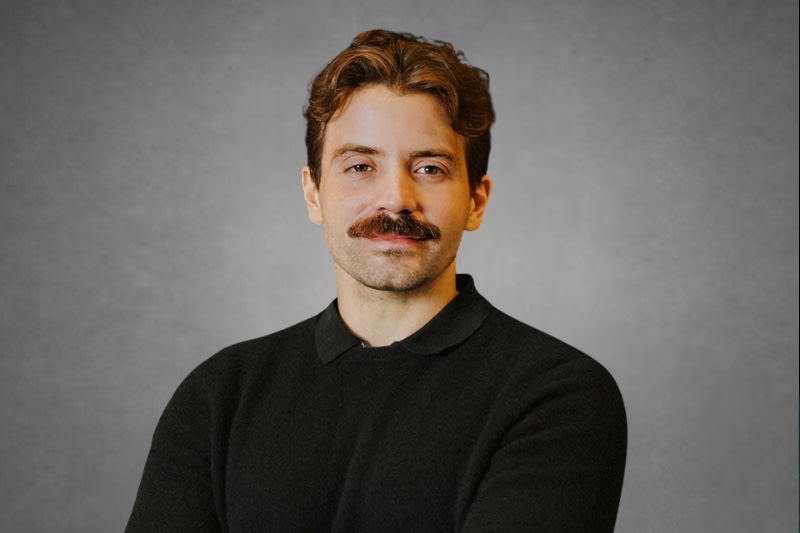
Guillermo RauchFounder & CEOThe agent-driven cloud and how autonomous software scales to trillion-dollar out
In this interview, Guillermo Rauch, Founder and CEO of Vercel, examines the paradigm shift underway as autonomous software agents revolutionize cloud infrastructure and web development. He outlines how individual developers utilizing intelligent agents can achieve the economic output of massive engineering organizations, potentially birthing the first single-person trillion-dollar enterprise. Rauch articulates why post-artificial intelligence commercial moats depend fundamentally on institutional trust, community loyalty, and relentlessly confronting operational pain points across developer tooling.


Founder Stats
- Technology
- Started 2015
- $42M/mo
- 800+ employees
- San Francisco, California, USA
About Guillermo Rauch
Guillermo Rauch is the Founder and CEO of Vercel, the leading frontend cloud and platform company empowering millions of developers to build and deploy modern web applications. A veteran technologist and prolific open-source contributor, he previously co-founded LearnBoost and Cloudup, acquired by Automattic, and created foundational libraries including Socket.io, Mongoose, and Next.js. Rauch is recognized globally for pioneering serverless infrastructure, modern web performance standards, and agentic developer platforms.
Interview
November 05, 2026
This is interview 2 of 2 with Guillermo Rauch.
Guillermo Rauch has been featured on CEO Insider 2 times. Explore the full collection.
What fundamental shift occurs in software creation as autonomous agents interact with cloud infrastructure?
We are transitioning from manual code composition to intent-driven system orchestration. Historically, software creation required massive specialized teams to manage servers, configure database clusters, and stitch together distributed networks. Today, a developer articulates high-level product intent, and autonomous agents provision, test, and deploy production-grade software dynamically. Software development is expanding from an elite engineering craft into a universal form of human expression.
How could a single person paired with autonomous agents eventually build a trillion-dollar enterprise?
When Instagram scaled to hundreds of millions of users with thirteen engineers, they leveraged cloud storage APIs rather than building physical data centers. Autonomous agents multiply that abstraction leap. A single visionary founder orchestrating specialized agents for marketing, engineering, security, and support can match the output of thousands of employees, capturing massive economic value with virtually zero headcount overhead.
Why do you believe institutional trust is the ultimate competitive moat for businesses in a post-AGI world?
When software generation becomes essentially free and universally accessible, raw code itself ceases to be a sustainable barrier to entry. Anyone can prompt an agent to replicate an application interface in minutes. Therefore, enduring commercial value migrates to brand reputation, customer trust, operational reliability, and community goodwill. Customers will place mission-critical enterprise workloads only with platforms that possess proven track records of uncompromising data integrity and uptime.
How does Vercel design infrastructure to support the explosive latency demands of generative AI applications?
Generative user interfaces require streaming responses, instant edge computation, and sub-millisecond data serialization. Traditional monolithic server architectures introduce unviable latency when piping model tokens back to end users. We re-engineered our edge network and serverless functions to stream model outputs dynamically from the closest geographical node, ensuring user interactions feel as immediate and responsive as native desktop software.
What executive leadership lesson did you extract from navigating severe technical crises early in your career?
The defining lesson of executive leadership is never avoiding operational pain or hiding from broken systems. Early in my career, confronting catastrophic server outages taught me that exceptional leaders run directly toward the fire. You must create an organizational culture that celebrates transparent post-mortems, interrogates architectural vulnerabilities relentlessly, and converts severe operational failures into permanent engineering resilience.
How do you approach product narrative and positioning when introducing complex developer technologies?
Early in Vercel's history, I frequently made the mistake of getting bogged down in intricate technical specifications that failed to communicate business value clearly. I learned that developers and enterprise buyers do not care about raw technical jargon; they care about speed, developer happiness, and commercial conversion. We now anchor our narrative on tangible customer outcomes: instantaneous page loads, zero configuration deployments, and accelerated team velocity.
How does your experience as a father of six shape your organizational philosophy for managing teams and agents?
Raising six children is a profound masterclass in recognizing that every individual represents a distinct probability distribution of personality traits, motivations, and strengths. You cannot manage different personalities with rigid, one-size-fits-all mandates. Similarly, when architecting autonomous agent networks or leading diverse executive teams, you must match specific cognitive profiles to appropriate operational responsibilities, providing clear boundaries alongside high contextual autonomy.
What role does open-source software like Next.js play in creating an unassailable commercial platform?
Open source is the ultimate engine for developer trust and bottom-up distribution. When developers can inspect, contribute to, and master your open-source framework, they become organic champions within their organizations. When those developers transition into senior enterprise decision-makers, choosing Vercel to host their applications becomes an intuitive, low-risk decision. Open source creates the community goodwill that drives enterprise adoption.
How should modern software founders approach the tension between serving niche developers and broad markets?
I look to the classic four-point plan: start by building an uncompromising, premium product for a passionate, highly discerning niche of early adopters. Perfect the user experience for that core cohort until they become evangelical advocates. Once you achieve undeniable dominance within that vertical, systematically broaden your distribution, expand platform capabilities, and transition toward mass-market enterprise adoption without compromising your core design standards.
Why are static websites giving way to dynamic, personalized generative web experiences?
The traditional static web presented identical, pre-rendered catalog pages to every visitor regardless of context. Modern web applications are becoming hyper-personalized living systems. An e-commerce platform should dynamically render virtual try-ons, tailor product descriptions to individual user intent, and synthesize tailored checkout flows in real time. The future web is not a static brochure; it is an intelligent conversational dialogue.
What organizational practices prevent technical debt from crippling engineering momentum at scale?
We practice continuous architectural pruning and aggressively eliminate redundant legacy abstractions. If an internal tool or dependency introduces undue friction, we refactor it immediately rather than deferring maintenance. We also empower small, multi-disciplinary squads to own services end-to-end. By holding engineering teams directly accountable for the production reliability of their own code, we ensure architectural discipline remains paramount.
What advice would you give ambitious technical founders launching companies in the current AI transition?
Do not build superficial wrappers around commodity model endpoints that offer no proprietary workflows or distribution moats. Instead, embed deeply within the daily operational friction of your target industry. Obsess over user latency, craftsmanship, and developer ergonomics. The founders who build enduring software giants in this era will not be those who celebrate technological hype, but those who solve agonizing customer problems with obsessive attention to detail.
Table Of Questions
Video Interviews with Guillermo Rauch
Vercel CEO: How 1 Person + AI Agents Could Build a 1 Trillion USD Company - Guillermo Rauch (Primary Source)

Vercel CEO: How 1 Person + AI Agents Could Build a 1 Trillion USD Company - Guillermo Rauch (Primary Source)
Fireside Chat with Guillermo Rauch - Supabase Select 2025

Guillermo Rauch on Building Vercel With Purpose in an AI-First World
Cite This Interview
Use this interview in your research, article, or academic work
Related Interviews

Bill Gates
Founder & Former CEO at Breakthrough Energy
In this interview, Bill Gates, Founder of Breakthrough Energy and Co-Founder of Microsoft, forecasts two decades of profound socioeconomic disruption driven by artificial intelligence advancements.…

Jim VandeHei
Co-Founder & CEO at Axios
In this interview, Jim VandeHei, Co-Founder and CEO of Axios and co-author of Smart Brevity, analyzes how generative artificial intelligence and pervasive digital noise are…

Satya Nadella
Chairman & CEO, Microsoft at Microsoft
Open versus closed models and enterprise AI
In this interview, Satya Nadella, Chairman and CEO of Microsoft, assesses the architectural divergence between open-weight and closed artificial intelligence models and explains why proprietary…

Jake Cooper
Founder & CEO at Railway
In this interview, Jake Cooper, Founder and CEO of Railway, details how the cloud platform scaled to nearly 100 million USD in annual recurring revenue…

Kai Yu
Founder & CEO at Horizon Robotics
In this interview, Dr. Kai Yu, founder and CEO of Horizon Robotics, sits down with Nicolai Tangen, CEO of the Norwegian Sovereign Wealth Fund, to…

Irena Pereira
Founder & CEO at Unleashed Games
In this interview, Irena Pereira, CEO of Infinite Realms and founder of Unleashed Games, explores how gaming can solve the global loneliness epidemic. Drawing on…