
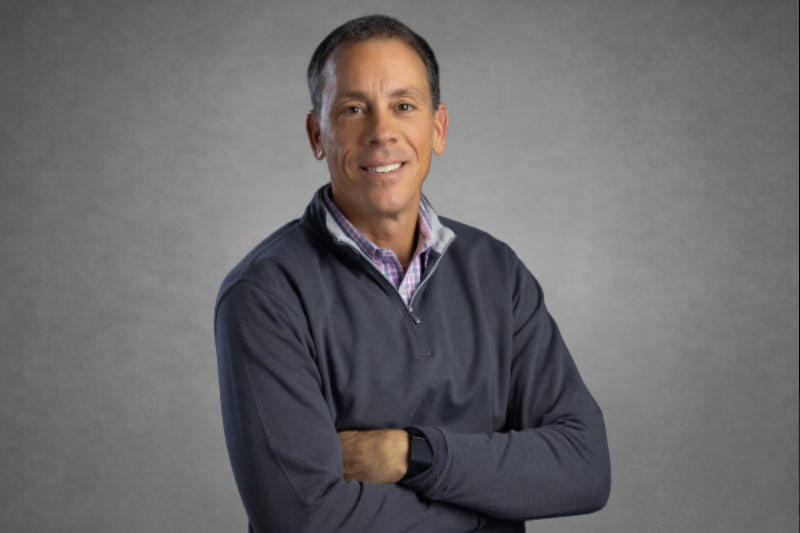
Jim VandeHeiCo-Founder & CEO
In this interview, Jim VandeHei, Co-Founder and CEO of Axios and co-author of Smart Brevity, analyzes how generative artificial intelligence and pervasive digital noise are reshaping executive communication and public trust. He shares strategic lessons on building sustainable media enterprises, scaling workplace productivity software with Axios HQ, and maintaining brand integrity amid societal polarization. VandeHei delivers essential leadership guidance on radical transparency, editing discipline, and preparing institutions for accelerated political and technological disruptions.

Founder Stats
- Technology
- Started 2016
- Approx. USD 8 Million/mo
- 500+ team
- Arlington, Virginia, United States
About Jim VandeHei
Jim VandeHei is the Co-Founder and CEO of Axios, a leading digital media company, and the creator of Axios HQ, an enterprise internal communications software platform. Prior to launching Axios in 2016, he co-founded Politico and served as its chief executive officer, revolutionizing political journalism. VandeHei is the co-author of the bestselling business book Smart Brevity, advising corporate executives and institutions worldwide on cutting through digital noise with disciplined, punchy, and transparent communication.
Interview
October 29, 2026
What fundamental flaw in modern digital communication inspired you to establish Axios and Smart Brevity?
Most corporate communications and traditional media articles are bloated with unnecessary jargon, throat-clearing preambles, and self-indulgent length. Human attention spans have fundamentally compressed in the digital age, yet organizations continue writing five-page memos that nobody reads. We built Axios around the core insight that respecting people's time through ruthless editing, clean hierarchy, and clear context is the ultimate form of customer service.
How does generative artificial intelligence impact the volume of corporate noise and institutional credibility?
Generative artificial intelligence has reduced the marginal cost of creating mediocre text to virtually zero, unleashing an unprecedented tsunami of synthetic verbiage. When everyone can generate five thousand words of plausible-sounding copy in five seconds, brevity and verified human perspective become infinitely more valuable. Leaders who rely on raw AI output without editorial discernment will destroy trust with their employees and shareholders.
Why did you choose to build Axios HQ as a standalone software product alongside your news business?
Every Fortune 500 chief executive officer we spoke with acknowledged that internal communication was fundamentally broken, leading to disengaged workforces and wasted productivity. Rather than keeping our Smart Brevity methodology as an internal secret, we packaged our proprietary machine learning algorithms and editorial frameworks into enterprise software. Axios HQ empowers corporate teams to draft concise, engaging internal updates that employees actually consume.
How do you maintain editorial neutrality and bipartisan trust in an era of intense political polarization?
We adhere to an unyielding standard of clinically fair, evidence-based reporting that describes reality as it exists rather than how partisans wish it to be. If you allow reporters to inject personal ideological bias into coverage, you forfeit the right to be trusted by a mainstream audience. Maintaining rigorous independence is commercially and journalistically essential for enduring enterprise longevity.
What critical discipline must leaders practice when communicating high-stakes corporate decisions?
Leaders must lead with the punchline immediately rather than burying their most important conclusion at the bottom of an email. State clearly what is happening, explain why it matters to the reader, and outline the exact next steps without evasive corporate euphemisms. Radical transparency and unvarnished honesty build cultural resilience far more effectively than manufactured optimism.
How should founders approach subscription monetization versus programmatic advertising in digital media?
Relying exclusively on open-web programmatic banner advertising is a catastrophic strategic dead end for publishers because platform algorithms commoditize generic pageviews. You must build direct first-party relationships through premium newsletters, proprietary enterprise software subscriptions, and high-impact physical events where your audience actively seeks out your content every single morning.
What management lessons did you carry over from building Politico into founding Axios?
At Politico we proved that obsessive specialization in a high-value niche can disrupt massive legacy incumbents. When launching Axios, we took that specialization principle and combined it with radical format innovation and strict workplace culture discipline. We learned to hire mission-driven colleagues who possess immense curiosity, zero entitlement, and a genuine commitment to collaborative excellence.
How do you evaluate the strategic impact of the upcoming 2026 midterm elections on corporate policy?
The 2026 political cycle will center on artificial intelligence regulation, sovereign industrial policy, and fiscal deficits. Corporate leaders cannot afford to remain politically illiterate; they must anticipate shifting regulatory headwinds across antitrust, energy infrastructure, and trade policy while keeping their organizational workforce focused on core operational objectives.
Why is ruthless brevity more difficult to execute than voluminous writing?
Writing concisely requires rigorous thinking and intense cognitive discipline because you must discard seventy percent of what you know to isolate the single essential truth. As Blaise Pascal famously observed, writing a short letter takes far more effort than drafting a long one. Editing is an act of intellectual courage.
How does Axios cultivate retention and engagement among its newsletter readership?
We obsess over high-signal editorial consistency and deliverable predictability. If a subscriber opens your newsletter at six o'clock every morning, they must know with absolute certainty that it will take them under three minutes to get fully informed on the crucial developments shaping their industry. Breaking that contract even once introduces churn risk.
What advice do you offer chief executives on managing internal organizational leaks and transparency?
Assume that every single memo, Slack message, and all-hands recording will eventually become public knowledge. If your internal messaging contradicts your external positioning, you will face an instant credibility crisis. When you operate with total integrity and speak truth internally, leaks lose their power to inflict organizational harm.
How should companies structure their communication habits to avoid employee burnout in remote work?
Kill the endless status meetings and replace them with structured, async updates delivered through concise weekly summaries. When employees spend five hours every day sitting through passive presentations, they have zero time left for deep creative work. Clear async communication restores operational velocity and employee sanity.
What role does local journalism play in your broader long-term corporate vision for Axios Local?
Local news across America has been devastated by hedge fund consolidation and obsolete advertising models, creating dangerous information deserts in major cities. We launched Axios Local to prove that concise, locally focused digital newsletters can achieve sustainable profitability while strengthening civic engagement across dozens of metropolitan communities.
What core philosophy guides your personal daily routine and prioritization as a chief executive?
Table Of Questions
Video Interviews with Jim VandeHei
Axios Co-Founders Jim VandeHei and Mike Allen on the 2026 Midterms, AI, and Simplifying Your Life

Axios Co-Founders Jim VandeHei and Mike Allen on the 2026 Midterms, AI, and Simplifying Your Life
AI Might Kill Us. Here’s Why It Matters w- Jim VandeHei – The Fifth Column
News Media in an AI World - Interview: Jim VandeHei
Axios co-founders on simplifying life and work
Cite This Interview
Use this interview in your research, article, or academic work
Related Interviews

Satya Nadella
Chairman & CEO, Microsoft at Microsoft
In this interview, Satya Nadella, Chairman and CEO of Microsoft, assesses the architectural divergence between open-weight and closed artificial intelligence models and explains why proprietary…

Jake Cooper
Founder & CEO at Railway
In this interview, Jake Cooper, Founder and CEO of Railway, details how the cloud platform scaled to nearly 100 million USD in annual recurring revenue…

Kai Yu
Founder & CEO at Horizon Robotics
In this interview, Dr. Kai Yu, founder and CEO of Horizon Robotics, sits down with Nicolai Tangen, CEO of the Norwegian Sovereign Wealth Fund, to…

Irena Pereira
Founder & CEO at Unleashed Games
In this interview, Irena Pereira, CEO of Infinite Realms and founder of Unleashed Games, explores how gaming can solve the global loneliness epidemic. Drawing on…

Vineet Nayar
Former CEO at HCL Technologies
In this interview, Vineet Nayar, former CEO of HCL Technologies, challenges conventional ideas about managing people, the role of Indian IT in the AI era,…
Tobi Lütke
Founder & CEO at Shopify
In this interview, Tobi Lütke, founder and CEO of Shopify, shares how AI agents and a company-wide culture shift are reshaping the future of work.…