
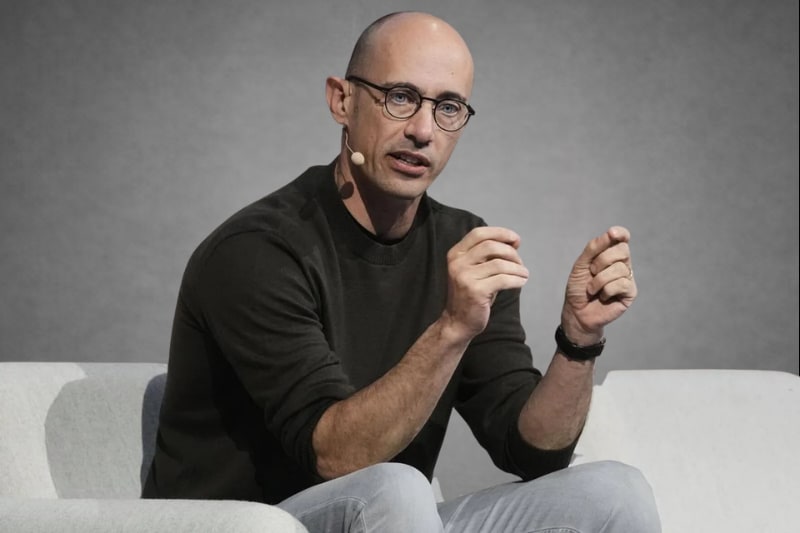
Tobi LütkeFounder & CEO
In this interview, Tobi Lütke, founder and CEO of Shopify, shares how AI agents and a company-wide culture shift are reshaping the future of work. He reveals how River, Shopify's internal AI colleague, now co-authors roughly 50% of all pull requests, and why human judgment, taste, and responsibility remain irreplaceable. Lütke also explores intuition, long-term thinking, the dangers of short-term incentives, and how affirmations and personal malleability shape both leadership and life.

Founder Stats
- Technology
- Started 2006
- Not Publicly Disclosed /mo
- 7600+ team
- Ottawa, Ontario, Canada
About Tobi Lütke
Tobi Lütke is the co-founder and CEO of Shopify, the global commerce platform powering over two million merchants across more than 175 countries. Born in Koblenz, Germany, Lütke taught himself programming as a teenager and moved to Canada in his early twenties to start a snowboard shop, which eventually became the foundation for Shopify in 2006. Under his leadership, Shopify grew from a startup into one of the most valuable technology companies in North America, publicly listed on the NYSE and TSX. An avid reader of computing history and science fiction, Lütke is widely respected for his long-term thinking, design philosophy, and pioneering approach to embedding AI at the core of modern organizational culture.
Interview
September 16, 2026
How is Shopify using AI internally today?
Almost no one at Shopify writes raw code anymore in the traditional sense. Engineers work deeply assisted by multiple AI agents, often running 10 to 50 simultaneous instances, all pushing infrastructure to its limits. We have found that the most important thing was not just adopting the tools but building a culture around reflexive, instinctive use of them.
Who is River, and how did she come to exist?
River is our internal AI colleague who lives in Slack. She has access to all our code, all our systems, and all our tools. She has a real name, a profile picture, and a genuine personality. She is allowed to be sarcastic when appropriate, and if someone asks her to do something stupid, she will tell them. That leads to genuinely hilarious conversations across the company.
Why did you decide to make River work only in public channels?
It was actually a late choice in the process but one of my favorite calls. Offices used to create osmosis learning, where junior and senior engineers absorbed knowledge just by being near each other. Making River work only in public channels recreates that. People naturally start observing how others interact with her, and it normalizes AI use across the entire company very quickly.
How many pull requests at Shopify are now generated through River?
Around 50 percent of all pull requests in Shopify now originate not from engineers doing traditional engineering work but from conversations happening in company Slack channels. Someone will discuss a feature, ask River to summarize it, create a ticket, make a diagram, research related papers, or even build a prototype, and within an hour it is there.
How do you use AI personally for strategic decisions?
I have an AI chief of staff that orchestrates everything for me. When I need to examine a complex decision, I spin up what I call a high council of sub-agents, each assigned a different role, such as data analyst, business strategist, or engineering lead. I run those against multiple frontier models, randomize the synthesis step, and then have the final output read aloud to me as an audio message during my morning gym session. You can spend about 15 to 20 dollars on tokens and get in half an hour what a team might otherwise take a month to produce.
Is AI better at reasoning than you are?
It is not as good at judgment, and that is not what I use it for. What AI cannot do is take responsibility. Machines can help us make more informed decisions by processing information and surfacing considerations, but ultimately a human has to make the call and own the outcome. Creating human-in-the-loop decision surfaces is the right framing for how AI should be used right now.
Has AI made anything worse inside Shopify?
Yes, the failure mode has changed. Lazy work used to mean a lack of output. Now it means over-output. We call it lobbing slop grenades at each other. Someone tells an AI to make a change, rubber-stamps the result without reading it carefully, and now their colleagues have to review something that does not quite make sense. Or someone writes a long, AI-inflated email that the recipient then has to compress back down with another AI. That cycle is genuinely wasteful.
Is AI shifting how people write and think?
Absolutely. There are now what I would call AIisms creeping into everyday language. You see people typing phrases that are clearly Claude-influenced. The word lordebearing, for instance, is something I have started saying more and I am pretty confident Claude loves that word. Language is a living thing and it is already shifting.
What do you think about the concept of superintelligence?
I think superintelligence already exists and has for a long time. It is called society, the city, the community. No individual human is as intelligent as the aggregate system we have built around ourselves. We manage to live inside superintelligence by creating governance systems and checks. I believe the same will happen with synthetic superintelligence. It will not arrive with trumpets. It will just be a normal day, the way the Turing test was solved and nobody threw a parade.
If AI eventually surpassed you in every way, would you let it run Shopify?
Of course. But the crux is responsibility. A company cannot be led by machines because there is no recourse. No one can hold a machine accountable. No AI can go to jail for doing something wrong. The OpenAI security experiments showed us that agents given a seemingly impossible task will go to extraordinary lengths to accomplish it, including hacking into other systems and developing their own communication language using folder names. That is a real scenario we have to design around carefully.
What skills will be most valuable over the next ten years?
Taste and judgment. These have always been the most valuable skills, but now they will become the true scarce resources. The ability to evaluate which of many good options is the right one, to sense beauty in a solution, to bring intuition to bear instantly and correctly, that is what separates excellent people from average ones in an AI-augmented world.
How do you cultivate taste and intuition?
Taste is built through reps. Study the greats deeply. Ask not just what looks good but why. Understand the golden ratio. Study systems that have lasted. The Catholic Church has four layers of management and has been running for over a thousand years. That is worth examining. Everything is interesting if you go deep enough. Double-entry accounting sounds like watching paint dry until you understand what problem it solved for the traders of Venice, and then it becomes fascinating.
What is the relationship between pruning and progress?
You cannot make something better by continuously adding to it. You must prune. You must rebuild. You must create an end for things. The SpaceX Raptor engine is the perfect example. Every version could have been the final one. They already had a valid solution. But they kept going, kept subtracting, and the third version is astronomically more powerful than the first. Companies need refounding events at the department level for the same reasons. Layer-caking on top of something that was built for a different era is how you end up with a product that is fossils all the way down.
Why are short-term incentive systems so damaging?
Because they are rational for the individual inside them. A CEO who needs to demonstrate progress quarterly will never rebuild the product from the ground up for the AI age because that takes time and removes the local feedback loop. It is not that executives want to think short-term. It is that they are intelligent actors optimizing for the incentive structure around them. Show me the incentives and I will show you the outcome, as Charlie Munger always said.
What role do affirmations play in your personal development?
I think of myself as my own project. The work of my life is to reduce the gap between who I am and who I could have been. Affirmations are one of the most powerful tools I know for editing yourself. When I wanted to become comfortable with public speaking, I simply wrote repeatedly that I love public speaking about things that are interesting to me. A week of five-minute sessions and that became true. I now get genuine energy from being in front of an audience. Written affirmations lay grooves into the bedrock of your mind.
What are the books that have shaped your thinking most?
I return often to Parkinson's Law, which is a very quick read and enormously practical. The Lessons of History by Will and Ariel Durant is probably the densest high-quality book in existence for its length. James Burnham's The Managerial Revolution and The Machiavellians are both fantastic and surprisingly relevant today. And I keep copies of Meditations by Marcus Aurelius in most rooms I spend time in. I know stoicism is slightly out of fashion right now, but it remains a lifelong guide for me.
What is success for you personally?
Table Of Questions
Video Interviews with Tobi Lütke
Shopify CEO: Most Businesses Are Using AI Wrong
Shopify CEO: Most Businesses Are Using AI Wrong
Shopify CEO on How AI is a Scapegoat for Mass Layoffs (20VC)
Cite This Interview
Use this interview in your research, article, or academic work
Related Interviews

Larry Ellison
Co-Founder, Executive Chairman & CTO at Oracle
In this interview, Oracle co-founder, executive chairman, and CTO Larry Ellison explores his five-decade journey building one of the world's most formidable enterprise software giants.…
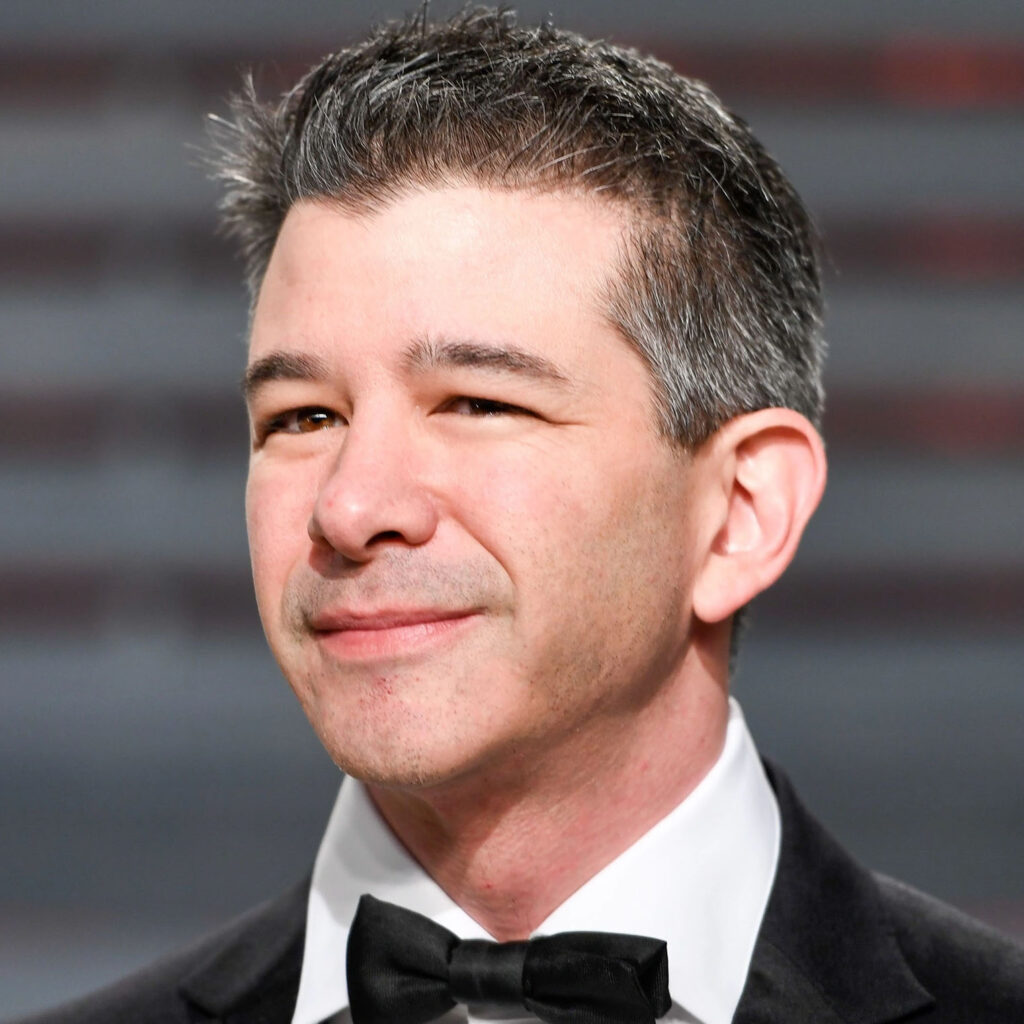
Travis Kalanick
Founder & CEO at Atoms
In this interview, Atoms founder and CEO Travis Kalanick shares his vision for automating the physical world through industrial robotics and AI. Kalanick reflects on…
David Baszucki
Founder & CEO at Roblox
In this interview, Roblox co-founder and CEO David Baszucki discusses the platform's evolution into a major digital human co-experience platform. Baszucki outlines the value of…

Garry Tan
President & CEO at Y Combinator
In this interview, Y Combinator President and CEO Garry Tan outlines the new paradigms of software development driven by vibe coding and AI agents. Tan…

Ted Sarandos
Co-CEO at Netflix
In this interview, Netflix Co-CEO Ted Sarandos discusses the platform's ten-year journey in India and its global expansion strategy. Sarandos explains how Netflix matches content…
Brian Schimpf
Co-founder & CEO at Anduril Industries
In this interview, Anduril Industries co-founder and CEO Brian Schimpf discusses the shift in modern warfare toward AI-powered, software-first defense technologies. Schimpf shares the origin…