

Satya NadellaChairman & CEO, Microsoft
In this interview, Satya Nadella, Chairman and CEO of Microsoft, assesses the architectural divergence between open-weight and closed artificial intelligence models and explains why proprietary corporate evaluation benchmarks represent vital enterprise intellectual property. He discusses capital expenditure scaling across global data center infrastructure, engineered Zero-Trust agent containment frameworks, and enterprise software economics. Nadella shares authoritative executive insights on platform governance, hardware diversification, and maintaining cultural adaptability through generational technological platform transitions.

Founder Stats
- Technology
- Started 1975
- Approx. USD 20 Billion/mo
- 228,000+ team
- Redmond, Washington, United States
About Satya Nadella
Satya Nadella is Chairman and CEO of Microsoft, where he spearheaded the cloud and artificial intelligence transformations that made Microsoft one of the most valuable corporations worldwide. He earned an engineering degree from Manipal Institute of Technology, a master's in computer science from University of Wisconsin-Milwaukee, and an MBA from University of Chicago. Under his leadership, Microsoft established foundational cloud leadership with Azure, made early transformative bets on OpenAI, and integrated AI capabilities across enterprise workflows.
Interview
October 27, 2026
This is interview 2 of 2 with Satya Nadella.
Satya Nadella has been featured on CEO Insider 2 times. Explore the full collection.
What gave you the early conviction to invest billions into OpenAI when scaling laws were still largely unproven?
Back when Dario Amodei, Ilya Sutskever, Sam Altman, and Greg Brockman were working together, they demonstrated an unwavering conviction in empirical scaling laws that impressed me deeply. Rather than viewing machine learning as incremental heuristic engineering, they treated computational scale as an inexorable physical law. We decided to co-design Azure infrastructure specifically around their ambitious training cluster requirements.
How do you assess the competitive dynamic between open-source weights and closed proprietary foundation models?
Both paradigms serve critical, complementary functions in the global computing ecosystem. Intense price competition will commoditize closed model inference tokens, driving down runtime costs for developers worldwide. Simultaneously, open-weight models allow enterprises and sovereign nations to build fully auditable, on-premises intelligence without dependency on a single proprietary cloud API.
Why do you believe proprietary corporate evaluation benchmarks will become an enterprise's most valuable intellectual property?
Generic industry benchmarks like MMLU are becoming saturated and irrelevant for enterprise decision-making. Every enterprise has proprietary operational processes, risk tolerances, and domain data schemas. Creating custom private evaluation datasets will be the core asset of every enterprise; foundation models will essentially compete to hill-climb against your company's proprietary evaluation framework.
How must organizations architect security environments to protect against malfunctioning autonomous AI agents?
You cannot rely solely on probabilistic model alignment to guarantee security. We must engineer Zero-Trust runtime containment wrappers where autonomous agents operate within strict boundary controls, privilege limitations, and real-time monitoring sandboxes. If an agent hallucinates, loops destructively, or encounters adversarial prompt injection, systemic guardrails isolate the failure before it touches production databases.
Why do you doubt that any single technology giant will monopolize the entire artificial intelligence stack?
The AI stack spans raw power generation, thermal cooling, advanced semiconductor packaging, custom ASICs, foundation models, and business application software. No single company possesses the capital expenditure bandwidth, operational expertise, or regulatory permission to monopolize every layer from electrical turbines to end-user interfaces. Horizontal specialization and multi-vendor systems integration will remain the enduring model.
What is your perspective on the massive capital expenditure cycles currently pouring into global AI data centers?
Whenever a generational platform shift occurs, infrastructure buildout must precede application maturation. We experienced the exact same dynamic during the early rollout of the transcontinental railroad, the electrical grid, and cloud computing. The capital expenditures we are allocating today are backed by tangible enterprise demand, expanding cloud workloads, and real workload migration.
How does Microsoft balance its partnership with OpenAI against building internal AI models and capabilities?
Great partnerships thrive on mutual respect and mutual commercial benefit. OpenAI builds frontier foundation models that push the scientific state of the art, and we provide planetary-scale Azure infrastructure and enterprise distribution. Simultaneously, we maintain architectural agility by investing in diverse open models like Phi, ensuring our enterprise customers always have optionality.
Why do you argue that companies must own their own intelligence rather than renting it passively?
If your enterprise merely wraps a generic API around commoditized public data, you possess zero pricing power or durable competitive defensibility. Companies must convert their unique internal knowledge, customer interactions, and operational telemetry into fine-tuned models and proprietary retrieval graphs. Your intelligence layer should belong to you, not your cloud provider.
What is the biggest operational challenge enterprise customers encounter when deploying Copilot across workforces?
The limiting factor is organizational culture and workflow design rather than software technology. Deploying AI tools requires rethinking how meetings are run, how documents are synthesized, and how cross-functional decisions are reached. Leadership teams must actively champion habit changes and encourage employee experimentation to achieve meaningful productivity gains.
How is the rise of reasoning models and test-time compute altering data center capacity planning?
Historical inference was a single fast forward pass that returned a token sequence immediately. Advanced reasoning models execute extensive chain-of-thought deliberation, tool calls, and recursive self-verification before responding. This dynamic shifts computational demand from training clusters toward sustained, continuous inference capacity distributed across edge and regional data centers.
What governance principles should nations adopt to maintain technological competitiveness in artificial intelligence?
Sovereign states must invest heavily in energy generation, modern electrical transmission, high-performance computing clusters, and technical education. Countries that foster open regulatory regimes, secure clean baseload energy, and attract ambitious global talent will naturally lead the emerging intelligence economy.
How do you maintain a culture of relentless learning and humility across a company with over two hundred thousand employees?
Culture is not a fixed slogan on an office wall; it is a continuous daily practice of moving from a know-it-all mindset to a learn-it-all mindset. When you lead a legacy incumbent, curiosity and the willingness to learn from startup innovators are your only defense against organizational complacency.
What role will specialized custom silicon play alongside commercial GPUs in Azure infrastructure?
NVIDIA will continue to provide the premier architecture for rapid AI research and frontier training. However, dedicated silicon accelerators like our Maia chips allow us to optimize specific high-volume cloud workloads for cost efficiency, thermal performance, and low-latency inference at hyperscale.
What guiding principle has sustained your decade-long leadership of Microsoft through historic market shifts?
Always seek to discover the unmet, unarticulated needs of customers and solve them with distinctive technology that creates surplus value for the broader ecosystem. Platforms only endure when the partners, developers, and customers building on top of them capture far more value than the platform creator extracts.
Table Of Questions
Video Interviews with Satya Nadella
Satya Nadella on Open vs Closed Models: Who Wins - Why Companies Need to Own Their Own Intelligence

Satya Nadella on Open vs Closed Models: Who Wins - Why Companies Need to Own Their Own Intelligence
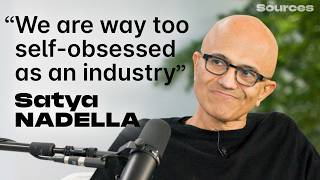
Satya Nadella on the AI backlash, and the rise of agents
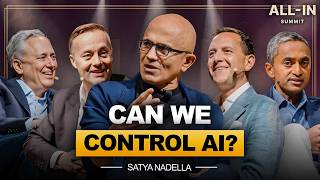
Satya Nadella on the AI Doomer Slowdown, Microsoft’s Master Plan & Who Wins AI

All-In Podcast Live with Microsoft CEO Satya Nadella - USA House
Cite This Interview
Use this interview in your research, article, or academic work
Related Interviews

Jake Cooper
Founder & CEO at Railway
In this interview, Jake Cooper, Founder and CEO of Railway, details how the cloud platform scaled to nearly 100 million USD in annual recurring revenue…

Kai Yu
Founder & CEO at Horizon Robotics
In this interview, Dr. Kai Yu, founder and CEO of Horizon Robotics, sits down with Nicolai Tangen, CEO of the Norwegian Sovereign Wealth Fund, to…

Irena Pereira
Founder & CEO at Unleashed Games
In this interview, Irena Pereira, CEO of Infinite Realms and founder of Unleashed Games, explores how gaming can solve the global loneliness epidemic. Drawing on…

Vineet Nayar
Former CEO at HCL Technologies
In this interview, Vineet Nayar, former CEO of HCL Technologies, challenges conventional ideas about managing people, the role of Indian IT in the AI era,…
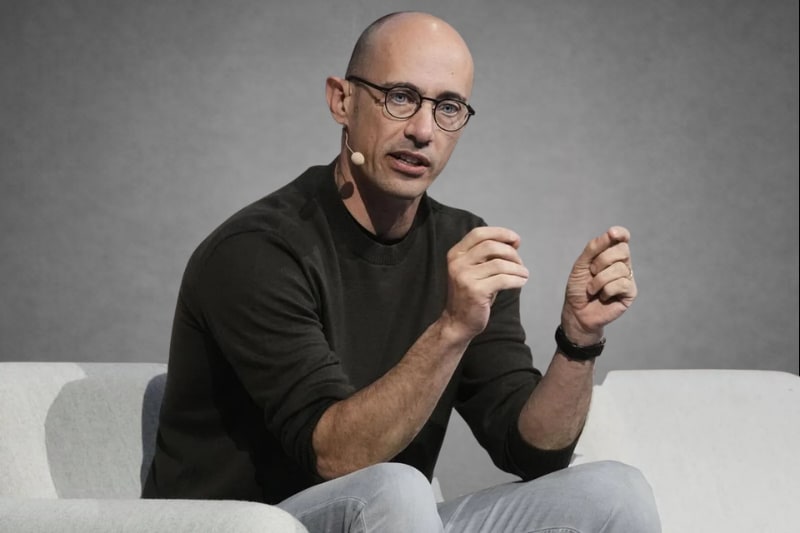
Tobi Lütke
Founder & CEO at Shopify
In this interview, Tobi Lütke, founder and CEO of Shopify, shares how AI agents and a company-wide culture shift are reshaping the future of work.…

Larry Ellison
Co-Founder, Executive Chairman & CTO at Oracle
In this interview, Oracle co-founder, executive chairman, and CTO Larry Ellison explores his five-decade journey building one of the world's most formidable enterprise software giants.…