

Larry EllisonCo-Founder, Executive Chairman & CTO
In this interview, Oracle co-founder, executive chairman, and CTO Larry Ellison explores his five-decade journey building one of the world's most formidable enterprise software giants. Ellison discusses his fierce competitive philosophy, the commercialization of relational databases, aggressive historical acquisitions, and Oracle's multi-hundred-billion-dollar infrastructure pivot into artificial intelligence. He also reflects on high-stakes rivalries, geopolitical partnerships, media expansion through Skydance, and his enduring pursuit of technological dominance.

Founder Stats
- Technology
- Started 1977
- Approx. USD 7.5 Billion/mo
- 160000+ team
- Austin, Texas, United States
About Larry Ellison
Larry Ellison is the co-founder, executive chairman, and chief technology officer of Oracle Corporation, which he founded in 1977. One of the most influential and enduring figures in global computing, Ellison pioneered the commercial relational database and transformed Oracle into a ninety billion USD enterprise cloud infrastructure leader. He is also a prominent investor across aerospace, artificial intelligence, healthcare longevity, and global media conglomerates.
Interview
September 14, 2026
How did your upbringing in Chicago and early family dynamics forge your competitive drive?
Growing up in Chicago, I learned at age twelve that I was adopted. My adoptive father was intensely critical and repeatedly told me that I would never amount to anything. Rather than breaking my spirit, that negativity ignited a fierce internal determination to prove my worth independently. Most overachievers are driven not merely by the pursuit of success, but by an acute fear of failure and a stubborn refusal to let critics define their limits.
What inspired you to leave college and pursue computer programming in California?
When my adoptive mother passed away while I was enrolled at the University of Illinois, I dropped out, packed my belongings into a car, and drove to Northern California. Silicon Valley was beginning to awaken, and businesses had an insatiable appetite for computer programmers. I taught myself coding on the job, realizing quickly that computer systems and software architecture were going to reshape global enterprise commerce.
How did a CIA project code-named Oracle lead to the creation of the commercial relational database?
In the late 1970s, my co-founders and I worked on a specialized project for the CIA that carried the code name Oracle. While researchers at IBM originated the theoretical concept of the relational database, they failed to commercialize it. We recognized that businesses were creating vast mountains of digital information without scalable storage and retrieval mechanisms, so we built and brought the world's first commercial relational database to market.
Why did Oracle prioritize sales aggression and market competition from its earliest days?
Nothing concentrates a company's strategic focus like fierce competition. In enterprise software, being technologically elegant is meaningless if you fail to capture distribution. I embraced an aggressive, zero-sum market mindset because enterprise customers depend on foundational infrastructure that cannot be allowed to fail. We out-marketed, out-sold, and out-recruited our rivals to secure commercial dominance.
How did your intense rivalry with Bill Gates and Microsoft shape enterprise software history?
Oracle completed its initial public offering just one day before Microsoft in 1986. That kicked off decades of intense rivalry. When Microsoft engaged in anti-competitive tactics against browser pioneers like Netscape, we actively funded investigations into their enterprise practices. I have always relished direct competitive battles because a formidable rival pushes an organization to execute at its absolute highest operational standard.
How did Oracle survive the near-fatal accounting and revenue recognition crisis in the early 1990s?
In the early 1990s, our aggressive sales culture led to severe overstatements of software licenses, causing our stock price to plummet by seventy-five percent and bringing the company near bankruptcy. That crisis forced me to overhaul senior leadership, institute strict financial controls, and rewrite modern software accounting rules. Surviving that existential threat gave Oracle the operational discipline required to scale into a global conglomerate.
What was the strategic rationale behind hostile takeovers of competitors like PeopleSoft and Siebel Systems?
As enterprise software matured, organic growth alone was insufficient to monopolize mission-critical back-office systems. We executed aggressive acquisitions, including the famous hostile takeover of PeopleSoft for over ten billion dollars and the purchase of Siebel Systems. By absorbing their customer bases and consolidating HR and CRM applications into the core Oracle stack, we eliminated key competitors while expanding our recurring software revenues.
Why did you decide to step down as CEO in 2014 while remaining chief technology officer and executive chairman?
Stepping down from the chief executive role allowed me to delegate corporate administrative burdens and quarterly earnings roadshows to trusted operational co-CEOs while dedicating my full energy to software architecture and product strategy. As CTO, I remained focused on where computing was going: multi-cloud interoperability, autonomous self-repairing databases, and massive hyperscale cloud infrastructure.
How has Oracle managed to scale annual revenues toward ninety billion USD across multiple product generations?
Oracle succeeded across five decades because we never trapped ourselves in legacy architectures. We migrated our entire enterprise customer base from on-premise mainframe databases to client-server architectures, then into the internet era, and finally into autonomous cloud services. By underpinning mission-critical enterprise workflows like payroll, inventory, and supply chain logistics, our recurring software footprint continues to compound.
Why did Oracle sacrifice short-term free cash flow to aggressively build out physical cloud infrastructure?
Building a world-class hyperscale cloud network requires hundreds of billions of dollars in physical capital expenditures for land, advanced cooling, power generation, and specialized graphics processing clusters. While Wall Street often obsesses over short-term quarterly cash flow, winning the foundational AI infrastructure layer demanded massive upfront capital deployment to construct the physical backbone that powers the next computational century.
What is the significance of Project Stargate and the multi-hundred-billion-dollar AI partnership with OpenAI?
Project Stargate represents a massive supercomputing initiative where OpenAI and international partners rely on Oracle Cloud Infrastructure to deploy frontier AI models. Constructing dedicated superclusters spanning gigawatts of power in locations like Texas gives frontier developers the unprecedented scale required to train next-generation artificial intelligence, positioning Oracle at the geopolitical center of sovereign computing power.
How did Oracle secure pivotal national security and sovereign cloud contracts like the US TikTok infrastructure?
Oracle built a trusted reputation across defense, intelligence, and municipal governments over forty-five years. When geopolitical security concerns threatened to ban TikTok in the United States, Oracle stepped in as the trusted domestic technology partner to isolate American user data inside sovereign, secure cloud data centers, proving our capability to manage highly sensitive digital environments.
Why do you maintain approximately forty percent equity ownership of Oracle rather than diversifying?
Maintaining substantial equity ownership grants me total strategic alignment with the company's long-term survival and prosperity. It insulates Oracle from short-sighted activist investor pressures, enabling us to make multi-billion-dollar contrarian infrastructure bets that pay off over ten or twenty-year horizons rather than sacrificing our competitive edge to satisfy immediate Wall Street consensus.
How are your personal investments and family empire expanding into global media through Skydance?
Through my son David Ellison and Skydance Media, we committed tens of billions in equity financing to acquire Paramount and target major studio consolidations. Just as Oracle built the underlying software that manages enterprise commerce, building a dominant entertainment and content empire secures distribution across consumer storytelling, digital streaming, and cultural intellectual property.
What motivates you to continue actively engineering and leading technology shifts at eighty-two years old?
I compete because I love building things and testing human limits against formidable challenges. Retiring to quietly watch the sunset holds zero appeal for me. Whether funding cutting-edge cancer longevity research through the Ellison Institute or architecting the planetary computing grids that power artificial intelligence, staying at the technological frontier is the ultimate intellectual adventure.
Table Of Questions
Video Interviews with Larry Ellison
How Larry Ellison Built His Empire
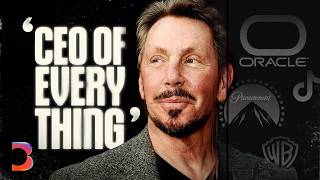
How Larry Ellison Built His Empire
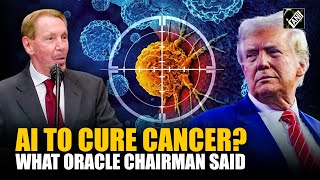
The $500B Stargate AI Supercomputer

Oracle CloudWorld Keynote: Larry Ellison on AI and Multicloud
Cite This Interview
Use this interview in your research, article, or academic work
Related Interviews
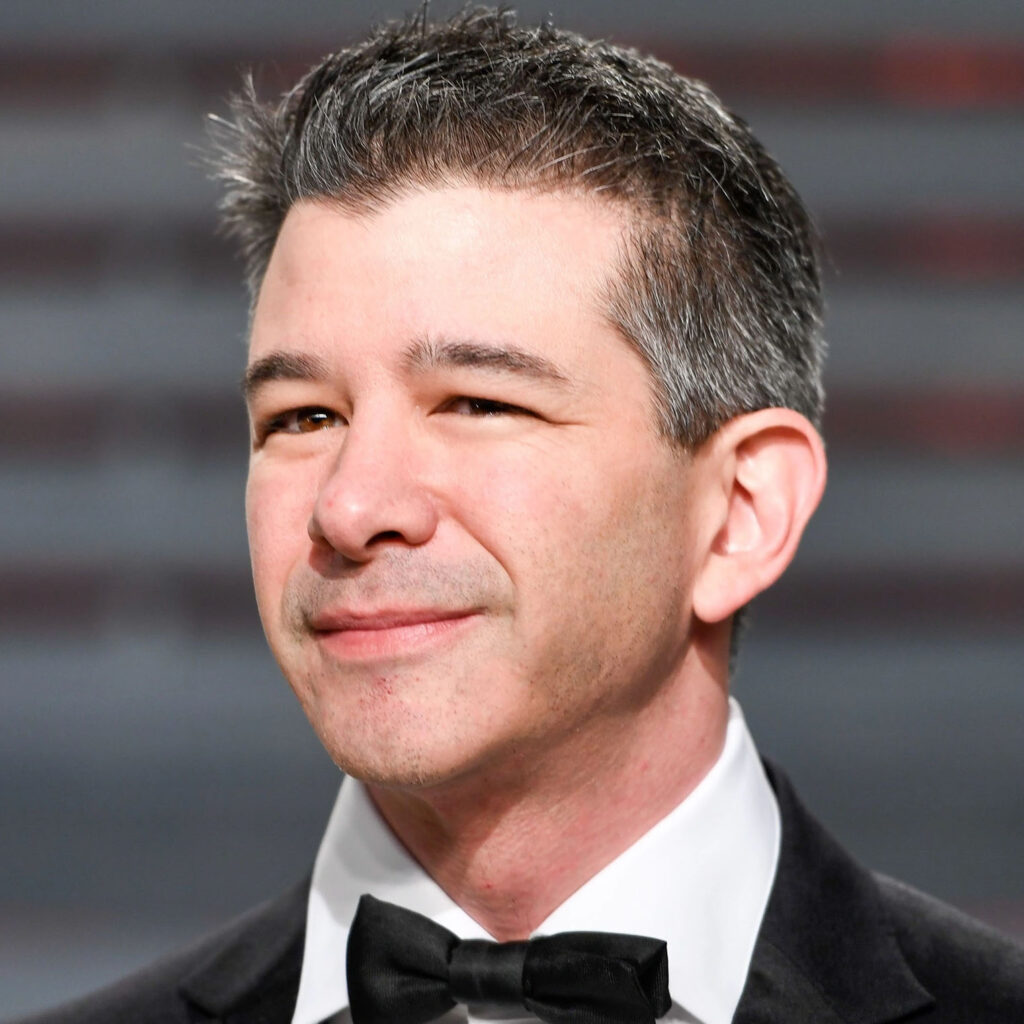
Travis Kalanick
Founder & CEO at Atoms
In this interview, Atoms founder and CEO Travis Kalanick shares his vision for automating the physical world through industrial robotics and AI. Kalanick reflects on…
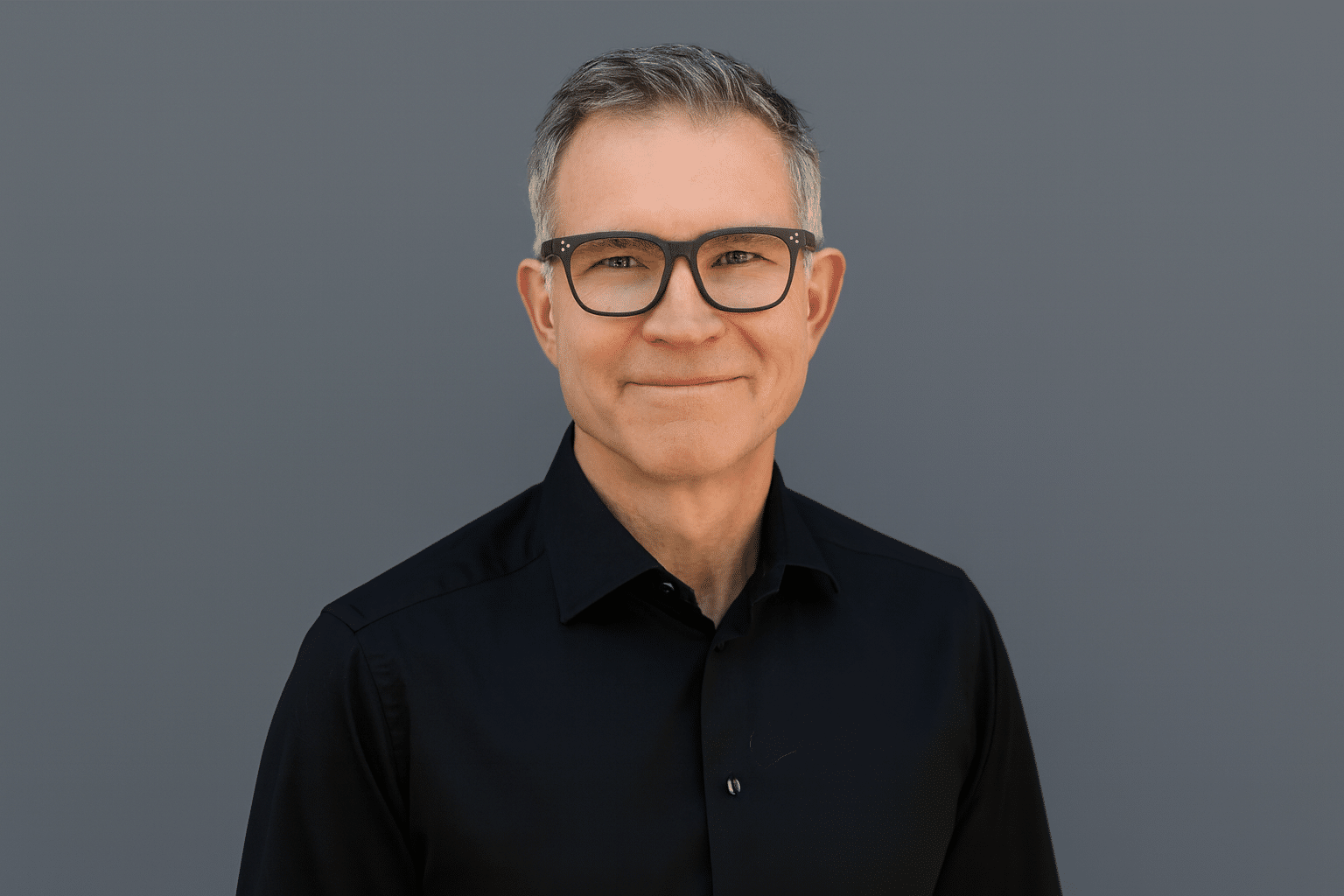
David Baszucki
Founder & CEO at Roblox
In this interview, Roblox co-founder and CEO David Baszucki discusses the platform's evolution into a major digital human co-experience platform. Baszucki outlines the value of…

Garry Tan
President & CEO at Y Combinator
In this interview, Y Combinator President and CEO Garry Tan outlines the new paradigms of software development driven by vibe coding and AI agents. Tan…

Ted Sarandos
Co-CEO at Netflix
In this interview, Netflix Co-CEO Ted Sarandos discusses the platform's ten-year journey in India and its global expansion strategy. Sarandos explains how Netflix matches content…
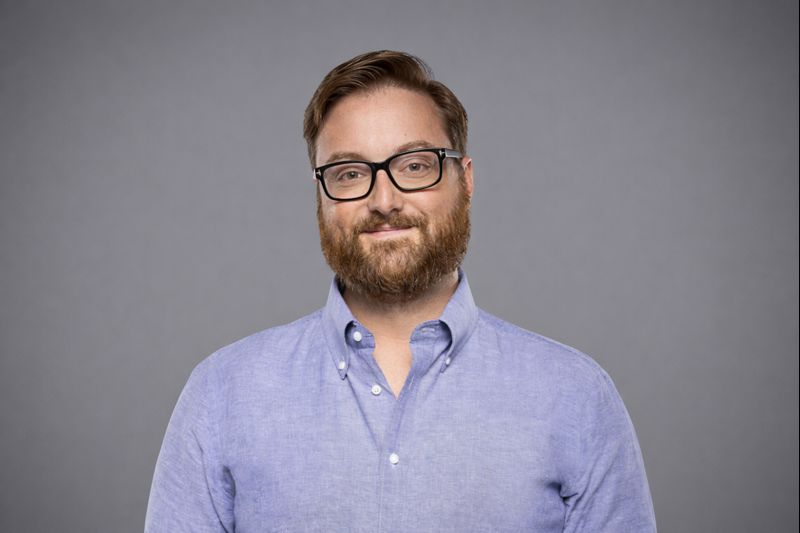
Brian Schimpf
Co-founder & CEO at Anduril Industries
In this interview, Anduril Industries co-founder and CEO Brian Schimpf discusses the shift in modern warfare toward AI-powered, software-first defense technologies. Schimpf shares the origin…

Amanda McMaster
Interim CEO at Boston Dynamics
In this interview, Boston Dynamics interim CEO Amanda McMaster explains the commercial transition of the pioneer robotics firm from research laboratory to industrial deployer. McMaster…