

Garry TanPresident & CEO
In this interview, Y Combinator President and CEO Garry Tan outlines the new paradigms of software development driven by vibe coding and AI agents. Tan shares lessons from his early career regrets, recounts Peter Thiel's attempt to recruit him for Palantir, and discusses how Y Combinator democratizes access to Silicon Valley. He also details the transition from traditional SaaS to agentic workflows, the role of security tools like Crab Trap, and San Francisco civic reforms.

Founder Stats
- Technology
- Started 2005
- Not Publicly Disclosed/mo
- 100+ team
- Mountain View, California, United States
About Garry Tan
Garry Tan is the President and CEO of Y Combinator, the world's leading startup accelerator founded in 2005. Tan co-founded Posterous and Initialized Capital before taking the helm at YC in 2023. A Stanford engineering graduate, he is a prominent advocate for builder culture, vibe coding, open-source AI agents, and local civic reform in San Francisco, helping turn outsiders into startup industry insiders.
Interview
August 17, 2026
What did the Silicon Valley startup landscape feel like when you graduated Stanford in 2003?
It was a very bleak moment right after the NASDAQ crashed and the first web boom ended. People genuinely believed it might be the end of technology. There were almost no startup jobs available in the Bay Area, and I was choosing between offers from Microsoft Windows Mobile and Expedia to pay off my student loans.
Why do you regret chasing hot tech trends early in your engineering career?
I chased what was hot instead of focusing on my core expertise in web programming. I left web programming exactly when Mark Zuckerberg was building early versions of Facebook. I learned that you should not follow the crowd; when everyone says a sector is dead, that is often the perfect time to build in it.
What is the difference between naive earnestness and mature courage for a founder?
Earnestness is often misunderstood as naivety, but it is actually a result of maturity and courage. It means having the conviction to trust your own direct experiences and observations, even when blogs or social media platforms contradict you. It is about staying true to your unique knowledge instead of role-playing a founder.
How do you define the difference between working from a map versus looking at the territory?
Working from a map means letting the opinions of traditional investors or tech trends dictate your career. Looking at the territory means examining the ground truth directly. It means co-founding companies with the smartest people you personally know and solving real, physical bottlenecks that you observe firsthand in your environment.
How did Peter Thiel recruit you for Palantir and why did you decline his offer?
Peter flew me down from Seattle to join Palantir as a co-founder and offered to match my seventy thousand dollars salary at Microsoft. I declined because I was obsessed with corporate status and expected a promotion at Microsoft. It was a multi-billion dollar mistake driven by working from a map instead of my instincts.
What did your experience at Palantir teach you about corporate culture and cults?
How does Y Combinator democratize access to Silicon Valley for outside founders?
Historically, you had to attend specific schools or navigate elite social circles to get funding. Y Combinator replaced that gatekeeping with a simple online application. We give builders a fair shake based on their ideas and execution, welcoming thousands of new founders to the Silicon Valley ecosystem every year.
Why does Y Combinator prioritize creating a real community for early-stage founders?
Building a startup is incredibly solitary and stressful. You face days when your co-founder loses hope, your best engineer quits, or you lose a major client. You need a trusted community of peers with whom you can be completely honest and vulnerable without having to act like you are constantly succeeding.
How is vibe coding and agentic coding transforming the role of software developers?
Why do you believe that pure seat-based SaaS business models are under threat?
SaaS was historically treated as the ultimate business model, but pure seat-based SaaS is unlikely to survive the next decade. If AI agents can write code and handle business processes instantly, seat-based pricing loses its meaning. Startups must leverage SaaS as a wedge to build data moats and network effects.
How did you build Gary's List and what did it teach you about AI agent capabilities?
I built Gary's List as an agentic newsroom using open-source tools to automate research. I realized that using agentic retrieval-augmented generation allows an AI to maintain a massive context of one million tokens in its head. This enables founders to delegate entire business processes to markdown files that execute perfectly.
Why is software code no longer considered precious in the era of AI?
Previously, shipping software was an incredibly complex process requiring project managers, developers, and QA teams. Today, code generation is cheap and immediate. The bottlenecks of the past are gone, and a founder's taste, product design instincts, and high agency have become the most valuable attributes.
How are mid-career founders in their thirties and forties leveraging AI agents?
We are seeing a major trend of experienced founders in their late thirties and forties building highly successful startups. These founders know exactly what to build and how to navigate enterprise systems. By using AI agents, a small team of two or three people can scale to fifteen million dollars in annual recurring revenue.
How does Brex use the open-source Crab Trap tool to manage AI agent security?
Pedro Franceschi from Brex created Crab Trap to monitor the network traffic and actions of AI agents. Since agents can execute code autonomously, Crab Trap serves as a security proxy to manage their permissions and ensure they do not perform unauthorized actions or compromise sensitive financial systems.
How can AI agents improve corporate compliance and reduce internal meeting bureaucracy?
AI agents can analyze meeting transcripts across an entire organization to identify compliance issues and operational roadblocks. This allows executives to understand ground-truth data two levels down without attending every meeting. It eliminates internal bureaucracy and aligns team coordination programmatically.
Why are you optimistic about the slow pace of governmental and institutional change?
What motivated you to get personally involved in San Francisco local politics?
I got involved because local ideologies began directly hurting families and kids. The school board banned algebra in middle schools, which structurally blocks public school kids from studying engineering. I realized that if builders and citizens do not speak up and organize, local institutions and media will fail the community.
Table Of Questions
Video Interviews with Garry Tan
Garry Tan: New Rules for Founders
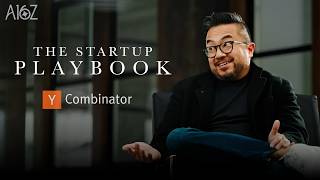
Garry Tan: New Rules for Founders
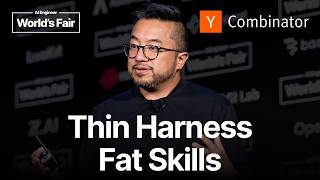
Every company should have a Brain — Garry Tan, Y Combinator
Cite This Interview
Use this interview in your research, article, or academic work
Related Interviews

Vineet Nayar
Former CEO at HCL Technologies
In this interview, Vineet Nayar, former CEO of HCL Technologies, challenges conventional ideas about managing people, the role of Indian IT in the AI era,…
Tobi Lütke
Founder & CEO at Shopify
In this interview, Tobi Lütke, founder and CEO of Shopify, shares how AI agents and a company-wide culture shift are reshaping the future of work.…

Larry Ellison
Co-Founder, Executive Chairman & CTO at Oracle
In this interview, Oracle co-founder, executive chairman, and CTO Larry Ellison explores his five-decade journey building one of the world's most formidable enterprise software giants.…

Travis Kalanick
Founder & CEO at Atoms
In this interview, Atoms founder and CEO Travis Kalanick shares his vision for automating the physical world through industrial robotics and AI. Kalanick reflects on…

David Baszucki
Founder & CEO at Roblox
In this interview, Roblox co-founder and CEO David Baszucki discusses the platform's evolution into a major digital human co-experience platform. Baszucki outlines the value of…

Ted Sarandos
Co-CEO at Netflix
In this interview, Netflix Co-CEO Ted Sarandos discusses the platform's ten-year journey in India and its global expansion strategy. Sarandos explains how Netflix matches content…