
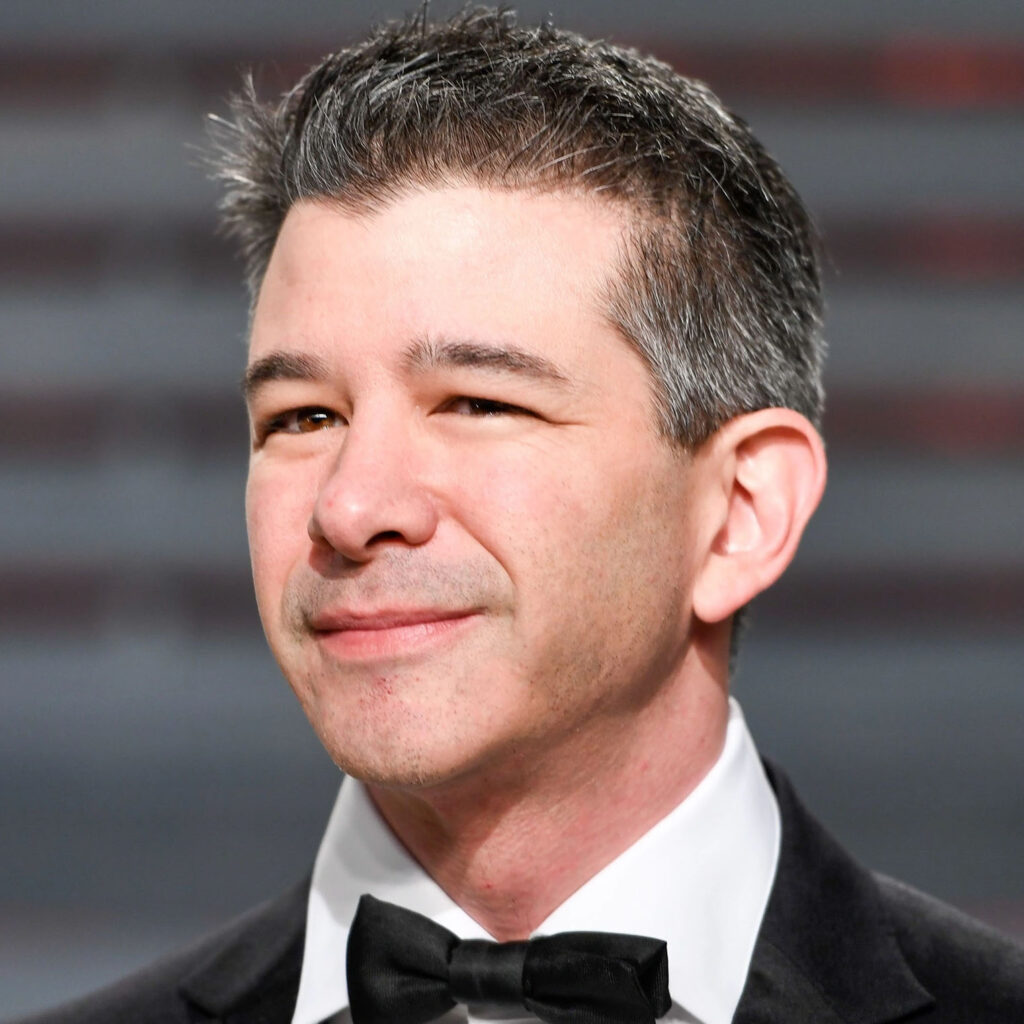
Travis KalanickFounder & CEO
In this interview, Atoms founder and CEO Travis Kalanick shares his vision for automating the physical world through industrial robotics and AI. Kalanick reflects on his lessons from standardizing ridesharing at Uber, the complexities of international expansion in China, and the game theory behind competitive fundraising. He outlines his frameworks for maximizing management capacity, resolving the meta-problem of company scaling, and finding the line between organizational order and chaos.

Founder Stats
- Technology
- Started 2018
- Not Publicly Disclosed/mo
- 2000+ team
- Los Angeles, California, United States
About Travis Kalanick
Travis Kalanick is the co-founder and former CEO of Uber, which revolutionized global transportation. After leaving Uber, Kalanick founded Atoms (formerly City Storage Systems/CloudKitchens) in 2018, operating in stealth for eight years before unveiling its focus on physical AI and industrial robotics. Known for his intense, first-principles approach to company building, Kalanick advocates for progress, operational excellence, and digitizing the physical world.
Interview
August 20, 2026
This is interview 2 of 2 with Travis Kalanick.
Travis Kalanick has been featured on CEO Insider 2 times. Explore the full collection.
What is the core mission of your new company Atoms?
How do you define management capacity and how does it constrain your imagination?
If a founder has to solve every small problem themselves due to a lack of management capacity under them, they are constrained in what portion of their imagination can become reality. If you build excellent management and problem-solving capacity underneath you, the constraints on your imagination unwind, allowing you to scale multiple businesses simultaneously.
What is the meta-problem framework that you use to manage business scalability?
The meta-problem is governed by an equation: the rate of problem-solving must always be greater than or equal to the rate of problem creation. If you create problems faster than you can solve them, your company will drown. You must anticipate the nature of the problems you create and build the capacity to solve them.
Why did you decide to launch Uber in China and what did you learn from the experience?
I wanted to pursue a gnarly, complicated challenge. We stayed in China for weeks to understand the territory. We learned that you cannot just copy-paste a Western business model into China. You have to start from scratch because everything, from mapping technology to consumer behavior, operates under a completely different framework.
How do you define the cultural value of being super pumped at your companies?
Super pumped is about having infectious enthusiasm about the hard things. The more weird, gnarly, and seemingly impossible a problem is, the more awesome it is to solve, and the more excited I get. The most rewarding problems to solve are those that others perceive as impossible but are actually solvable.
What were the specific technical challenges of starting a ride-sharing service in China?
The infrastructure is entirely different. For example, China utilizes a different GPS mapping system than the West. If you want to understand how cars move through space and calculate routes accurately, you have to build your tracking around their local GPS framework. That is just one of a hundred things we had to rebuild.
How did you navigate the regulatory and political landscape during your expansion in China?
We partnered with Baidu, giving them a seven percent stake, to help us navigate regulatory hurdles and build trust with Chinese ministers. We learned that in China, progress is only welcome when it is in harmony with stability. As long as we created a foundation of stability, our technological progress was supported.
What is the people's Uber model and how did it differ from standard taxi apps?
Before the People's Uber, Chinese competitors only offered taxi booking. Taxis did not want to pay apps a percentage of revenue and preferred street waves, leaving users underserved. We launched the first peer-to-peer ride-sharing service in China, allowing normal citizens to offer rides, which created a massive, beloved brand.
How do you define the network effect and efficiency edge in ride-sharing?
The network effect is driven by efficiency. If your sign-up flow is simpler and your routing is better, drivers have less dead time. Shorter pickup times make the system cheaper to run. A more efficient network allows you to lower prices without relying on heavy subsidies that smaller, less efficient competitors must pay to compete.
Why did you read John D. Rockefeller's biography and what did you learn from Standard Oil?
I read Rockefeller's biography after building Uber. I learned that he was an incredibly hardcore entrepreneur who optimized every detail. He tested reducing the solder drops on oil barrels from fifty to forty-nine to save costs at scale. He imposed order on a chaotic industry through absolute precision and efficiency.
How do you manage a competitive auction process during a fundraising round?
I focus on the process rather than a target price. We start by offering a low price to clear the market and get initial bidders. If it is a winner-take-all round, we pit bidders against each other to drive the valuation up. In large rounds, we gather demand at different prices to construct a demand curve and close at the optimal valuation.
Why do you advise founders to avoid Benchmark Capital and activist investor coups?
Active investors can be catastrophic and run war rooms to remove founders if they feel their liquidity timeline is threatened. I advise founders to focus on investors who commit to doing no harm. A good operator is a chess grandmaster playing eighty hours a week, whereas VCs are often chess enthusiasts checking in once a quarter.
How do you compare the public persona of Travis Kalanick with the actual person?
The public persona and the actual person are completely different. The media turned business into politics, creating narratives that perverted the truth. My intensity came from my early startup years where I went without a salary and struggled to buy groceries. I ran a massive company with the precision of someone afraid of starving.
Why do you believe that a founder must be willing to take more pain than their competitor?
Entrepreneurship is the lifestyle of taking more pain than the other guy. Like a world-class marathoner at mile twenty-one, if you are not pushing through the pain to reach your full potential, someone else will, and they will win. Progress and excellence are achieved by pushing through that pain.
What is the core difference between specialized industrial robotics and general humanoid robots?
Humanoids are best for low-scale tasks in environments built for humans, like folding laundry or washing dishes at home. But for high-scale industrial automation, like flipping a thousand pancakes an hour or moving freight, you need specialized, purpose-built machines that are engineered specifically for the task.
Why is food e-commerce uniquely dependent on urban real estate and logistics?
Unlike Amazon, which ships stable goods from remote warehouses, prepared food has a thirty-minute half-life. The manufacturing and logistics must happen at the same location, within fifteen minutes of the consumer. This requires building an urban real estate fabric of automated, robotic hubs scattered across every city.
What is your framework for finding the line between order and chaos in an organization?
How would you advise a sixteen-year-old developer to build a company that matters?
Table Of Questions
Video Interviews with Travis Kalanick
Excellence Is the Capacity To Take Pain | Travis Kalanick, Founder of Uber
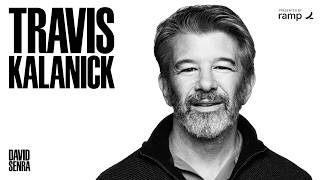
Excellence Is the Capacity To Take Pain | Travis Kalanick, Founder of Uber

"I Ran a 70 Billion Company Like I Might Starve Next Week" | Travis Kalanick
Cite This Interview
Use this interview in your research, article, or academic work
Related Interviews

Vineet Nayar
Former CEO at HCL Technologies
In this interview, Vineet Nayar, former CEO of HCL Technologies, challenges conventional ideas about managing people, the role of Indian IT in the AI era,…
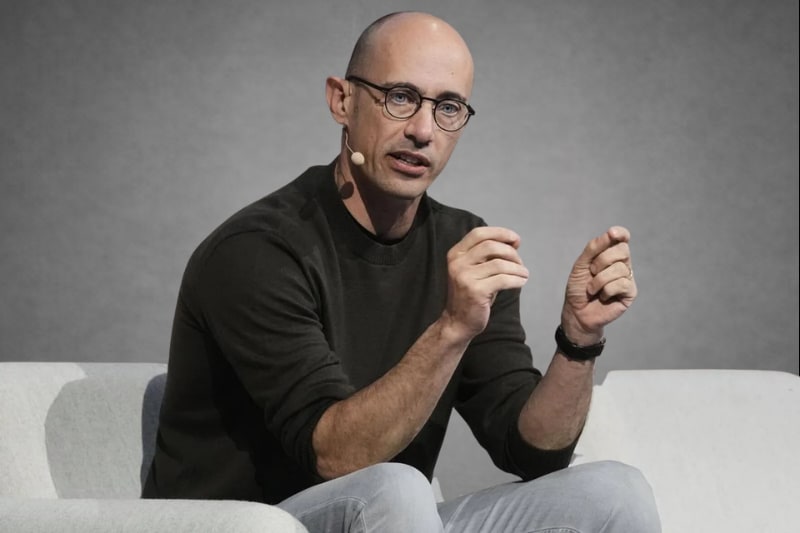
Tobi Lütke
Founder & CEO at Shopify
In this interview, Tobi Lütke, founder and CEO of Shopify, shares how AI agents and a company-wide culture shift are reshaping the future of work.…

Larry Ellison
Co-Founder, Executive Chairman & CTO at Oracle
In this interview, Oracle co-founder, executive chairman, and CTO Larry Ellison explores his five-decade journey building one of the world's most formidable enterprise software giants.…
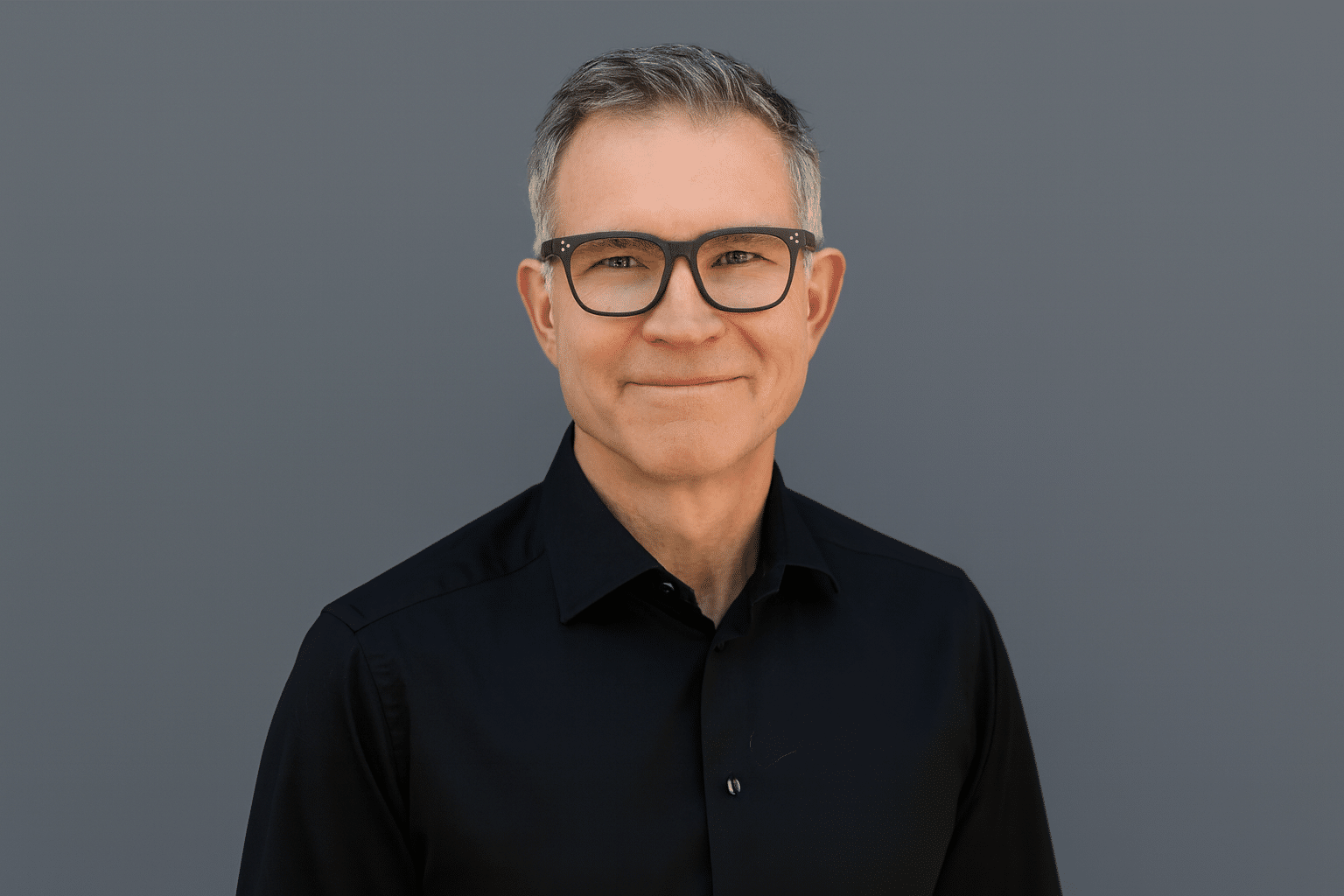
David Baszucki
Founder & CEO at Roblox
In this interview, Roblox co-founder and CEO David Baszucki discusses the platform's evolution into a major digital human co-experience platform. Baszucki outlines the value of…

Garry Tan
President & CEO at Y Combinator
In this interview, Y Combinator President and CEO Garry Tan outlines the new paradigms of software development driven by vibe coding and AI agents. Tan…

Ted Sarandos
Co-CEO at Netflix
In this interview, Netflix Co-CEO Ted Sarandos discusses the platform's ten-year journey in India and its global expansion strategy. Sarandos explains how Netflix matches content…