

Ted SarandosCo-CEO
In this interview, Netflix Co-CEO Ted Sarandos discusses the platform's ten-year journey in India and its global expansion strategy. Sarandos explains how Netflix matches content with viewer tastes using recommendation algorithms, details their focus on organic growth over acquisitions, and outlines how Indian creators are leveraging artificial intelligence tools. He also shares insights on local creative empowerment, live events, co-CEO dynamics, and lessons from early entertainment distribution.

Founder Stats
- Technology
- Started 1997
- Approx. 3.75 Billion USD/mo
- 16000 team
- Los Gatos, California, United States
About Ted Sarandos
Ted Sarandos is the co-CEO of Netflix, a global streaming entertainment service founded in 1997. Sarandos joined the company in 2000, leading its transition from a mail-order DVD rental business into a pioneer of digital streaming and original content production. Under his leadership, Netflix expanded globally and earned numerous awards, including the first Academy Award for India. Sarandos is a recognized entertainment industry veteran and advocate for global storytelling.
Interview
August 12, 2026
How did Netflix co-founder Reed Hastings first pitch the vision of the company in 1999?
What was the original customer relationship problem Netflix was trying to solve?
We were solving a marketing and matching problem rather than a distribution problem. The internet allowed us to help customers find movies they would love out of thousands of choices. We wanted to efficiently connect niche films with the specific audiences who would appreciate them without massive advertising costs.
How does Netflix view the theatrical movie business and its role in the entertainment ecosystem?
Who do you consider to be Netflix's primary competitors for screen time?
How does the Netflix recommendation algorithm differ from polarizing social media algorithms?
How has Netflix helped cross-border content, like Bollywood movies, find global audiences?
By using our personalization algorithms, we can confidently present foreign-language content to viewers in other countries. For example, the Indian film Dhurandhar became the most-watched non-English movie on Netflix globally this year, showing how high-quality local storytelling can easily cross international borders.
Is the global viewing of Indian content on Netflix skewed primarily toward the diaspora?
No, it has crossed over significantly to non-Indian audiences. We recorded three point five billion hours of viewing for Indian content globally this year. A large portion of that viewing comes from international audiences in countries like the United States and the United Kingdom who have no cultural connection to India.
Why has India been described as a long journey for Netflix, and how are you adapting?
India is a massive, diverse market that is historically underscreened in terms of theaters. We realize you cannot run our operations from California. We established a local office of hundreds of people in Mumbai who understand local sensibilities, enabling us to commission authentic series and win national awards.
What did your train trip on the Palace on Wheels teach your executive team about the diversity of India?
How do you balance local creative intuition against global data when greenlighting projects?
Data only tells you what worked in the past, whereas audiences are always looking for something they have never seen before. We rely on creative executives who have the instincts and courage to override the data. We use data to understand the economics of production, but greenlighting is driven by gut.
Why was the massive success of Squid Game impossible to predict using historical viewer data?
What is the difference between classy and massy content, and does Netflix prioritize one over the other?
Classy and massy are industry labels, but consumers do not judge their entertainment that way. They want to be engaged. If I could restart our India operations, I would have launched popular, mass-market shows alongside high-end scripted dramas like Sacred Games. We must serve all tastes under one roof.
Why did Netflix decide against bidding for major live sports league rights in India?
Major sports league rights are typically a loss leader for broadcasters. They are extremely expensive and yield low profit margins because audiences will immediately follow the sport if it moves to another service. We prefer to invest in eventizing specific sporting events, like Christmas Day football games.
How did your early desire to be a journalist shape your career and curiosity about stories?
How are you integrating artificial intelligence tools into the Netflix production workflow?
Why did you decide to walk away from the proposed acquisition of Warner Brothers Discovery?
We have a highly successful organic growth model. We evaluated the Warner Brothers Discovery deal because they had valuable intellectual property, but we were only willing to buy at the right price. When the price rose, we walked away. We prefer building our own franchises over relying on acquisitions.
What is the secret sauce behind the co-CEO leadership structure at Netflix?
Table Of Questions
Video Interviews with Ted Sarandos
Netflix Co-CEO Ted Sarandos on IPL, Dhurandhar, Safed Sagar & Much More | Express Adda
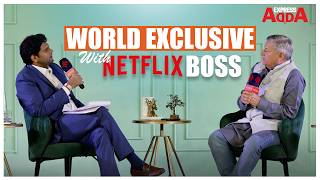
Netflix Co-CEO Ted Sarandos on IPL, Dhurandhar, Safed Sagar & Much More | Express Adda
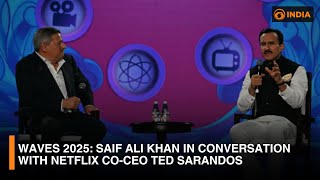
Saif Ali Khan in Conversation with Netflix Co-CEO Ted Sarandos
Cite This Interview
Use this interview in your research, article, or academic work
Related Interviews
Tobi Lütke
Founder & CEO at Shopify
In this interview, Tobi Lütke, founder and CEO of Shopify, shares how AI agents and a company-wide culture shift are reshaping the future of work.…

Larry Ellison
Co-Founder, Executive Chairman & CTO at Oracle
In this interview, Oracle co-founder, executive chairman, and CTO Larry Ellison explores his five-decade journey building one of the world's most formidable enterprise software giants.…
Travis Kalanick
Founder & CEO at Atoms
In this interview, Atoms founder and CEO Travis Kalanick shares his vision for automating the physical world through industrial robotics and AI. Kalanick reflects on…
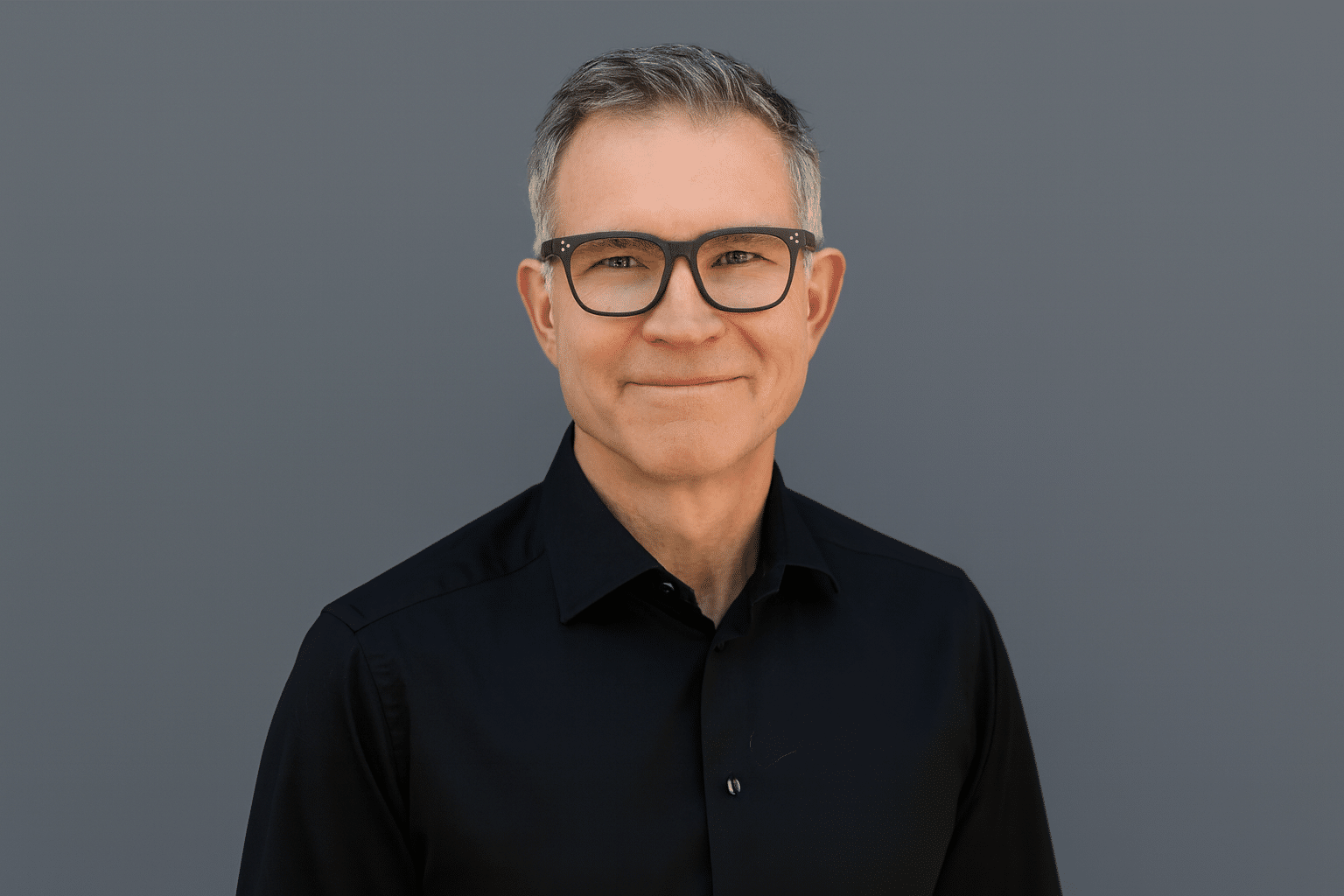
David Baszucki
Founder & CEO at Roblox
In this interview, Roblox co-founder and CEO David Baszucki discusses the platform's evolution into a major digital human co-experience platform. Baszucki outlines the value of…

Garry Tan
President & CEO at Y Combinator
In this interview, Y Combinator President and CEO Garry Tan outlines the new paradigms of software development driven by vibe coding and AI agents. Tan…
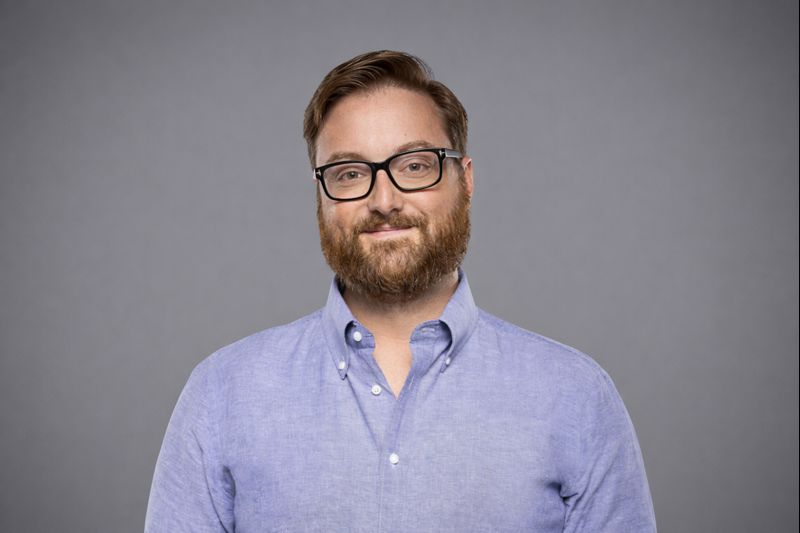
Brian Schimpf
Co-founder & CEO at Anduril Industries
In this interview, Anduril Industries co-founder and CEO Brian Schimpf discusses the shift in modern warfare toward AI-powered, software-first defense technologies. Schimpf shares the origin…