

Kai YuFounder & CEO
In this interview, Dr. Kai Yu, founder and CEO of Horizon Robotics, sits down with Nicolai Tangen, CEO of the Norwegian Sovereign Wealth Fund, to break down China's leadership in autonomous driving. He explains how his company powers one out of every three intelligent passenger vehicles in China, outlines his strategic roadmap toward hands-off, eyes-off, and mind-off driving by 2035, and shares why high-barrier automotive computing creates defensible, enduring business models.

Founder Stats
- Technology
- Started 2015
- Approx. USD 45 Million/mo
- 2000+ team
- Beijing, China
About Kai Yu
Dr. Kai Yu is the founder and CEO of Horizon Robotics, China's leading provider of automotive AI chips and autonomous driving software platforms. A distinguished computer scientist with over thirty years in machine learning, Yu previously led the Baidu Institute of Deep Learning and conducted research at Siemens and NEC Laboratories Silicon Valley. He founded Horizon Robotics in 2015, growing it into a publicly traded powerhouse powering one in three intelligent vehicles in China.
Interview
October 07, 2026
What is the core mission and technological focus of Horizon Robotics?
We are developing the core computing platform for all generic robotics, with our commercial focus currently dedicated almost entirely to passenger vehicles. Our platform integrates proprietary semiconductor architecture with full-stack software algorithms, handling everything from sensor camera perception to trajectory planning and vehicle motion control. Essentially, our processing chips and software models serve as the central brain for intelligent automobiles, enabling assisted and automated driving across global fleets.
How would you describe the functional role of your chips and software inside a vehicle?
Our system functions as a smarter, modern evolution of the automatic transmission. Decades ago, drivers had to shift gears manually, which gradually transitioned into automatic transmissions. Our computing platform takes the next step by managing the real-time cognitive workload of driving. It monitors surrounding vehicles, pedestrians, and obstacles, interprets road conditions, and makes instantaneous acceleration, steering, and braking decisions so that the driver simply stays alert while the vehicle executes the driving mechanics smoothly.
Horizon Robotics currently powers one out of every three intelligent cars in China. Who are your major customers and global partners?
Our domestic customer base includes major Chinese original equipment manufacturers such as BYD, Geely, Changan, Chery, and Great Wall Motor. Simultaneously, we have formed long-standing joint ventures and supply agreements with premier global automotive groups, including Volkswagen Group, Toyota, and Suzuki, alongside top-tier global tier-one suppliers like Bosch and Denso. We act as a neutral technology partner focused on empowering brands rather than competing with them.
Who do you consider your primary competitors in the automotive computing landscape?
We compete with specialized automotive chipmakers like Mobileye, domestic Chinese technology giants like Huawei, and emerging silicon developers like Black Sesame. On the global stage, we also encounter large semiconductor multinational firms such as Qualcomm, Nvidia, Texas Instruments, Renesas, and NXP. However, because our entire company is solely dedicated to automotive computing and robotics rather than spread across multiple consumer electronics segments, our intensity of focus provides a distinct advantage.
Why did you choose to build an enabling computing platform rather than manufacturing your own electric vehicles like Xiaomi or XPeng?
Our ambition has always been to become the equivalent of Microsoft and Intel for the robotics and intelligent vehicle era. Building a car brand allows you to make one product appealing to consumers, but providing an open computing platform enables hundreds of car brands to improve their intelligence. Just as Intel and Windows helped usher all of humanity into personal computing and empowered workers globally, we want to provide the foundational infrastructure that elevates the entire transportation civilization.
When did the foundational vision for generic robotics and automotive computing first hit you?
I have dedicated my entire career to machine learning for over thirty years, beginning as an undergraduate student reading research on neural networks. I was fascinated by the idea that computer algorithms could mimic the human brain and continuously improve by learning from data. After leading artificial intelligence labs at Siemens, NEC in Silicon Valley, and Baidu, I recognized eleven years ago that machines would eventually leave digital screens and operate physically in warehouses, agriculture, eldercare, and transportation. That realization inspired the founding of Horizon Robotics before the commercial market even existed.
What makes automotive semiconductor design a terrible business initially, yet an exceptional business over the long run?
Automotive semiconductor development requires massive upfront capital, rigorous automotive-grade safety certifications, and exceptionally slow return cycles. Developing a new automotive chip takes three to four years of engineering. Once verified, winning a design nomination and integrating it into an automaker's vehicle platform requires another two to five years before mass production begins. That five-to-eight-year cycle sounds terrible to short-term investors, but it creates an extraordinarily high barrier to entry that shields incumbents from casual competition. Once you achieve market leadership, you can sleep peacefully because competitors cannot copy your position overnight.
How do you describe the consumer progression of autonomous driving using your framework of hands-off, eyes-off, and mind-off?
Engineering terms like Level 2 through Level 5 are confusing to everyday consumers, so I explain autonomy in terms my mother can easily grasp. The first stage is hands-off, where the vehicle steers and maintains lane positioning while you keep watch. The second stage is eyes-off, where the system is legally certified and statistically reliable enough that you can look away from the road during specific conditions. The final stage is mind-off, where the vehicle is entirely autonomous, allowing the passenger to sleep, work, or relax without ever taking control.
Where are we today on that autonomous driving timeline, and when do you expect full mind-off capability?
We are making rapid progress toward achieving universal hands-off capability across Chinese passenger vehicles by the end of 2028. Our roadmap targets robust eyes-off capabilities by the end of 2030, and we anticipate fully certified mind-off driving by 2035. Our latest Horizon SuperDrive software running on our Journey 6 series processing hardware already delivers a nearly hands-free experience under diverse driving scenarios, proving that the underlying foundation is functioning effectively.
What technological bottlenecks must still be solved to move safely from hands-off to certified eyes-off driving?
The primary challenge is collecting sufficient real-world mileage across rare corner cases to prove statistical safety beyond any doubt. Automotive driving is life-critical, meaning an algorithmic failure impacts public safety rather than just software convenience. To transition from hands-off to eyes-off, the industry requires larger onboard compute capabilities, bigger generative end-to-end foundation models, and massive troves of diverse, high-quality corner-case driving data that demonstrate the vehicle handles extreme road anomalies better than a human driver.
Why is the domestic Chinese passenger vehicle market so fiercely competitive compared to Western markets?
China's passenger vehicle market is uniquely intense, featuring sixty to seventy competitive domestic automotive brands that launched over 580 new models in the first half of this year alone. Chinese consumers expect continuous software updates, smart cockpit features, automated parking, and advanced navigation assistance. Local engineering teams work with an incredible sense of urgency, shrinking vehicle development cycles down to two years compared to the traditional five-year cycles common in Europe.
How does China's deep and rapid supply chain ecosystem provide a structural advantage for hardware and software innovation?
Over the past two decades, China has developed an unmatched ecosystem for automotive components, electronics, sensors, and manufacturing. A German automotive executive recently described China as a wonderland for supply chains because any new prototype idea can be sourced, iterated, and delivered within days. Instead of waiting weeks for international communications, engineers can coordinate suppliers via instant messaging or take a high-speed flight between Beijing and Shenzhen within three hours, treating the entire country as an integrated manufacturing village.
How should European and Chinese automakers rethink their relationship amid shifting global market dynamics?
Both sides must abandon zero-sum thinking. Historically, European brands viewed China simply as a consumer market to extract profits from, while some Chinese firms now view Europe merely as a market to capture market share. Both views are unhealthy. European legacy suppliers excel in analog semiconductors and traditional vehicle dynamics, whereas Chinese companies excel in digital computing platforms and rapid software iteration. By forming win-win technological alliances, European and Chinese manufacturers can co-develop superior vehicles for global consumers.
What is the fundamental technological overlap between autonomous driving passenger vehicles and embodied humanoid robotics?
Autonomous passenger vehicles and humanoid robots share virtually identical underlying computing patterns. Both rely on perception systems to map physical surroundings, spatial models to interpret human intentions, and planning algorithms to make coordinated decisions in unstructured, dynamic environments. Whether interpreting a traffic officer's hand gesture from a car or navigating a crowded living room as a humanoid robot, the computational requirements will eventually converge into a single unified generic robotics platform.
Why do you believe the winner of the automotive supply chain race will also dominate the emerging robotics industry?
The automotive sector operates at massive global manufacturing volumes, forcing suppliers of sensors, lidars, radars, actuators, and mechanical components to optimize costs, durability, and compact form factors under intense market pressure. Just as the supply chain winners of the smartphone boom naturally came to dominate consumer Internet of Things devices, the component suppliers who win the high-volume electric vehicle market will inevitably provide the cost-effective hardware foundation required to scale humanoid robots.
How will widespread autonomous driving and robotic automation physically reshape future cities and daily human life?
Urban civilization will regain enormous amounts of wasted time and cognitive energy. Today, commuters in congested cities spend hours daily tensely gripping steering wheels, acting as slaves to their vehicles rather than masters of their time. Coordinated autonomous vehicles will eliminate traffic bottlenecks, reduce accidents, and turn vehicles into moving living rooms, diminishing the artificial real estate price disparities between city centers and suburbs. Automation frees humanity from dangerous and tedious manual labor, creating more time for philosophy, arts, scientific research, and genuine human interaction.
How does Zen philosophy and the concept of the power of now influence your daily routine as a chief executive?
I practice a mindset grounded in Zen Buddhism, focusing deeply on the power of the present moment. A famous Zen teaching notes that many people live miserable lives because when they are resting they stress about work, and when they are working they daydream about resting. True happiness is remarkably simple: when you work, focus purely on the task at hand; when you sleep, simply sleep. Running a high-growth technology company requires insane optimism, letting go of past frustrations immediately, and channeling undivided focus into the mission right in front of you.
Table Of Questions
Video Interviews with Kai Yu
Horizon Robotics CEO: Car Chips, Mind-Off Driving and China's Speed | Podcast | In Good Company

Horizon Robotics CEO: Car Chips, Mind-Off Driving and China's Speed | Podcast | In Good Company
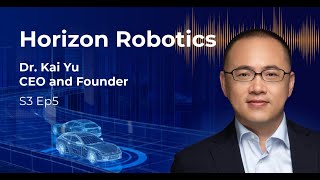
Horizon Robotics: Driving the Autonomous Revolution - Invest in Progress | S3 Ep5

C-Talk | Horizon Robotics CEO Yu Kai: Winning Now AND Owning the Future—5 Years Out
Cite This Interview
Use this interview in your research, article, or academic work
Related Interviews

Irena Pereira
Founder & CEO at Unleashed Games
In this interview, Irena Pereira, CEO of Infinite Realms and founder of Unleashed Games, explores how gaming can solve the global loneliness epidemic. Drawing on…

Vineet Nayar
Former CEO at HCL Technologies
In this interview, Vineet Nayar, former CEO of HCL Technologies, challenges conventional ideas about managing people, the role of Indian IT in the AI era,…

Tobi Lütke
Founder & CEO at Shopify
In this interview, Tobi Lütke, founder and CEO of Shopify, shares how AI agents and a company-wide culture shift are reshaping the future of work.…

Larry Ellison
Co-Founder, Executive Chairman & CTO at Oracle
In this interview, Oracle co-founder, executive chairman, and CTO Larry Ellison explores his five-decade journey building one of the world's most formidable enterprise software giants.…

Travis Kalanick
Founder & CEO at Atoms
In this interview, Atoms founder and CEO Travis Kalanick shares his vision for automating the physical world through industrial robotics and AI. Kalanick reflects on…

David Baszucki
Founder & CEO at Roblox
In this interview, Roblox co-founder and CEO David Baszucki discusses the platform's evolution into a major digital human co-experience platform. Baszucki outlines the value of…