

Kris ChaseFounder & Solo CreatorBootstrapping a 100K USD peptide tracking app through methodical programmatic SE
In this interview, Kris Chase, Founder and Creator of PeptIQ, explains how he built a specialized peptide protocol tracking application on the side that surpassed one hundred fifteen thousand USD in revenue in its first year. He outlines his strategy for leveraging programmatic search engine optimization to capture over five hundred thousand organic visitors without paid marketing, enforcing a hard paywall model, and designing pharmacokinetic half-life calculation features. Chase shares valuable frameworks for senior software engineers building bootstrapped mobile software.


Founder Stats
- Health & Wellness
- Started 2024
- $14K/mo
- Under 10 employees
- Austin, Texas, USA
About Kris Chase
Kris Chase is the Founder and Creator of PeptIQ, a privacy-centric mobile tracking and pharmacokinetic visualization platform built for peptide therapy protocols. With twenty-five years of experience as a software architect and fractional chief technology officer, he has led engineering organizations across multiple venture-backed software enterprises. Operating as a bootstrapped solopreneur, Chase scaled PeptIQ to over fourteen thousand USD in monthly recurring revenue in nine months through organic search engine optimization and focused utility features.
Interview
November 18, 2026
What motivated you to build PeptIQ as a side project after twenty-five years in software engineering?
I was exploring peptide therapies myself for health optimization and found existing tracking tools painfully clunky and disorganized. I realized thousands of health enthusiasts were calculating reconstitution dosages on scrap paper or basic spreadsheets. Drawing on my engineering background, I built a personalized tracking app in about one week to solve my own logging frustrations.
Why did you choose to enter a market that already had dozens of competing tracking applications?
Entering an established category with existing competitors actually validated that strong consumer demand already existed. Instead of trying to invent an unproven concept, I analyzed where existing apps fell short. Most competitors had confusing interfaces, lacked automated half-life decay modeling, or neglected privacy. By polishing those critical core interactions, PeptIQ stood out immediately.
How did programmatic search engine optimization drive over five hundred thousand visitors without paid ads?
I recognized that people research specific peptide protocols and reconstitution calculations before downloading any mobile app. I built dedicated programmatic web pages answering precise scientific dosage questions and reconstitution formulas. When users found our free calculators through Google, they naturally transitioned into downloading the mobile application to manage their daily schedules.
Why did you decide to enforce a strict hard paywall instead of a freemium model?
A hard paywall immediately qualifies serious users who value their health data and are willing to pay for reliable software. Offering a free tier often attracts demanding support tickets that consume valuable engineering bandwidth without generating revenue. By charging thirty USD monthly or one hundred thirty USD yearly, I filter for committed subscribers.
How do you handle the complex math of peptide half-life decay and injection scheduling?
Peptides possess varying pharmacokinetic decay curves that confuse casual users. PeptIQ automatically calculates active compound levels circulating in your system based on precise timestamps and dosage amounts. Providing dynamic visual decay graphs empowers users to optimize their protocol timing and avoid accidental compound accumulation, turning complex biochemistry into effortless daily tracking.
What role does customer privacy play when managing personal medical and health data?
Health data privacy is completely paramount for our community. We intentionally avoid selling user information, running third-party ad trackers, or sharing health protocols with external aggregators. Users trust PeptIQ because their logs remain confidential and encrypted. That reputation for strict integrity creates powerful word-of-mouth recommendations across health forums.
How did you balance building PeptIQ alongside your responsibilities as a fractional technology executive?
Discipline and ruthless feature prioritization were essential. Because I have a demanding day job, I could not waste cycles on vanity features. I focused strictly on high-impact improvements requested repeatedly by paying customers. Automating deployment pipelines and customer billing through RevenueCat freed me to run the entire business in just five hours weekly.
What unexpected hurdles did you encounter when launching on the Apple App Store?
Navigating App Store medical guidelines required meticulous care. Apple scrutinizes health applications closely to ensure they do not provide unauthorized diagnostic advice. We carefully positioned PeptIQ as a personalized logging and calculation utility rather than medical software, ensuring complete compliance with regulatory standards while clearly stating our terms of service.
How has hitting fourteen thousand USD in monthly recurring revenue changed your product roadmap?
Reaching predictable recurring revenue gave me the freedom to invest in deeper pharmacokinetic modeling and personalized biometric integrations. We are currently integrating wearable data like sleep scores and resting heart rate to help users correlate protocols with physical recovery. Stable cash flow allows me to build thoughtfully without outside investor pressure.
Why should software engineers consider building utility mobile apps around their personal hobbies?
When you build for a niche you personally participate in, you inherently understand the user journey and frustrating edge cases. You do not need expensive focus groups or user research because you are the target customer. That innate empathy guides your UX decisions and gives you genuine enthusiasm to iterate persistently.
What common marketing trap should solo developers avoid when trying to gain early traction?
Developers often waste months chasing viral social media trends or paying expensive influencers before establishing organic search visibility. Organic search traffic compound steadily over time, delivering qualified high-intent users every single day. Slow and methodical search engine optimization creates a durable customer acquisition moat that algorithm changes cannot easily destroy.
What is your overarching long-term vision for PeptIQ within the broader wellness ecosystem?
My goal is to establish PeptIQ as the definitive gold standard for personalized peptide protocol logging globally. As preventative medicine and peptide therapies gain widespread clinical acceptance, patients will require professional tools to track outcomes accurately. We want to bridge the communication gap between proactive patients and their functional medicine doctors.
Table Of Questions
Video Interviews with Kris Chase
I built this app on the side for fun. It just hit 100K USD - Starter Story (Interview Video)
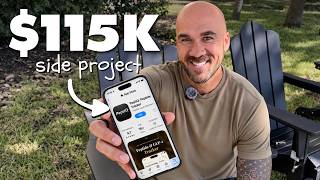
I built this app on the side for fun. It just hit 100K USD - Starter Story (Interview Video)
100,000 USD in 8 months with a Peptide tracking app
Cite This Interview
Use this interview in your research, article, or academic work
Related Interviews

Krissy Cela
Founder & Creative Director at Oner Active
In this interview, Oner Active founder Krissy Cela shares her journey from waitressing and compiling workout PDFs on a student laptop to building a bootstrapped…

Adrian Gore
Founder & Group CEO at Discovery Group
In this interview, Discovery Group founder and CEO Adrian Gore discusses the behavioral economics behind his shared-value insurance model. Gore outlines the four principles of…

Kiran Mazumdar-Shaw
Founder & Executive Chairperson at Biocon
In this interview, Biocon founder and executive chairperson Kiran Mazumdar-Shaw discusses the pioneering of India's biotechnology sector, from launching an enzyme startup to building a…

Cobi Blumenfeld-Gantz
Co-Founder & CEO at Chapter
In this interview, Chapter co-founder and CEO Cobi Blumenfeld-Gantz discusses the company's rise to a $3 billion valuation in the senior health navigation market. He…

Dr Emil Kendziorra
Founder & CEO at Tomorrow.bio
In this interview, Emil Kendziora discusses the future of cryopreservation, longevity science, and the pursuit of life extension. He explains why he views cryostasis as…

Mark Bertolin
CEO at Oscar Health
In this interview, Oscar Health CEO Mark Bertolini explains how technology, AI, and consumer choice can reshape the health insurance industry. He discusses the future…