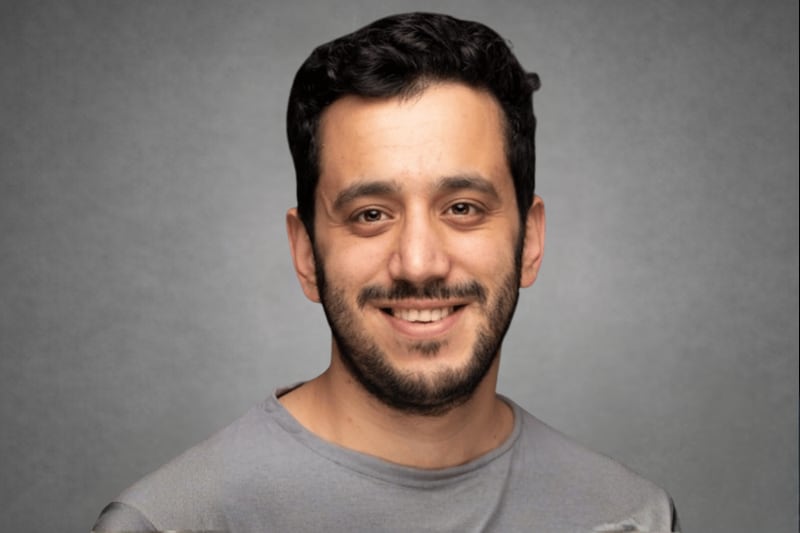
Sam Altman, Co-founder & CEO at OpenAI
4.9/5 Rating
AI
Approx. $2 Billion/mo
Approx. $24 Billion ARR

Sam AltmanCo-founder & CEO

In this interview, OpenAI co-founder and CEO Sam Altman discusses the shifting dynamics of startup creation, the trajectory of model scaling laws, and the geopolitical battle between AI liberty and authoritarianism. Altman shares internal trade-offs, such as pausing Sora to prioritize coding agents, and details his collaboration with Jony Ive. He reflects on managing organizational chaos, aligns incentives through historic economic structures, and examines physical bottlenecks like transistors and energy.

Sam Altman

Sam Altman

Co-founder & CEO

OpenAI

OpenAI

Founder Stats

  • AI
  • Started 2015
  • Approx. $2 Billion/mo
  • 8000+ team
  • San Francisco, California, United States

About Sam Altman

Sam Altman is the co-founder and CEO of OpenAI, the research and deployment company behind ChatGPT. Previously, he served as the president of Y Combinator from 2014 to 2019, guiding the growth of thousands of early-stage startups. A former computer science student at Stanford University, Altman has been a key driver in the development of artificial general intelligence, advocating for decentralized access, technological safety, and broadly shared global prosperity.

Interview

July 27, 2026

Q

What is the biggest shift in starting a startup over the past ten years?

Question 1 of 18
Sam Altman

Clearly AI, which now enables small teams to build extremely advanced products at rapid speeds. A ten-week-old startup today can achieve what used to require a year of work, making old startup playbooks obsolete.

0
Q

How has the definition of a hard startup changed recently?

Question 2 of 18
Sam Altman

It is changing so quickly that traditional mental models no longer apply. Software is becoming virtually free, and tasks that once seemed incredibly difficult, like building rockets or complex physical robotics, may soon become much easier as AI tools scale.

0
Q

Why do startups hold a massive advantage during times of rapid landscape shifts?

Question 3 of 18
Sam Altman

Startups have the biggest edge when the ground is shifting, costs are dropping rapidly, and cycle times are short. Under these conditions, the speed and flexibility of small teams outweigh the capital advantages of large, established corporations.

0
Q

Why are you surprised that more founders aren't taking on crazy, ambitious projects?

Question 4 of 18
Sam Altman

Given how much the landscape is in flux, I am surprised more people are not trying to build massive, completely new things with these tools. There is a strong temptation to apply today's agents to easy wins rather than planning for what scaling laws will enable in two to four years.

0
Q

How does your belief in exponential model progress influence startup advice?

Question 5 of 18
Sam Altman

I have developed a deep trust in exponentials. The market has not fully adapted to the fact that model progress will continue, meaning it is entirely rational to start building products today that require much smarter or cheaper models to function.

0
Q

How do you develop the emotional peace required to operate in chaotic environments?

Question 6 of 18
Sam Altman

It only comes from practice. Operating through chaos and trusting that you will figure things out requires emotional reps that cannot be taught intellectually. Young founders often struggle with early crises because they have not yet built up this resilience.

0
Q

How does the perspective of no experience help you handle bad days?

Question 7 of 18
Sam Altman

If you view the alternative to a bad day not as a good day, but as having no experience at all, you become grateful for the bad days. Boring and painful parts of life are what provide emotional depth and range, which is far better than the fast-forward button.

0
Q

What is the mission of OpenAI, and why do you worry about AI authoritarianism?

Question 8 of 18
Sam Altman

Our mission is to make powerful intelligence extremely cheap, abundant, and decentralized to empower humanity. I worry deeply about AI authoritarianism, where a small group of people or a single company controls a machine god to dominate the world.

0
Q

What are the primary physical bottlenecks to scaling artificial intelligence?

Question 9 of 18
Sam Altman

Transistors are the primary bottleneck, followed closely by electrons, meaning the physical energy grid. To produce intelligence and manipulate matter, we must build massive data centers, which requires substantial energy and physical infrastructure.

0
Q

How do you keep OpenAI's suppliers aligned with your development timelines?

Question 10 of 18
Sam Altman

You have to talk to them constantly. We show our core suppliers upcoming models, share our research, and explain what the technology will enable. Getting them to believe in the mission is far more effective than just requesting a turbine or a chip on a specific date.

0
Q

Why do you consider the joint stock corporation to be the most important invention of the industrial revolution?

Question 11 of 18
Sam Altman

Before corporations, businesses were limited to family trust. The joint stock corporation allowed sovereigns to grant status that let entities amass capital, protect liability, and align incentives. This invention is what enabled the rapid scaling of technologies during the industrial revolution.

0
Q

How has capitalism historically impacted extreme global poverty?

Question 12 of 18
Sam Altman

Capitalism has driven an extraordinary, unprecedented drop in extreme infant mortality and poverty over the last hundred years. If you plot quality of life improvements and economic growth across human history, the curve bends dramatically upward after the invention of the company.

0
Q

How do the motivations of large technology CEOs differ?

Question 13 of 18
Sam Altman

It varies. For many, it is about seeing how good they can get at the strategic game and constantly improving. High-ego CEOs can be annoying, but our system aligns their self-interest with creating valuable products that society benefits from.

0
Q

Why is the current era of AI development so decisive compared to ten years ago?

Question 14 of 18
Sam Altman

Ten years ago, artificial general intelligence was a far-off, improbable dream discussed at lunch tables. Today, we are in the singularity moment where the exponential curve is actively climbing, and the decisions we make will determine if we head toward liberty or authoritarianism.

0
Q

Why do you text three to four hundred people internally every day?

Question 15 of 18
Sam Altman

It is actually a bad habit that shortens my attention span, but it provides a huge amount of short-term context. I act like an AI model with high short-term context but low long-term memory, which lets me make slightly better decisions in the moment when research breakthroughs happen.

0
Q

Why do you avoid planning backwards and instead choose to plan forwards?

Question 16 of 18
Sam Altman

Planning backwards creates rigid worldviews that fall apart when the ground shifts. I prefer to hold a small number of strong convictions about the direction of the future, while planning forwards from our current state and remaining highly flexible on everything else.

0
Q

Why did OpenAI decide to shut down its robotics and Sora projects?

Question 17 of 18
Sam Altman

We must continuously focus on our critical path. When GPT-3 succeeded, we shut down robotics to focus on language models. Recently, when coding agents began showing massive, compounding growth, we made the painful decision to pause Sora and the browser to redirect resources.

0
Q

What have you learned about design from your collaboration with Jony Ive?

Question 18 of 18
Sam Altman

Jony Ive taught me that great design is about deeply studying and understanding the problem before ever thinking about the solution. He spends months researching history, materials, typefaces, and sounds, documenting the entire exploration in detail before refining a new concept.

0

Video Interviews with Sam Altman

Sam Altman - How to Start a Startup
 Sam Altman - How to Start a Startup

Sam Altman - How to Start a Startup

10 Years of OpenAI: A Conversation with Sam Altman and Greg Brockman

10 Years of OpenAI: A Conversation with Sam Altman and Greg Brockman

How to Start a Startup (Sam Altman & Dustin Moskovitz)

How to Start a Startup (Sam Altman & Dustin Moskovitz)

Cite This Interview

Use this interview in your research, article, or academic work

Related Interviews

Monzy Merza, Co-founder & CEO at Crogl
AI

Monzy Merza

Co-founder & CEO at Crogl

Not Publicly Disclosed
6–20

In this interview, Crogl co-founder and CEO Monzy Merza discusses the evolution of security operations and the launch of the company's free enterprise-grade AI SOC…

Read Interview
Rajan Sethuraman, CEO at LatentView Analytics
AI

Rajan Sethuraman

CEO at LatentView Analytics

Approx. $10 Million
1190+

In this interview, LatentView Analytics CEO Rajan Sethuraman discusses the firm's non-exclusive services partnership with Anthropic to deploy Claude in enterprise environments. He details LatentView's…

Read Interview
Krishna Rangasayee, Founder & CEO at SiMa.ai
AI

Krishna Rangasayee

Founder & CEO at SiMa.ai

Not Publicly Disclosed
235+

In this interview, SiMa.ai founder and CEO Krishna Rangasayee discusses the transition of physical AI from early adoption to mainstream production. Speaking at the RAISE…

Read Interview
Jeff Cardenas, Co-Founder & CEO at Apptronik
AI

Jeff Cardenas

Co-Founder & CEO at Apptronik

Not Publicly Disclosed
300+

In this interview, Apptronik co-founder and CEO Jeff Cardenas outlines the rapid expansion of physical AI and humanoid robotics. Speaking at the Race Summit in…

Read Interview
Aravind Srinivas, Co-Founder & CEO at Perplexity AI
AI

Aravind Srinivas

Co-Founder & CEO at Perplexity AI

Approx. 41.6 Million
1400+

In this interview, Perplexity AI co-founder and CEO Aravind Srinivas challenges the conventional 9-to-5 desk job, identifying it as a corporate strategy engineered by Microsoft…

Read Interview
Jamie Stewart, Founder & CEO at Binq
AI

Jamie Stewart

Founder & CEO at Binq

Not Publicly Disclosed
6–20

In this interview, Jamie Stewart shares how he transitioned from an international music career into fintech entrepreneurship by founding Binq, an AI-powered business assistant for…

Read Interview