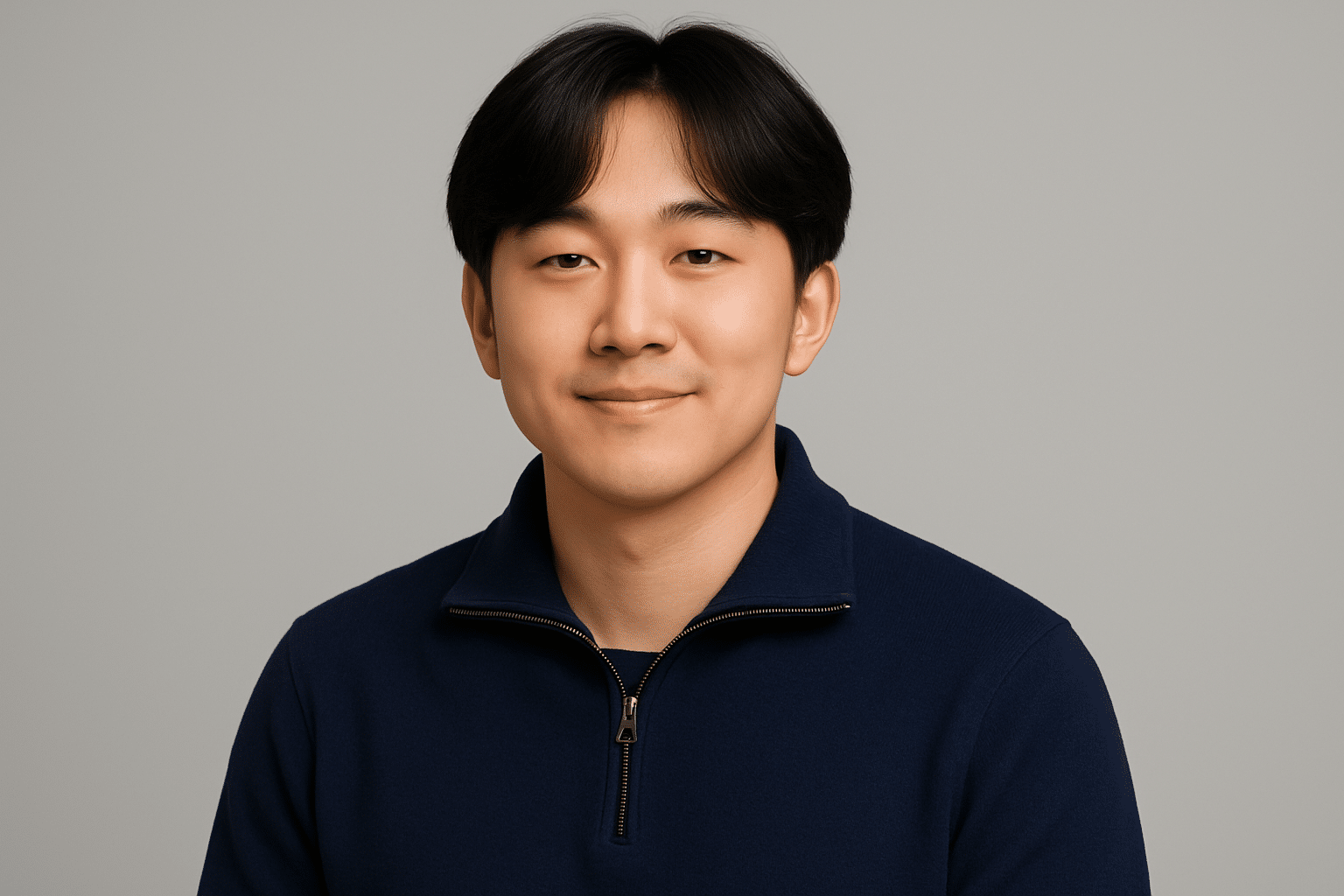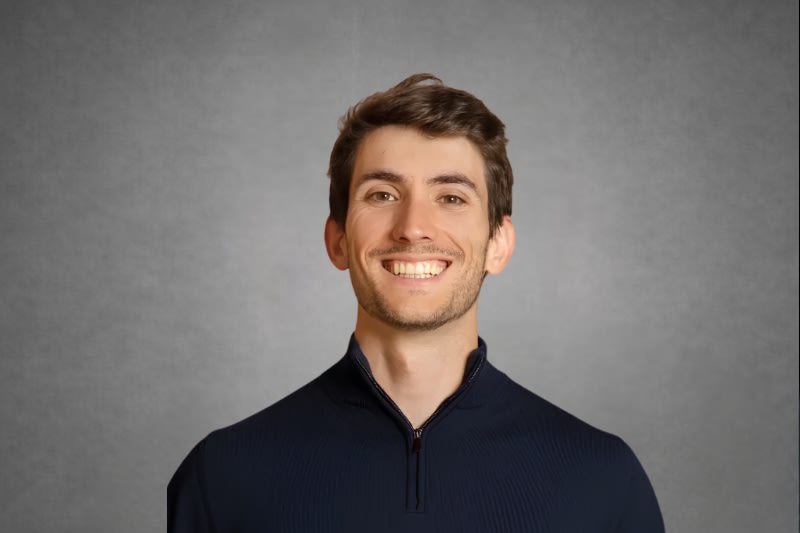
Tom Siebel, Founder, Chairman & CEO at C3 AI
4.4/5 Rating
AI
Approx. $20.8 Million/mo
Approx. $250.27 Million ARR

Tom SiebelFounder, Chairman & CEO

In this interview, C3 AI founder, chairman, and CEO Tom Siebel discusses the historical evolution of enterprise artificial intelligence and the role of education in American exceptionalism. Siebel shares stories of his recovery from a near-fatal elephant attack in the Serengeti, his recent bilateral blindness caused by an autoimmune condition, and his collaborative neuroplasticity research with Stanford. He also outlines the potential for agentic AI to eliminate government fraud and improve global economic productivity.

Tom Siebel

Tom Siebel

Founder, Chairman & CEO

C3 AI

C3 AI

Founder Stats

  • AI
  • Started 2009
  • Approx. $20.8 Million/mo
  • 800+ team
  • Redwood City, California, United States

About Tom Siebel

Tom Siebel is the founder, chairman, and CEO of C3 AI, an enterprise artificial intelligence software company established in 2009. Siebel previously founded Siebel Systems, a pioneer in customer relationship management software, which was acquired by Oracle. He holds a Bachelor of Arts in history, a Master of Business Administration, and a Master of Science in computer science from the University of Illinois. He is a prominent philanthropist and supporter of the Hoover Institution.

Interview

August 3, 2026

Q

How did studying history influence your career as a technology entrepreneur?

Question 1 of 17
Tom Siebel

History does not repeat itself, but it certainly rhymes. Studying the history of technology and science allowed me to make well-informed guesses about what would happen next based on what happened prior. A historical foundation provides essential context that a purely technical education lacks.

0
Q

What is your perspective on the role of education in American exceptionalism?

Question 2 of 17
Tom Siebel

American exceptionalism was built on an exceptional educational system. The Puritans established schoolrooms that taught classical literature, philosophy, and history to ordinary citizens, producing leaders who could write eloquently and think critically.

0
Q

How did the Morrill Act of 1862 transform the American university system?

Question 3 of 17
Tom Siebel

The Morrill Act formed land-grant institutions like Berkeley, Illinois, Cornell, and Purdue. Previously, higher education was restricted to the sons of the wealthy landed class. Land-grant universities opened education in agriculture, engineering, science, and medicine to everyone, fueling entrepreneurship and greatness.

0
Q

Why has the United States repeatedly led successive global technological revolutions?

Question 4 of 17
Tom Siebel

It comes down to our core experiments: freedom of religion, individual liberty, a representational republican government, and a public commitment to education. By keeping government limited and letting people pursue their ideas, we create the perfect environment for continuous reinvention.

0
Q

How does C3 AI help state and federal government agencies operate more efficiently?

Question 5 of 17
Tom Siebel

We build AI products that optimize processes, forecast demand, and deliver high-quality public services at lower costs. Applying generative AI to benefits programs like Medicaid and Medicare can significantly reduce operational fraud and improve constituent satisfaction.

0
Q

Who actually invented the core frameworks of artificial intelligence?

Question 6 of 17
Tom Siebel

Silicon Valley did not invent AI. Almost everything we know about supervised learning, unsupervised learning, and reinforcement learning was invented by John McCarthy at Princeton in 1950. It simply took seventy years to develop the cheap computing and storage capacity to run those systems.

0
Q

What is agentic AI and how does it change business operations?

Question 7 of 17
Tom Siebel

Agentic AI represents a massive leap forward. Large language models and transformers allow software agents to perform complex, multi-step reasoning. This technology changes how we work, govern, conduct warfare, and engage socially, accelerating innovation at a breathtaking rate.

0
Q

How will the universal access to large language models affect global productivity?

Question 8 of 17
Tom Siebel

Within a short time, six billion smartphone users will have the sum of human knowledge available in their local languages. This access will boost productivity and global gross domestic product, helping families solve local problems in agriculture, medicine, and clean water.

0
Q

How did you navigate relational database theory early in your career at Oracle?

Question 9 of 17
Tom Siebel

When I joined Oracle as a small startup, relational database technology was just a theory from academic research. Commercializing it was a major gamble, but it was a calculated risk based on my graduate research in database theory.

0
Q

What calculated risks did you take when establishing Siebel Systems?

Question 10 of 17
Tom Siebel

We founded Siebel Systems to apply computer technology to sales, marketing, and customer service, naming the category customer relationship management. Every expert insisted there was no market for it, but I believed the economics of information technology made it inevitable.

0
Q

Why did you start C3 AI years before a market for enterprise AI existed?

Question 11 of 17
Tom Siebel

In 2009, before major cloud platforms were established, we saw that cloud computing, the internet of things, and predictive analytics would converge. Nobody believed in enterprise AI for the first decade, but today the market is thousands of times larger than we imagined.

0
Q

How do you respond when faced with severe professional setbacks?

Question 12 of 17
Tom Siebel

In business, everyone gets knocked down. Tech leaders like Bill Gates, Steve Jobs, and Larry Ellison all faced near-collapse. When you get kicked in the teeth, you pick yourself up, get on one elbow, then the other, get to a knee, stand up, and keep walking.

0
Q

Could you describe the near fatal elephant attack you survived in the Serengeti?

Question 13 of 17
Tom Siebel

In 2009, a matriarch elephant charged us from two hundred meters away. The guide shot at ten meters and missed. The elephant threw the guide, then rolled, punched, and gored me, putting a tusk through my left leg and stepping on my right foot.

0
Q

How did you recover and rebuild your physical mobility after the attack?

Question 14 of 17
Tom Siebel

I was critically injured and spent three hours bleeding in the desert before being airlifted to Nairobi and then San Jose. Over the next five years, I endured nineteen reconstructive surgeries, refused amputation, and eventually walked, ran, and sailed again.

0
Q

What autoimmune attack caused your bilateral blindness in early 2025?

Question 15 of 17
Tom Siebel

In early 2025, after a misdiagnosed viral infection, I woke up blind in the hospital. An autoimmune attack fried my optic nerves, leaving me bilaterally blind. The doctors told me the blindness was permanent, which was emotionally jarring.

0
Q

How does your joint Stanford neuroplasticity initiative seek to restore vision?

Question 16 of 17
Tom Siebel

We are launching a massive, multi-disciplinary project at Stanford using magnetic and electronic brain stimulation, neurological therapy, and pharmacology to help the brain wire around damaged pathways. We are already seeing progress, and my own vision is improving.

0
Q

What keeps you optimistic about the future of the American experiment?

Question 17 of 17
Tom Siebel

Our two hundred and fifty year old experiment is just getting started. Despite temporary challenges, our system of liberty, education, and entrepreneurship continues to make the world healthier, happier, and safer. The greatest days of this country are still ahead of us.

0

Video Interviews with Tom Siebel

Tom Siebel on Education, Reinvention, and the AI Revolution | Only In America

Tom Siebel on Education, Reinvention, and the AI Revolution | Only In America
Tom Siebel on Education, Reinvention, and the AI Revolution | Only In America

Tom Siebel on Education, Reinvention, and the AI Revolution | Hoover Institution

Tom Siebel on Education, Reinvention, and the AI Revolution | Hoover Institution

Perspectives on the Future of AI | C3 Transform 2026

Perspectives on the Future of AI | C3 Transform 2026

Cite This Interview

Use this interview in your research, article, or academic work

Related Interviews

Dario Amodei, Co-founders (CEO & President) at Anthropic
AI

Dario Amodei

Co-founders (CEO & President) at Anthropic

Approx. $390 Million
3800+

In this interview, Anthropic co-founders Dario and Daniela Amodei address the safety and ethical dilemmas of rapid artificial intelligence development. The siblings discuss the capabilities…

Read Interview
Sam Altman, Co-founder & CEO at OpenAI
AI

Sam Altman

Co-founder & CEO at OpenAI

Approx. $2 Billion
8000+

In this interview, OpenAI co-founder and CEO Sam Altman discusses the shifting dynamics of startup creation, the trajectory of model scaling laws, and the geopolitical…

Read Interview
Monzy Merza, Co-founder & CEO at Crogl
AI

Monzy Merza

Co-founder & CEO at Crogl

Not Publicly Disclosed
6–20

In this interview, Crogl co-founder and CEO Monzy Merza discusses the evolution of security operations and the launch of the company's free enterprise-grade AI SOC…

Read Interview
Rajan Sethuraman, CEO at LatentView Analytics
AI

Rajan Sethuraman

CEO at LatentView Analytics

Approx. $10 Million
1190+

In this interview, LatentView Analytics CEO Rajan Sethuraman discusses the firm's non-exclusive services partnership with Anthropic to deploy Claude in enterprise environments. He details LatentView's…

Read Interview
Krishna Rangasayee, Founder & CEO at SiMa.ai
AI

Krishna Rangasayee

Founder & CEO at SiMa.ai

Not Publicly Disclosed
235+

In this interview, SiMa.ai founder and CEO Krishna Rangasayee discusses the transition of physical AI from early adoption to mainstream production. Speaking at the RAISE…

Read Interview
Jeff Cardenas, Co-Founder & CEO at Apptronik
AI

Jeff Cardenas

Co-Founder & CEO at Apptronik

Not Publicly Disclosed
300+

In this interview, Apptronik co-founder and CEO Jeff Cardenas outlines the rapid expansion of physical AI and humanoid robotics. Speaking at the Race Summit in…

Read Interview