
Aneel Bhusri, Co-Founder & CEO at Workday
4.4/5 Rating
SaaS
$800M/mo
$10B/yr

Aneel BhusriCo-Founder & CEO

In this interview, Aneel Bhusri, Co-Founder and CEO of Workday, unpacks the seismic impact of enterprise AI agents on global corporate labor and organizational architecture. He details Workday's aggressive re-founding strategy, product rationalization from 50 to 20 core AI agents, and corporate governance essentials. Bhusri offers candid guidance on workforce displacement, startup-velocity execution, and enduring SaaS leadership.

Aneel Bhusri

Aneel Bhusri

Co-Founder & CEO

Workday

Workday

Founder Stats

  • SaaS
  • Started 2005
  • $800M/mo
  • 21,000+ employees
  • Pleasanton, California, USA

About Aneel Bhusri

Aneel Bhusri is Co-Founder and CEO of Workday, a leading enterprise cloud provider for human resources and financial management. Previously serving as Vice Chairman of PeopleSoft and partner at Greylock, he holds a BS in Electrical Engineering and Economics from Brown University and an MBA from Stanford. Bhusri has steered Workday to the Fortune 500 while pioneering human capital management software.

Interview

October 19, 2026

Q

What motivated your return to the CEO seat at Workday in 2026?

Question 1 of 14
Aneel Bhusri

The arrival of enterprise generative AI marked a true refounding moment where prior tech assumptions changed overnight. Returning allowed me to bring a startup mindset, streamline our AI leadership, and aggressively steer our next era of cloud innovation.

0
Q

How do you anticipate AI agent deployment will alter corporate workforce dynamics by 2030?

Question 2 of 14
Aneel Bhusri

Enterprises are shifting into a hybrid workforce where human professionals and autonomous agents coexist. Highly repetitive and rote administrative workflows that lack complex judgment will rapidly transition to software agents over the next five years.

0
Q

Will widespread enterprise adoption of AI agents inevitably trigger corporate job displacement?

Question 3 of 14
Aneel Bhusri

Yes, companies will naturally seek lower costs and higher operating efficiencies by deploying agents for routine work. While job displacement is a legitimate concern, professionals who actively master AI toolsets will secure an immense competitive advantage.

0
Q

How does Workday plan to adapt its organizational footprint to an AI-driven operating model?

Question 4 of 14
Aneel Bhusri

We established our HR 2030 project to model leaner, flatter corporate organizational hierarchies. Startups are architecting native AI business models from scratch, and enterprise incumbents must borrow that operational agility to thrive.

0
Q

Why did you decide to consolidate Workday's agent portfolio from fifty down to twenty?

Question 5 of 14
Aneel Bhusri

When multiple decentralized teams own disparate tools and APIs, accountability fractures. We consolidated fragmented projects into twenty deeply capable, mission-critical agents with single executive owners to maximize execution velocity and client value.

0
Q

What historical leadership lessons from Steve Jobs influence your current turnaround strategy?

Question 6 of 14
Aneel Bhusri

Watching how Steve Jobs restructured Apple upon his return highlighted the necessity of unified product ownership and obsessive focus. You cannot achieve greatness across fifty scattered initiatives; disciplined prioritization around core products consistently wins.

0
Q

How do you differentiate autonomous AI agents from earlier generations of enterprise software copilots?

Question 7 of 14
Aneel Bhusri

Copilots were advisory assistants that generated suggestions while requiring continuous human interaction. Autonomous agents execute multi-step workflows independently, making decisions and directly updating enterprise systems of record without manual intervention.

0
Q

What origin philosophy established in a Truckee diner remains central to Workday today?

Question 8 of 14
Aneel Bhusri

When Dave Duffield and I co-founded the business in 2005, we committed to putting employees and customer satisfaction ahead of short-term Wall Street expectations. Keeping culture front and center is what enables long-term enterprise resilience.

0
Q

Which specific professional roles are most vulnerable to near-term AI automation?

Question 9 of 14
Aneel Bhusri

Roles characterized by high data volume, predictable documentation, and standardized financial or operational reporting face the highest vulnerability. AI excels at rapid synthesis and predictive modeling across vast structured databases.

0
Q

What technical safeguards are essential when deploying autonomous AI in enterprise finance and HR?

Question 10 of 14
Aneel Bhusri

Enterprise clients manage confidential employee and financial data that cannot tolerate probabilistic errors or unmanaged hallucinations. We implement strict identity guardrails and governance controls to ensure data security and compliance.

0
Q

How does the transition to AI agents disrupt conventional SaaS seat-based subscription pricing?

Question 11 of 14
Aneel Bhusri

As software shifts from human user seats to autonomous programmatic workflows, pricing models must evolve toward consumption, transaction, and business-outcome metrics rather than simply counting individual employee licenses.

0
Q

How can enterprise incumbents compete effectively against agile, AI-native software startups?

Question 12 of 14
Aneel Bhusri

Incumbents possess massive proprietary datasets and deeply entrenched customer trust, which startups lack. If legacy software providers infuse high startup speed and overhaul slow committees, their distribution advantages remain decisive.

0
Q

What advice do you give corporate professionals worried about being displaced by AI?

Question 13 of 14
Aneel Bhusri

Invest aggressively in developing proficiency with the latest generative technologies and autonomous tools in your discipline. The winners will not be replaced by AI itself, but by individuals who effectively harness AI to 10x their output.

0
Q

What defines an enduring enterprise technology company across successive generational shifts?

Question 14 of 14
Aneel Bhusri

Enduring institutions transcend single technology cycles, just as leaders like Microsoft navigated personal computing, the web, cloud, and AI. Workday must prove it can lead both the cloud era and the autonomous intelligence era.

0

Video Interviews with Aneel Bhusri

Workday CEO Predicts AI Job Displacement And Which Roles May Be Safe | Titans and Disruptors
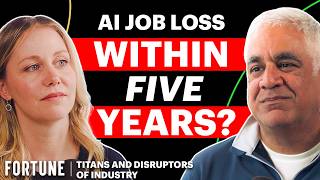
Workday CEO Predicts AI Job Displacement And Which Roles May Be Safe | Titans and Disruptors
Workday CEO Predicts AI Job Displacement And Which Roles May Be Safe | Titans and Disruptors

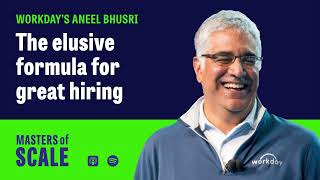
The elusive formula for great hiring (with Workday's Aneel Bhusri)
The elusive formula for great hiring (with Workday's Aneel Bhusri)

CEO Perspective: How Artificial Intelligence Is Transforming Businesses

CEO Perspective: How Artificial Intelligence Is Transforming Businesses

Cite This Interview

Use this interview in your research, article, or academic work

Related Interviews

Agnese Jaunošāne, Co-Founder & CEO at Ajelix
SaaS

Agnese Jaunošāne

Co-Founder & CEO at Ajelix

First-mover SEO and organic product iteration for bootstrapped AI SaaS

$65K/mo
1–5 employees

In this interview, Agnese Jaunošāne, Co-Founder and CEO of Ajelix, details the organic acquisition engine and iterative pivoting framework that scaled her bootstrapped spreadsheet intelligence…

Read Interview
Paul Copplestone, Co-Founder & CEO at Supabase
SaaS

Paul Copplestone

Co-Founder & CEO at Supabase

$4M/mo
150+ employees

In this interview, Paul Copplestone, Co-Founder and CEO of Supabase, outlines the architectural shift occurring as generative artificial intelligence democratizes software development globally. He analyzes…
Read Interview
Rob Snyder, Founder & CEO at Reframe
SaaS

Rob Snyder

Founder & CEO at Reframe

$50K–$100K/mo
6–20 employees

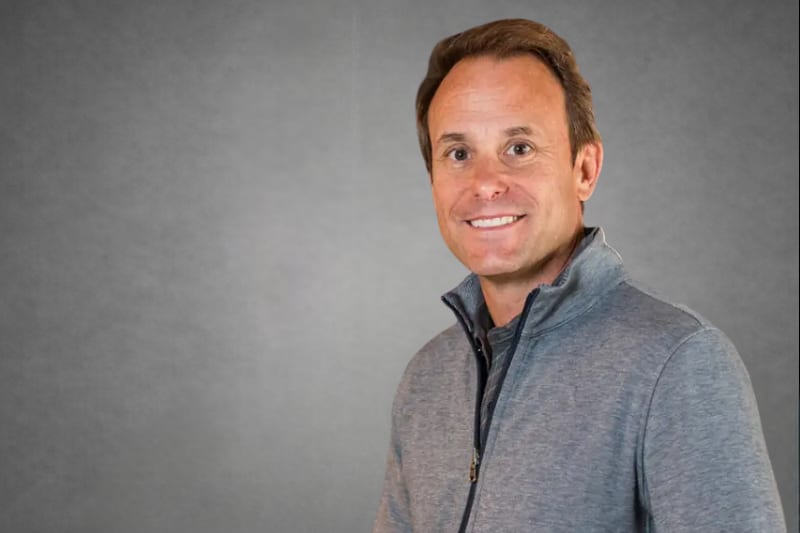
In this interview, Rob Snyder, Founder and CEO of Reframe and author of The Power of Pull, reveals his counterintuitive zero-to-one methodology for uncovering genuine…
Read Interview
Jason Lemkin, Founder & CEO at SaaStr
SaaS

Jason Lemkin

Founder & CEO at SaaStr

$2.5M/mo
21–50 employees

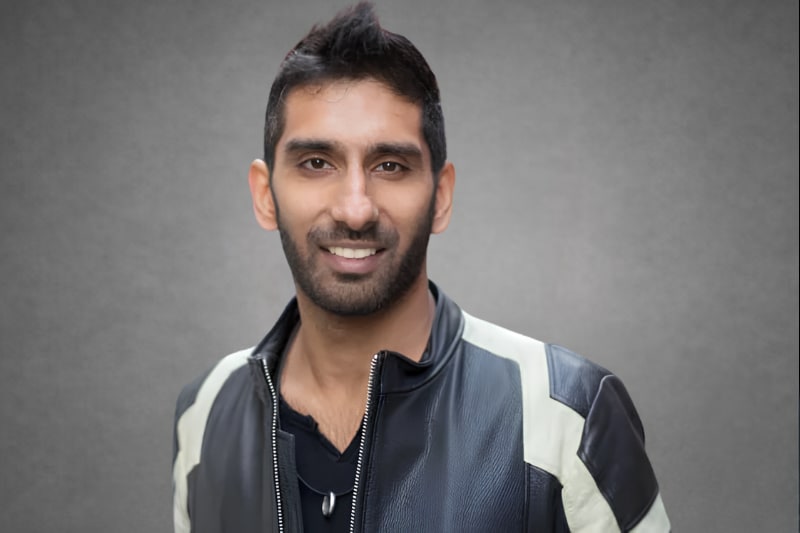
In this interview, Jason Lemkin, Founder and CEO of SaaStr, assesses the structural shifts impacting late-stage venture capital, public cloud valuations, and artificial intelligence infrastructure…
Read Interview
Rahul Vohra, Founder & CEO at Superhuman
SaaS

Rahul Vohra

Founder & CEO at Superhuman

Making AI stick in email workflows

$30M/mo
1,200+ employees

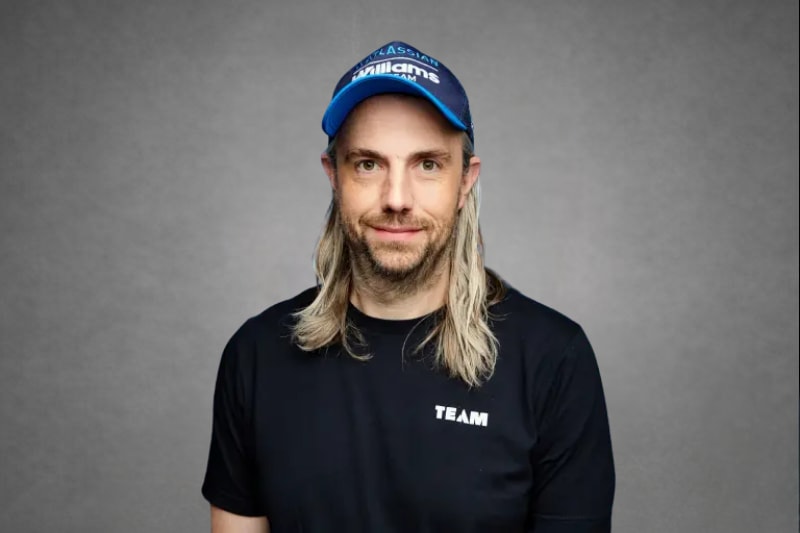
In this interview, Rahul Vohra, Founder and CEO of Superhuman, explores why superficial AI integrations fail to retain software users and outlines frameworks for embedding…
Read Interview
Mike Cannon-Brookes, Co-Founder & CEO at Atlassian
SaaS

Mike Cannon-Brookes

Co-Founder & CEO at Atlassian

$350M/mo
12,000+ employees

In this interview, Mike Cannon-Brookes, Co-Founder and CEO of Atlassian, discusses the practical integration of autonomous AI agents across modern enterprise collaborative workflows. He examines…

Read Interview