
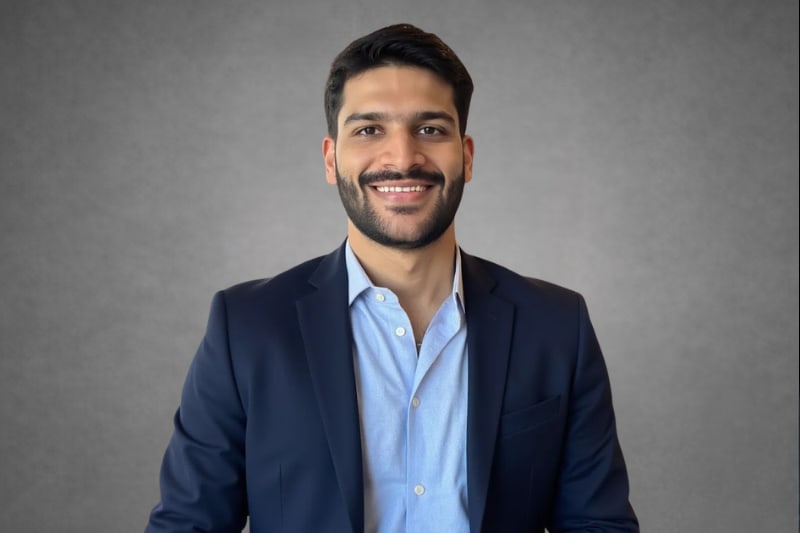
Sanskar TiwariFounder & Solo CreatorBuilding a 1 Million USD Micro-SaaS Portfolio as a Solo Bootstrapped Founder
In this interview, Sanskar Tiwari, Founder of MicroApps, reveals how he escaped call center night shifts to build a portfolio of thirty micro-SaaS applications that generated over one million USD in revenue. He shares his pre-order validation strategy, organic acquisition through YouTube video longevity, and the discipline of operating thirty applications completely alone with zero full-time employees.


Founder Stats
- SaaS
- Started 2018
- $25K/mo
- Under 10 employees
- Bengaluru, Karnataka, India
About Sanskar Tiwari
Sanskar Tiwari is the Founder and Solo Developer behind a portfolio of thirty micro-SaaS tools, including SheetAI and BlurWeb App, which collectively surpassed one million USD in revenue. Based in Bengaluru, India, he transitioned from a call center representative to a solo software entrepreneur by teaching himself full-stack programming. Tiwari bootstrapped his micro-app empire without outside venture capital, maintaining over one thousand paying subscribers with zero staff.
Interview
November 24, 2026
What inspired you to transition from working night shifts at a call center to building software products?
I watched an online video about an independent programmer who built a niche software product from his bedroom and sold it for substantial money. That made me realize that software leverage allows a solo individual to create life changing income. I chose to skip traditional college, took a call center night job to pay bills, and spent every spare daylight hour teaching myself modern web development.
How did you handle the early period when your first software experiments failed to make any money?
The first two years produced zero income. I built several early projects that nobody wanted because I was coding in isolation without understanding commercial distribution. After transitioning to a telephone sales role for eight months, I learned how to pitch benefits rather than technical features. That sales discipline transformed my mindset and gave me the practical communication skills needed to sell software successfully online.
What was the breakthrough moment that proved people would actually pay for your micro-applications?
I decided to launch two minimal tools on lifetime deal platforms to test willingness to pay. Within forty-eight hours of launching, those two products generated enough revenue to equal my entire monthly salary. Achieving immediate customer payment validated my belief in lightweight software utilities. That revenue gave me the confidence to leave my sales job permanently and pursue solo software development full-time.
How do you validate new software product ideas before writing a single line of production code?
I publish a public pre-order page on social channels or Gumroad with a defined delivery timeline between ten and thirty days. If customers commit actual money and place pre-orders, that immediately proves genuine market interest. Only after receiving the first paid transaction do I start the development countdown. If nobody pays during the pre-order window, I discard the concept without wasting valuable development time.
What common architectural theme connects all thirty applications across your software portfolio?
Every successful tool in my catalog is built either as a lightweight Chrome extension or as a targeted integration inside Google Sheets. Users live inside their web browsers and spreadsheets daily. By meeting customers directly within their existing workflows, our extensions eliminate friction, require zero complicated onboarding, and solve acute everyday operational problems in just one single click.
How did your SheetAI product scale from an early prototype to over two thousand USD in monthly recurring revenue?
I noticed people struggling to write complex spreadsheet formulas and realized artificial intelligence could automate repetitive tabular work. I built a minimal wrapper connecting OpenAI models directly into Google Sheets functions. Once users experienced automated formula generation and web data enrichment inside their sheets, retention surged. That single utility quickly reached two thousand USD in monthly subscriptions from word-of-mouth recommendations.
Why do you prioritize YouTube tutorials as your primary organic customer acquisition channel?
YouTube offers unparalleled content longevity compared to fleeting algorithmic feeds on typical social networks. A tutorial demonstrating how to solve a specific spreadsheet bottleneck that I recorded three years ago still drives fresh paying customers every single week. Video viewers have high commercial intent because they are actively searching for solutions to their exact technical problems at the exact moment they watch.
How do you manage ongoing technical support across eight active products with zero full-time employees?
I intentionally design applications with extreme mechanical simplicity. Because our tools solve single focused use cases, edge cases and software bugs remain minimal. I also record comprehensive step-by-step video tutorials and automated documentation for every feature. When customers encounter issues, automated onboarding walks them through the fix. Eliminating complicated configurations keeps our ongoing support volume exceptionally low for a solo creator.
How do you protect your solo product portfolio against sudden platform changes or model commoditization?
Diversifying across eight active revenue generating products prevents catastrophic dependency on any single platform or underlying artificial intelligence provider. If one extension suffers an algorithmic shift, seven other applications continue generating predictable cash flow. Furthermore, solving proprietary user workflows and storing custom user preferences creates high switching barriers that generic artificial intelligence wrappers cannot easily duplicate.
What is your philosophy on lifetime deals versus monthly recurring subscriptions for bootstrapped tools?
Lifetime deals provide immediate non-dilutive working capital and early user feedback during product launches. However, sustainable solo freedom requires monthly recurring subscriptions. I leverage initial lifetime campaigns to fund infrastructure costs and validate demand, then rapidly transition the tool to recurring monthly plans. This hybrid pricing strategy generated over one million USD in total revenue across my software portfolio.
What key mistake do first-time software builders make when attempting to launch a SaaS business?
First-time founders believe they need one massive revolutionary idea and venture funding to succeed. In reality, launching multiple small utilities solves acute problems faster with lower execution risk. Inexperienced builders also spend months polishing code in secret instead of putting a payment link in front of prospective customers on day one to confirm real willingness to pay.
What advice would you give to aspiring solo founders who are starting from scratch today?
Focus relentlessly on rapid public execution rather than passive observation. Thousands of people consume educational startup content, but very few actually ship functional software into the market. Pick an existing workflow you already understand, build a minimal Chrome extension that saves fifteen minutes of manual work, and charge for it immediately. Action consistently beats perfection.
Table Of Questions
Video Interviews with Sanskar Tiwari
How I Made 1M USD Building 30 Micro-Apps - Starter Story (Interview Video)
How I Made 1M USD Building 30 Micro-Apps - Starter Story (Interview Video)

Ex-Call Center Worker Makes 1M USD: The 30 Micro-Apps Solo Founder Playbook

How I Design Landing Pages with AI - Sanskar Tiwari
Cite This Interview
Use this interview in your research, article, or academic work
Related Interviews
Sam Blond
Co-Founder & CEO at Monaco
Why traditional sales CRMs fail in the agentic era and how Monaco automates GTM
In this interview, Sam Blond, Co-Founder and Chief Executive Officer of Monaco, analyzes why legacy CRM architectures fail in the era of artificial intelligence agents…

Miquel Palet
Founder & CEO at Zernio
Bootstrapping a unified social and messaging API to 5 million ARR in 13 months
In this interview, Miquel Palet, Founder and Chief Executive Officer of Zernio, reveals how he launched a unified social media and messaging API platform over…

Agnese Jaunošāne
Co-Founder & CEO at Ajelix
First-mover SEO and organic product iteration for bootstrapped AI SaaS
In this interview, Agnese Jaunošāne, Co-Founder and CEO of Ajelix, details the organic acquisition engine and iterative pivoting framework that scaled her bootstrapped spreadsheet intelligence…

Paul Copplestone
Co-Founder & CEO at Supabase
In this interview, Paul Copplestone, Co-Founder and CEO of Supabase, outlines the architectural shift occurring as generative artificial intelligence democratizes software development globally. He analyzes…

Rob Snyder
Founder & CEO at Reframe
In this interview, Rob Snyder, Founder and CEO of Reframe and author of The Power of Pull, reveals his counterintuitive zero-to-one methodology for uncovering genuine…
Jason Lemkin
Founder & CEO at SaaStr
In this interview, Jason Lemkin, Founder and CEO of SaaStr, assesses the structural shifts impacting late-stage venture capital, public cloud valuations, and artificial intelligence infrastructure…