

Agnese JaunošāneCo-Founder & CEOFirst-mover SEO and organic product iteration for bootstrapped AI SaaS
In this interview, Agnese Jaunošāne, Co-Founder and CEO of Ajelix, details the organic acquisition engine and iterative pivoting framework that scaled her bootstrapped spreadsheet intelligence platform to 350,000 users without venture capital or advertising budgets. She explains targeting emergent search queries before keyword difficulty rises, deploying friction-free freemium onboarding without data collection barriers, and shifting positioning toward sovereign European enterprise workspaces. Jaunošāne shares vital lessons on maintaining founder-led agility and defending product moats against generalized artificial intelligence giants.

Founder Stats
- SaaS
- Started 2022
- Approx. USD 65,000/mo
- 1–5 team
- Riga, Latvia
About Agnese Jaunošāne
Agnese Jaunošāne is the Co-Founder and CEO of Ajelix, a bootstrapped software platform transforming business intelligence and spreadsheet workflows through specialized artificial intelligence tools. Operating without institutional venture funding or paid acquisition channels, she directed the technical product design and content architecture that scaled the platform to over 350,000 international users. Jaunošāne is recognized for pioneering organic search discovery frameworks and developing sovereign European enterprise artificial intelligence solutions.
Interview
November 05, 2026
What motivated you and your co-founder to launch Ajelix under a strict zero-budget pact?
We deliberately agreed from day one not to invest outside capital or purchase paid advertising. Coming into software with no formal marketing background, we recognized that spending money on ads before mastering product-market alignment would simply mask product flaws. Learning every operational function organically forced us to understand our users deeply, prioritize authentic customer problem-solving, and build sustainable unit economics without artificial capital cushions.
How did targeting emerging AI search queries in 2022 provide Ajelix a durable first-mover advantage?
When we launched in 2022, long before ChatGPT ignited mainstream awareness, searches for AI-assisted spreadsheet tools had virtually zero commercial competition. We identified hyper-specific customer pain points around formula writing and created dedicated landing pages for those nascent keywords. Because we published authoritative, hands-on content before domain rating requirements escalated, our brand established dominant search index rankings that continue generating compounding organic signups today.
What specific architecture did you use to convert organic visitors into 350,000 registered users without sales reps?
We built a zero-friction freemium funnel with an MVP of seven specialized micro-tools, each addressing a distinct spreadsheet friction point like formula translation or VBA generation. Crucially, we allowed visitors to test the tools immediately without demanding a credit card or mandatory upfront account creation. Eliminating initial friction maximized tool adoption, while natural usage limits guided heavy daily operators toward our paid subscription tiers.
Why do you believe authentic, human-written listicles outperform mass-generated AI content for software discovery?
Many software founders mistakenly flood the internet with generic synthetic articles that offer zero original insight. We limit our editorial output to twenty meticulously crafted listicles each month, written entirely by real operators who physically benchmark every tool. By embedding our ideal customer profile and transparent competitive comparisons directly into the narrative, our content establishes genuine trust with technical professionals seeking authentic problem resolution.
How did you manage the transition when ChatGPT made basic formula generation a commoditized feature?
When frontier foundational models became widely accessible, simple formula generation turned into an industry commodity overnight. Instead of defending an obsolete feature, we immediately evolved into multi-step script automation and data visualization dashboards. We recognized that users do not merely want isolated formulas; they require integrated workflow environments that connect disparate data sources and deliver actionable business reporting instantly.
What prompted your strategic pivot from individual productivity tools to sovereign European enterprise workspaces?
European enterprises face stringent data compliance and sovereign privacy mandates that prevent them from sending proprietary financial datasets to centralized overseas providers. We pivoted toward fine-tuning sovereign open-source models hosted within European infrastructure. By providing air-gapped security, localized regulatory compliance, and guaranteed data privacy, we insulated our enterprise offering from generalized consumer artificial intelligence tools.
How do you address the persistent enterprise question of why they should adopt Ajelix over generalized models?
Enterprise teams rarely struggle because they lack a generalized reasoning model; they struggle because foundation models lack operational context within spreadsheet schemas and business intelligence systems. Ajelix delivers structured formula validation, automated dashboard creation, and governed team permissions out of the box. We sell verified business outcomes and workflow efficiency rather than raw, unguided token completions.
What five-channel launch framework do you execute whenever introducing a major product update?
Our multi-channel launch playbook synchronizes across founder LinkedIn commentary, an authoritative technical blog category, PR newswires, targeted media pitching, and short-form video demonstrations. Deploying coordinated content simultaneously across every channel signals algorithmic momentum to search engines and language models, reinforcing domain authority and ensuring our new features are indexed rapidly by external answer engines.
What unexpected operational challenges arose from receiving mainstream media coverage as co-founders who are married?
When mainstream journalists picked up our growth story, they frequently sensationalized our marriage as a romantic narrative rather than highlighting our technical achievements and infrastructure roadmap. While human-interest stories generated massive top-of-funnel brand visibility, we had to deliberately re-anchor our public communications around systems engineering, enterprise compliance, and data governance to protect our enterprise credibility.
Why has short-form video content become an essential pillar for proving software legitimacy in the AI era?
The internet is currently saturated with automated landing pages and dubious software wrappers created in hours. Producing consistent founder-led video walkthroughs demonstrates that an authentic, accountable engineering team stands behind the product. Seeing real operators demonstrate complex features live builds immense institutional trust, validating that our capabilities are robust and professionally maintained.
How do you maintain extreme product iteration velocity with a lean core team of two operators?
Keeping our organizational structure lean allows us to ship functional updates daily without bureaucratic delays or multi-tiered approval chains. We communicate directly with our power users, review live customer support logs every morning, and refactor code immediately. A two-person founding unit with high context can out-maneuver larger corporate incumbents burdened by conflicting stakeholder agendas.
What fundamental business advice would you offer to bootstrapped software entrepreneurs building in crowded AI sectors?
Never attempt to outspend venture-backed competitors on paid customer acquisition. Instead, out-context them by obsessing over niche workflow pain points that generalized platforms neglect. Build zero-friction onboarding paths, publish authentic domain expertise that AI cannot fabricate, and embrace iterative pivots with courage whenever underlying technological paradigms shift.
Table Of Questions
Video Interviews with Agnese Jaunošāne
SEO for AI Search: How Ajelix Grew to 350K Signups Without Ads (Primary Source)

SEO for AI Search: How Ajelix Grew to 350K Signups Without Ads (Primary Source)
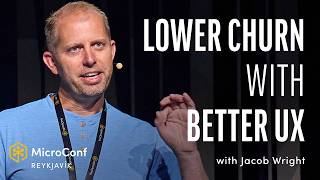
SaaS Product Design: How a B2C App Got to 4% Churn

Independent SaaS Founders in Reykjavík: MicroConf Europe 2026
Cite This Interview
Use this interview in your research, article, or academic work
Related Interviews

Paul Copplestone
Co-Founder & CEO at Supabase
In this interview, Paul Copplestone, Co-Founder and CEO of Supabase, outlines the architectural shift occurring as generative artificial intelligence democratizes software development globally. He analyzes…

Rob Snyder
Founder & CEO at Reframe
In this interview, Rob Snyder, Founder and CEO of Reframe and author of The Power of Pull, reveals his counterintuitive zero-to-one methodology for uncovering genuine…

Jason Lemkin
Founder & CEO at SaaStr
In this interview, Jason Lemkin, Founder and CEO of SaaStr, assesses the structural shifts impacting late-stage venture capital, public cloud valuations, and artificial intelligence infrastructure…

Rahul Vohra
Founder & CEO at Superhuman
Making AI stick in email workflows
In this interview, Rahul Vohra, Founder and CEO of Superhuman, explores why superficial AI integrations fail to retain software users and outlines frameworks for embedding…
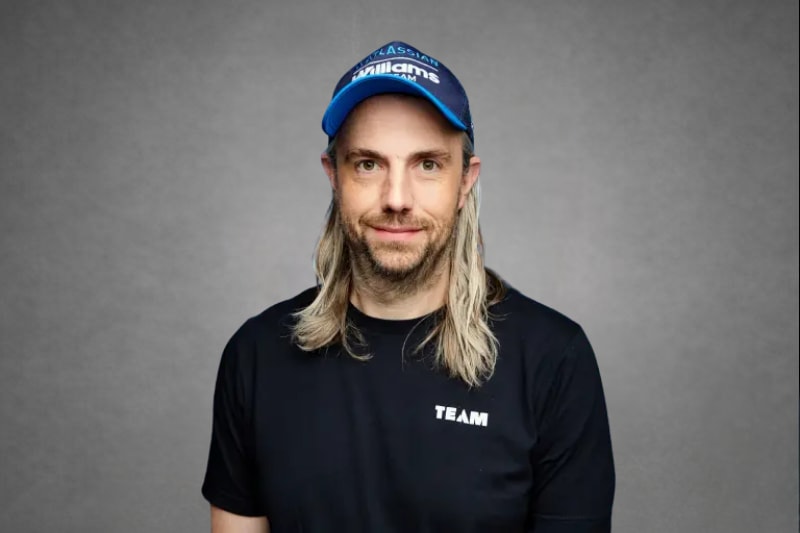
Mike Cannon-Brookes
Co-Founder & CEO at Atlassian
In this interview, Mike Cannon-Brookes, Co-Founder and CEO of Atlassian, discusses the practical integration of autonomous AI agents across modern enterprise collaborative workflows. He examines…

Aneel Bhusri
Co-Founder & CEO at Workday
In this interview, Aneel Bhusri, Co-Founder and CEO of Workday, unpacks the seismic impact of enterprise AI agents on global corporate labor and organizational architecture.…