
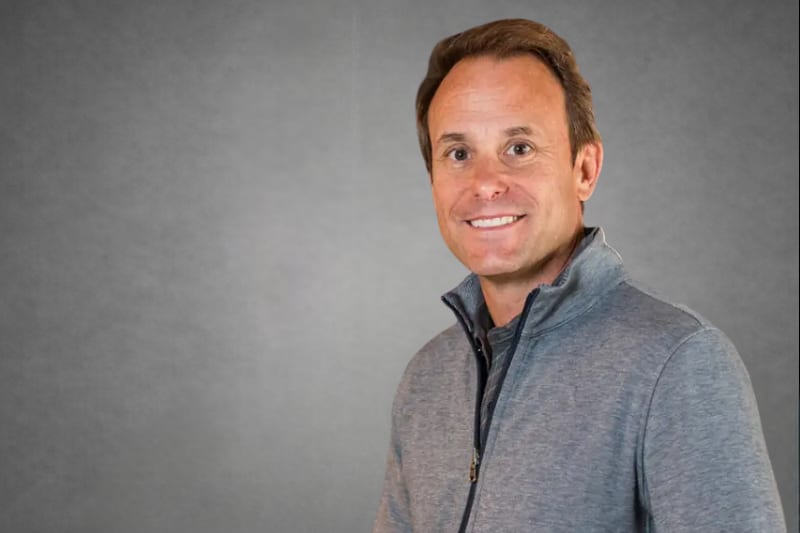
Jason LemkinFounder & CEO
In this interview, Jason Lemkin, Founder and CEO of SaaStr, assesses the structural shifts impacting late-stage venture capital, public cloud valuations, and artificial intelligence infrastructure financing. He examines secondary market liquidity dislocations, the resilience of established enterprise software incumbents, and the operational limitations of autonomous sales agents. Lemkin delivers candid executive guidance on managing cash burn, navigating compressed revenue multiples, and preserving durable net retention in changing economic cycles.
Founder Stats
- SaaS
- Started 2012
- Approx. USD 2.5 Million/mo
- 21–50 team
- Palo Alto, California, United States
About Jason Lemkin
Jason Lemkin is Founder and CEO of SaaStr, the world's largest executive community and event platform for business software entrepreneurs. He previously founded EchoSign, the pioneer in digital signatures acquired by Adobe where he served as Vice President of Web Business. Lemkin earned his undergraduate degree from Harvard University and a law degree from Stanford Law School, and has backed numerous successful software category leaders through SaaStr Fund.
Interview
October 27, 2026
Why do you believe venture capital in software has shifted toward billion-dollar positions or nothing?
Top-tier venture firms have accumulated tens of billions in assets under management, meaning writing three-hundred-thousand-dollar seed checks cannot move the needle on their fund returns. Large firms are forced to concentrate massive capital into consensus breakout winners, creating intense competition for late-stage allocation while early-stage founders face a fragmented funding landscape.
What is your reaction to secondary market sell-offs and debt financing around GPU cloud providers like CoreWeave?
Secondary discounts reflect rising investor anxiety over hardware depreciation and extreme debt leverage rather than lack of revenue growth. While compute demand remains extraordinary, infrastructure providers face continuous capital expenditure cycles and razor-thin margins. Unlike software with zero marginal cost, hardware hosting requires continuous capital to service debt and replace obsolete silicon.
Why do you disagree with claims that established enterprise software giants are dying because of AI agents?
Incumbents like Salesforce, HubSpot, Klaviyo, and Workday possess deep workflow integration, massive proprietary customer datasets, and established compliance approvals that startups cannot displace overnight. While their public market revenue multiples have compressed from fifteen times revenue down to three or four times, their customer retention remains remarkably sturdy.
How are foundation model routing and commodity pricing impacting enterprise application startups?
Startups are ruthlessly routing inference traffic between OpenAI, Anthropic, and open-source models based purely on cost per token and latency. Because developer loyalty to specific model APIs is near zero, application companies that lack proprietary enterprise workflows or direct customer distribution will see their gross margins quickly eroded by compute costs.
Why do you believe the concept of a one-person billion-dollar software unicorn is largely an illusion?
Building a toy application with automated coding agents is easy, but scaling an enterprise business requires SOC 2 compliance, security audits, procurement negotiations, customer success management, and high-touch executive relationship building. Enterprise buyers will not sign seven-figure contracts with software vendors that do not have dedicated human teams backing their service.
What advice do you give SaaS founders whose revenue multiples have compressed from historic highs?
Accept that three-to-six-times revenue is the historical norm for public software companies and stop anchoring your financial planning to the 2021 bubble. Focus relentlessly on net revenue retention, capital efficiency, and gross margin health; companies that generate real free cash flow and predictable expansion will always command premium valuations.
How should early-stage software companies experiment with autonomous AI sales representatives?
AI sales agents can assist with basic top-of-funnel lead qualification, meeting transcription, and follow-up email drafting, but they cannot replace human trust in complex enterprise evaluations. Buyers want to understand how a tool fits their specific organizational architecture and hold a real person accountable for project implementation.
What is the biggest operational mistake SaaS executives make when integrating generative AI into existing products?
The biggest error is rushing out superficial AI chatbots and marketing gimmicks that add friction rather than solving core customer workflows. If your AI feature increases your compute hosting costs without driving quantifiable customer expansion or retention, you are destroying your gross margins for vanity engagement.
Why is customer success more critical than ever during periods of macroeconomic software budget scrutiny?
When enterprise chief information officers mandate software budget cuts, shelfware and unadopted seats get eliminated immediately. The only defensible protection against churn is ensuring your customer success team is actively driving product adoption, measuring business outcomes, and embedding your software into daily employee routines.
How does the current market downturn in private SaaS valuations compare to previous tech downturns?
The 2001 dot-com crash was about companies that had no revenue at all, whereas today's market features software businesses with tens of millions in real recurring revenue struggling because they raised capital at seventy times ARR. The underlying business model of SaaS remains magnificent, but founders must grow into their inflated capitalizations through patient operational discipline.
What metrics must a SaaS startup demonstrate today to raise a successful Series A round?
Founders must demonstrate at least one to two million in annual recurring revenue growing at over one hundred percent year-over-year, alongside gross margins exceeding seventy-five percent and net revenue retention above one hundred and ten percent. The bar for product-market fit has risen dramatically; investors demand proof of customer love rather than promises of addressable market size.
How does SaaStr maintain relevance and strong unit economics across events and media in a changing tech climate?
We operate SaaStr with the exact same unit economics and capital discipline that we preach to software founders. By delivering unfiltered, peer-to-peer executive education without sponsored sales pitches, we built an authentic global brand that enterprise leaders trust through bull and bear markets alike.
What role will vertical specialized software play against horizontal enterprise platforms in the AI era?
Vertical SaaS platforms that own the system of record for specific industries like construction, legal, or automotive have the strongest defensibility against generalized AI disruption. Their deep workflow integration, industry-specific data schemas, and regulatory moats make them virtually impossible for generic frontier models to dislodge.
What is the most enduring lesson you learned transitioning from founder to venture investor and community leader?
Great software businesses take seven to ten years of unglamorous compounding execution to achieve enduring scale. There are no shortcuts to category leadership; the founders who win are those with the stamina to withstand market downturns, listen obsessively to customers, and relentlessly ship superior software.
Table Of Questions
Video Interviews with Jason Lemkin
The New VC Game - CoreWeave Sell-Off Creates Panic - Revenue Multiples Out of Control

The New VC Game - CoreWeave Sell-Off Creates Panic - Revenue Multiples Out of Control
What CEOs Actually Want From Their VP of Marketing - Jason Lemkin, SaaStr

We replaced our sales team with 20 AI agents—here’s what happened next - Jason Lemkin (SaaStr)
Cite This Interview
Use this interview in your research, article, or academic work
Related Interviews

Rahul Vohra
Founder & CEO at Superhuman
In this interview, Rahul Vohra, Founder and CEO of Superhuman, explores why superficial AI integrations fail to retain software users and outlines frameworks for embedding…
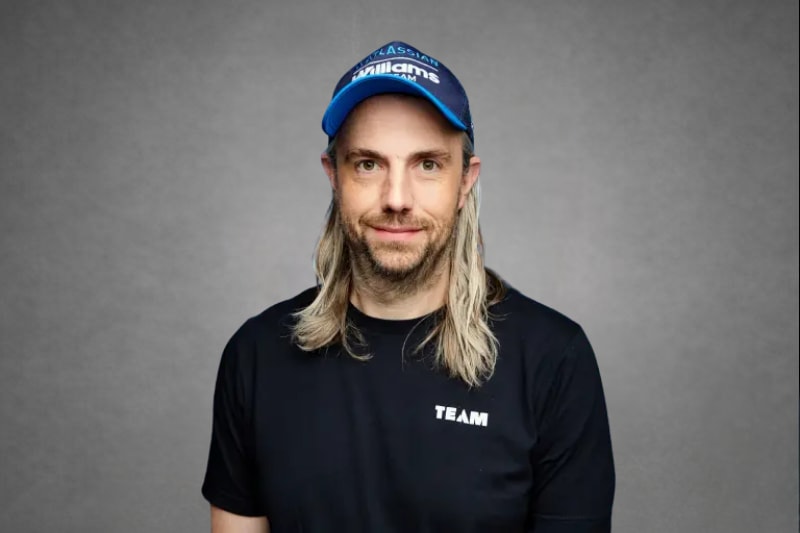
Mike Cannon-Brookes
Co-Founder & CEO at Atlassian
In this interview, Mike Cannon-Brookes, Co-Founder and CEO of Atlassian, discusses the practical integration of autonomous AI agents across modern enterprise collaborative workflows. He examines…

Aneel Bhusri
Co-Founder & CEO at Workday
In this interview, Aneel Bhusri, Co-Founder and CEO of Workday, unpacks the seismic impact of enterprise AI agents on global corporate labor and organizational architecture.…

Vikram Chalana
Founder & CEO at Pictory
In this interview, Vikram Chalana, founder and CEO of Pictory, sits down with Vlad Kachur to explore the transformation of corporate knowledge into automated video…

Guillermo Rauch
Founder & CEO at Vercel
In this interview, Vercel founder and CEO Guillermo Rauch discusses recursive founder mode, scaling product portfolio autonomy, and the transition toward agentic software factories. Rauch…

Jirka Bachel
Founder & CEO at Navigara
In this interview, Navigara CEO Jirka Bachel explains how his engineering analytics platform measures software developer performance and tracks the return on investment of AI…