
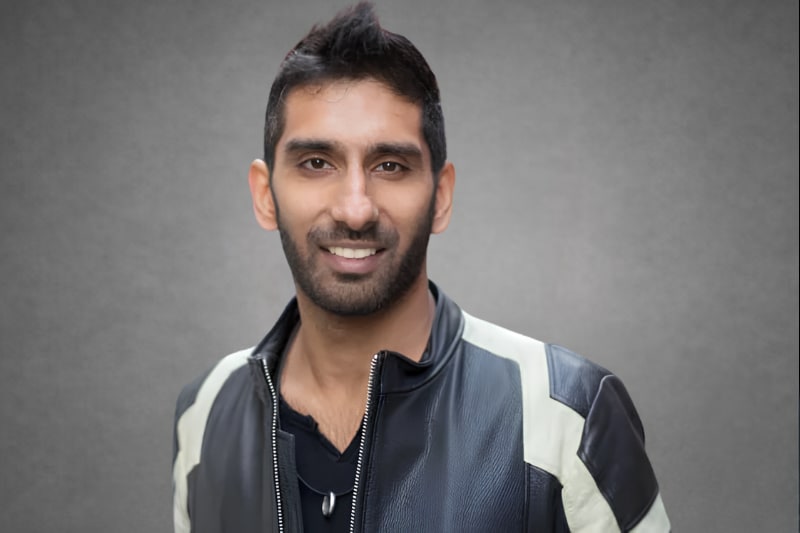
Rahul VohraFounder & CEO
In this interview, Rahul Vohra, Founder and CEO of Superhuman, explores why superficial AI integrations fail to retain software users and outlines frameworks for embedding generative intelligence into daily productivity workflows. He discusses the evolution of email infrastructure, game design mechanics in SaaS development, and customer acquisition economics. Vohra delivers pragmatic operational insights on maintaining product-market fit, enterprise security challenges, and scaling premium subscription software in competitive markets.

Founder Stats
- SaaS
- Started 2009
- Approx. USD 30 Million/mo
- 1200+ team
- San Francisco, California, United States
About Rahul Vohra
Rahul Vohra is Founder and CEO of Superhuman, the high-performance email platform widely acclaimed for its speed and user productivity. He previously founded Rapportive, the relationship management plugin acquired by LinkedIn, after studying computer science at the University of Cambridge. Vohra is recognized across the technology sector for developing the quantitative Product-Market Fit Engine and applying game design psychology to enterprise software architecture.
Interview
October 23, 2026
This is interview 2 of 2 with Rahul Vohra.
Rahul Vohra has been featured on CEO Insider 2 times. Explore the full collection.
Why are so many early AI features failing to stick with mainstream enterprise software users?
Most teams simply slapped a chat interface or a generic summary box on top of their legacy software without understanding the user's immediate workflow. If an AI feature requires users to context-shift, write complex prompts, or correct frequent hallucinations, the cognitive burden outweighs the time saved. For AI to become sticky, it must be embedded invisibly within high-frequency micro-interactions.
How does Superhuman approach embedding generative AI into the core email workflow?
We focused on reducing latency and eliminating repetitive keyboard tasks. Rather than asking users to draft whole essays with chatbots, our AI predicts replies based on past tone, summarizes lengthy email threads into three bullet points, and automates scheduling context. The goal is saving hours every week without ever breaking the user's flow state.
What is the fundamental difference between building software as a utility versus designing it as a game?
Traditional enterprise software is built purely around functionality and compliance, which makes it feel tedious and cumbersome. Game design focuses on human psychology, intrinsic rewards, rapid feedback loops, and clear goals. When you treat achieving Inbox Zero as a game level with speed shortcuts and delightful micro-interactions, users develop genuine affection for the product.
How do you keep users paying a premium subscription price when free alternatives like Gmail and Outlook exist?
You cannot win on price or feature checklists against free commoditized utilities; you have to compete on speed, craftsmanship, and tangible time savings. Executives, investors, and high-output professionals calculate their time in hundreds of dollars per hour. If Superhuman saves them four hours every week, paying thirty dollars a month provides astronomical return on investment.
What metrics do you track to determine whether a newly released feature actually strengthens product-market fit?
We measure how disappointed users would be if the feature disappeared tomorrow. If over forty percent of users answer that they would be very disappointed, you have a high-retention core. We also track daily active usage velocity, shortcut adoption speed, and whether the feature accelerates time-to-inbox-zero.
How has the shift from consumer prosumer adoption to enterprise B2B sales reshaped your organization?
In the early days, Superhuman grew through word of mouth and individual VIP onboarding calls. As whole venture firms, tech startups, and executive suites adopted the tool, we had to build enterprise-grade security controls, SOC 2 compliance, administrative billing portals, and team collaboration features without sacrificing the magical individual experience.
What challenges emerge when applying AI detectors and automated writing tools across business communications?
AI writing often produces bland, uniform text that lacks authentic personality and emotional nuance. Readers quickly develop subconscious filters that dismiss formulaic AI generated copy. The highest leverage use of AI writing is generating structural drafts that the human author customizes and polishes with their distinct voice.
Why did Superhuman maintain an exclusive waitlist and 1-on-1 onboarding for so many years before opening up?
The waitlist allowed us to curate our earliest user cohorts and meticulously optimize the onboarding experience until retention was nearly unbreakable. Giving every new user a thirty-minute concierge onboarding session taught us exactly where people got confused, how keyboard muscle memory formed, and which features drove lifelong advocacy.
How do you balance rapid feature iteration with maintaining extreme sub-hundred-millisecond software speed?
Speed is not a cosmetic feature you optimize at the end of development; it is an architectural religion that must govern every technical decision. We maintain strict performance budgets where any code pull request that increases latency by even ten milliseconds gets rejected immediately until optimized.
What is your perspective on autonomous AI agents taking over executive inboxes completely?
Email involves sensitive personal relationships, high-stakes negotiations, and subtle social nuance that autonomous agents cannot reliably interpret without human guidance. The near-term winning architecture is a centaur model where an intelligent co-pilot drafts options and organizes context, but the human retains final editorial judgment and sending authority.
How did your background as a video game developer influence your product philosophy at Superhuman?
Games teach you that user engagement relies on immediate visual responsiveness, progressive mastery, and reducing friction between thought and action. By removing mouse clicks, implementing intuitive keyboard navigation, and providing subtle visual rewards upon clearing your inbox, we transformed a dreaded daily chore into an energizing daily ritual.
What advice do you offer founders attempting to scale a premium subscription business in a downturn?
How do you navigate privacy and data governance concerns when processing corporate communications with LLMs?
What is the most crucial leadership lesson you learned scaling Superhuman from inception to market leadership?
Table Of Questions
Video Interviews with Rahul Vohra
Flying Cars, OpenAI Spies, Why AI Isn’t Sticking (Superhuman CEO)

Flying Cars, OpenAI Spies, Why AI Isn’t Sticking (Superhuman CEO)

Superhuman Mail CEO on Rediscovering Product-Market Fit in the Age of AI
How Superhuman Took Over Silicon Valley Emails
Cite This Interview
Use this interview in your research, article, or academic work
Related Interviews
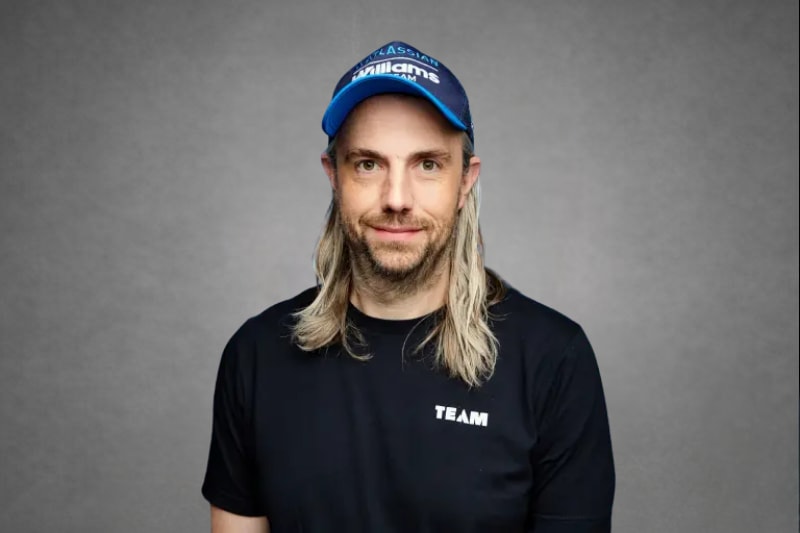
Mike Cannon-Brookes
Co-Founder & CEO at Atlassian
In this interview, Mike Cannon-Brookes, Co-Founder and CEO of Atlassian, discusses the practical integration of autonomous AI agents across modern enterprise collaborative workflows. He examines…

Aneel Bhusri
Co-Founder & CEO at Workday
In this interview, Aneel Bhusri, Co-Founder and CEO of Workday, unpacks the seismic impact of enterprise AI agents on global corporate labor and organizational architecture.…

Vikram Chalana
Founder & CEO at Pictory
In this interview, Vikram Chalana, founder and CEO of Pictory, sits down with Vlad Kachur to explore the transformation of corporate knowledge into automated video…

Guillermo Rauch
Founder & CEO at Vercel
In this interview, Vercel founder and CEO Guillermo Rauch discusses recursive founder mode, scaling product portfolio autonomy, and the transition toward agentic software factories. Rauch…

Jirka Bachel
Founder & CEO at Navigara
In this interview, Navigara CEO Jirka Bachel explains how his engineering analytics platform measures software developer performance and tracks the return on investment of AI…

Daniel Chait
Co-founder & CEO at Greenhouse Software
In this interview, Greenhouse Software co-founder and CEO Daniel Chait discusses how artificial intelligence is reshaping the recruiting landscape. Chait outlines the mechanics of the…