

Paul CopplestoneCo-Founder & CEO
In this interview, Paul Copplestone, Co-Founder and CEO of Supabase, outlines the architectural shift occurring as generative artificial intelligence democratizes software development globally. He analyzes the evolution of developer platforms, the rising demand for personal databases, and scaling open-source Postgres infrastructure to over thirteen million users. Copplestone delivers essential strategic lessons on designing agent-first developer experiences, maintaining transparent developer pricing, and fostering an egoless engineering culture through rapid operational scaling.

Founder Stats
- SaaS
- Started 2020
- Approx. USD 4 Million/mo
- 150+ team
- San Francisco, California, United States
About Paul Copplestone
Paul Copplestone is the Co-Founder and CEO of Supabase, the open-source developer platform and backend-as-a-service built on Postgres. A seasoned software architect and entrepreneur, he previously founded multiple tech startups across Southeast Asia and served as a technology leader in cloud infrastructure. Under his leadership since launching in the Y Combinator summer batch of 2020, Supabase has scaled to manage over fifty million databases for more than thirteen million developers worldwide.
Interview
November 03, 2026
What fundamental premise drove the creation of Supabase as an open-source alternative to Firebase?
When we launched in 2020, Firebase had proven that developers loved rapid backend scaffolding, but developers despised proprietary vendor lock-in and the limitations of NoSQL databases. We realized that Postgres was the most extensible, mature, and powerful relational database in human history. By wrapping open-source Postgres with auto-generated REST APIs, real-time websockets, authentication, and storage, we gave developers enterprise power without proprietary constraints.
How has generative artificial intelligence reshaped the developer demographics using Supabase?
Historically, developer platforms were built exclusively for professional software engineers who spent years mastering terminal commands, schema migrations, and SQL syntax. Today, with generative code synthesis tools, an entirely new demographic of builders—product managers, designers, domain specialists—can manifest complete software applications in an afternoon. This transition has accelerated our user base to over thirteen million accounts.
Why do you predict a future where billions of individuals possess dedicated personal databases?
As autonomous artificial intelligence agents become ubiquitous in everyday life, they will require secure, stateful, and structured memory storage. You will not want your personal financial data, medical history, and private communications stored in a fragmented proprietary cloud silo. Each individual will have a dedicated personal Postgres database where their private agents store memories, execute queries, and enforce cryptographic ownership.
How does Supabase architect its platform to serve autonomous artificial intelligence coding agents?
AI agents do not interact with software the way humans do; they require deterministic, machine-readable interfaces with unambiguous schema documentation and immediate error telemetry. We redesigned our APIs, database migrations, and provisioning pipelines to be agent-first. If an agent writes a migration that fails, our system returns structured compiler feedback that allows the agent to self-heal and correct the SQL automatically.
What key milestones define the three major developmental eras in the evolution of Supabase?
The first era was establishing feature parity with Firebase using open-source tools: Postgres, PostgREST, GoTrue, and Realtime. The second era was achieving hyperscale enterprise reliability, supporting millions of production databases, SOC2 compliance, and zero-downtime scaling. The current third era is agent-native infrastructure, positioning Supabase as the default data layer for autonomous agents and democratized software creation.
How do you maintain extreme operational reliability while managing over fifty million databases?
Scaling to tens of millions of active Postgres instances requires aggressive automation and isolation. We treat each tenant database as an independent containerized workload rather than sharing massive multitenant monolithic clusters. This architectural decision prevents noisy neighbor problems, guarantees security boundaries, and allows us to perform seamless rolling updates across planetary infrastructure.
Why is transparent usage-based utility pricing essential for developer tools platforms?
Developers hate surprise bills and opaque enterprise tier walls. If you force an ambitious solo developer to talk to a sales representative just to get database connection pooling or point-in-time recovery, they will abandon your platform immediately. We offer a generous free tier followed by predictable, transparent metered billing that scales proportionally with computational compute, bandwidth, and storage.
How does Supabase foster what you describe as an egoless engineering culture across a global team?
We hire engineers who care deeply about shipping exceptional developer tools rather than accumulating personal organizational status. In an open-source company, our code, pull requests, and architecture discussions are visible to the entire world. When your work is public, intellectual honesty, humility, and constructive collaboration become the natural cultural operating system.
What advice do you offer founders regarding building open-source commercial software businesses?
Do not treat open source as a cynical top-of-funnel marketing trick. You must genuinely love your community, contribute upstream, and make the self-hosted experience truly functional. If you cripple your open-source core to force users into proprietary enterprise licenses, the community will fork your repository. Commercial success comes from hosting convenience, enterprise security, and Planetary infrastructure management.
How does dogfooding your own products accelerate internal product development at Supabase?
Every tool we build—from authentication and vector search to edge functions—is used to run Supabase's own internal production infrastructure. If our engineers experience friction, latency, or documentation gaps while building internal dashboards, we fix the issue immediately before our external developers ever encounter it. Dogfooding is the ultimate alignment mechanism.
What role does vector search in pgvector play in consolidating the modern artificial intelligence stack?
When the artificial intelligence boom started, dozens of venture-backed startups claimed developers needed specialized standalone vector databases. We integrated the pgvector extension into standard Postgres and proved that relational data, metadata filtering, full-text search, and high-dimensional vector embeddings belong in the same unified ACID-compliant database. Consolidation always defeats fragmentation.
How did your experience participating in the Y Combinator summer batch of 2020 shape your growth trajectory?
YC instilled in us a relentless focus on two metrics: writing code and talking to users. During our launch week, we announced a new major feature every single day, creating a drumbeat of momentum that resonated with developers globally. That launch week cadence became part of our core company DNA, which we still maintain four years later.
What changes when software development transitions from handcrafted syntax to agentic orchestration?
Software engineering becomes more like systems architecture, product design, and creative direction. Instead of spending hours debugging missing semicolons or configuring boilerplate boilerplate build tools, developers will define data models, write verification assertions, and direct teams of autonomous agents that execute the implementation details in seconds.
What guiding principle anchors your long-term vision for Supabase over the coming decade?
Table Of Questions
Video Interviews with Paul Copplestone
What Happens When Everyone Can Build Software
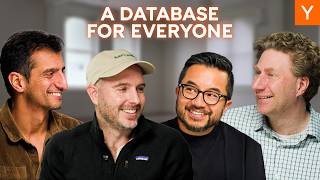
What Happens When Everyone Can Build Software

The egoless culture that built Supabase - Paul Copplestone (Co-founder, CEO)
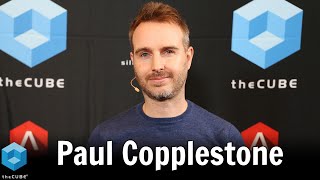
Paul Copplestone, Supabase - AWS re:Invent 2025
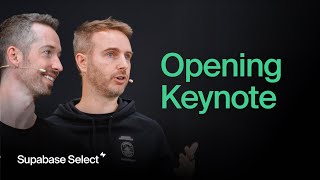
Opening keynote from Paul Copplestone and Ant Wilson - Supabase Select 2025
Cite This Interview
Use this interview in your research, article, or academic work
Related Interviews

Rob Snyder
Founder & CEO at Reframe
In this interview, Rob Snyder, Founder and CEO of Reframe and author of The Power of Pull, reveals his counterintuitive zero-to-one methodology for uncovering genuine…

Jason Lemkin
Founder & CEO at SaaStr
In this interview, Jason Lemkin, Founder and CEO of SaaStr, assesses the structural shifts impacting late-stage venture capital, public cloud valuations, and artificial intelligence infrastructure…

Rahul Vohra
Founder & CEO at Superhuman
Making AI stick in email workflows
In this interview, Rahul Vohra, Founder and CEO of Superhuman, explores why superficial AI integrations fail to retain software users and outlines frameworks for embedding…

Mike Cannon-Brookes
Co-Founder & CEO at Atlassian
In this interview, Mike Cannon-Brookes, Co-Founder and CEO of Atlassian, discusses the practical integration of autonomous AI agents across modern enterprise collaborative workflows. He examines…

Aneel Bhusri
Co-Founder & CEO at Workday
In this interview, Aneel Bhusri, Co-Founder and CEO of Workday, unpacks the seismic impact of enterprise AI agents on global corporate labor and organizational architecture.…

Vikram Chalana
Founder & CEO at Pictory
In this interview, Vikram Chalana, founder and CEO of Pictory, sits down with Vlad Kachur to explore the transformation of corporate knowledge into automated video…