
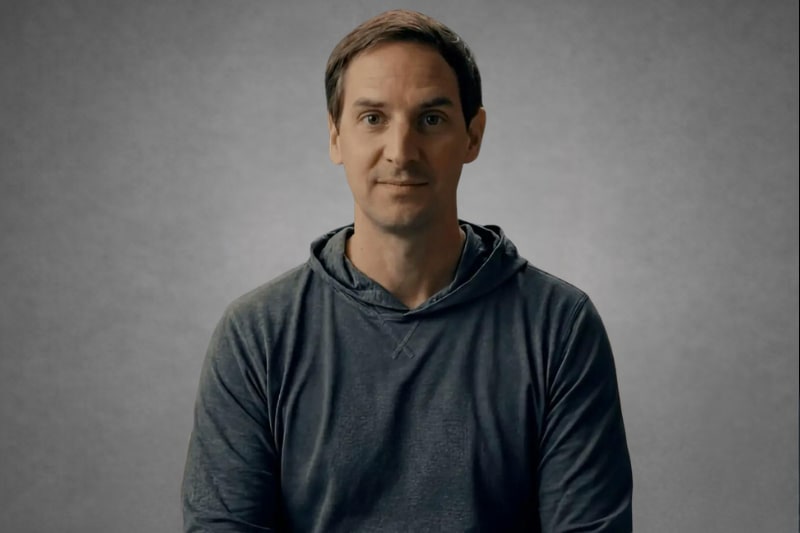
Sam BlondCo-Founder & CEOWhy traditional sales CRMs fail in the agentic era and how Monaco automates GTM
In this interview, Sam Blond, Co-Founder and Chief Executive Officer of Monaco, analyzes why legacy CRM architectures fail in the era of artificial intelligence agents and shares his framework for modern go-to-market execution. Drawing from his background evaluating hundreds of startups at Founders Fund and scaling Brex as Chief Revenue Officer, he details how Monaco automates account enrichment, outbound messaging, and pipeline hygiene. Blond delivers vital strategic guidance on non-linear brand compounding and scaling sales productivity.


Founder Stats
- SaaS
- Started 2024
- $1.25M/mo
- 10–50 employees
- San Francisco, California, USA
About Sam Blond
Sam Blond is the Co-Founder and Chief Executive Officer of Monaco, the artificial intelligence native revenue platform automating go-to-market operations for high-growth software enterprises. Previously a Partner at Founders Fund, he evaluated over two hundred sales automation startups. Blond earlier served as Chief Revenue Officer at Brex, scaling company revenue to hundreds of millions, and held executive sales leadership positions at Zenefits and EchoSign prior to its acquisition by Adobe.
Interview
November 23, 2026
What common traps killed the majority of artificial intelligence sales startups you evaluated at Founders Fund?
During my time at Founders Fund, I evaluated over two hundred sales automation startups, and most fell into two fatal traps. The first was building a minor feature rather than a durable company, such as a basic wrapper that summarizes sales calls and updates CRM fields. The second was building sophisticated technology in search of a problem without genuine customer pull.
Why is it nearly impossible for legacy CRM giants like Salesforce to pivot to an AI-native architecture?
Legacy CRM systems were architected decades ago to be entirely reactive systems of record. They wait passively for human sales reps to type notes, update stages, and log calls. An AI-native platform like Monaco is architected so autonomous agents perform the research, drafting, and pipeline updates before a human ever opens the interface. Rebuilding that foundational reactive data schema from scratch is structurally prohibitive.
What go-to-market workflows are artificial intelligence agents objectively superior at executing today?
Agents dramatically outperform humans at calculating total addressable markets, enriching account data in real time, detecting executive hiring signals, and conducting targeted multi-channel outbound across email and LinkedIn. Furthermore, agents excel at continuous pipeline hygiene, automatically creating opportunities and scheduling follow-up reminders. Having expensive human sales reps perform those repetitive manual tasks is an enormous waste of enterprise capital.
Where do human sales representatives retain an insurmountable advantage over autonomous agents?
Humans remain completely irreplaceable when it comes to building deep trust, navigating executive politics, and closing complex enterprise relationships. Buyers investing six figures in software still demand face-to-face rapport and authentic human accountability. Additionally, humans excel at imaginative, operationally complex marketing campaigns. An algorithm will never dream up flying a promotional airplane over an industry conference; brilliant humans orchestrate those memorable moments.
How does Monaco help revenue organizations transition from bloated SDR teams to high-efficiency pods?
Traditionally, software companies hired armies of junior sales development reps who spent eighty percent of their week copy-pasting lead lists and sending generic emails. Monaco automates the entire prospecting research and initial outreach lifecycle. This enables companies to operate with far fewer, highly compensated account executives who focus entirely on conducting high-caliber discovery calls and negotiating enterprise contract terms.
What is your monthly thirty-day creative marketing ritual for engineering viral brand moments?
Every month, thirty days before major events, we assemble our five most creative minds and give them a prompt forty-eight hours in advance. Everyone brings their most audacious, unconventional marketing ideas to amplify our brand. We pick two or three high-conviction concepts and execute ruthlessly. That deliberate process ensures we show up with memorable spectacles rather than boring booth swag.
Why do you emphasize that bold brand marketing moments compound non-linearly over time?
Brand marketing creates multiplicative momentum rather than linear addition. Our outdoor billboards perform significantly better because prospects remember our conference poker tournament. That tournament lands harder because of our recent fundraising announcement, which resonates deeper because of our product velocity. Each bold brand impression reinforces the next, establishing an aura of market inevitability that accelerates enterprise deal cycles.
What core operating metrics should modern chief revenue officers prioritize in an AI-driven sales environment?
Traditional metrics like total outbound activity volume and headcount expansion are obsolete vanity measurements. Modern revenue leaders must track revenue per employee, pipeline velocity, customer acquisition payback periods, and net revenue retention. When software automates administrative prospecting overhead, sales productivity per representative should double, allowing companies to scale top-line revenue without expanding sales payroll linearly.
How did your experience scaling Brex to hundreds of millions in revenue inform Monaco product design?
At Brex, we experienced firsthand the agonizing friction of scaling a hyper-growth sales organization on legacy software tools. Our managers spent half their working lives badgering account executives to update deal stages and log meeting notes accurately. We engineered Monaco to eliminate administrative data entry entirely, ensuring CRM data is continuously accurate and actionable without human friction.
What pitfalls arise when enterprise software teams attempt to automate customer outbound prematurely?
The biggest mistake is blasting thousands of generic automated emails that burn domain reputation and alienate high-value prospects. Automation without deep contextual enrichment is merely amplified spam. Monaco leverages fine-grained buying signals, recent corporate milestones, and organizational pain points to ensure that every automated communication feels tailored, relevant, and timely, protecting brand equity while driving engagement.
How should early-stage enterprise founders evaluate when to hire their first sales leader?
Founders must achieve founder-led sales traction and close the first ten to twenty enterprise accounts personally before hiring sales executives. You cannot delegate sales leadership until you understand why customers buy, what objections arise, and how pricing resonates. Once the founder establishes a repeatable sales motion, an exceptional sales leader can codify that playbook and scale execution.
What is your expansive long-term vision for Monaco in the future of enterprise software?
We are building the autonomous revenue brain for global enterprise commerce. Over the next decade, sales platforms will evolve from static databases into proactive intelligent co-pilots that anticipate customer needs, coordinate complex deal cycles, and forecast revenue trajectories with absolute mathematical precision. Eliminating manual operational drag will enable ambitious companies to achieve unprecedented commercial scale.
Table Of Questions
Video Interviews with Sam Blond
I Was a VC at Founders Fund. Here is What Everyone Gets Wrong with Sam Blond, CEO of Monaco - SaaStr AI (Interview Video)
I Was a VC at Founders Fund. Here is What Everyone Gets Wrong with Sam Blond, CEO of Monaco - SaaStr AI (Interview Video)

The AI-Native GTM Playbook - Sam Blond, Monaco
Sam Blond on the Future of Sales in an AI-Native World
Cite This Interview
Use this interview in your research, article, or academic work
Related Interviews

Miquel Palet
Founder & CEO at Zernio
Bootstrapping a unified social and messaging API to 5 million ARR in 13 months
In this interview, Miquel Palet, Founder and Chief Executive Officer of Zernio, reveals how he launched a unified social media and messaging API platform over…

Agnese Jaunošāne
Co-Founder & CEO at Ajelix
First-mover SEO and organic product iteration for bootstrapped AI SaaS
In this interview, Agnese Jaunošāne, Co-Founder and CEO of Ajelix, details the organic acquisition engine and iterative pivoting framework that scaled her bootstrapped spreadsheet intelligence…

Paul Copplestone
Co-Founder & CEO at Supabase
In this interview, Paul Copplestone, Co-Founder and CEO of Supabase, outlines the architectural shift occurring as generative artificial intelligence democratizes software development globally. He analyzes…

Rob Snyder
Founder & CEO at Reframe
In this interview, Rob Snyder, Founder and CEO of Reframe and author of The Power of Pull, reveals his counterintuitive zero-to-one methodology for uncovering genuine…

Jason Lemkin
Founder & CEO at SaaStr
In this interview, Jason Lemkin, Founder and CEO of SaaStr, assesses the structural shifts impacting late-stage venture capital, public cloud valuations, and artificial intelligence infrastructure…

Rahul Vohra
Founder & CEO at Superhuman
Making AI stick in email workflows
In this interview, Rahul Vohra, Founder and CEO of Superhuman, explores why superficial AI integrations fail to retain software users and outlines frameworks for embedding…