

Jacob WrightFounder & CEOAchieving Four Percent Churn in B2C SaaS Through Thoughtful Product Design
In this interview, Jacob Wright, Founder and CEO of Dabble, reveals how he designed a fiction writing application that achieved an extraordinary four percent monthly churn rate in consumer software. He breaks down his core product philosophy, how respecting the user reservoir of goodwill eliminates software friction, and the architectural decisions that enabled seamless offline browser synchronization against entrenched incumbent competitors.


Founder Stats
- SaaS
- Started 2017
- $45K/mo
- Under 10 employees
- Salt Lake City, Utah, USA
About Jacob Wright
Jacob Wright is the Founder and CEO of Dabble, a specialized software application tailored for novelists and creative storytellers. Based in Salt Lake City, Utah, he engineered Dabble to solve the overwhelming complexity of legacy writing tools by combining browser accessibility with robust offline data synchronization. As a bootstrapped founder, Wright grew Dabble to hundreds of thousands of dollars in recurring revenue while maintaining an industry-leading four percent consumer churn rate.
Interview
November 25, 2026
What motivated you to enter the crowded writing software market and build Dabble from scratch?
Many novelists relied on Scrivener, but beginners found its cluttered interface overwhelming and intimidating. I saw amateur writers struggling with endless configuration menus instead of actually completing their stories. I wanted to build an elegant tool that provided sophisticated plotting and organization features without feeling like complicated spreadsheet software. My vision was an intuitive web application where novelists could focus purely on their creative flow.
How does Dabble manage to sustain a remarkably low four percent churn rate in consumer software?
Consumer subscription software typically suffers from double-digit monthly attrition because hobbyists cancel quickly. We keep churn exceptionally low by designing for emotional connection rather than feature volume. When writers feel that software genuinely supports their artistic goals and removes cognitive friction, they become fiercely loyal. Our members integrate Dabble into their daily writing rituals, transforming our software into an indispensable creative partner.
How do you apply Steve Krug concept of the reservoir of goodwill to your interface design?
Every person visits your application with a finite tank of emotional goodwill. Every confusing label, strange error modal, or unexpected delay depletes that goodwill. If the reservoir empties, the user closes the tab and never returns. We ruthlessly audit our interface to eliminate every unnecessary click and confusing prompt. Keeping cognitive friction near zero preserves user patience so they can pour their energy into writing.
Why do you believe that customer satisfaction is actually the enemy of organic word-of-mouth growth?
Mere satisfaction simply means an application functioned without breaking. Nobody recommends a product to their writing circle just because it was adequate. People only evangelize software when it triggers a genuine emotional response. You must deliver delight that exceeds baseline expectations. When an author discovers an unexpected visual feature or receives a delightfully human response from support, they eagerly recommend the platform to fellow writers.
What led you to engineer Dabble as a browser-first application that works seamlessly offline?
Writers travel frequently, work in remote cabins, and write during subway commutes where internet connections fail. Traditional desktop applications require manual file saving and complex license keys, while standard web apps break without connectivity. We invested immense engineering effort into making Dabble run in the browser while maintaining instant local database synchronization. That technical architectural choice delivered maximum convenience with total peace of mind.
How did you simplify the complex plotting mechanics that intimidate authors using legacy tools?
Legacy tools force authors to manage complex folder hierarchies and metadata cards that fragment the creative flow. We reimagined plotting as an integrated index-card matrix running directly parallel to the manuscript text. Authors can reorder story arcs, track character development, and reorganize scenes visually with instant drag-and-drop operations. This visual design gives writers structural clarity without forcing them to learn complex database software.
What is the Customer Logo Tattoo metric that you introduced at MicroConf?
It is a playful metric representing the ultimate expression of product adoration. We literally had a devoted customer get the Dabble logo permanently tattooed on their body. While obviously humorous, it underscores a serious operational principle. When software genuinely changes how someone achieves their dreams, their appreciation transcends commerce. Measuring extreme affinity pushes our product team to optimize for deep affection over superficial engagement metrics.
How do you resist the urge to add feature bloat as power users request advanced configurations?
Feature bloat is the primary disease of aging productivity software. When power users request niche settings, adding them often compromises simplicity for ninety percent of customers. We interrogate the underlying problem behind every request rather than blindly building the suggested feature. Our goal is to solve advanced workflow requirements using our existing clean primitives so the core writing experience remains uncluttered for beginners.
How does artificial intelligence impact your product roadmap and competitive moat?
Commodity artificial intelligence can generate prose and code, but it cannot invent great taste or intuitive product design. In fact, rampant artificial intelligence text generation makes authentic human storytelling even more precious. We use machine intelligence selectively to assist authors with structural editing, but we refuse to turn our canvas into an automated content mill. Thoughtful user experience and deep emotional resonance remain our moat.
What pricing strategy enabled Dabble to build a sustainable bootstrapped software business?
We offer tiered monthly, annual, and lifetime options tailored to different creative stages. While monthly plans offer low trial barriers, annual subscriptions align with the reality that writing a complete novel takes months of sustained work. Offering annual commitments upfront generates immediate working capital to fund continuous engineering. It also filters for dedicated writers who are genuinely committed to finishing their books.
How does your small four-person team compete successfully against heavily funded software incumbents?
Large software organizations move slowly because every design tweak requires executive committees and consensus meetings. Our small bootstrapped team talks directly to authors every single day. We identify workflow pain points and deploy improvements within hours. Because we do not answer to outside venture capitalists demanding aggressive growth, we focus entirely on product craftsmanship, customer delight, and sustainable long-term profitability.
What fundamental advice do you give to bootstrapped founders trying to master product management?
Stop focusing on what features competitors have and start observing where users experience emotional frustration. Watch prospective customers interact with your application without giving them verbal prompts. Notice where they pause, where they squint, and where they hesitate. Making software feel effortless requires doing immense hard work on simplicity behind the scenes so the end user never feels the underlying complexity.
Table Of Questions
Video Interviews with Jacob Wright
SaaS Product Design: How a B2C App Got to 4% Churn - MicroConf (Interview Video)

SaaS Product Design: How a B2C App Got to 4% Churn - MicroConf (Interview Video)
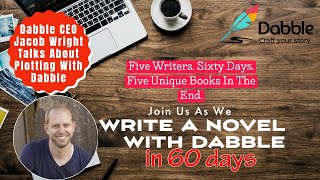
Write A Novel In 60 Days With Dabble Week 1 - Dabble CEO Jacob Wright Talks Plotting With Dabble

A Dabble Tour from the Guy Who Built It - Dabble Writer
Cite This Interview
Use this interview in your research, article, or academic work
Related Interviews

Sanskar Tiwari
Founder & Solo Creator at MicroApps
Building a 1 Million USD Micro-SaaS Portfolio as a Solo Bootstrapped Founder
In this interview, Sanskar Tiwari, Founder of MicroApps, reveals how he escaped call center night shifts to build a portfolio of thirty micro-SaaS applications that…
Sam Blond
Co-Founder & CEO at Monaco
Why traditional sales CRMs fail in the agentic era and how Monaco automates GTM
In this interview, Sam Blond, Co-Founder and Chief Executive Officer of Monaco, analyzes why legacy CRM architectures fail in the era of artificial intelligence agents…

Miquel Palet
Founder & CEO at Zernio
Bootstrapping a unified social and messaging API to 5 million ARR in 13 months
In this interview, Miquel Palet, Founder and Chief Executive Officer of Zernio, reveals how he launched a unified social media and messaging API platform over…

Agnese Jaunošāne
Co-Founder & CEO at Ajelix
First-mover SEO and organic product iteration for bootstrapped AI SaaS
In this interview, Agnese Jaunošāne, Co-Founder and CEO of Ajelix, details the organic acquisition engine and iterative pivoting framework that scaled her bootstrapped spreadsheet intelligence…

Paul Copplestone
Co-Founder & CEO at Supabase
In this interview, Paul Copplestone, Co-Founder and CEO of Supabase, outlines the architectural shift occurring as generative artificial intelligence democratizes software development globally. He analyzes…

Rob Snyder
Founder & CEO at Reframe
In this interview, Rob Snyder, Founder and CEO of Reframe and author of The Power of Pull, reveals his counterintuitive zero-to-one methodology for uncovering genuine…