
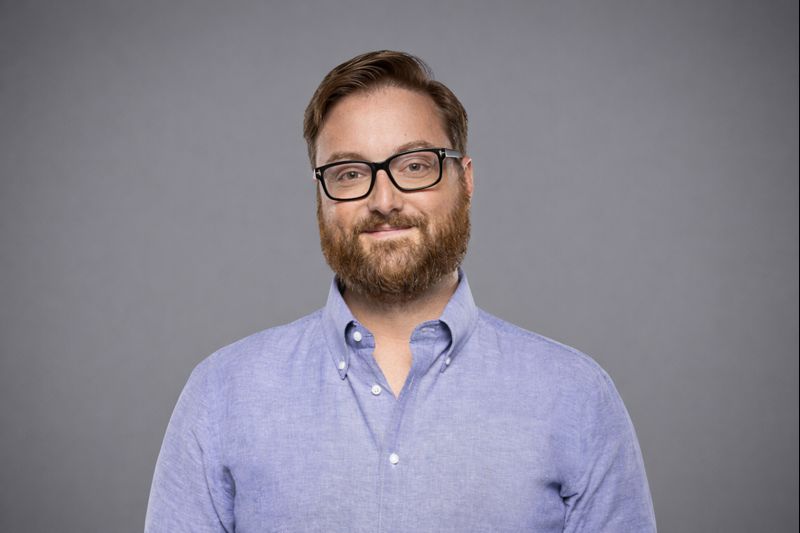
Brian SchimpfCo-founder & CEOAI, deterrence and ethics of autonomous weapons
In this interview, Anduril Industries co-founder and CEO Brian Schimpf discusses the shift in modern warfare toward AI-powered, software-first defense technologies. Schimpf shares the origin story of Anduril alongside Palmer Luckey, details the challenges of hardware iteration compared to software, and analyzes the role of deterrence in regional conflicts. He also addresses ethical red lines in autonomous weaponry, details the impact of drone proliferation, and examines the consolidation of defense budgets.


Founder Stats
- Technology
- Started 2017
- $183.3M/mo
- 7,000+ employees
- Costa Mesa, California, USA
About Brian Schimpf
Brian Schimpf is the co-founder and CEO of Anduril Industries, a defense technology company established in 2017. Before co-founding Anduril, Schimpf was an early employee and director of engineering at Palantir Technologies, managing international operations. He holds a Bachelor of Science in Operations Research and Industrial Engineering from Cornell University, where he directed autonomous vehicle projects. Under his leadership, Anduril has grown to become a primary contractor for United States and allied defense programs.
Interview
August 3, 2026
This is interview 2 of 2 with Brian Schimpf.
Brian Schimpf has been featured on CEO Insider 2 times. Explore the full collection.
What was the origin story of founding Anduril Industries in 2017?
My co-founders Matt Grimm, Trae Stephens, and I had worked together for a long time. Trae was at Founders Fund searching for a defense tech investment, but no one in Silicon Valley would touch defense. When Palmer Luckey left Facebook, we partnered to bring Silicon Valley engineering to the Pentagon.
Why did you target the defense sector when other tech founders avoided it?
How does the cost of hardware iteration compare to software development?
How do you blend a fast paced software culture with safety critical hardware?
We combine rapid software iteration with disciplined hardware engineering. Safety-critical systems controlling aircraft require rigorous, structured coding, but that does not mean the engineering cycle has to take ten years. Elon Musk proved you can execute high-quality engineering in months, not years.
What are the primary products in Anduril's defense portfolio today?
What role did the Australian Navy autonomous submarine program play in Anduril's growth?
What is Anduril's Lattis software and how does it manage the modern battlefield?
How does Anduril's projected revenue target for this year compare to previous years?
Why is hard military power an essential tool for maintaining global peace?
What has caused the transition from relative geopolitical stability to the current conflicts?
It is a combination of technological change and political shifts. Many nations atrophied their defense capabilities by relying on American protection for decades. When the United States signaled a less interventionist posture, it created opportunities for aggressive neighbors to pursue their aims.
How has the proliferation of low cost drones changed the economics of infantry warfare?
Why is the concept of long range strike becoming the focus of modern militaries?
Militaries use long-range strike to target economic infrastructure, airfields, and supply lines rather than just military hardware. This creates severe political and economic pressure on adversaries. Fending off coordinated long-range strikes requires defending the entire country simultaneously, which is highly challenging.
How do you address ethical concerns regarding the development of autonomous weapons?
The United States has deployed bounded autonomous systems like the Aegis combat system, torpedoes, and anti-radiation missiles since the 1970s. Bounding decision-making to a defined area or target profile is a proven defensive technique. The ethical choice is to build the most precise weapons possible.
Why is human accountability a core pillar of Anduril's autonomous systems?
What was the basis of the public policy dispute between Anthropic and the military?
Why should technologists, rather than policy makers, dictate what AI models can achieve?
What are your thoughts on proposals for the government to take equity stakes in tech startups?
Table Of Questions
Video Interviews with Brian Schimpf
The Next Era of Warfare is Here
The Next Era of Warfare is Here
Anduril CEO on the Business of Defense, AI Predictions for 2026, Steve Jobs' Son | The Information
Cite This Interview
Use this interview in your research, article, or academic work
Related Interviews
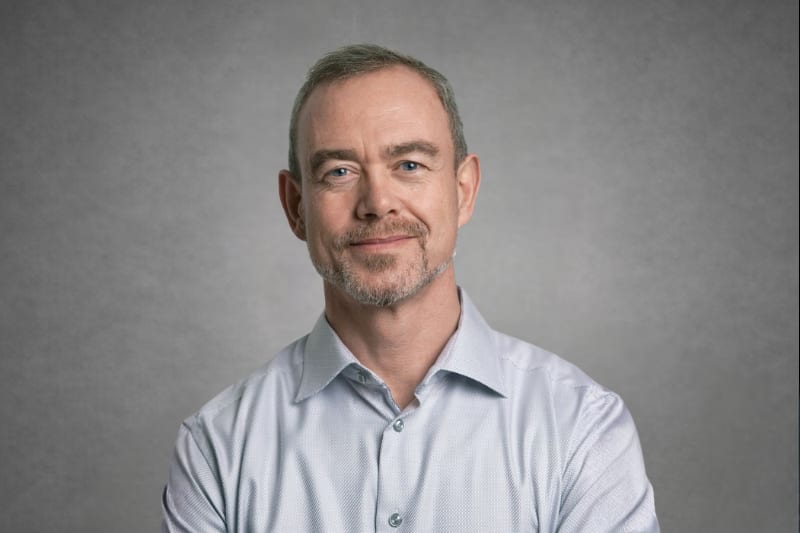
Ulrik Lehrskov-Schmidt
Founder & Managing Director at Willingness to Pay
Why per-seat pricing is dead and how AI agents are transforming SaaS monetizatio
In this interview, Ulrik Lehrskov-Schmidt, Founder and Managing Director of Willingness to Pay, breaks down the collapse of the per-seat software pricing model in the…

Walter Goodwin
Founder & CEO at Fractile
Custom in-memory silicon architecture and the global AI inference compute crisis
In this interview, Walter Goodwin, Founder and Chief Executive Officer of Fractile, analyzes the exponential hardware bottlenecks threatening the generative artificial intelligence industry and outlines…
Amjad Masad
Founder & CEO at Replit
Browser-based IDEs and autonomous AI software agents at scale
In this interview, Amjad Masad, Founder and CEO of Replit, joins Paul Graham to analyze the transformation of software development in the artificial intelligence agent…
Guillermo Rauch
Founder & CEO at Vercel
The agent-driven cloud and how autonomous software scales to trillion-dollar out
In this interview, Guillermo Rauch, Founder and CEO of Vercel, examines the paradigm shift underway as autonomous software agents revolutionize cloud infrastructure and web development.…

Bill Gates
Founder & Former CEO at Breakthrough Energy
In this interview, Bill Gates, Founder of Breakthrough Energy and Co-Founder of Microsoft, forecasts two decades of profound socioeconomic disruption driven by artificial intelligence advancements.…
Jim VandeHei
Co-Founder & CEO at Axios
In this interview, Jim VandeHei, Co-Founder and CEO of Axios and co-author of Smart Brevity, analyzes how generative artificial intelligence and pervasive digital noise are…