
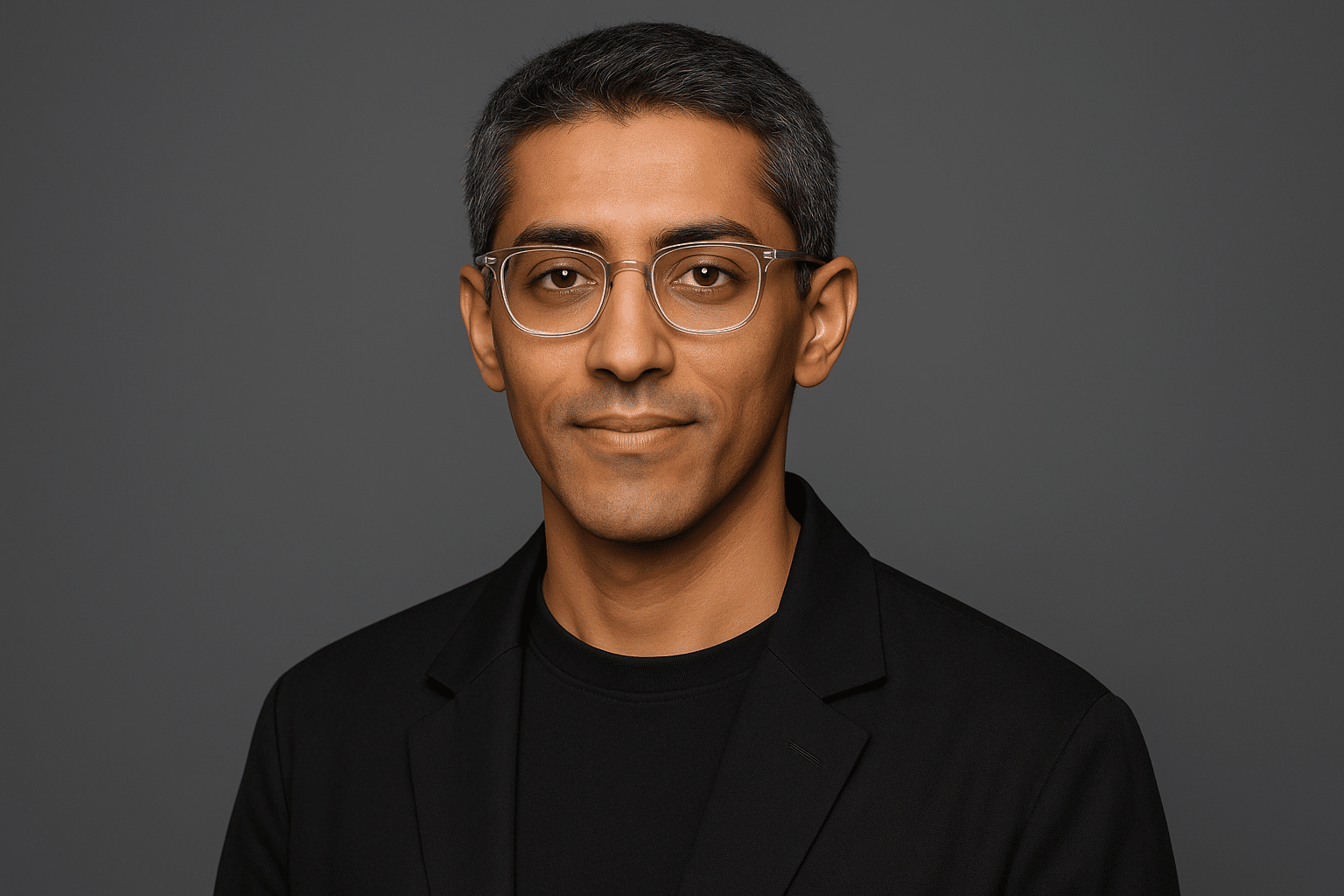
Dhanush RadhakrishnanFounder & CEO
In this interview, Dhanush Radhakrishnan discusses the mission behind Clone Robotics and the pursuit of human-level robotics through musculoskeletal androids powered by artificial muscles. He shares insights on biomimicry, simulation-first development, vertical integration, and building teams focused on ambitious technical goals. The conversation highlights the advantages of copying nature’s designs, the challenges of achieving human-like dexterity and movement, and how advances in AI and robotics are accelerating the path toward scalable, real-world humanoid systems.
Founder Stats
- Technology, AI, Production
- Started 2023
- $100K–$500K/mo
- 21–50 team
- India
About Dhanush Radhakrishnan
Dhanush Radhakrishnan is the founder and CEO of Clone Robotics, a robotics company developing musculoskeletal androids powered by fluidic artificial muscles. Focused on replicating human anatomy as closely as possible, he is leading efforts to combine advanced robotics with modern AI to achieve human-like strength, dexterity, and movement. His approach emphasizes biomimicry, rapid iteration, simulation-driven development, and deep vertical integration to accelerate progress toward practical humanoid robots.
Interview
October 19, 2025
Where did your vision start?
Why start with a full body goal but build the hand first?
What was the key product insight?
Why copy nature so literally instead of redesigning?
Are you adding improvements over the human body?
How do you stay focused as a company?
What market do you design for first?
How do you think about battery life for real use?
How will people communicate with it?
Why choose synthetic muscles over motors?
What is the muscle technology and fluid choice?
How will you achieve stable walking and robust locomotion?
What compute and control hardware power the system?
Which sensors matter most at the start?
What is your data strategy for manipulation skills?
What changes in the next alpha versus now?
What is the hardest milestone right now and why does it matter for the business?
Untethered bipedal walking. It needs compact valves, batteries, the hydraulic heart, accumulators, reservoir, tubes, and cables all inside rib cage, abdomen, and pelvis, plus trained locomotion. Hitting this proves a true synthetic human that can move on its own, which unlocks real world value at scale.
Table Of Questions
Video Interviews with Dhanush Radhakrishnan
Building Musculoskeletal Androids | Interview with Clone's Co-founder & CEO Dhanush Radhakrishnan
Building Musculoskeletal Androids | Interview with Clone's Co-founder & CEO Dhanush Radhakrishnan
‘Ep 67: Doing Plan A to Do B Doesn’t Work (w/ Dhanush Radhakrishnan)
Clip: Dhanush Rad Clone Robotics
Cite This Interview
Use this interview in your research, article, or academic work
Related Interviews
Brian Schimpf
Co-founder and CEO, Anduril Industries at Anduril Industries
In this interview, Brian Schimpf discusses how Anduril Industries is transforming defense through autonomy, software, and rapid innovation. He shares lessons from scaling the company…
Krishna Rangasayee
Founder & CEO at SiMa.ai
In this interview, Krishna Rangasayee discusses the rise of physical AI and the opportunities created by bringing intelligent decision-making directly to edge devices. He shares…

Naveen Rao
VP of Generative AI & Former CEO of MosaicML at Databricks
In this interview, Naveen Rao, VP of Generative AI at Databricks and former CEO of MosaicML, analyzes the explosive economics of artificial intelligence inference and…
Rahul Vohra
Founder & CEO at Superhuman
In this interview, Rahul Vohra, Founder and CEO of Superhuman, explores why superficial AI integrations fail to retain software users and outlines frameworks for embedding…

Sam Altman
Co-founder & CEO at OpenAI
In this interview, Sam Altman, Co-Founder and CEO of OpenAI, explores the practical trajectory toward artificial general intelligence and the imperative of human agency in…
Mike Cannon-Brookes
Co-Founder & CEO at Atlassian
In this interview, Mike Cannon-Brookes, Co-Founder and CEO of Atlassian, discusses the practical integration of autonomous AI agents across modern enterprise collaborative workflows. He examines…