

Jensen HuangCo-founder & CEO
In this interview, NVIDIA co-founder and CEO Jensen Huang discusses the geopolitical landscape of AI, the co-existence of open-source and closed models, and the massive capital expenditure shift powering the artificial intelligence revolution. Huang addresses trade dynamics with China, critiques regulatory over-correction, and highlights how open models strengthen global cybersecurity. He outlines NVIDIA's headcount strategy and shares how personal trials and a relentless focus on execution build leadership resilience.

Founder Stats
- AI
- Started 1993
- Approx. 18 Billion USD/mo
- 50000+ team
- Santa Clara, California, United States
About Jensen Huang
Jensen Huang is the co-founder and CEO of NVIDIA, the world's leading company in programmable graphics and artificial intelligence computing. Born in Taiwan, Huang moved to the United States as a child and graduated from Oregon State University and Stanford University with degrees in electrical engineering. Under his leadership from day zero in 1993, NVIDIA transformed from a 3D graphics startup into the world's most valuable technology enterprise, powering the global AI infrastructure.
Interview
July 24, 2026
This is interview 2 of 4 with Jensen Huang.
Jensen Huang has been featured on CEO Insider 4 times. Explore the full collection.
How would Chinese export controls on AI models affect the U.S. technology sector?
Should the U.S. government restrict or ban Chinese AI models like Kimi?
Is there a security risk in American companies using Chinese open-source models?
Why is it essential to regulate AI applications rather than the raw technology?
What is the current status of NVIDIA's sales to the Chinese market?
Why has the market repeatedly misunderstood the impact of open-source Chinese models like DeepSeek?
What is the purpose of NVIDIA's open-source model, Nemotron?
Why should companies avoid building their own custom AI models from scratch?
How do open-source models strengthen global cybersecurity defense?
Why do you reject the narrative that AI will cause massive job losses?
How does the current AI chip demand cycle differ from historical semiconductor boom-and-bust cycles?
Why will the next generation of software companies be capital-expenditure heavy?
Why do you believe that a market bubble is unlikely in the next five years?
How do you manage NVIDIA's headcount to remain as small as possible?
What is the significance of the "token" in the economics of modern computing?
Why do you believe that pain and suffering are essential to achieving professional greatness?
Why do you choose not to wear a watch or manage your life with an outlook calendar?
Why does the United States remain the land of dreams for global entrepreneurs?
Table Of Questions
Video Interviews with Jensen Huang
Jensen Huang says the AI doomers have it wrong

Jensen Huang says the AI doomers have it wrong
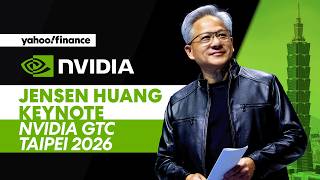
Nvidia GTC Taipei 2026 Keynote
Cite This Interview
Use this interview in your research, article, or academic work
Related Interviews

Sam Altman
Co-founder & CEO at OpenAI
In this interview, Sam Altman, Co-Founder and CEO of OpenAI, explores the practical trajectory toward artificial general intelligence and the imperative of human agency in…
Jensen Huang
Co-founder & CEO at NVIDIA
In this interview, Jensen Huang, Founder, President and CEO of NVIDIA, addresses prevailing existential narratives surrounding artificial intelligence and outlines Europe's sovereign computing opportunities. He…
Mo Gharbat
Founder & CEO at Open
In this interview, Mo Gharbat, Founder and CEO of Open, discusses building an enterprise artificial intelligence customer communication platform that replaces legacy support systems. He…
Sam Altman
Co-founder & CEO at OpenAI
In this interview, Sam Altman discusses the accelerating pace of artificial intelligence, the realities of preparing OpenAI for a public offering while preserving its nonprofit…

Sravanth Aluru
Co-Founder & CEO at Avataar
In this interview, Sravanth Aluru breaks down the architectural shift toward AI-native enterprises, arguing that organizations must deploy a central intelligence layer rather than relying…
Jensen Huang
Co-founder & CEO at NVIDIA
In this interview, Jensen Huang, co-founder and CEO of NVIDIA, sits down with Anderson Cooper to address the most urgent questions surrounding AI safety, autonomous…