

Kush BavariaCo-Founder & CEOBuilding GPU Compute Futures and Navigating the AI Neo-Cloud Economy
In this interview, Kush Bavaria, Co-Founder and CEO of Ornn, unpacks the financial mechanics of modern artificial intelligence infrastructure, neo-cloud economics, and GPU compute derivatives. He explains why compute hardware commoditizes faster than traditional software assets, how price indices and futures contracts mitigate severe cluster oversupply risks, and why enterprise application builders will capture superior long-term returns compared to levered infrastructure operators.


Founder Stats
- Technology
- Started 2023
- $250K/mo
- 10–50 employees
- New York, New York, USA
About Kush Bavaria
Kush Bavaria is the Co-Founder and CEO of Ornn, the premier financial market constructing price indices, liquidity pools, and standardized futures for artificial intelligence compute. A former MIT researcher who previously built high-scale prediction platforms, Bavaria founded Ornn in New York to bring capital markets discipline to the volatile graphics processor ecosystem. Under his leadership, Ornn established transparent pricing benchmarks for enterprise clusters, neo-clouds, and global infrastructure funds.
Interview
What fundamental market inefficiency inspired you to launch Ornn as a financial exchange for compute?
Computing power has evolved into the most essential raw commodity of modern civilization, yet it lacks transparent pricing and hedging mechanisms. Companies commit billions of dollars to multi-year graphics processor leases without knowing future spot values. We created Ornn to build transparent pricing indices and futures contracts for compute hours. This financial infrastructure lets cluster operators hedge utilization risks and allows software developers to secure guaranteed compute capacity.
Why do you believe that artificial intelligence applications will win while infrastructure investors face substantial losses?
Infrastructure investors are pouring vast capital into data centers and silicon assuming continuous high rental margins. However, compute is inherently an undifferentiated commodity with zero vendor lock-in. When massive new generation chips deploy, older cluster valuations experience swift margin collapse. In contrast, proprietary software applications retain customer data, custom business workflows, and high switching costs. The real durable economic value will accrue to application layers, not commodity infrastructure.
How do neo-cloud operators manage the extreme financial risk of multi-year hardware debt financing?
Many neo-clouds purchased clusters using heavy debt backed by long-term customer contracts. The acute danger arises when initial three-year leases expire. If open-market hourly rental rates drop fifty percent due to new silicon architectures, refinancing that debt becomes perilous. Neo-clouds that rely solely on unhedged price arbitrage face severe liquidation risk. Those that build proprietary orchestration software and utilize futures contracts to guarantee baseline returns will survive.
How does Ornn construct standardized price indices across fragmented graphics processor configurations?
Constructing a reliable index requires normalizing across varied interconnect speeds, networking topologies, power efficiency ratings, and geographic latency zones. We aggregate real-time transaction data from enterprise purchases, secondary markets, and leading neo-cloud exchanges. By establishing standardized quality grades akin to West Texas Intermediate in crude oil markets, Ornn provides institutions with clear benchmark prices for eight-way graphics processing clusters across diverse hosting regions.
What role do compute futures play in protecting enterprise software companies against price volatility?
Model training runs require predictable budgets over six to eighteen month cycles. If spot compute prices surge during sudden model training rushes, startups burn through venture rounds unexpectedly. Conversely, buying fixed three-year capacity leaves companies holding expensive depreciating silicon if compute prices collapse. By trading standardized futures contracts on Ornn, enterprise engineering teams lock in exact future computational costs without taking on physical cluster management burdens.
Why is electrical power capacity proving to be a more severe bottleneck than raw chip manufacturing?
Modern artificial intelligence factories require hundreds of megawatts of continuous electrical power that regional utility grids simply cannot supply quickly. Fabricating silicon takes months, but securing power substation approvals, transformer equipment, and high-voltage transmission lines takes four to seven years. As a result, energized shell facilities command massive valuation premiums. Access to cheap, reliable power now dictates where high-performance compute clusters can economically operate globally.
How does rapid hardware obsolescence affect secondary market trading values for previous generation chips?
When advanced chips arrive delivering four times better energy efficiency and higher memory bandwidth, running older processors becomes economically unviable at previous pricing. Secondary market values for aging hardware do not decline gradually. They fall off an abrupt cliff as power costs exceed computational output. Ornn forward curve accurately reflects this depreciation, allowing operators to plan hardware decommissioning schedules rationally rather than facing surprise asset write-downs.
What parallels do you observe between early telecommunication fiber buildouts and today artificial intelligence infrastructure boom?
During the late nineteen-nineties telecom bubble, companies laid millions of miles of dark fiber across oceans anticipating explosive internet traffic. Many infrastructure builders went bankrupt when immediate demand failed to absorb capacity. However, that abundant cheap fiber eventually enabled the entire modern mobile and streaming economy. Similarly, current overbuilding will create temporary financial pain for over-leveraged infrastructure funds while permanently accelerating technological progress for humanity.
How does your background building prediction platforms at MIT shape your approach to market design?
Prediction markets teach you that liquid markets require transparent information, clear contract settlement rules, and balanced incentive structures. At MIT, I learned how order books clear when diverse market participants hold conflicting economic views. We applied those exact financial principles to compute derivatives. When model labs, cloud providers, and institutional investors all trade on transparent order books, accurate price discovery occurs naturally.
What is the operational mindset behind your admiration for Travis Kalanick high-intensity leadership style?
Building a brand new financial market from scratch requires relentless offensive velocity and immense intellectual resilience. Conventional corporate consensus culture moves far too slowly to capture rapidly evolving macroeconomic opportunities. Like Travis Kalanick in the early days of ride-sharing, founders tackling massive legacy industries must operate with relentless urgency, hire exceptionally driven problem solvers, and refuse to accept bureaucratic delays when scaling critical market infrastructure.
How do you view the future balance between centralized cloud giants and specialized neo-cloud providers?
Hyperscale cloud giants hold massive enterprise distribution, but their internal bureaucratic processes and high profit markups create openings for lean competitors. Specialized neo-clouds move faster, offer customized bare-metal networking architectures, and deliver superior price performance for artificial intelligence workloads. By connecting to transparent liquidity markets like Ornn, specialized providers gain the financial flexibility needed to challenge entrenched tech monopolies on equal footing.
What long-term transformation will standardized compute markets unlock for the global economy?
Within the next decade, computational capacity will be traded as fluidly as oil, natural gas, or electricity. Sovereign wealth funds, global hedge funds, and multinational corporations will treat compute reserves as essential balance sheet assets. By building the definitive exchange for compute futures, Ornn is creating the financial bedrock that will power the next era of synthetic intelligence, scientific discovery, and global economic expansion.
Table Of Questions
Video Interviews with Kush Bavaria
Why Neo-Clouds are Great Businesses & The State of Compute - 20VC with Harry Stebbings (Interview Video)

Why Neo-Clouds are Great Businesses & The State of Compute - 20VC with Harry Stebbings (Interview Video)

Kush Bavaria, Ornn - theCUBE + NYSE Wired: AI Factories
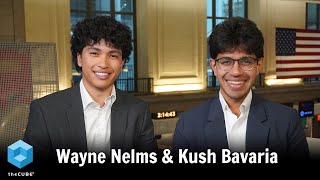
Kush Bavaria and Wayne Nelms, Ornn - theCUBE + NYSE Wired: RAISE Summit 2026

Kush Bavaria, Ornn - theCUBE + NYSE Wired: AI Factories - Data Centers of the Future
Cite This Interview
Use this interview in your research, article, or academic work
Related Interviews

Blake Scholl
Founder & CEO at Boom Supersonic
Turning Crisis into Opportunity and Financing Supersonic Airliners
In this interview, Blake Scholl, Founder and CEO of Boom Supersonic, reveals how his company navigated near-fatal supplier abandonment to develop Symphony, a purpose-built supersonic…

Ulrik Lehrskov-Schmidt
Founder & Managing Director at Willingness to Pay
Why per-seat pricing is dead and how AI agents are transforming SaaS monetizatio
In this interview, Ulrik Lehrskov-Schmidt, Founder and Managing Director of Willingness to Pay, breaks down the collapse of the per-seat software pricing model in the…

Walter Goodwin
Founder & CEO at Fractile
Custom in-memory silicon architecture and the global AI inference compute crisis
In this interview, Walter Goodwin, Founder and Chief Executive Officer of Fractile, analyzes the exponential hardware bottlenecks threatening the generative artificial intelligence industry and outlines…

Amjad Masad
Founder & CEO at Replit
Browser-based IDEs and autonomous AI software agents at scale
In this interview, Amjad Masad, Founder and CEO of Replit, joins Paul Graham to analyze the transformation of software development in the artificial intelligence agent…
Guillermo Rauch
Founder & CEO at Vercel
The agent-driven cloud and how autonomous software scales to trillion-dollar out
In this interview, Guillermo Rauch, Founder and CEO of Vercel, examines the paradigm shift underway as autonomous software agents revolutionize cloud infrastructure and web development.…

Bill Gates
Founder & Former CEO at Breakthrough Energy
In this interview, Bill Gates, Founder of Breakthrough Energy and Co-Founder of Microsoft, forecasts two decades of profound socioeconomic disruption driven by artificial intelligence advancements.…