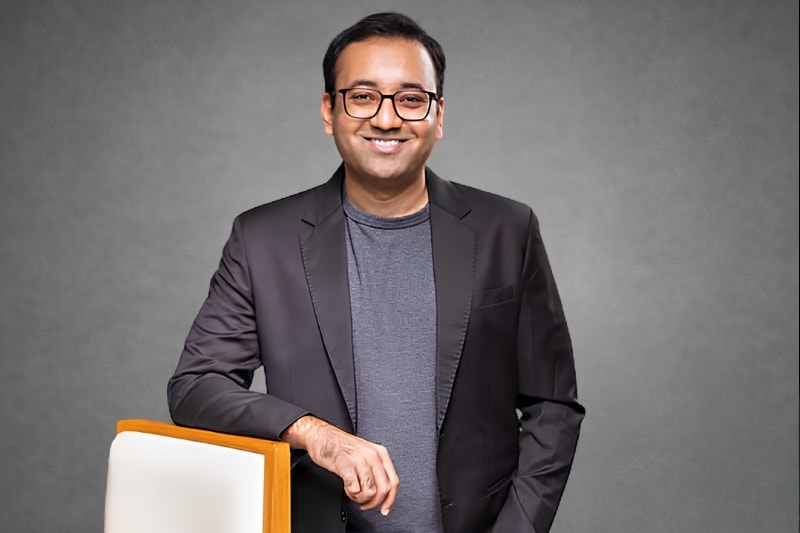
Matt Ebert, Founder & CEO at Crash Champions
4.3/5 Rating
Retail
Approx. $250 Million/mo
Approx. $3 Billion ARR

Matt EbertFounder & CEO

In this interview, Crash Champions founder and CEO Matt Ebert discusses the growing demand for skilled trades and the automotive technician shortage facing the collision repair industry. Ebert outlines the impact of retiring baby boomers, details Crash Champions' apprentice programs, and discusses the complexity of modern vehicles containing millions of lines of code. He also addresses his mentorship under Daymond John, the impact of tariffs on parts pricing, and the role of social media in recruiting younger talent.

Matt Ebert

Matt Ebert

Founder & CEO

Crash Champions

Crash Champions

Founder Stats

  • Retail
  • Started 1999
  • Approx. $250 Million/mo
  • 11000+ team
  • Chicago, Illinois, United States

About Matt Ebert

Matt Ebert is the founder and CEO of Crash Champions, one of the largest collision repair operators in the United States. Ebert established the company in 1999 as New Lenox Auto Body in Illinois before rebranding it in 2014. Under his leadership and supported by private equity partnerships, the firm has scaled to more than six hundred and fifty locations nationwide. He is a prominent advocate for the skilled trades and apprentice mentorship programs.

Interview

August 4, 2026

Q

What is the primary driving force behind the recent surge in interest for skilled trades?

Question 1 of 14
Matt Ebert

For decades, young people were heavily encouraged to pursue college education, leaving the trades neglected. Today, the trades are catching fire because people are realizing they can build highly lucrative, six-figure careers without going into debt.

0
Q

Why is the collision repair industry experiencing a severe shortage of qualified technicians?

Question 2 of 14
Matt Ebert

The industry faces a projected shortage of a hundred thousand technicians over the next several years. A large portion of our existing workforce belongs to the baby boomer generation, and they are retiring at a faster rate than we can replace them.

0
Q

How does the number of retired technicians compare to new trade school graduates?

Question 3 of 14
Matt Ebert

Trade schools only graduate a few thousand technicians each year. This is a drop in the bucket compared to the rate at which experienced technicians are retiring, creating an operational bottleneck for collision repair shops nationwide.

0
Q

How has the technical complexity of modern vehicles transformed the collision repair job?

Question 4 of 14
Matt Ebert

Today's vehicles are rolling computers. For perspective, a Boeing 777 airplane has fifteen million lines of code, whereas modern cars have a hundred and fifty million lines of code and a thousand chips. Collision repair now requires highly technical software and electrical skills.

0
Q

Why do you describe the collision repair industry as being largely AI-proof?

Question 5 of 14
Matt Ebert

In a collision shop, every accident and every repair job is completely unique. Unlike a manufacturing assembly line, you cannot easily train a robot to perform the same repetitive task. Because of this high variability, the technician's role remains AI-proof.

0
Q

How does Crash Champions utilize artificial intelligence in its daily operations?

Question 6 of 14
Matt Ebert

We use artificial intelligence on the administrative side of the business. It helps us optimize our supply chain, streamline parts ordering, and manage technician scheduling. This improves our overall operational efficiency while allowing technicians to focus on physical repairs.

0
Q

What has been the net effect of recent tariffs on the auto parts supply chain?

Question 7 of 14
Matt Ebert

Tariffs have increased parts prices slightly. However, this affects the consumer more than our company because parts costs are passed through. Because tariff policies are highly unpredictable, we do not spend much time trying to forecast them.

0
Q

How has your mentorship and partnership with Daymond John helped grow your company?

Question 8 of 14
Matt Ebert

Daymond has been a massive help with building my personal brand and raising company awareness. In a service business, consumers want to do business with people they know and trust. Daymond helped us find our voice and build that public trust.

0
Q

Why is establishing public trust and brand awareness so crucial in the collision repair sector?

Question 9 of 14
Matt Ebert

Nobody gets excited about needing a collision repair shop unless they have been in an accident. If consumers do not know or trust you before they need you, they will not bring their vehicles to your shops. Brand trust is our primary customer acquisition tool.

0
Q

How does Crash Champions recruit the younger generation who are looking to avoid college debt?

Question 10 of 14
Matt Ebert

We reach out to young people through social media messaging and public appearances. We highlight that they can earn a paycheck while they learn a valuable trade, providing a much stronger financial starting point than a costly four-year college degree.

0
Q

Why is trade school training alone insufficient to address the skilled labor gap?

Question 11 of 14
Matt Ebert

Trade schools provide the basics, but graduates still lack the real-world speed and troubleshooting skills required in a busy shop. We have to take trade school graduates or raw recruits and put them through our own internal training programs to bridge the gap.

0
Q

How does Crash Champions structure its internal apprentice and mentor programs?

Question 12 of 14
Matt Ebert

We pair recruits with experienced master technicians. The challenge is that being excellent at repairing cars does not automatically make someone a patient or effective teacher. We have to actively train our top technicians on how to be good mentors.

0
Q

Why do you believe learning a skilled trade is a solid starting point for long-term career growth?

Question 13 of 14
Matt Ebert

Learning a trade is not a lifetime sentence to fixing cars. It serves as an entry point. As companies like ours expand, they create diverse career paths in management, operations, and training. I started in a shop and have not repaired a car in years.

0
Q

What are the primary operational challenges when scaling a repair network to over six hundred locations?

Question 14 of 14
Matt Ebert

The biggest bottleneck is the talent pipeline. To support our expansion, we must constantly source, hire, and train technicians. Without a robust apprentice program and an active mentorship culture, scaling physical repair locations at this pace is impossible.

0

Video Interviews with Matt Ebert

The auto industry has had a real ‘transformation,’ CEO says
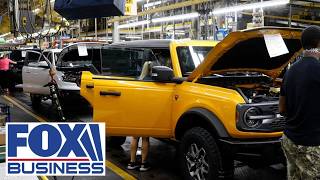
The auto industry has had a real ‘transformation,’ CEO says

The auto industry has had a real ‘transformation,’ CEO says

Fox Business | Skilled labor is 'catching fire,' says Crash Champions CEO

Fox Business | Skilled labor is 'catching fire,' says Crash Champions CEO

Bloomberg | Matt Ebert on Skilled Labor Shortages in Auto Repair

Bloomberg | Matt Ebert on Skilled Labor Shortages in Auto Repair

Cite This Interview

Use this interview in your research, article, or academic work

Related Interviews

Allison Ellsworth, Co-founder at Poppi
Retail

Allison Ellsworth

Co-founder at Poppi

Approx. $42 Million
250+

In this interview, Poppi co-founder Allison Ellsworth shares the journey of building a prebiotic soda brand from a kitchen counter experiment to a 1.95 billion…

Read Interview
Dave Mondragon, Founder & CEO at AutoTrust Dealer Alliance
Retail

Dave Mondragon

Founder & CEO at AutoTrust Dealer Alliance

11–50

In this interview, AutoTrust founder and CEO Dave Mondragon explains how independent automotive dealers can compete with large public dealer groups through collective purchasing power…
Read Interview
Paul Guyett, Managing Director at Leffler Leather
Retail

Paul Guyett

Managing Director at Leffler Leather

$1M+
50+

In this interview, Paul Guyett discusses how Leffler Leather has remained successful across generations by focusing on quality, expertise, and continuous adaptation. He shares lessons…
Read Interview
Emily Yuan, Co-founder & COO at Corgi
Finance

Emily Yuan

Co-founder & COO at Corgi

Approx. $3.3 Million
250+

In this interview, Corgi co-founder and Chief Operating Officer Emily Yuan discusses the complexities of building an AI-native, full-stack commercial insurance carrier from scratch. Yuan…

Read Interview
Brian Schimpf, Co-founder & CEO at Anduril Industries
Technology

Brian Schimpf

Co-founder & CEO at Anduril Industries

Approx. $183.3 Million
7000+

In this interview, Anduril Industries co-founder and CEO Brian Schimpf discusses the shift in modern warfare toward AI-powered, software-first defense technologies. Schimpf shares the origin…

Read Interview
Tom Siebel, Founder, Chairman & CEO at C3 AI
AI

Tom Siebel

Founder, Chairman & CEO at C3 AI

Approx. $20.8 Million
800+

In this interview, C3 AI founder, chairman, and CEO Tom Siebel discusses the historical evolution of enterprise artificial intelligence and the role of education in…

Read Interview