
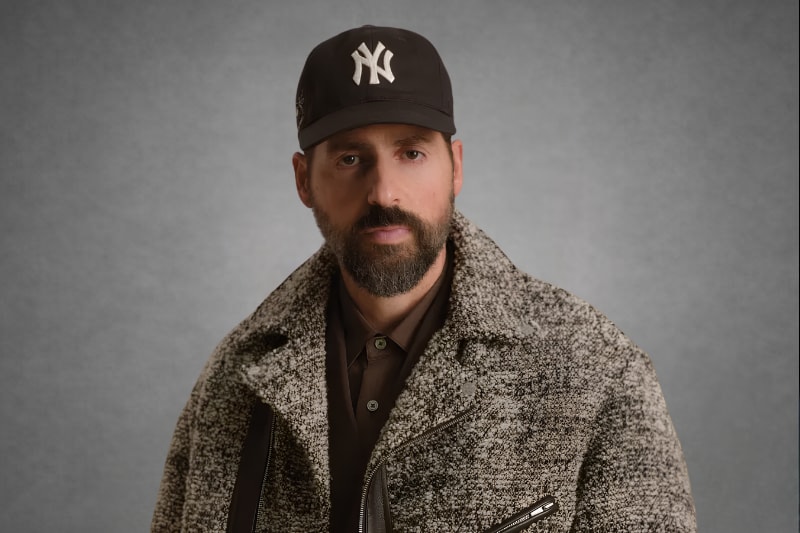
Ronnie FiegFounder, CEO & Creative Director
In this interview, Ronnie Fieg, founder, CEO, and creative director of Kith, opens up 15 years of his brand's archive and shares stories he has never told publicly. From growing up stocking shelves in Queens to building one of the most culturally influential lifestyle brands in the world, Ronnie breaks down how authentic taste, obsessive product devotion, and zero paid advertising built a global empire worth an estimated 1 billion USD entirely through self-funding and creative conviction.

Founder Stats
- Retail
- Started 2011
- Not Publicly Disclosed./mo
- 1300+ team
- New York City, New York, USA
About Ronnie Fieg
Ronnie Fieg is the founder, CEO, and creative director of Kith, one of the world's most influential lifestyle and fashion brands, headquartered in New York City. He began his career at age 13 stocking shelves at David Z footwear in Queens, where he spent over a decade developing an encyclopedic knowledge of product before founding Kith in 2011. Under his sole creative leadership and without any outside investment, paid advertising, or wholesale distribution, Fieg has grown Kith to 23 global locations, a hospitality division, and an estimated brand valuation of 1 billion USD.
Interview
October 02, 2026
How would you describe the actual creative process behind developing a product from an initial spark in your head to getting it on the shelf?
That process can range in so many different ways. Product is created in a million different lanes. When I think about footwear specifically, I spent 15 years on the sales floor seeing maybe 50 brands quarterly and having the knowledge of why people gravitate toward certain product. When people would come in before social media was directing taste, about 50 percent of their buying was functional and 50 percent was fashion, and on both ends I got to see why people liked what they liked. My ideas come from the catalog of all the product I have seen over 31 years. I will see a unique colorway from 20 years ago and reference it when I am working on something today. It is very rewarding to get to relive those moments I loved in the 90s and early 2000s and apply them to what I build now.
You have described yourself as a footwear guy rather than just a sneaker guy. What is the distinction and why does it matter?
Brown shoes and boots are as important to me as sneakers. Some of the first products I ever collected were Dolomite boots. There was a time I had 150 pairs because I would spend every paycheck on them, filling my parents garage. I could not explain the obsession because they had no resale value. I just loved the product so much I needed to have all of it. That formed my taste. Having a point of view means you got to study all subcategories and love them in totality, not just the ones that are popular at a given moment. That depth is what separates product knowledge from trend-chasing.
Who is the Kith customer and how do you think through the brand's audience?
It is me. The point of view has always been me. Every single footwear project, 2,200 styles over 15 years, I worked on every single one. What has been the hardest part of our business to replicate is that lens. I never phoned in anything in footwear. Never. And because of that consistency there is a red thread through everything people see from the brand. My 14-year-old nephew loves it. A 45-year-old guy has 9,000 points on our loyalty program. The brand was always meant to be a welcoming space for people who know the difference between great and good. That is all it is.
How would you define the distinction between taste and style, and why is it important for building a lasting brand?
Taste and style are the two most important words in our world. My taste has always been the same in terms of what I like, but my style has evolved as I have gotten older. Taste is unique to people but if your taste can be swayed by what you see on social or by external influence then you do not have a strong point of view and your brand will not be consistent. Style is how you express taste in a given moment of your life. The consistency of taste over time is what makes a brand easy to grow with. People can see that I work on product I love and that I have not chased what was fashionable.
You cover an enormous range of product, from Kith Treats cereal collabs to Giorgio Armani. How do you hold all of that together without the brand feeling fragmented?
There are people who understand the brand because they have grown up with it and they understand both ends of the spectrum and everything in between. And then there are people who see one thing and then the next thing and they hate what they do not understand. Those are not my people and I have never cared about anyone who has not put the time in to understand what it is that we have done over the years. I do not forget about the kid I was when I started. A Kith Treats capsule is fun and bright and colorful. A Giorgio Armani collaboration is one of the finest garments in the world. Both are through the same lens. Both are everything I love. That is what New York is. We are a New York brand. I will never be one thing or the other.
You have been the fit model for your own product for over 13 years. Why is fitting the product on yourself so important?
A lot of brands take a block that worked for them and change the fabric without refitting it. When you apply an Oxford to a shirt and then change it to wool and do not refit it, the product sits differently on the body and the customer feels it and blames themselves when really it is the brand cutting corners. We do not skip those steps. I was spending three to four hours a week fitting every single men's skew for 13 to 14 years of our 15-year existence. Within the last year I have taken a small step back from fitting every product but my point is there has been a consistent eye on the fit of every skew we have ever put out and that is something a lot of brands will never tell you they skip on.
Tell me about the move from Broadway and Bleecker to 337 Lafayette. That seems like one of the biggest bets of your career.
Above Houston on Lafayette, there was not a soul walking on that block at the time. The building looked like it was going to crumble. And I used to say this is the perfect space. If I ever get this building this is going to be where I place the brand. Seven years later I got the call. I had to break a profitable lease, pay real money to exit it, and move to a space with zero foot traffic but its own standalone building where I could control the entire experience. I envisioned 300 people a day instead of the 800 we were getting. The second month after opening I was already getting the same traffic we had on Broadway. That location, that global flagship, is what helped the brand grow. Without it I do not think Kith is what it is today.
You have never taken profits out of the business. How has that decision shaped what Kith has become?
I have never taken the chips off the table. The only way we have gotten to be as big as we are is that I have always put the chips back in. All of the profit has gone back into the company. That is how we have been able to grow. Our capex yearly for building stores and offices is substantial and I am proud to say we have done it entirely self-funded. We spend between 1,000 and 1,300 dollars a foot on our spaces. That has puzzled my CFO and continues to, but the stores are my website. I am trying to give people a space where they can come in and be inspired. I am building spaces where there is no ceiling in aesthetic so the product can continue to evolve without ever feeling out of place.
You have zero paid advertising and no wholesale. In an era where every brand is spending on Meta, why have you never done it?
Because we do not have to. I am not interested in doubling up topline revenue if it means an emotion is being created for the consumer by an algorithm instead of by them discovering the brand organically. When you are pitched your algorithm with paid ads, your curiosity is manufactured for you. I am interested in people organically connecting to the brand and creating their own emotion towards it. The minute the curiosity goes away we are going to be in a lot of trouble. A lot of brands are already lacking that curiosity from their consumer and I think that is the first step toward the grave.
Walk me through how the BMW collaboration came together as an example of how you approach brand partnerships.
When I sat with Toby from BMW he asked me why I loved the brand. I told him it was a poster on my wall. My grandfather had an E30 M3 and I fell in love with it as a kid. The idea became this past and present story. I flew to Germany and got to see the history of BMW and the lineage of the 3 series. I knew that story had to be told. I put the race car driver who drove the E30 M3, Johnny Cecotto, on the racetrack with his son and had them both drive the E30 and the M4 on the same track. The apparel and lifestyle product we then sell is letting people into the culture of what BMW stands for. If I ask you what is the first thing you think of when I say BMW and you say the orange leather jacket you just bought, that is what I am trying to do. That is how we expand what a brand can stand for beyond its original category.
How do you approach convincing brand partners to go further than they are comfortable going?
Putting the Kith logo in the BMW Roundel was an automatic no. Multiple times no. And then no again. Putting Kith in the Coke font on a glass Contour bottle was an expletive no in so many words. But through conversation and through understanding the purpose of what I am trying to do, brands align because they understand the mutual benefit. They understand that what I am doing is not just creating something new but is also speaking to why their brand is great and lifting the equity they already have. Some of the most important product and concepts I have put out took three or four rounds of having to convince a brand to allow me to do certain things. That is the work no one sees.
What does your role as creative director of the New York Knicks actually involve?
I meet with the team and we discuss the aesthetics, the digital content, what it looks like, what it feels like, and we discuss emotion. I apply the same lens I apply to Kith. The Knicks represent for the city everything I feel New York is about. Growing up with the 90s team, Mason, Starks, Ewing, Oakley, that was everything. And everything you love when you are a kid you will love for the rest of your life. I have been with them since way before they were good. When the Knicks are good the city is great. Winning the 2026 championship was the pinnacle. For me personally outside of having my two daughters there may not be a better moment.
What are you building toward with Kith in the next 18 to 20 years?
I want to expand what it is that we do into areas that people in my position would not even dare to think about. Ivy is the start of that. It is the beginning of trying to change human behavior and have a positive impact on people's lives. From there I am thinking about a membership club where the impact we had would change people's lives in the way that the best hospitality experiences do. Hospitality is a passion of mine right now but I am speaking about other avenues too that I am in the middle of ideating. The brand is my life and the end point is when I die. I have dreams of so many different things in lifestyle and human behavior. I just want to keep pushing everything forward in a way that maximizes the potential but does so tastefully.
What has Kith cost you personally that people cannot see?
Everything. It has cost me everything. The family time I am talking about is not with my wife and kids but with my immediate family. My parents, my sister, my aunts, my uncles, my cousins. We used to go away together on summer vacations when I was a kid and that is no longer the case. I have given up building really true friendships where you have the time to meet regularly and just be present. And I am willingly doing so. No one is forcing me. But the problem is that I always have to maximize the potential of whatever it is I am working on. I will never do something halfway. If I am sweeping the floor, the floor will be clean. It is a gift and a curse. When I am in something I am just completely in it.
What is the single most important piece of advice you would give to the next generation of founders?
Devotion. And that word is getting demonized in the world we live in right now. But devotion and work ethic and moving with purpose are the foundations. People are moving without purpose and I am not cut from that cloth. Find a passion first. That is the hardest part for the younger generation because they are being thrown so much information that they cannot decipher between substance and noise. How are they going to weed through all of that and pick what will actually make them happy if they commit to it? Once you find the passion, move with purpose. The rewards will follow. But starting from purpose rather than from chasing a number is the only way I know how to do it.
You have the Kith Connect Foundation bringing high school juniors in and helping them get to college. What drives that commitment?
I want to inspire the youth. If I can affect even a few people by giving them insight and a foot in the door then that is the best I can do. We bring in a cohort of 15 kids every year into the brand, they get a mentor in a different category of the business, and we help kids who would not typically end up going to college make sure that they attend. We have a 100 percent conversion rate on that. I have great personnel heading this foundation within my Williamsburg office. It is a big part of the purpose around what I do. Not everybody will become passionate about what we do here but if I can change their path and give them access they would not otherwise have then that matters more than any product release.
Table Of Questions
Video Interviews with Ronnie Fieg
KITH Founder: How to Build a Brand With Cult-Level Loyalty
KITH Founder: How to Build a Brand With Cult-Level Loyalty
Ronnie Fieg Full Kith Playbook Interview
Kith 15-Year Evolution, Kith Ivy, and the Nike Sweet 16 Collection - Complex Idea Generation
He Turned a Shoe Store Into a Global Lifestyle Empire - TheBoldWay
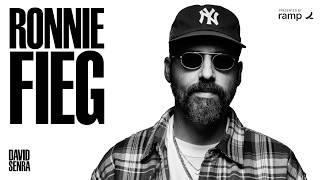
Ronnie Fieg - David Senra Podcast
Cite This Interview
Use this interview in your research, article, or academic work
Related Interviews
Jake Karls
Co-founder & Chief Rainmaker at Mid-Day Squares
In this interview, Mid-Day Squares co-founder and Chief Rainmaker Jake Karls describes the unconventional journey of building a disruptive snack brand. Karls shares insights on…

Matt Ebert
Founder & CEO at Crash Champions
In this interview, Crash Champions founder and CEO Matt Ebert discusses the growing demand for skilled trades and the automotive technician shortage facing the collision…

Allison Ellsworth
Co-founder at Poppi
In this interview, Poppi co-founder Allison Ellsworth shares the journey of building a prebiotic soda brand from a kitchen counter experiment to a 1.95 billion…

Dave Mondragon
Founder & CEO at AutoTrust Dealer Alliance
In this interview, AutoTrust founder and CEO Dave Mondragon explains how independent automotive dealers can compete with large public dealer groups through collective purchasing power…

Paul Guyett
Managing Director at Leffler Leather
In this interview, Paul Guyett discusses how Leffler Leather has remained successful across generations by focusing on quality, expertise, and continuous adaptation. He shares lessons…
Adam Neumann
Founder & CEO at WeWork
In this interview, Adam Neumann, co-founder of WeWork and founder of Flow, sits down with Steven Bartlett for his most candid conversation to date. He…