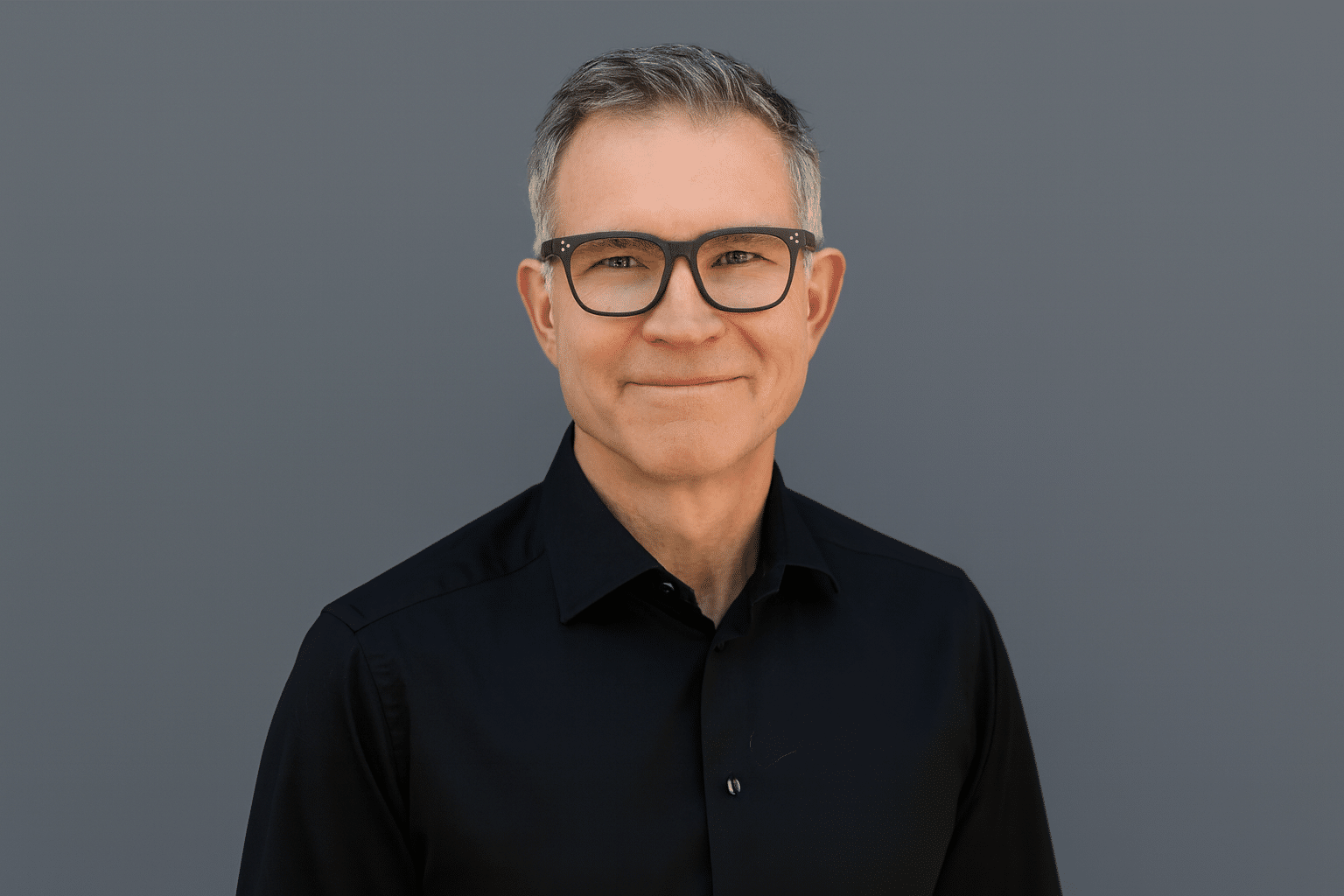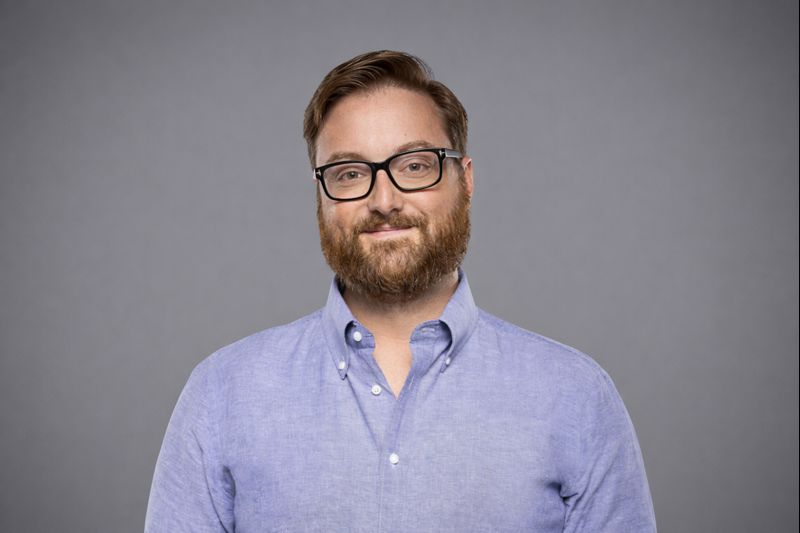
Pawan Kumar Chandana, Co-founder & CEO at Skyroot Aerospace
4.8/5 Rating
Technology
Pre-Revenue/mo

Pawan Kumar ChandanaCo-founder & CEO

In this interview, Skyroot Aerospace co-founder and CEO Pawan Kumar Chandana details the historic orbital launch of Vikram-1, marking India's first successful private orbital flight. Chandana discusses the engineering challenges of solid and liquid propulsion stages, the optimization of small satellite launch vehicles, and the development of reusable rockets. He shares insights on fundraising for deep tech ventures, collaboration with the Indian Space Research Organisation, and converting national potential into kinetic innovation.

Pawan Kumar Chandana

Pawan Kumar Chandana

Co-founder & CEO

Skyroot Aerospace

Skyroot Aerospace

Founder Stats

  • Technology
  • Started 2018
  • Pre-Revenue/mo
  • 1000+ team
  • Hyderabad, Telangana, India

About Pawan Kumar Chandana

Pawan Kumar Chandana is the co-founder and CEO of Skyroot Aerospace, the pioneering Indian space-tech company behind the Vikram rocket series. A former scientist at the Indian Space Research Organisation, Chandana co-founded Skyroot in 2018 to build affordable small satellite launch vehicles. Under his leadership, the startup achieved the historic milestone of becoming the first private Indian company to successfully place a satellite into orbit on its maiden attempt in July 2026.

Interview

July 29, 2026

1. How did it feel to become the first private space company in India to successfully reach orbit?2. What was the initial reaction and atmosphere in the mission control room during liftoff?3. What did Prime Minister Narendra Modi say when he called to congratulate you?4. How did the initial LinkedIn interaction in 2018 set the foundation for Skyroot?5. How did Mukesh Bansal approach his investment decision when Skyroot was just an idea?6. Why is a long-term commitment critical for deep tech founders seeking investment?7. What was the lowest point in Skyroot's journey before achieving launch capability?8. How did GIC's fifty-one million check change the investor sentiment around Indian deep tech?9. How did regulatory changes in 2020 allow Skyroot to transition from illegal to legal building?10. How did the Indian Space Research Organisation support Skyroot's developmental journey?11. How do you utilize paranoia as a cultural value to prevent rocket launch failures?12. Why does the first stage of the Vikram-1 flight represent the most aerodynamically intense phase?13. How does the automatic launch sequence operate at the t-minus eleven minutes mark?14. Why did the computer put the launch countdown on hold at t-minus five minutes?15. How does the liquid-fueled orbital adjustment module execute precise satellite deployments?16. Why did you decide to build a factory capable of producing one rocket per month?17. What are the future development timelines for Vikram-2 and reusable launch vehicles?18. Why is sourcing ninety percent of your rocket components domestically so significant for India?
Q

How did it feel to become the first private space company in India to successfully reach orbit?

Question 1 of 18
Pawan Kumar Chandana

I am still out of words because the launch curves were spot-on matching our trajectory. Reaching orbit successfully on the very first attempt is a phenomenal, historic milestone for India and the global space sector, especially since even SpaceX required multiple attempts to achieve this feat.

0
Q

What was the initial reaction and atmosphere in the mission control room during liftoff?

Question 2 of 18
Pawan Kumar Chandana

The team was highly excited because they trusted their systems after a month of intense preparation at the launch site. Although I kept public expectations low by reminding everyone that first launches statistically have low success rates, watching the pitch-perfect liftoff was a surreal experience.

0
Q

What did Prime Minister Narendra Modi say when he called to congratulate you?

Question 3 of 18
Pawan Kumar Chandana

He watched the launch live, despite having back-to-back meetings and a thirty-minute timeline slippage. When I took his call, the ringtone was Vande Matram. He congratulated us on this major national milestone, sent a handwritten Vande Matram card, and praised the entire Skyroot team.

0
Q

How did the initial LinkedIn interaction in 2018 set the foundation for Skyroot?

Question 4 of 18
Pawan Kumar Chandana

I was a user of Myntra products and reached out to Mukesh Bansal on LinkedIn without expecting much since I was a naive twenty-seven-year-old. He responded immediately, and we met that weekend. We had a clear technical frequency match on the whiteboard, sketching out our plans.

0
Q

How did Mukesh Bansal approach his investment decision when Skyroot was just an idea?

Question 5 of 18
Pawan Kumar Chandana

I wanted to make concentrated, high-conviction bets rather than spreading small checks across many companies. Having watched SpaceX and loving science, I wanted to back an Indian private space company. Pawan and Bharat had done their homework and showed deep conviction through their body language.

0
Q

Why is a long-term commitment critical for deep tech founders seeking investment?

Question 6 of 18
Pawan Kumar Chandana

Building a rocket takes at least ten years. If the founders had told me they would try for two to three years and see what happened, I would not have invested. Their willingness to dedicate the rest of their lives to the mission was the ultimate clincher.

0
Q

What was the lowest point in Skyroot's journey before achieving launch capability?

Question 7 of 18
Pawan Kumar Chandana

Raising our Series A right as COVID hit. Funding priorities changed, seed capital was running out, and we faced a high chance of shutting down. Mukesh Bansal provided two crores of additional bridge funding, and early investor Anil put in three crores to keep us afloat.

0
Q

How did GIC's fifty-one million check change the investor sentiment around Indian deep tech?

Question 8 of 18
Pawan Kumar Chandana

Before GIC came in, the investment community was highly skeptical that a pre-revenue deep tech startup could raise growth capital. GIC's investment was completely revolutionary, closing two months before our first suborbital launch and showing that large institutional funds would back hard science.

0
Q

How did regulatory changes in 2020 allow Skyroot to transition from illegal to legal building?

Question 9 of 18
Pawan Kumar Chandana

In 2018, building rockets privately was semi-illegal because there was no policy allowing private entities to launch. We were allowed to design and build in our backyard, but the privatization of space in 2020 provided the regulatory clarity needed to launch legally.

0
Q

How did the Indian Space Research Organisation support Skyroot's developmental journey?

Question 10 of 18
Pawan Kumar Chandana

ISRO went out of their way to support us. They provided access to their launch pads, test facilities, and continuous design reviews. The entire wisdom of the Indian space sector and government infrastructure came together to ensure the success of our mission.

0
Q

How do you utilize paranoia as a cultural value to prevent rocket launch failures?

Question 11 of 18
Pawan Kumar Chandana

I am paranoid by nature, which is a great asset in rocket engineering because the smallest scratch can cause a catastrophic failure. We study past failure modes meticulously, build a culture of paranoia within the engineering team, and design reliability directly into the components.

0
Q

Why does the first stage of the Vikram-1 flight represent the most aerodynamically intense phase?

Question 12 of 18
Pawan Kumar Chandana

The first stage lifts the fifty-ton rocket through the thickest part of Earth's atmosphere up to fifty kilometers. Within the first hundred seconds, the vehicle experiences maximum aerodynamic pressure, heavy structural loads, and intense vibrations, which we cleared successfully.

0
Q

How does the automatic launch sequence operate at the t-minus eleven minutes mark?

Question 13 of 18
Pawan Kumar Chandana

At t-minus eleven minutes, the computer takes complete control of the vehicle, and human operators cannot intervene. The system monitors hundreds of parameters, and if any reading falls out of bounds or gives a spooky signal, it automatically holds the launch.

0
Q

Why did the computer put the launch countdown on hold at t-minus five minutes?

Question 14 of 18
Pawan Kumar Chandana

The automatic launch sequence detected a minor software mismatch where the computer's past memory did not align with current data. It was not a hardware failure, so once we cleared the memory mismatch and restarted, the sequence resumed and worked perfectly.

0
Q

How does the liquid-fueled orbital adjustment module execute precise satellite deployments?

Question 15 of 18
Pawan Kumar Chandana

The liquid-fueled module handles the final stage of flight, adjusting the velocity precisely because missing the target by even ten meters per second prevents orbit. It uses over twenty valves acting in milliseconds to execute a nominal cutoff once the payload coordinates are reached.

0
Q

Why did you decide to build a factory capable of producing one rocket per month?

Question 16 of 18
Pawan Kumar Chandana

We invested a large portion of our sixty to seventy million dollars of funding into building manufacturing capacity for the future. Our factory is fully equipped to build one rocket a month, putting us in an exclusive global club alongside SpaceX and Rocket Lab.

0
Q

What are the future development timelines for Vikram-2 and reusable launch vehicles?

Question 17 of 18
Pawan Kumar Chandana

Vikram-1 will remain our workhorse, and we aim to scale its payload capacity to three hundred kilograms. We are designing Vikram-2 with a cryogenic stage to deliver a ton of payload, and we target developing a reusable vehicle within this decade.

0
Q

Why is sourcing ninety percent of your rocket components domestically so significant for India?

Question 18 of 18
Pawan Kumar Chandana

Sourcing ninety percent of our components in India proves that deep tech and hard engineering can be executed locally. India cannot rely on importing billions of dollars of defense and space products, and Skyroot demonstrates that indigenous IP is entirely achievable.

0

Video Interviews with Pawan Kumar Chandana

Inside the $1.1 Billion Rocket Company That Just Beat SpaceX
Inside the $1.1 Billion Rocket Company That Just Beat SpaceX

Inside the $1.1 Billion Rocket Company That Just Beat SpaceX

WATCH: 'We Want One Rocket Every Month', Skyroot CEO Reveals Why He Left ISRO

WATCH: 'We Want One Rocket Every Month', Skyroot CEO Reveals Why He Left ISRO

Cite This Interview

Use this interview in your research, article, or academic work

Related Interviews
Andrew Feldman, Co-founder & CEO at Cerebras Systems
Technology

Andrew Feldman

Co-founder & CEO at Cerebras Systems

Approx. $72 Million
850+

In this interview, Cerebras Systems co-founder and CEO Andrew Feldman details the engineering behind wafer-scale computing and the company's record-setting semiconductor IPO. Feldman explains why…

Read Interview
Jensen Huang, Co-founder & CEO at NVIDIA
Technology

Jensen Huang

Co-founder & CEO at NVIDIA

$1M+
50000+

In this interview, NVIDIA co-founder and CEO Jensen Huang discusses the geopolitical landscape of AI, the co-existence of open-source and closed models, and the massive…

Read Interview
Chris Best, Co-founder & CEO at Substack
Technology

Chris Best

Co-founder & CEO at Substack

Not Publicly Disclosed
100+

In this interview, Substack co-founder and CEO Chris Best discusses the challenge of AI slop, the premium on human attention, and Substack's new transparency tooling.…

Read Interview
RJ Scaringe, Founder & CEO at Rivian
Technology

RJ Scaringe

Founder & CEO at Rivian

Approx. $460 Million
16000+

In this interview, Rivian founder and CEO RJ Scaringe discusses the company's journey from a clean-sheet startup to a leading electric vehicle manufacturer. Scaringe outlines…

Read Interview
Palmer Luckey, Founder at Anduril Industries
Technology

Palmer Luckey

Founder at Anduril Industries

Approx. $ 183.3 Million
7000+

In this interview, Anduril Industries founder Palmer Luckey discusses the company's culture and its rapid deployment of autonomous defense products like the Fury fighter jet.…

Read Interview
Prudhvi Raj Pakalapati, Co-Founder & CEO at Vector Technics
Technology

Prudhvi Raj Pakalapati

Co-Founder & CEO at Vector Technics

Approx. $0.48 Million
22+

In this interview, Vector Technics co-founder and CEO Prudhvi Raj Pakalapati discusses the company's expansion to a manufacturing capacity of 300,000 drone propulsion units annually.…

Read Interview