

Se Yong ParkCo-Founder
In this interview, Fomo co-founder Se Yong Park discusses the rise of their social cryptocurrency trading platform and their focus on retail onboarding. Park explains the strategy behind cash-denominated balances, describes how leaderboards and clans build trust and community, and shares his perspective on high-conviction narrative trading, personal brand value, and the changing economics of mobile finance applications.

Founder Stats
- Cryptocurrency
- Started 2025
- Approx. 8 Million USD/mo
- 6–20 team
- New York, New York, United States
About Se Yong Park
Se Yong Park is the co-founder of Fomo, a social cryptocurrency trading platform founded in 2025 and headquartered in New York. Park co-founded Fomo to make decentralized trading seamless and social for retail users. Formerly an active on-chain trader across multiple networks, he focuses on product design, simplifying cross-chain bridging, establishing developer transparency, and building leaderboards to elevate the next generation of financial content creators.
Interview
August 18, 2026
What is the core philosophy and mission behind Fomo?
Our philosophy is to make trading anything as simple and social as possible. We want to put opportunity into the hands of billions of people who historically did not have access to these markets. We designed Fomo to bridge the technical gap so that users can participate without needing to understand blockchain complexities, gas fees, or wallet mechanics.
Why are cryptocurrency companies so highly revenue efficient compared to other tech sectors?
Crypto allows startups to scale globally with minimal friction. For example, some companies reach one hundred million dollars in revenue in just a few months, and others generate billions with fewer than ten employees. While crypto faces skepticism, it operates on a global scale that allows lean, highly automated teams to achieve unparalleled efficiency.
How did Fomo acquire its first cohort of users and validate the product?
It was extremely difficult. Even though we raised capital from one hundred and forty angel investors, we did not have one hundred active users for months. We relied heavily on our early user cohort from mid-2025 to give us daily feedback. Listening closely to those first one hundred users allowed us to build a product that scales.
How did your early trading experiences on Avalanche and Base shape Fomo's product strategy?
I started trading in 2021 by following on-chain tips, turning a few hundred dollars into five figures. Later, when my friends bridged to Base to buy a token, they made seven figures. I realized that the bridging process was too complicated for normal users. Fomo was built to eliminate that friction and make cross-chain trading instant.
Why does Fomo choose to denominate user balances in cash rather than Solana or Ethereum?
We denominate balances in cash to make the experience easy for normies who are used to platforms like Robinhood. Additionally, it helps retail users lock in their profits. Volatile denominating currencies like Solana can slide in value and erode a trader's portfolio, even when their underlying on-chain trades are performing well.
How does Fomo build and maintain trust with retail users who are new to blockchain?
Trust is critical. If a user deposits one hundred dollars and returns to see their balance fluctuate arbitrarily due to behind-the-scenes currency conversions, they will think you are stealing from them. By denominating balances in cash, we preserve a transparent, stable reference point that keeps users comfortable and builds long-term trust.
Who are your all-time favorite crypto traders and what makes them legendary?
My Mount Rushmore includes GCR, who is the undisputed goat with an incredible mystique. I also respect Kobe for his early conviction on Twitter, Flood for his long-term bullishness and dedication to research, and Ansem for consistently making accurate market calls and putting his reputation on the line publicly.
What is the significance of the Fomo leaderboard and how does it create new financial heroes?
Many legendary traders operate in the shadows with anonymous profile pictures. We want to bring their performance to light. The leaderboard proves who is actually the best in the world through transparent data rather than Photoshop. It allows talented traders to accrue massive social capital, leading to advisory deals and alpha access.
How do you define the role of crypto content creators and who are the top figures crushing it?
Crypto creators are the ones onboarding the next generation of investors. My top list includes Rasmus, who is on a massive trading heater, ThreadBoi, who runs an incredibly consistent and professional morning financial show, Oranje, who is a consumer marketing savant, and Ansem, who bridges trading expertise with mainstream media content.
Why is building a personal brand more valuable than chasing short-term trading profits?
Trading profits are temporary, but a personal brand and legacy are permanent. Chasing get-rich-quick trades often results in losing your capital. If you focus on building a reputable brand, providing value, and documenting your journey, the long-term opportunities and influence will yield far greater returns over your lifetime.
What are Fomo Clans and how do they change the dynamics of group trading?
Clans let users team up to compete on leaderboards, view each other's holdings, and trade collectively. Trading is fundamentally competitive, like a sport. Clans bring this PvP aspect to light, allowing groups to share alpha, establish treasuries, and receive targeted token airdrops because of their collective reputation and holding conviction.
How does your hiring process differ from traditional software companies?
We have a very unorthodox approach and have almost never put out a job posting. Instead, we hire directly from our trusted networks. We look for people who are exceptionally hard-working, have high integrity, and align with our long-term vision. We want to build cool products with friends we respect.
How do you manage to ship product features so quickly with a lean team?
We maintain a highly focused engineering culture. We treat our team exceptionally well, compensate them competitively, and give them exciting problems to solve. By removing corporate red tape and keeping our organization deliberately flat, we are able to ship major features in days that would take traditional companies months.
Do you think modern mobile trading apps are approaching their final design form?
Yes, we are close to the final design form for mobile. Robinhood created a major zero-to-one shift years ago, and mobile apps today focus on haptics, animations, and clean layouts. Fomo's goal is to keep cross-chain trading simple and hide the complex plumbing of wallets and bridging entirely from the interface.
Why is social connectivity key to retaining retail users in the crypto market?
When retail users buy a token based on a viral video, they often lose their money because they trade in isolation. They do not know what the top traders are doing or how the narratives are shifting. Social features allow them to read investment theses, follow leaderboards, and communicate directly to navigate the market.
How do you approach competing against massive industry giants like Coinbase and Robinhood?
We welcome competition because users will ultimately choose the best product. We focus on building the fastest, most seamless trading experience. If our app can execute cross-chain trades in under a second and hide the complexity of bridging, we can grow the pie and onboard users faster than legacy platforms.
What books and resources do you recommend for aspiring startup founders?
Aspiring founders should read business classics like Peter Thiel's Zero to One and Ben Horowitz's The Hard Thing About Hard Things. I also recommend listening to recent venture capital podcasts featuring operators like Mickey Malca from Rubicon, which provide invaluable, modern insights on building global firms at scale.
Table Of Questions
Video Interviews with Se Yong Park
Building the Social Media for Crypto (fomo Founder Interview)

Building the Social Media for Crypto (fomo Founder Interview)

Fomo Co-Founder: The FOMO Bull Thesis For Trading Crypto (Be Early)
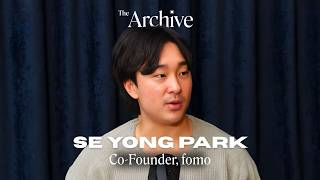
fomo's Se Yong Park: Building a user-friendly trading app
Cite This Interview
Use this interview in your research, article, or academic work
Related Interviews

Franklin Wang
Founder & CEO at Liquid
In this interview, Liquid founder and CEO Franklin Wang discusses the integration of conversational AI with cryptocurrency perpetual futures trading. Wang details how the Co-Invest…
Franklin Wang
Founder & CEO at Liquid
In this interview, Liquid founder and CEO Franklin Wang discusses the integration of conversational AI with cryptocurrency perpetual futures trading. Wang details how the Co-Invest…

Mert Mumtaz
Co-Founder & CEO at Helius
In this interview, Helius CEO Mert Mumtaz discusses the company's developer tooling infrastructure on the Solana network and their recent acquisition of Light Protocol. Mumtaz…

Michael Saylor
Founder & Chairman at MicroStrategy
In this interview, MicroStrategy co-founder and Chairman Michael Saylor discusses the utility of Bitcoin as a digital capital store of value. Saylor explains why fiat…

Bill Barhydt
Founder & CEO at Abra
In this interview, Abra founder and CEO Bill Barhydt shares a macro perspective on the cryptocurrency market cycle, contrasting price volatility with exponential technology growth.…
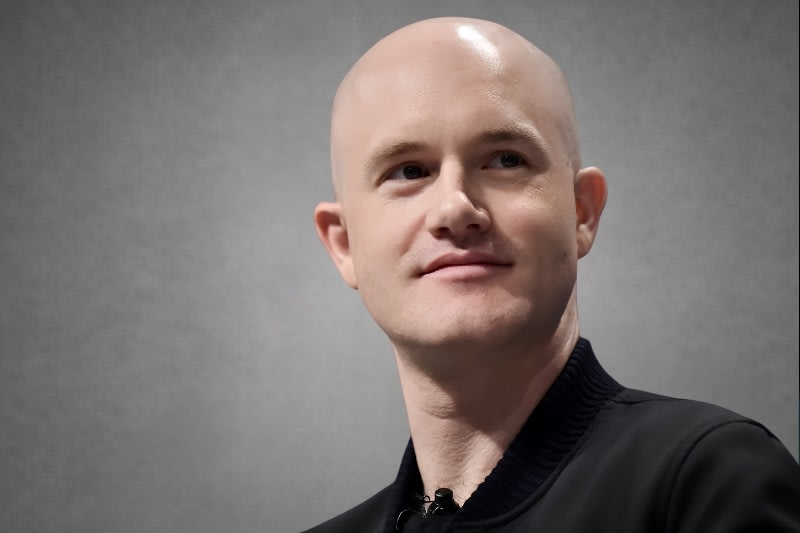
Brian Armstrong
Co-founder & CEO at Coinbase
In this interview, Coinbase co-founder and CEO Brian Armstrong joins Nikhil Kamath to explore the evolution of global finance, stablecoin economics, and cryptocurrency opportunities in…