
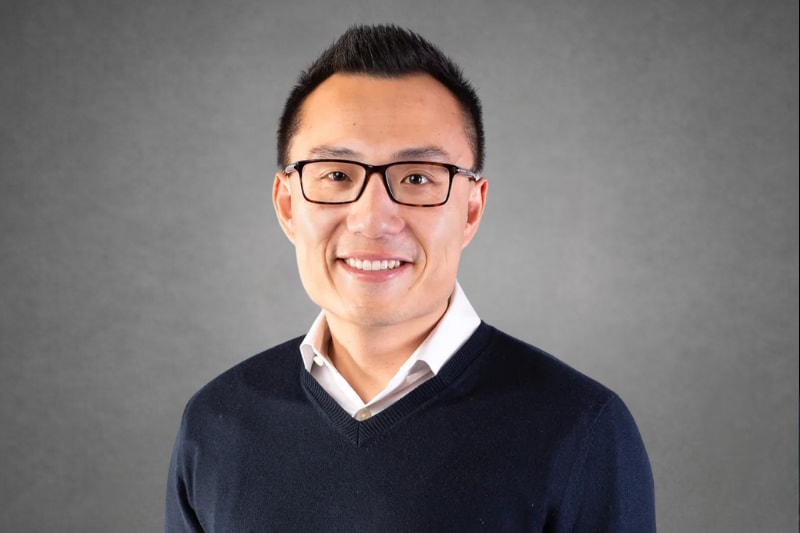
Tony XuCo-founder & CEOCustomer Obsession, Surviving Startup Death, and Building Local Commerce Infrast
In this interview, Tony Xu, Co-founder and CEO of DoorDash, discusses building the leading local commerce and delivery platform from the ground up through Y Combinator. He reflects on doing unscalable work as an early delivery driver, surviving near-fatal operational crises during startup hypergrowth, executing a contrarian suburban expansion strategy, and establishing a relentless customer-obsessed culture capable of powering the physical economy across global cities.


Founder Stats
- Technology
- Started 2013
- $850M/mo
- 10,000+ employees
- San Francisco, California, USA
About Tony Xu
Tony Xu is the Co-founder and CEO of DoorDash, the technology company connecting consumers with local commerce across more than thirty countries. Born in Nanjing, China, Xu immigrated to the United States as a child and earned an engineering degree from UC Berkeley and an MBA from Stanford University. In 2013, he co-founded DoorDash, guiding it through Y Combinator to an industry-leading public enterprise generating billions in annual gross merchandise volume.
Interview
November 27, 2026
What original observation led you and your co-founders to create DoorDash?
While studying at Stanford, my co-founders and I spent weeks interviewing small business owners in Palo Alto to understand their daily operational challenges. We spoke with a local macaroon boutique owner who showed us a thick book of delivery requests she had to turn down every single week. We realized that local merchants possessed immense consumer demand but lacked the physical delivery infrastructure required to fulfill orders.
How did you validate your minimum viable product before building complex software?
We launched a simple landing page called PaloAltoDelivery.com with eight scanned PDF menus from neighborhood restaurants. We listed a Google Voice phone number that simultaneously rang all four of our personal cell phones. Whoever answered first wrote down the customer order, drove to the restaurant, paid for the meal, and delivered it to the customer. We validated real commercial demand within hours without writing complex dispatch algorithms.
Why was personally delivering food for over a year essential to your early strategy?
There is no substitute for doing the ground-level work if you want to understand complex operational systems. By delivering hundreds of orders ourselves, we experienced every friction point firsthand. We saw which restaurant packaging spilled in transit, how confusing parking lots slowed pickups, and how frustrating app glitches irritated customers. That immersive operational experience allowed us to build software that solved genuine physical problems rather than theoretical ones.
How did your group partner Paul Buchheit influence your trajectory at Y Combinator?
Paul Buchheit brought extraordinary clarity to our weekly batch dinners at Y Combinator. He constantly challenged us to ignore distractions and focus exclusively on two metrics: talking to users and improving the core product experience. Because Paul lived in a neighboring community where we did not yet deliver, he constantly pushed us to expand our delivery radius and optimize driver routing so our service could reach his neighborhood.
What occurred during the infamous 2013 Stanford football game operational crisis?
During a major Stanford football game in our first autumn, order volume spiked ten times higher than our delivery network could handle. Delivery times stretched past ninety minutes, restaurant kitchens became hopelessly backlogged, and furious customers flooded our phones. To save our reputation, we refunded half of our entire corporate bank account, wrote handwritten apologies, and spent all night baking and personally delivering cookies to every affected customer.
Why did you pursue a contrarian suburban expansion strategy while competitors focused on dense cities?
Prevailing venture capital dogma insisted that food delivery could only succeed in ultra-dense urban hubs like Manhattan or downtown San Francisco. We realized that suburban families represented a far more attractive demographic. Suburbs featured larger family orders, higher average basket sizes, abundant restaurant parking, and long customer retention. While competitors fought expensive price wars in congested downtown corridors, we built an unassailable, highly profitable leadership position throughout American suburbia.
How did you survive intense fundraising skepticism when dozens of venture firms rejected DoorDash?
During our early fundraising efforts, dozens of prominent investors turned us down because they believed on-demand food delivery suffered from unworkable unit economics. We survived by obsessing over underlying cohort retention and ruthless cost discipline. We proved that as geographic delivery density increased, driver efficiency improved and delivery costs decreased dramatically. Maintaining deep conviction in our mathematical unit economics sustained our team through brutal fundraising environments.
How do you define customer obsession across a complex three-sided marketplace?
Customer obsession means balancing the distinct needs of merchants, consumers, and Dashers simultaneously. For restaurants, we must generate incremental revenue and protect profit margins. For consumers, we deliver hot food reliably in under thirty minutes. For Dashers, we provide flexible, well-compensated earnings. If any single constituent feels neglected, the ecosystem unravels. We optimize our algorithms to create shared economic value across all three groups.
What operational frameworks allow DoorDash to maintain relentless startup intensity at massive scale?
We combat corporate inertia by enforcing a philosophy of becoming one percent better every single day. We require every corporate executive and software engineer to complete regular delivery shifts and customer support rotations. When leaders remain intimately connected to the daily reality of our merchants and delivery workers, they make superior architectural decisions. Preserving direct operational proximity prevents executive detachment and keeps our organization agile and hungry.
How did the global pandemic reshape your mission and commercial responsibilities?
When the pandemic struck in 2020, local commerce faced catastrophic shutdown risks. Overnight, DoorDash transformed from a convenient consumer application into essential municipal infrastructure. We immediately cut restaurant commission rates in half, distributed free safety equipment to Dashers, and launched grocery and pharmacy delivery networks to support homebound citizens. That crisis clarified our permanent organizational mission: empowering local business owners and fortifying the economic foundation of every community we serve.
How does DoorDash leverage artificial intelligence and autonomous delivery systems today?
We utilize advanced machine learning models to forecast real-time dining demand, calculate dynamic traffic conditions, and optimize multi-stop dispatch logistics across millions of concurrent orders. Furthermore, we are actively piloting autonomous sidewalk robots and electric delivery drones for short-distance routes. Automating repetitive, small-payload deliveries lowers consumer delivery fees, eases urban vehicle congestion, and allows human drivers to focus on higher-paying, complex delivery assignments.
What core leadership wisdom do you impart to founders facing startup hypergrowth?
The most important lesson in business is that you become the expert simply by doing the work. Many founders spend too much time seeking external validation, reading theoretical management advice, and trying to predict the distant future. Instead, roll up your sleeves, sit alongside your customers, and solve their immediate daily frustrations. Relentless focus, extreme operational resilience, and unwavering customer empathy will consistently overcome every technological or financial obstacle.
Table Of Questions
Video Interviews with Tony Xu
DoorDash CEO: Customer Obsession, Surviving Startup Death & Creating A New Market - Y Combinator (Interview Video)
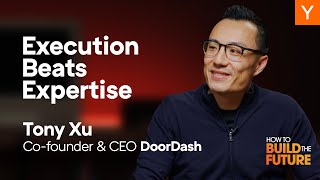
DoorDash CEO: Customer Obsession, Surviving Startup Death & Creating A New Market - Y Combinator (Interview Video)

Tony Xu on AI Consumption, Atoms vs. Bits, and the 1% Better Mentality - Uncapped

DoorDash ft. Tony Xu: The 'Wrong' Moves That Built a Giant - Sequoia Capital
Cite This Interview
Use this interview in your research, article, or academic work
Related Interviews

Kush Bavaria
Co-Founder & CEO at Ornn
Building GPU Compute Futures and Navigating the AI Neo-Cloud Economy
In this interview, Kush Bavaria, Co-Founder and CEO of Ornn, unpacks the financial mechanics of modern artificial intelligence infrastructure, neo-cloud economics, and GPU compute derivatives.…
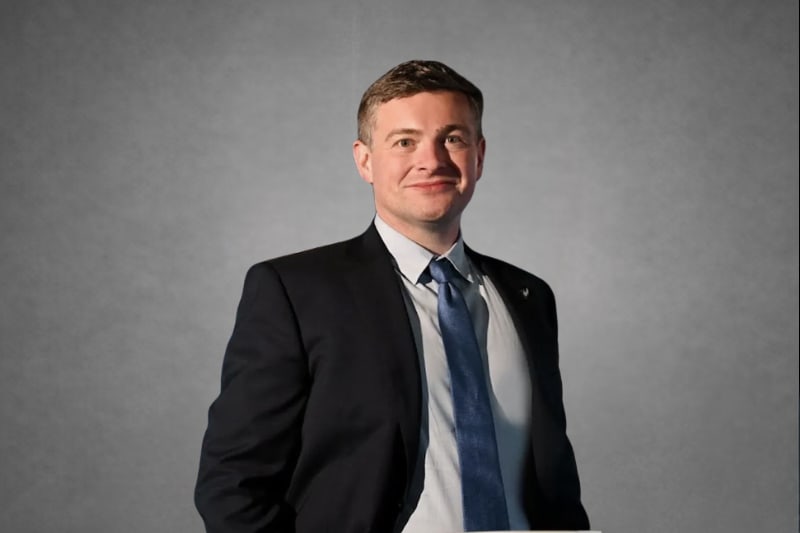
Blake Scholl
Founder & CEO at Boom Supersonic
Turning Crisis into Opportunity and Financing Supersonic Airliners
In this interview, Blake Scholl, Founder and CEO of Boom Supersonic, reveals how his company navigated near-fatal supplier abandonment to develop Symphony, a purpose-built supersonic…
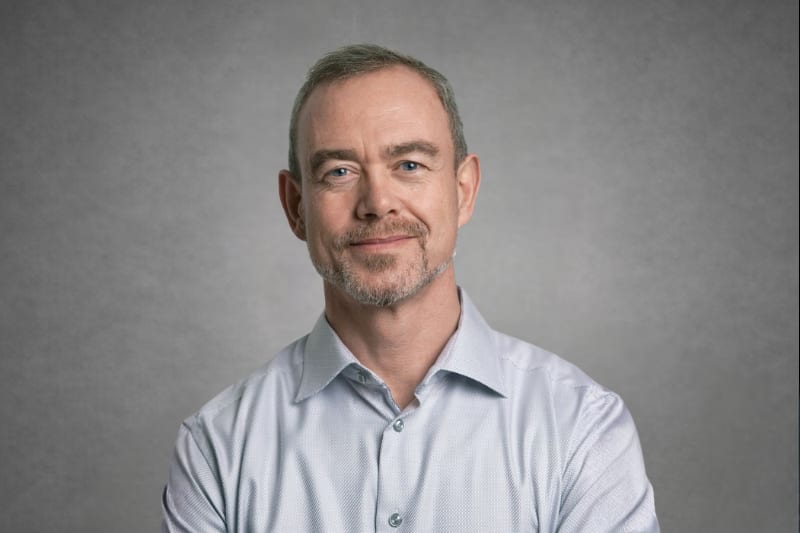
Ulrik Lehrskov-Schmidt
Founder & Managing Director at Willingness to Pay
Why per-seat pricing is dead and how AI agents are transforming SaaS monetizatio
In this interview, Ulrik Lehrskov-Schmidt, Founder and Managing Director of Willingness to Pay, breaks down the collapse of the per-seat software pricing model in the…
Walter Goodwin
Founder & CEO at Fractile
Custom in-memory silicon architecture and the global AI inference compute crisis
In this interview, Walter Goodwin, Founder and Chief Executive Officer of Fractile, analyzes the exponential hardware bottlenecks threatening the generative artificial intelligence industry and outlines…
Amjad Masad
Founder & CEO at Replit
Browser-based IDEs and autonomous AI software agents at scale
In this interview, Amjad Masad, Founder and CEO of Replit, joins Paul Graham to analyze the transformation of software development in the artificial intelligence agent…
Guillermo Rauch
Founder & CEO at Vercel
The agent-driven cloud and how autonomous software scales to trillion-dollar out
In this interview, Guillermo Rauch, Founder and CEO of Vercel, examines the paradigm shift underway as autonomous software agents revolutionize cloud infrastructure and web development.…