
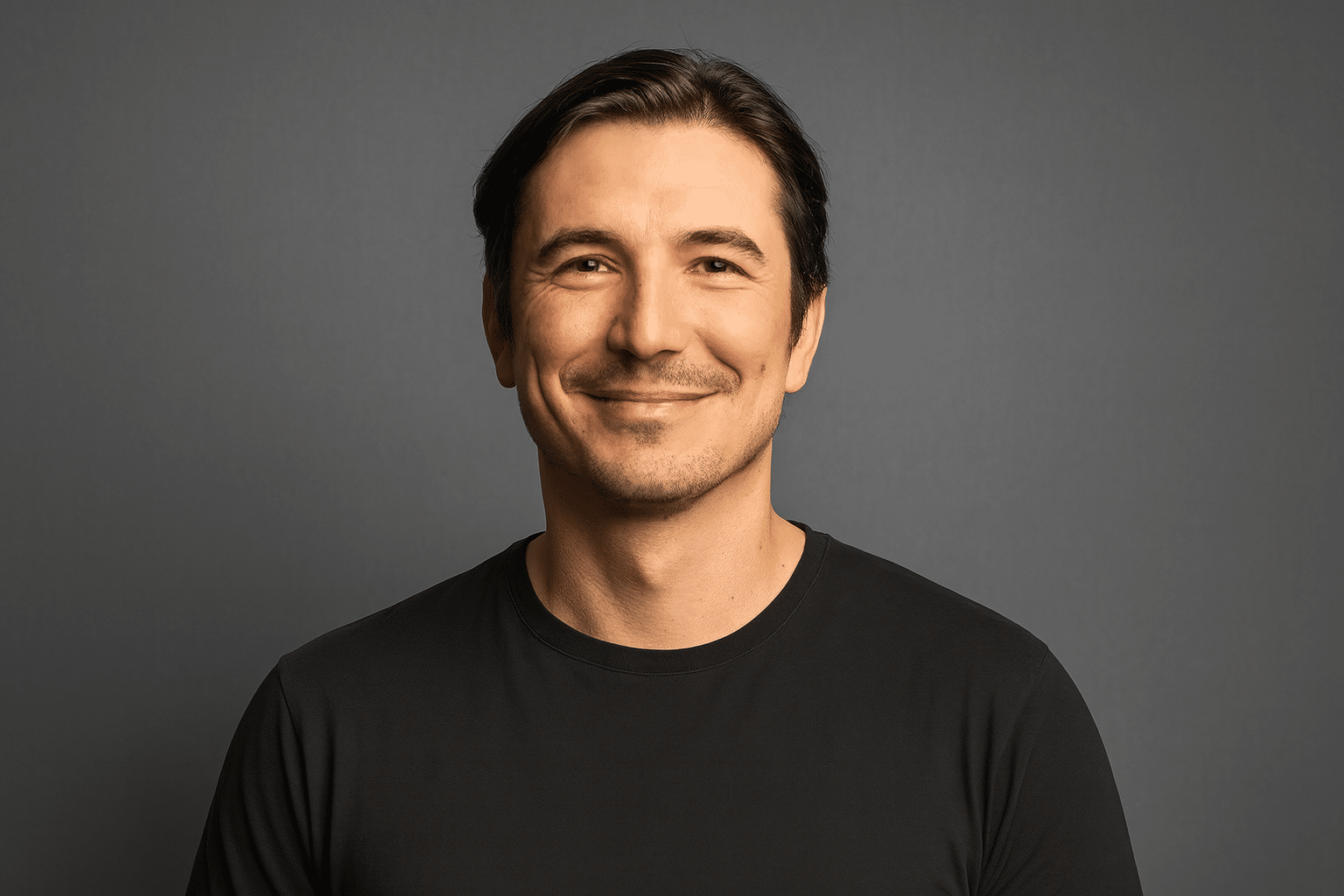
Vlad TenevCo-founder & CEO
In this interview, Vlad Tenev discusses Robinhood’s evolution from a commission-free trading platform into a broader financial super app. He shares insights on scaling revenue while maintaining cost discipline, serving active traders, and expanding into 24-hour equities, crypto, prediction markets, and AI-powered investing tools. The conversation highlights innovation, product expansion, regulatory considerations, and how emerging technologies are reshaping the future of financial services and retail investing.
Founder Stats
- Finance, Technology, Cryptocurrency
- Started 2015 or
- $1M+/mo
- 50+ team
- USA
About Vlad Tenev
Vlad Tenev is the co-founder and CEO of Robinhood, a company that has transformed retail investing by providing broader access to financial markets. Since launching Robinhood in 2013, he has led its expansion into stocks, options, crypto, retirement products, and advanced trading tools. Under his leadership, the company has focused on innovation through 24-hour markets, digital assets, and AI-powered financial products, with a mission to make investing more accessible to everyday individuals.
Interview
November 18, 2025
Robinhood has been one of the best-performing stocks in the S&P 500. What do you think is driving that performance?
Revenue doubled while costs stayed tight, so EPS tripled. We timed big releases—commission-free options, crypto, and 24-Hour Market—and kept improving the core experience. When active traders feel we have the sharpest tools, the business compounds without bloated spend. That mix of product timing and cost discipline is why the stock has outperformed.
You mentioned “launching the right products at the right time.” How do you decide what to ship and when?
Active traders lead us. We watch where they push the frontier, measure share and gaps, and build the missing pieces. Commission-free equities, options, and crypto each became real businesses. If an active trader would feel disadvantaged anywhere else, we know we are shipping the right thing at the right time.
Active traders are a big part of your story. What does “staying at the frontier of active trading” mean in practice?
It means adding assets like futures and prediction markets and pushing the experience, like we did with 24-Hour Market. We stitched ATS and exchange sessions so thousands of securities trade around the clock. The goal is for serious traders to feel Robinhood is the most advanced, integrated place to run their workflow.
How did you actually make 24-hour stock trading work within the rules?
There is no law banning after-hours trading; ATSs have long run outside the core session. The hard part is stitching them with national exchanges so routing, pricing, and UX stay seamless. We built smart routing across those venues for thousands of tickers so customers experience one continuous market instead of fragmented sessions.
You’ve said that one way or another we’ll have 24/7 markets for equities. What makes you so sure?
How do you think about crypto inside Robinhood: is it just another trading product, or something deeper?
We view crypto two ways: as a trading product alongside options and equities, and as infrastructure that could replace parts of the financial stack. Protocol-level exchanges and payment processors can lower cost and raise reliability. Tokenization lets us deliver a familiar UX on crypto rails, which is where the deeper opportunity sits.
You are already running tokenized stocks in Europe. What have you learned from that experiment?
You sounded pretty bearish on native on-chain stock issuance. Why is that?
Native on-chain stock issuance sounds neat, but the traditional system moves slowly with many counterparties and paper-era plumbing. Pilot programs end up tiny and most liquidity stays on old rails. A more useful model is like stablecoins: hold real assets in a bucket and mint or burn tokens against them.
You chose to build on an Arbitrum-based chain. How did you make that decision as a large public company?
Right now Robinhood has about 1% global crypto market share. How do you plan to grow that without losing focus?
That 1% figure mixes DeFi, CeFi, global, and institutional. In U.S. retail we are already large. So first we keep adding assets, cutting costs, and improving tools for U.S. customers. Then we expand internationally and grow institutional via Bitstamp, which is already over $100M ARR. Retail excellence plus selective expansion drives share.
When you say Robinhood wants to be a “financial super app,” what does that mean in terms of customers?
Being a super app means we can be your paycheck destination, emergency fund, long-term investing home, and active trading platform in one. Crypto is one tool in that stack. Our customer base now ranges from a few thousand dollars to nine-figure accounts, so the experience has to serve both without losing simplicity.
Prediction markets are a big bet for you. How do you answer people who say they are just gambling?
Prediction markets are CFTC-regulated and brokers answer to the NFA, so we treat them like another regulated market, not a casino. Any market needs some speculation for price discovery. What is new is trading outcomes beyond commodities—sports, politics, AI benchmarks—where real money creates better forecasts. That is why I call them truth machines.
What kind of long-term impact do you think prediction markets can have outside of trading?
I think markets on shutdowns, policy moves, tech milestones, or earnings can replace polls that only show wishes. You can even imagine quote-based insurance where risk is priced in real time. There are hurdles, but if you let people price outcomes they care about, you get better information than headlines.
Let’s talk about AI and Cortex. How do you see AI fitting into the trader’s daily workflow?
Like Cursor for coders, Cortex lives inside the trader workflow. Today it summarizes why a stock is moving with sources, and powers scanners and indicators in Robinhood Legend. Over time it should let people backtest and automate strategies in natural language instead of cobbling together a complex setup.
Will Cortex ever just tell people exactly what to buy or sell?
The models could generate trade ideas, but unchecked hallucinations and regulation make that risky. Self-directed brokers must stay impartial, while automated advice has its own rules. We offer narrow first-trade nudges and a digital advisor, Robinhood Strategies. Anything in between must balance helpful guidance with compliance and reliability.
Internally, how has AI changed the way you manage and build the company?
AI lets us ship more with fewer costs. Engineers use code tools to lift output, and support and operations use AI so simple issues resolve fast and humans focus on complex ones. That leverage helps us grow revenue while keeping a disciplined cost base and forces us to design teams for AI-native workflows, not headcount sprawl.
If you had to give one operating lesson to founders from this phase of Robinhood’s journey, what would it be?
Stay close to the user problem and rebuild the plumbing if needed. 24-Hour Market, tokenized stocks, prediction markets, and Cortex all started with "what would make this customer's experience better," then we worked backward through regulation and cost. Narratives are easy; shipping behavior-shifting products inside real constraints is the hard part.
Table Of Questions
Video Interviews with Vlad Tenev
URGENT! Robinhood's CEO Reveals His Honest View on Crypto, Prediction Markets & 24/7 Stocks

URGENT! Robinhood's CEO Reveals His Honest View on Crypto, Prediction Markets & 24/7 Stocks
Robinhood's Super App With CEO Vlad Tenev
Robinhood CEO Vlad Tenev on Crypto, Tokenization, and the Future of Markets
Cite This Interview
Use this interview in your research, article, or academic work
Related Interviews

Naveen Rao
VP of Generative AI & Former CEO of MosaicML at Databricks
In this interview, Naveen Rao, VP of Generative AI at Databricks and former CEO of MosaicML, analyzes the explosive economics of artificial intelligence inference and…
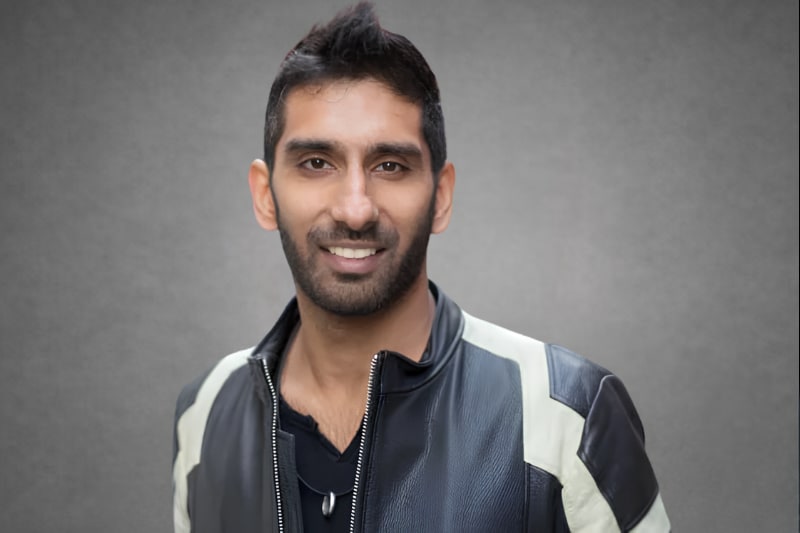
Rahul Vohra
Founder & CEO at Superhuman
In this interview, Rahul Vohra, Founder and CEO of Superhuman, explores why superficial AI integrations fail to retain software users and outlines frameworks for embedding…

Sam Altman
Co-founder & CEO at OpenAI
In this interview, Sam Altman, Co-Founder and CEO of OpenAI, explores the practical trajectory toward artificial general intelligence and the imperative of human agency in…
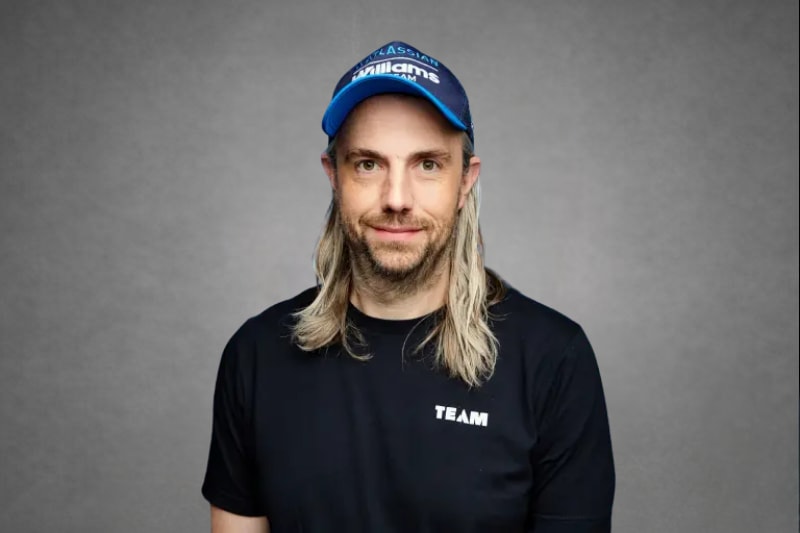
Mike Cannon-Brookes
Co-Founder & CEO at Atlassian
In this interview, Mike Cannon-Brookes, Co-Founder and CEO of Atlassian, discusses the practical integration of autonomous AI agents across modern enterprise collaborative workflows. He examines…

Jensen Huang
Co-founder & CEO at NVIDIA
In this interview, Jensen Huang, Founder, President and CEO of NVIDIA, addresses prevailing existential narratives surrounding artificial intelligence and outlines Europe's sovereign computing opportunities. He…

Aneel Bhusri
Co-Founder & CEO at Workday
In this interview, Aneel Bhusri, Co-Founder and CEO of Workday, unpacks the seismic impact of enterprise AI agents on global corporate labor and organizational architecture.…