

Wawira NjiruFounder & CEO
In this interview, Food for Education founder and CEO Wawira Njiru reflects on her foundational upbringing, family values, and the journey of building Africa's largest school feeding organization. Njiru recounts growing up in Nyeri and Ruiru with healthcare worker and pastor parents, discusses overcoming resource constraints through family unity, and explains how early exposure to inequality and community service shaped her lifelong mission to eradicate childhood classroom hunger across Africa.

Founder Stats
- Edu
- Started 2012
- Not Publicly Disclosed/mo
- 6000+ team
- Nairobi, Kenya
About Wawira Njiru
Wawira Njiru is the founder and CEO of Food for Education, an African women-led social enterprise established in 2012. A nutritionist and globally recognized social entrepreneur, Njiru has received the Skoll Award for Social Innovation, the Elevate Prize, and United Nations Kenya Person of the Year honors. Under her leadership, Food for Education employs over 6,000 people and serves nutritious daily meals to over 650,000 children across Kenya.
Interview
September 08, 2026
What is the overall scale and daily operational impact of Food for Education today?
Food for Education operates 182 kitchens across Kenya, employing over 6,000 people and feeding more than 650,000 children every single school day. Our central operations process over 130 tons of dry raw ingredients daily to prepare fresh, nutritious meals. Since our founding, we have served over 230 million hot meals to public primary school students, establishing a scalable blueprint for school feeding across the African continent.
How did your parents' personal journeys out of poverty shape your perspective on education?
Both of my parents came from deeply impoverished backgrounds, one in a rural village and the other in an informal settlement. Education was the sole vehicle that transformed their lives, enabling them to attend college and become clinical healthcare workers. Growing up, they constantly reinforced that education is the most powerful tool for generational transformation, instilling in me a deep commitment to ensuring every child has the educational access they deserve.
How did your grandmother's entrepreneurial hustle influence your family's trajectory?
My maternal grandmother raised her family in the Soweto settlement of Kahawa West by working multiple jobs, including packaging meat, raising livestock, and brewing traditional beverages to fund my mother's schooling. My mother studied late at night with her feet in cold water to stay awake, eventually graduating top of her primary school and earning a scholarship. That relentless work ethic and resilience became foundational family values.
What was your experience growing up in a household dedicated to community health and pastoral ministry?
My parents worked as healthcare professionals while leading a community church in Ruiru. Our home was always open to relatives, church congregants, and vulnerable community members who needed shelter or medical support. Witnessing my parents prioritize helping others, even selling our family television to assist a struggling neighbor, taught me that life's highest calling is utilizing your skills in service of others.
How did living in a home that was constructed around you shape your resilience?
When we moved into our house in Ruiru, it was an unfinished shell without interior plaster, tiled floors, or indoor plumbing. My parents completed the construction room by room as funds became available, moving our family around during plastering and flooring work. Living comfortably amidst ongoing construction taught me adaptability and gave me a high tolerance for managing unfinished, evolving operational environments.
How did your parents balance severe financial constraints with an atmosphere of abundant love?
Although money was often tight, our household never felt impoverished because it was filled with warmth, clarity, and open communication. My parents never pretended to have resources they lacked, but they consistently provided essential necessities and made sacrifices to prioritize our schooling. That atmosphere of love and transparency eliminated fear and gave us a strong sense of internal security.
What early lesson did you learn about advocating for yourself during your early school years?
When I was very young, school administrators attempted to hold me back in nursery school due to my small physical stature, despite my having mastered the curriculum. I advocated for myself to my father, who listened respectfully and accompanied me to school the next day to ensure I was placed in pre-unit classes. Having parents who valued my voice taught me the importance of speaking up for equity.
How did transitioning to a boarding school in Kikuyu expose you to socioeconomic differences?
Moving to Green Garden for class eight was my first major culture shock. I transitioned from a modest local environment in Ruiru to being surrounded by peers from wealthy Nairobi neighborhoods whose families owned luxury vehicles and traveled extensively. Navigating those stark lifestyle contrasts forced me to confront my own identity early and define what truly mattered beyond material possessions.
How did you navigate feelings of self-doubt when competing in academically elite environments?
Having consistently ranked at the top of my local school, entering a highly competitive environment where my ranking shifted caused initial self-doubt. In our academic culture where top ranking is often equated with self-worth, I had to redefine success, realizing that academic performance is a benchmark for learning rather than a limitation on what you can achieve in life.
What early childhood experiences sparked your desire to serve others like Mother Teresa?
My parents recall that after seeing Mother Teresa on television as a young girl, I declared my intention to follow a similar path of humanitarian service. Growing up surrounded by parents who used their medical skills to deliver babies for vulnerable teenage mothers showed me firsthand how practical competencies could restore dignity to marginalized communities.
How did observing your parents deliver medical care to vulnerable community members affect you?
Seeing my parents get called out at all hours to assist individuals in medical distress demonstrated the profound value of technical healthcare skills. It demystified community leadership for me and solidified my belief that adulthood should be centered around acquiring specialized knowledge and deploying it to solve urgent societal challenges.
What role did growing up as a pastor's child play in developing your leadership skills?
Being a pastor's daughter naturally thrust me into leadership responsibilities within the church youth community from an early age. Organizing activities, communicating with diverse congregants, and participating in community outreach helped me develop public speaking confidence, emotional intelligence, and organizational discipline.
How did you maintain grounded perspective while moving between contrasting social worlds?
Because my upbringing encompassed both modest community realities and exposure to elite institutions, moving between different social environments became second nature. Whether engaging with international philanthropic donors in global capitals or visiting grassroots school kitchens in informal settlements, staying anchored in authentic purpose allows me to connect comfortably with people from all walks of life.
How did your primary education at Ruiru Peak and Green Garden prepare you for subsequent milestones?
My early schooling instilled a deep curiosity and love for reading that remains active today. Scoring 425 out of 500 on the Kenya Certificate of Primary Education granted me admission to Saint Anne's Lioki, providing the academic foundation and personal discipline required to pursue nutrition studies and eventually build Food for Education into a continental feeding initiative.
Table Of Questions
Video Interviews with Wawira Njiru
EP1 | My Childhood Upbringing | Wawira Njiru | Founder & CEO Food 4 Education |
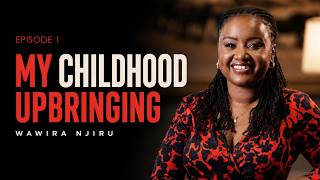
EP1 | My Childhood Upbringing | Wawira Njiru | Founder & CEO Food 4 Education |

Wawira Njiru: The Story of Food For Education | CTA Brand Stories

An Inside Look At Africa's Largest Kitchen | Food For Education
Cite This Interview
Use this interview in your research, article, or academic work
Related Interviews

Simon Court
Founder & Leadership Coach at Founders Legacy
In this interview, Founders Legacy founder and leadership coach Simon Court discusses executive development, founder psychology, and scaling high-growth enterprises. Court explains the Three Horizons…

Wayne Cartmel
Founder & CEO at MyNewTerm
In this interview, MyNewTerm founder and CEO Wayne Cartmel discusses the challenges of building a bootstrapped applicant tracking system and job board for the education…

Rahul Vohra
Founder & CEO at Superhuman
In this interview, Rahul Vohra, Founder and CEO of Superhuman, explores why superficial AI integrations fail to retain software users and outlines frameworks for embedding…

Sam Altman
Co-founder & CEO at OpenAI
In this interview, Sam Altman, Co-Founder and CEO of OpenAI, explores the practical trajectory toward artificial general intelligence and the imperative of human agency in…
Mike Cannon-Brookes
Co-Founder & CEO at Atlassian
In this interview, Mike Cannon-Brookes, Co-Founder and CEO of Atlassian, discusses the practical integration of autonomous AI agents across modern enterprise collaborative workflows. He examines…

Jensen Huang
Co-founder & CEO at NVIDIA
In this interview, Jensen Huang, Founder, President and CEO of NVIDIA, addresses prevailing existential narratives surrounding artificial intelligence and outlines Europe's sovereign computing opportunities. He…