
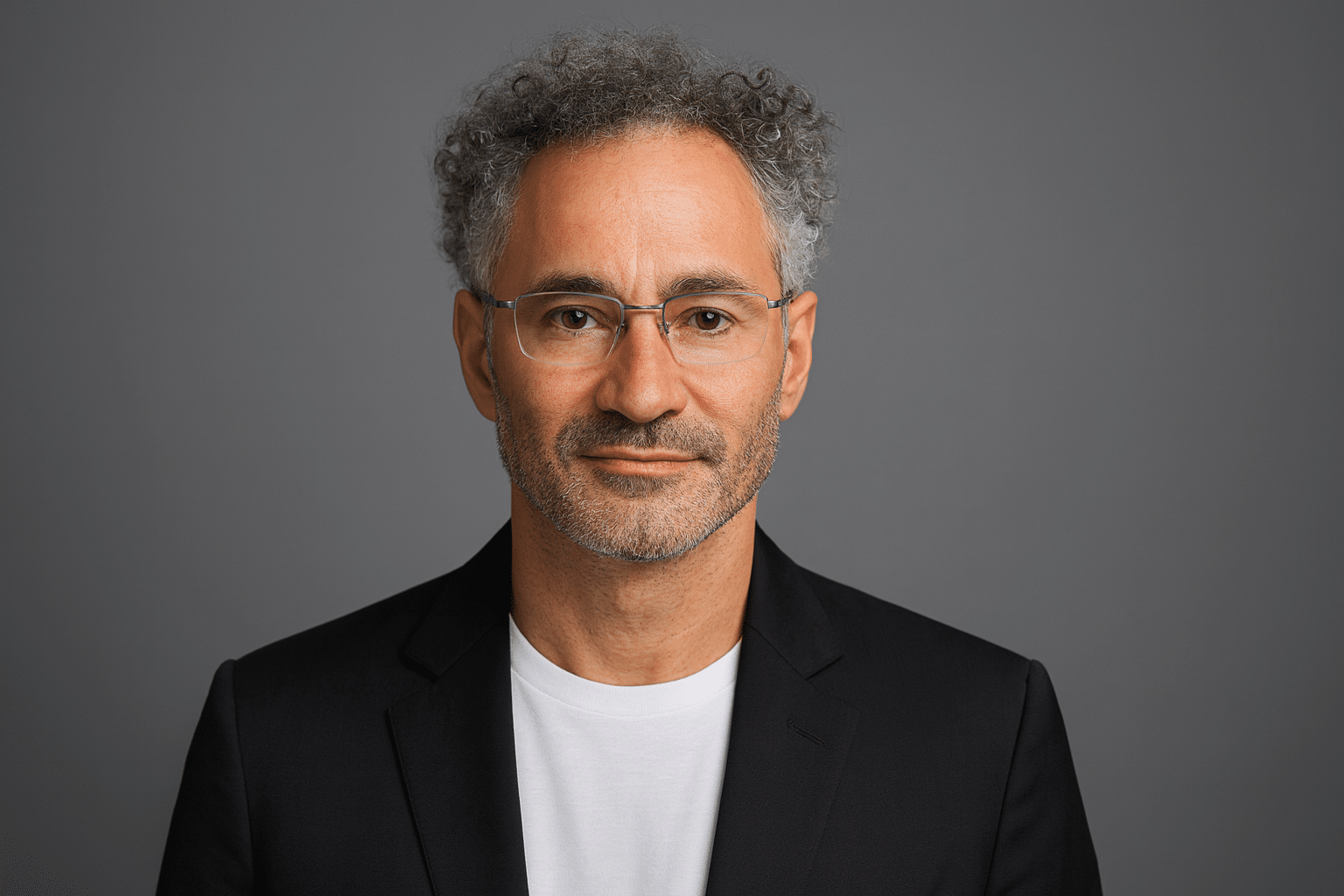
Alex KarpCo-founder & CEO
In this interview, Alex Karp discusses building Palantir into a category-defining software company by embracing an unconventional culture, mission-driven innovation, and relentless focus on solving difficult problems. He shares insights on leadership, meritocracy, product development, and working closely with defense and government organizations. The conversation highlights organizational culture, long-term thinking, customer obsession, and how empowering exceptional talent can create enduring competitive advantages in technology.

Founder Stats
- Technology, AI, Defense
- Started 2015 or
- $1M+/mo
- 50+ team
- USA
About Alex Karp
Alex Karp is the co-founder and CEO of Palantir Technologies, a technology company known for developing advanced data platforms used by governments, defense organizations, and commercial enterprises worldwide. Since co-founding Palantir in 2003, he has led the company with a distinctive philosophy centered on mission focus, intellectual independence, and product excellence. Karp is recognized for challenging conventional management practices while building software that helps organizations solve complex operational and strategic problems.
Interview
November 21, 2025
This is interview 1 of 2 with Alex Karp.
Alex Karp has been featured on CEO Insider 2 times. Explore the full collection.
You often say Palantir was a “freak show” for almost 20 years. How do you feel now that the company is finally being valued at this scale?
You describe Palantir as a 20-year-old company with the vibe of a four- or five-year-old startup. What creates that feeling inside the business?
Structure is key: very few layers and lots of direct conversation. Decisions like the meritocracy program can be made in minutes, not months. We keep tribal knowledge from 20 years but move with the freedom of a four- or five-year-old startup. That scale-plus-flatness mix keeps the culture feeling young.
You talk a lot about Palantir as an “anti-playbook” company. What does that mean in day-to-day management?
Anti-playbook means ignoring expert templates and building for people on the ground. We pivoted to the U.S. military or U.S. commercial when it made sense, even if analysts called it insane. If you cannot follow the standard manual, you look at reality and do what helps soldiers and factory teams first.
You come from a family of artists and commercial art. How did that shape the way you build products and run the company?
In the interview you are very critical of analysts and experts. How do you stop their views from distorting your decisions as a CEO?
You say Palantir was built to give America an unfair advantage. How does that belief show up in the way you pick products and customers?
We pick missions that give America an edge in war, counter-terrorism, reshoring, and manufacturing. We see soldiers and workers as people who assumed the world might not work for them yet still fight. That keeps us from building parasitic products; we build tools that make them safer and more effective.
You have become popular with retail investors, especially people on WallStreetBets. Why are you so focused on them?
You push back hard on victimhood narratives. How does that belief influence how you build teams and culture?
If you embrace victimhood fully, you become a mark. I never expected rescue, even with a messy background. We created meritocratic programs so people tired of discrimination could learn useful skills and compete on output. Inside Palantir the only thing that matters is whether you deliver, not your identity.
You describe yourself as “self-made” more in morals and values than in money. What do you mean by that?
You often say America is a “maximal freedom culture” that made your career possible. How does that shape your advice to young founders?
America rewards delivery with unusual freedom. I lived abroad, so I see it clearly: you can have eccentric views, write odd letters, run a company like an art project, and if the numbers work you can keep going. My advice: treat that freedom as a competitive advantage and build something others cannot copy.
How is Palantir’s way of creating value different from a traditional SaaS company?
You mentioned that FDSE and similar programs were mocked for years. Why did you stay with them?
You have a strong connection to soldiers and often talk about awards like the Eisenhower Award. How has that changed your view of leadership?
Outsiders know the world is not designed to protect them. Soldiers and factory workers live with that and still fight. Awards like the Eisenhower Award matter because they signal from that community that our tools helped. Leadership decisions are not abstract; they influence who lives and comes home.
How do you balance being an artist-type founder with the hard financial discipline Palantir shows now?
For 15-plus years many investors thought we were failing financially even as the mission worked. The trick is to keep the artistic, contrarian core but tie it to measurable outcomes. Now that revenue and earnings scale, the numbers buy freedom to stay weird. Performance buys the right to be different.
Internally, how do you make sure people can “be themselves” but still perform at a very high level?
At Palantir you can tell the CEO to move and hold any opinion, but freedom is tied to output. We value people who create for partners in hard environments and give them autonomy. The system works because the value creators in special operations, factories, or data centers get enormous respect and space.
You’ve said dyslexia helped you in a “non-playbook world.” How has that shaped your approach to problem-solving?
If you had to give one operating lesson to founders from this phase of Palantir’s journey, what would it be?
Stay brutally close to the real problem for the people who bleed for it, and rebuild infrastructure if needed. Most chase narratives; we tried to ship products that changed behavior for soldiers, workers, and serious investors, even when it offended others. If it works, you end up with something hard to copy.
Table Of Questions
Video Interviews with Alex Karp
Alex Karp, CEO of Palantir: Exclusive Interview Inside PLTR Office
Alex Karp, CEO of Palantir: Exclusive Interview Inside PLTR Office

Palantir's Alex Karp on government surveillance, AI and the Democratic party - The Axios Show Ep. 5
RARE Alex Karp Interview: Palantir Philosophy Explained! (2009)
Cite This Interview
Use this interview in your research, article, or academic work
Related Interviews

Naveen Rao
VP of Generative AI & Former CEO of MosaicML at Databricks
In this interview, Naveen Rao, VP of Generative AI at Databricks and former CEO of MosaicML, analyzes the explosive economics of artificial intelligence inference and…

Rahul Vohra
Founder & CEO at Superhuman
In this interview, Rahul Vohra, Founder and CEO of Superhuman, explores why superficial AI integrations fail to retain software users and outlines frameworks for embedding…

Sam Altman
Co-founder & CEO at OpenAI
In this interview, Sam Altman, Co-Founder and CEO of OpenAI, explores the practical trajectory toward artificial general intelligence and the imperative of human agency in…
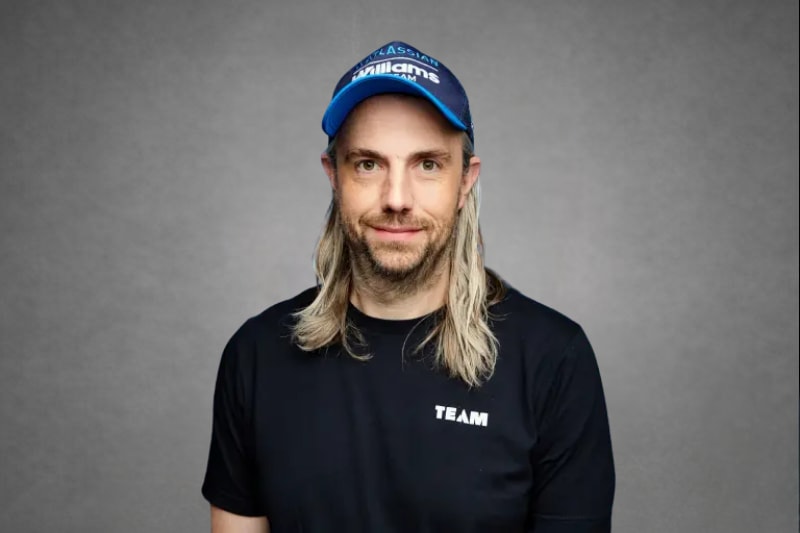
Mike Cannon-Brookes
Co-Founder & CEO at Atlassian
In this interview, Mike Cannon-Brookes, Co-Founder and CEO of Atlassian, discusses the practical integration of autonomous AI agents across modern enterprise collaborative workflows. He examines…

Jensen Huang
Co-founder & CEO at NVIDIA
In this interview, Jensen Huang, Founder, President and CEO of NVIDIA, addresses prevailing existential narratives surrounding artificial intelligence and outlines Europe's sovereign computing opportunities. He…

Aneel Bhusri
Co-Founder & CEO at Workday
In this interview, Aneel Bhusri, Co-Founder and CEO of Workday, unpacks the seismic impact of enterprise AI agents on global corporate labor and organizational architecture.…