
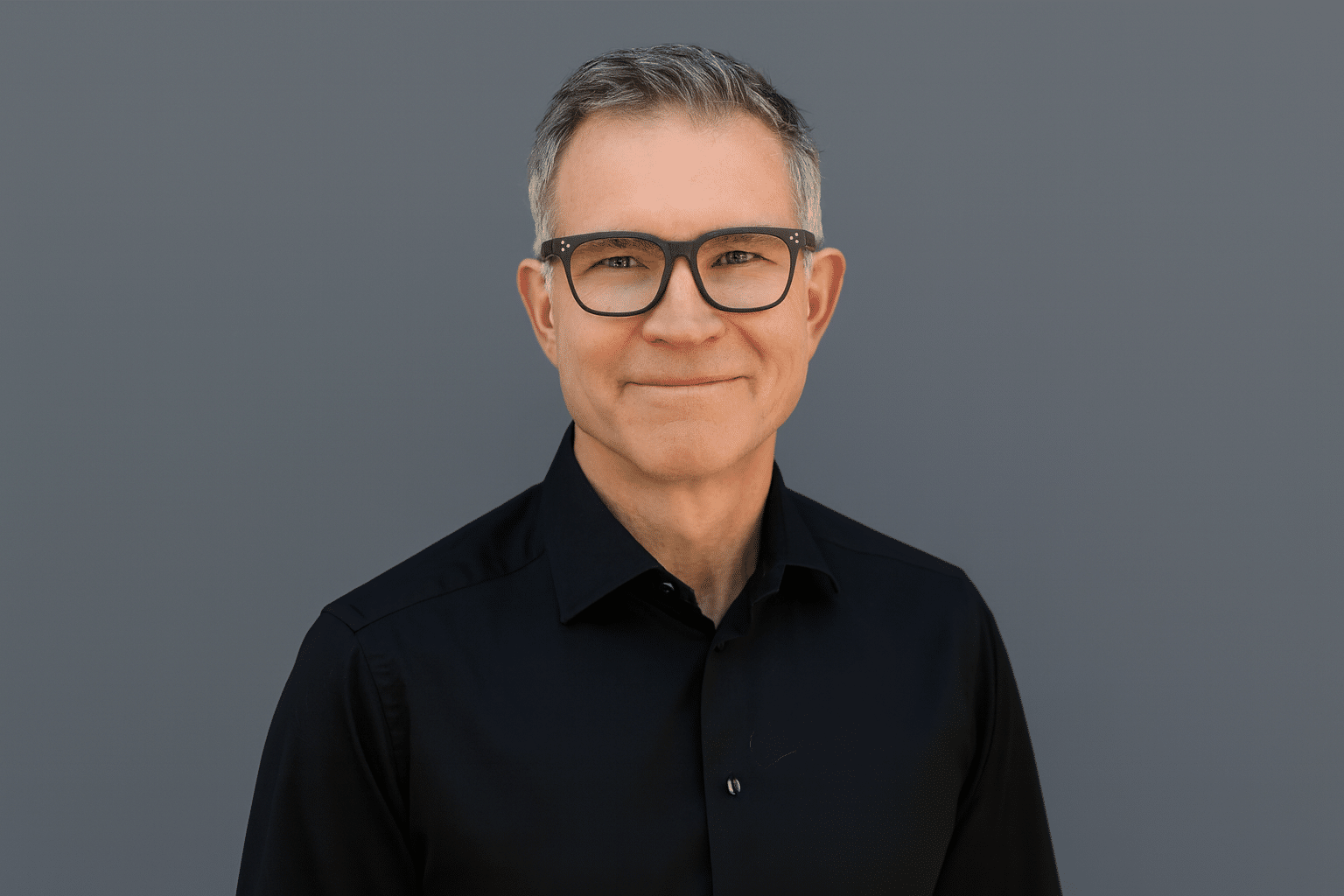
David BaszuckiFounder & CEO, Roblox
In this interview, David Baszucki discusses the evolution of Roblox from a simple physics experiment into one of the world’s largest user-generated gaming platforms. He shares insights on trusting intuition, building for long-term growth, and navigating major product and business challenges. The conversation highlights creator economies, platform innovation, user safety, AI-driven development, and how continuous reinvention, resilience, and a decades-long perspective can help build enduring technology companies.

Founder Stats
- Technology
- Started 2004
- Approx. 400 Million USD/mo
- 50+ team
- USA
About David Baszucki
David Baszucki is the founder and CEO of Roblox, a global platform that enables millions of creators to build and monetize interactive experiences. After earlier entrepreneurial success with Knowledge Revolution, he founded Roblox and transformed it into one of the largest user-generated content ecosystems in the world. Baszucki is known for his long-term vision, commitment to platform safety, belief in creator empowerment, and focus on innovation through emerging technologies such as artificial intelligence and immersive digital experiences.
Interview
December 2, 2025
This is interview 1 of 2 with David Baszucki.
David Baszucki has been featured on CEO Insider 2 times. Explore the full collection.
When did you first feel an entrepreneurial instinct in yourself?
How did you feel right after finishing college and trying to start your career?
What finally helped you move from feeling lost to a clearer direction?
Time off after bad jobs helped. Apple II and Macintosh were rising, educational software was interesting. Instead of analyzing every option, I decided to enter educational software, following fascination with 3D simulation, physics, and consumer software. That step led directly to Knowledge Revolution and later Roblox.
How did you find and choose your early co-founders like Eric Cassel?
What is one big lesson you took from building Knowledge Revolution?
Why did you take a long RV road trip with your family after selling the company?
You once used a spreadsheet with nine possible careers. What did you learn from that?
I once tried to optimize life with a spreadsheet of nine careers and metrics. It was a bad way to choose. For big decisions, pure analysis can trap you; intuition about what fascinates you is better than a perfect grid. That lesson returned whenever I chose between safe options and harder, interesting ones.
How did you decide to shut down DynaBlocks and rebuild it into Roblox?
How did you know Roblox had finally hit product–market fit?
What happened during Roblox’s near-death monetization crisis and how did you solve it?
How did you deal mentally with big competitors like Minecraft and Fortnite?
Minecraft and Fortnite exploded and it felt unfair. We leaned on our pipeline: auto-sharding in the cloud, multi-device support, stable APIs, one engine for mobile and PC. We stayed a unified platform instead of splitting engines or running a big first-party game, playing a long-term infrastructure game.
When engagement and safety seem to conflict, which way do you choose?
How do you build a “safety-first” culture inside a large company?
What changes did you have to make in yourself to grow from founder to public company CEO?
How do you see AI changing Roblox as a business and a platform?
We run hundreds of AI models for safety, search, discovery, and 3D generation. Waves: quiet behind-the-scenes improvements; generative tools letting creators and users build by talking; eventually avatars and assistants. Our advantage is billions of hours of 3D interaction we never sell the data but use it to make the platform smarter.
Are you worried that AI will replace developers on Roblox?
I am optimistic. Like the industrial revolution, work changes rather than disappearing. For creators, AI will raise quality and shift the landscape, not create mass unemployment. New work appears designing systems, stories, economies, communities that AI accelerates. The best developers will lean in and go further.
What is the best leadership advice you carry with you today?
Table Of Questions
Video Interviews with David Baszucki
David Baszucki, Founder and CEO of Roblox: Trust Your Gut | Stanford GSB View From The Top

David Baszucki, Founder and CEO of Roblox: Trust Your Gut | Stanford GSB View From The Top
Gaming Platform Entrepreneurship with David Baszucki | Stanford eCorner
Cite This Interview
Use this interview in your research, article, or academic work
Related Interviews

Jake Cooper
Founder & CEO at Railway
In this interview, Jake Cooper, Founder and CEO of Railway, details how the cloud platform scaled to nearly 100 million USD in annual recurring revenue…

Kai Yu
Founder & CEO at Horizon Robotics
In this interview, Dr. Kai Yu, founder and CEO of Horizon Robotics, sits down with Nicolai Tangen, CEO of the Norwegian Sovereign Wealth Fund, to…

Irena Pereira
Founder & CEO at Unleashed Games
In this interview, Irena Pereira, CEO of Infinite Realms and founder of Unleashed Games, explores how gaming can solve the global loneliness epidemic. Drawing on…

Vineet Nayar
Former CEO at HCL Technologies
In this interview, Vineet Nayar, former CEO of HCL Technologies, challenges conventional ideas about managing people, the role of Indian IT in the AI era,…
Tobi Lütke
Founder & CEO at Shopify
In this interview, Tobi Lütke, founder and CEO of Shopify, shares how AI agents and a company-wide culture shift are reshaping the future of work.…

Larry Ellison
Co-Founder, Executive Chairman & CTO at Oracle
In this interview, Oracle co-founder, executive chairman, and CTO Larry Ellison explores his five-decade journey building one of the world's most formidable enterprise software giants.…