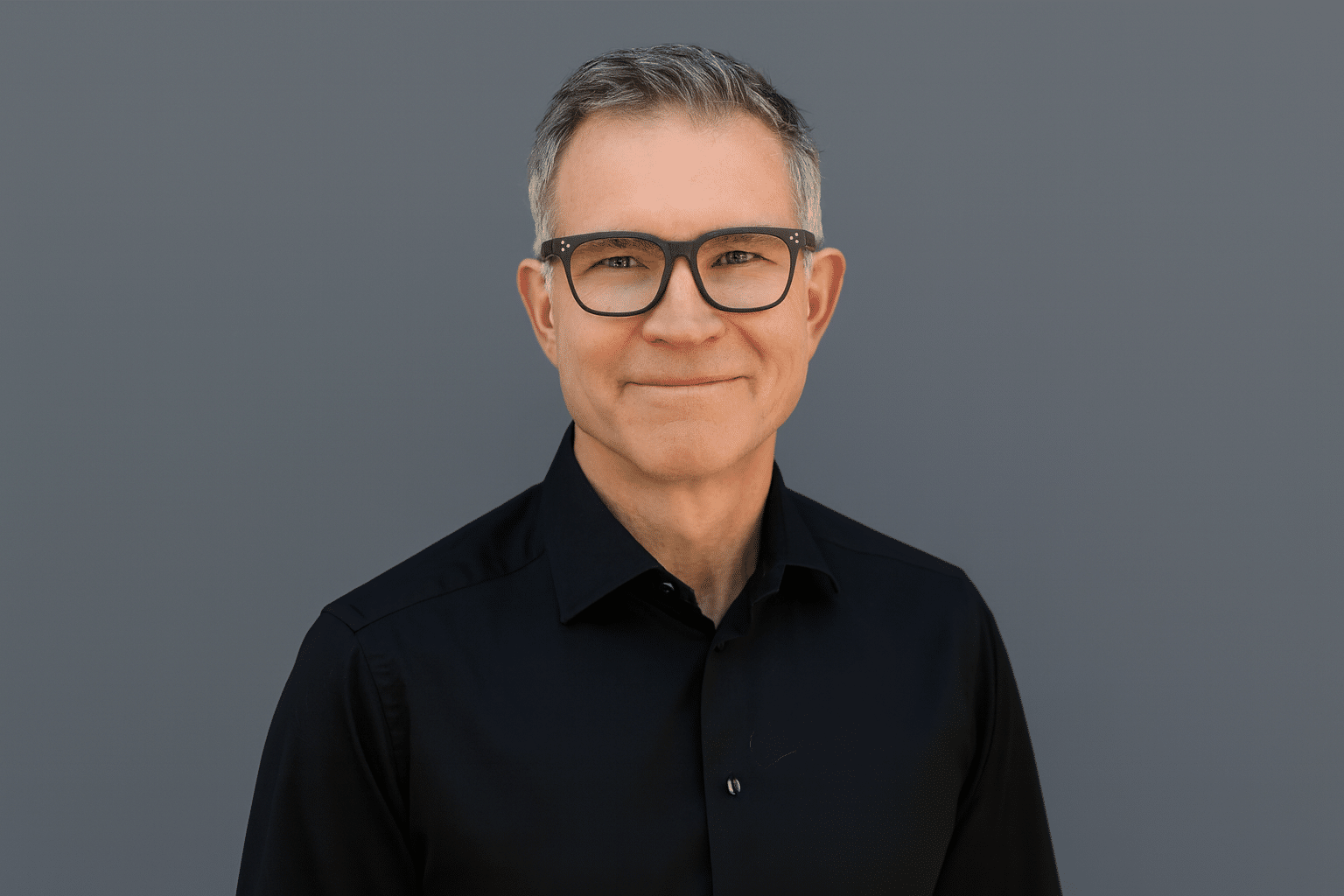
Jeetu Patel, President & Chief Product Officer at Cisco Systems
4.8/5 Rating
Technology
Approximately $4.5 Billion USD/mo
Approximately $54 Billion USD ARR

Jeetu PatelPresident & Chief Product Officer

In this interview, Cisco President and Chief Product Officer Jeetu Patel discusses the AI-driven networking supercycle, the future of software development, workforce transformation, and the massive infrastructure demands created by AI agents. He shares insights on innovation, productivity, AI adoption, India's opportunities, and why businesses must move quickly to remain competitive in the AI era.

Jeetu Patel

Jeetu Patel

President & Chief Product Officer

Cisco Systems

Cisco Systems

Founder Stats

  • Technology
  • Started 1984
  • Approximately $4.5 Billion USD/mo
  • 90,000+ team
  • San Jose, California, USA

About Jeetu Patel

Jeetu Patel is the President and Chief Product Officer of Cisco, one of the world's largest technology companies. Born in Mumbai and later moving to the United States, he has built a distinguished career in enterprise software and technology leadership. Today, he leads Cisco's product strategy across AI, cybersecurity, networking, and software as the company evolves into a key infrastructure provider for the AI era.

Interview

June 29, 2026

Q

Why do you believe we are entering a networking supercycle?

Question 1 of 16
Jeetu Patel

We're moving from a world of chatbots to a world of AI agents. These agents consume significantly more network resources than humans. In our studies, an agent consumed roughly 450% more bandwidth than a person performing the same task. As agents become widespread, networks will need to be completely reimagined.

0
Q

What makes AI agents so demanding on infrastructure?

Question 2 of 16
Jeetu Patel

Agents work around the clock. They continuously exchange information, access memory, communicate with models, and perform tasks without stopping. Unlike humans, they never sleep. When you multiply that across thousands of agents, the demand on networks, compute power, and energy becomes enormous.

0
Q

How are businesses already responding to this shift?

Question 3 of 16
Jeetu Patel

We're seeing companies modernize their workplace infrastructure much faster than before. Historically, workplace networking grew only a few percentage points annually. Recently, we've seen growth rates many times higher because organizations are preparing for AI-driven workloads and agent-based computing.

0
Q

Cisco recently announced products written entirely by AI. What does that mean?

Question 4 of 16
Jeetu Patel

We already have products where AI generated all the code and humans verified the results. By the end of next year, we expect a large percentage of our products to be fully written by AI. The role of humans will increasingly focus on judgment, validation, architecture, and customer engagement.

0
Q

Do you think software engineers will stop writing code?

Question 5 of 16
Jeetu Patel

Their work will change significantly. Engineers will spend less time manually writing code and more time reviewing, validating, designing architectures, and helping customers succeed. Product intuition and decision-making will become more valuable than typing code itself.

0
Q

Will AI eliminate jobs?

Question 6 of 16
Jeetu Patel

I don't believe AI will reduce the need for talented people. Every time we automate one bottleneck, another bottleneck appears. The challenge shifts rather than disappears. What will matter is whether people become fluent in AI and learn how to work effectively alongside these technologies.

0
Q

Why is AI fluency becoming so important?

Question 7 of 16
Jeetu Patel

The productivity gap between someone who understands AI deeply and someone who doesn't could become enormous. It may eventually be as unusual as hiring someone today who doesn't know how to use the internet. AI fluency will become a basic requirement for many knowledge-based jobs.

0
Q

What is the biggest mistake companies make with AI?

Question 8 of 16
Jeetu Patel

Many organizations spend too much time experimenting and not enough time committing. The companies that move decisively and integrate AI into their operations are seeing the strongest results. At this point, AI adoption is becoming less of a choice and more of a necessity.

0
Q

Are we currently in an AI infrastructure bubble?

Question 9 of 16
Jeetu Patel

I don't believe so. We are still very early in the cycle. Only a tiny percentage of the world's population actively uses AI agents today. As adoption increases, demand for infrastructure, networking, compute power, and data centers will continue to grow significantly.

0
Q

Why are companies struggling to see returns from AI investments?

Question 10 of 16
Jeetu Patel

Most organizations are still learning how to use AI effectively. There is a difference between becoming familiar with AI, becoming skilled at it, and becoming efficient with it. Many companies are still in the early stages, where costs are high and productivity gains haven't fully materialized yet.

0
Q

How should businesses think about AI costs?

Question 11 of 16
Jeetu Patel

Companies need greater visibility into token consumption, infrastructure utilization, and AI efficiency. Not every task requires the most advanced model. Intelligent routing, smaller models, and better management systems will become increasingly important for controlling costs.

0
Q

What opportunities does AI create for future workers?

Question 12 of 16
Jeetu Patel

AI creates opportunities for people who can adapt quickly. The workforce will evolve, but new roles, industries, and responsibilities will emerge. The biggest opportunity lies in learning how to work alongside AI rather than competing against it.

0
Q

How optimistic are you about India's role in the AI era?

Question 13 of 16
Jeetu Patel

I'm extremely optimistic. India has a tremendous demographic advantage with a large young workforce. Combined with strong entrepreneurship and increasing government support for innovation, India is positioned to play a major role in the global AI economy.

0
Q

What major technology trends are you watching over the next five years?

Question 14 of 16
Jeetu Patel

Physical AI and robotics are at the top of the list. We're also seeing advancements in spatial models, quantum computing, new energy solutions, and application-layer innovation. These technologies will reshape industries and create entirely new opportunities.

0
Q

Why are you so optimistic about AI's long-term impact?

Question 15 of 16
Jeetu Patel

The pace of progress is accelerating exponentially. We're seeing self-improving systems, rapid innovation, and breakthroughs across multiple industries simultaneously. Healthcare, education, scientific discovery, and productivity all stand to benefit from these advancements over time.

0
Q

What leadership lesson has guided your career?

Question 16 of 16
Jeetu Patel

Companies often fail because they hesitate. The organizations that succeed are usually the ones willing to commit early, move decisively, and adapt quickly. Waiting too long to embrace change can be far more dangerous than moving too fast.

0

Video Interviews with Jeetu Patel

Exclusive: Cisco President Jeetu Patel On AI, Jobs, Data Centres & India's Future

Exclusive: Cisco President Jeetu Patel On AI, Jobs, Data Centres & India's Future

Exclusive: Cisco President Jeetu Patel On AI, Jobs, Data Centres & India's Future

Cite This Interview

Use this interview in your research, article, or academic work

Related Interviews
Neal Mohan, CEO at YouTube
Technology

Neal Mohan

CEO at YouTube

Approximately $4.5 Billion USD
7,000+

In this interview, YouTube CEO Neal Mohan discusses the future of the creator economy, YouTube's monetization model, AI-generated content, free speech, streaming competition, and the…

Read Interview
Chris Lou, Founder and CEO at Usobi
Technology

Chris Lou

Founder and CEO at Usobi

In this interview, U-SOB founder Chris Lou discusses the growing talent challenges within the iGaming industry. He shares insights on leadership hiring, employee retention, AI…

Read Interview
Luke Sarsfield, Chairman & CEO at Ridgewood Capital
Technology

Luke Sarsfield

Chairman & CEO at Ridgewood Capital

200+

In this interview, Ridgewood Capital CEO Luke Sarsfield explains how alignment drives long-term success in asset management. Drawing on more than two decades at Goldman…

Read Interview
Srinath Ravichandran, Co-Founder & CEO at Agnikul Cosmos
Technology

Srinath Ravichandran

Co-Founder & CEO at Agnikul Cosmos

Pre-revenue
300+

In this interview, Agnikul Cosmos co-founder and CEO Srinath Ravichandran explains rocket science in simple terms while sharing his journey from Wall Street to building…

Read Interview
Jean-Charles Gaudechon, CEO at Remedy Entertainment
Technology

Jean-Charles Gaudechon

CEO at Remedy Entertainment

4.6M - $5.8M USD
350+

In this interview, Remedy Entertainment CEO Jean-Charles Gaudechon discusses the future of the studio, the importance of protecting Remedy's creative identity, and the opportunities ahead…

Read Interview
Fabricio Bloisi, CEO at Prosus and Naspers
Technology

Fabricio Bloisi

CEO at Prosus and Naspers

$1M+
10,000+

In this interview, Prosus CEO Fabricio Bloisi shares how he built billion-dollar technology businesses through relentless innovation, strong culture, and entrepreneurial leadership. He discusses scaling…

Read Interview