

Paul GrahamCo-Founder
In this interview, Y Combinator co-founder Paul Graham reflects on twenty-one years of startup acceleration and forty-seven YC batches. Graham explores the nature of founder ambition, defines the elusive quality of formidability, and discusses why day-to-day motivation stems from fear of failure rather than wealth. He also analyzes whether lean startups remain viable, shares his perspective on the jagged artificial intelligence frontier, and explains how early-stage batch networks accelerate company growth.

Founder Stats
- Finance
- Started 2005
- Not Publicly Disclosed/mo
- 100+ team
- Mountain View, California, United States
About Paul Graham
Paul Graham is a programmer, venture investor, essayist, and the co-founder of Y Combinator, the world's preeminent startup accelerator established in 2005. Earlier in his career, Graham created Viaweb, the first web-based application company, which was acquired by Yahoo in 1998. His influential essays on technology, economics, and entrepreneurship have defined modern venture capital and guided generations of technology founders globally.
Interview
September 08, 2026
Why do the core principles of building an early-stage startup remain unchanged regardless of technology cycles?
Whether you are building around microprocessors, the internal combustion engine, or modern artificial intelligence, the fundamental mechanics of launching a startup remain identical. You must understand customer problems, build something people want, and maintain relentless execution. While the underlying technological tooling evolves, human behavior and the core discipline of startup creation stay the same.
How has the seriousness and ambition of Y Combinator startup ideas evolved over time?
People have claimed YC peaked since 2008, but today's founders tackle problems that are vastly more ambitious and consequential than earlier consumer software. In early batches, projects often revolved around social forums, whereas modern cohorts work on intercontinental ballistic cargo transport, specialized space systems, and customized biotech interventions.
What did you observe regarding founders tackling ambitious problems like cancer research?
Startups are fighting complex diseases through targeted therapies and on-demand oncology research. By approaching severe medical challenges with the agile mindset of a technology startup, founders inflict a death of a thousand cuts on complex diseases, creating bespoke research platforms that benefit broader patient populations.
How did your 2012 prediction of frighteningly ambitious ideas play out with companies like OpenAI?
Disrupting entrenched tech monopolies like search engines cannot be achieved by attacking them head-on with identical products. You must wait for a paradigm shift that renders the legacy model obsolete. Conversational AI interfaces demonstrated that users sought direct synthesis of information rather than indexed lists of web links, transforming search behavior completely.
What truly motivates ambitious founders on a day-to-day operational level?
While financial upside exists in the background, day-to-day founder motivation is almost entirely driven by an acute fear of failure, operational disaster, and public embarrassment. Founders focus intensely on keeping their systems running and preventing catastrophic breakdowns, often realizing they have built substantial equity value only years later.
Why is attempting to use a startup as a status credential a fundamental mistake?
What does the term formidability mean to you when evaluating early-stage founders?
Is the concept of the lean startup still valid in an era of abundant capital and AI?
You can still launch significant ventures with minimal capital. While compute infrastructure and token consumption can be costly initially, technological processing power consistently becomes cheaper and higher quality over time, allowing resourceful teams to achieve substantial traction before raising large capital rounds.
How can capital-intensive hard tech startups make progress with minimal initial funding?
Founders in aerospace or hardware do not need to build complete physical vehicles immediately. By developing rigorous engineering simulations, publishing credible technical white papers, and booking future launch slots, founders establish sufficient credibility to unlock sequential tranches of investor funding.
What surprised you most about the actual development trajectory of artificial intelligence?
Early AI researchers expected systems to evolve from simple biological organisms up to human capability while maintaining precision. Instead, large language models emerged immediately with broad human conversational fluency alongside factual hallucinations, requiring researchers to work backward from plausible language toward logical precision.
How do you view the current progress toward Artificial General Intelligence?
Instead of representing a sharp finish line, AGI is a broad, multidimensional spectrum. Certain machine capabilities already solve open mathematical problems at superhuman levels, while others struggle with basic real-world scheduling, demonstrating that intelligence expands unevenly across different domains.
Has artificial intelligence changed the importance of rapid product shipping velocity?
What structural advantages does an accelerator batch environment provide to founders?
How did you and Jessica Livingston originally conceive the idea for Y Combinator?
We originally set out to build an angel investment firm that invested small amounts of capital into early-stage founders using standardized legal paperwork. We organized the first batch over the summer as an alternative to corporate internships for college students, discovering that cohort-based investing accelerated both investor learning and founder progress.
How has Y Combinator managed to maintain intimacy and effectiveness as it scaled?
Where will the next generation of trillion-dollar tech companies emerge from?
Table Of Questions
Video Interviews with Paul Graham
Paul Graham On Startups, Ambition, and Great Founders
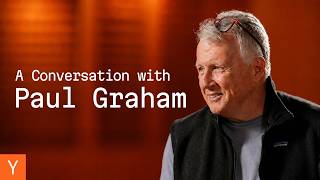
Paul Graham On Startups, Ambition, and Great Founders
Cite This Interview
Use this interview in your research, article, or academic work
Related Interviews

Bill Ackman
Founder & CEO at Pershing Square Capital Management
In this interview, Bill Ackman breaks down his disciplined approach to concentrated value investing, explaining how structural market shifts from indexation and quantitative pods create…

Jason Cozens
Founder & CEO at Glint Pay
In this interview, Jason Cozens, founder and CEO of Glint Pay, joins Andy Schectman on Little by Little to discuss the resurgence of physical gold…

Tom Sosnoff
Co-founder & CEO at Lossdog
In this interview, Tom Sosnoff, co-founder of thinkorswim, tastytrade, and Lossdog, sits down with Will Stern in his Chicago studio to discuss forty-five years of…

Kevin Paffrath
Founder & CEO at Meet Kevin (Reinvest)
In this interview, Kevin Paffrath — financial analyst and creator behind the Meet Kevin brand — breaks down Alex Karp's controversial claim that OpenAI and…
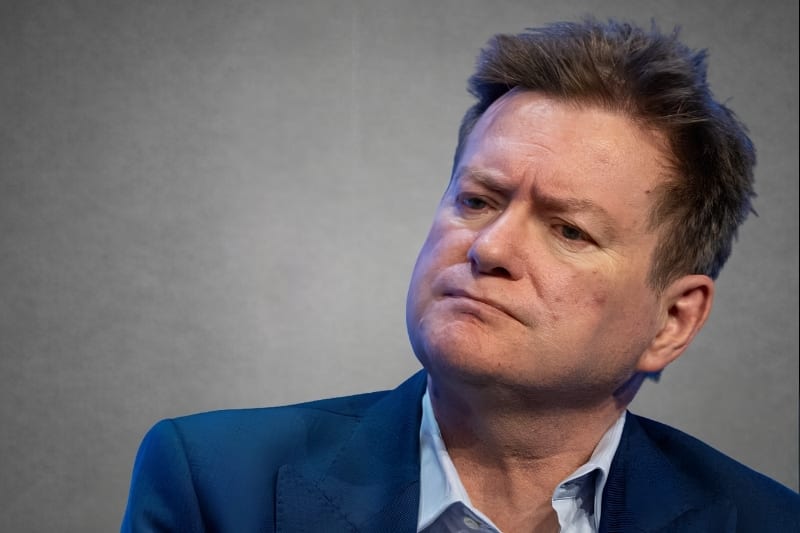
Sir Paul Marshall
Co-Founder, Chairman & CIO at Marshall Wace
In this interview, Marshall Wace co-founder and chairman Sir Paul Marshall discusses running a ninety billion USD alternative asset management firm. Marshall explains the synergy…
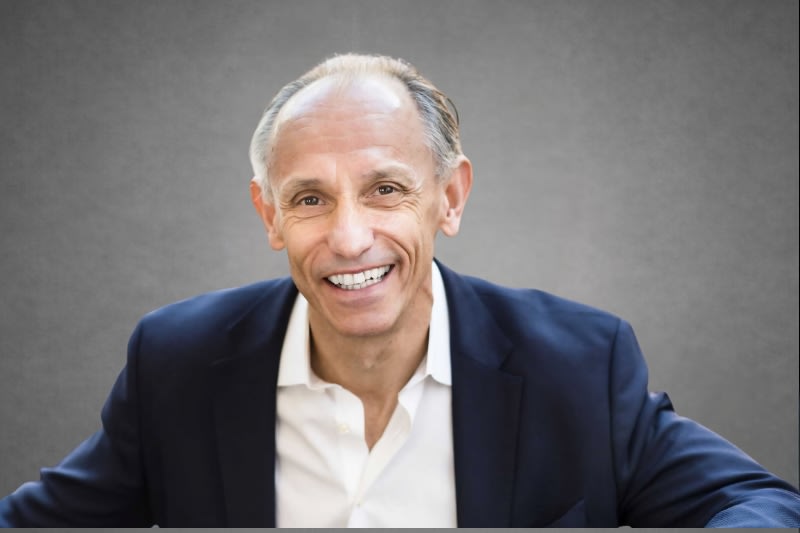
Nigel Morris
Co-founder & Managing Partner at QED Investors
In this interview, QED Investors co-founder and Managing Partner Nigel Morris outlines the frameworks that built Capital One and QED Investors. Morris shares insights on…